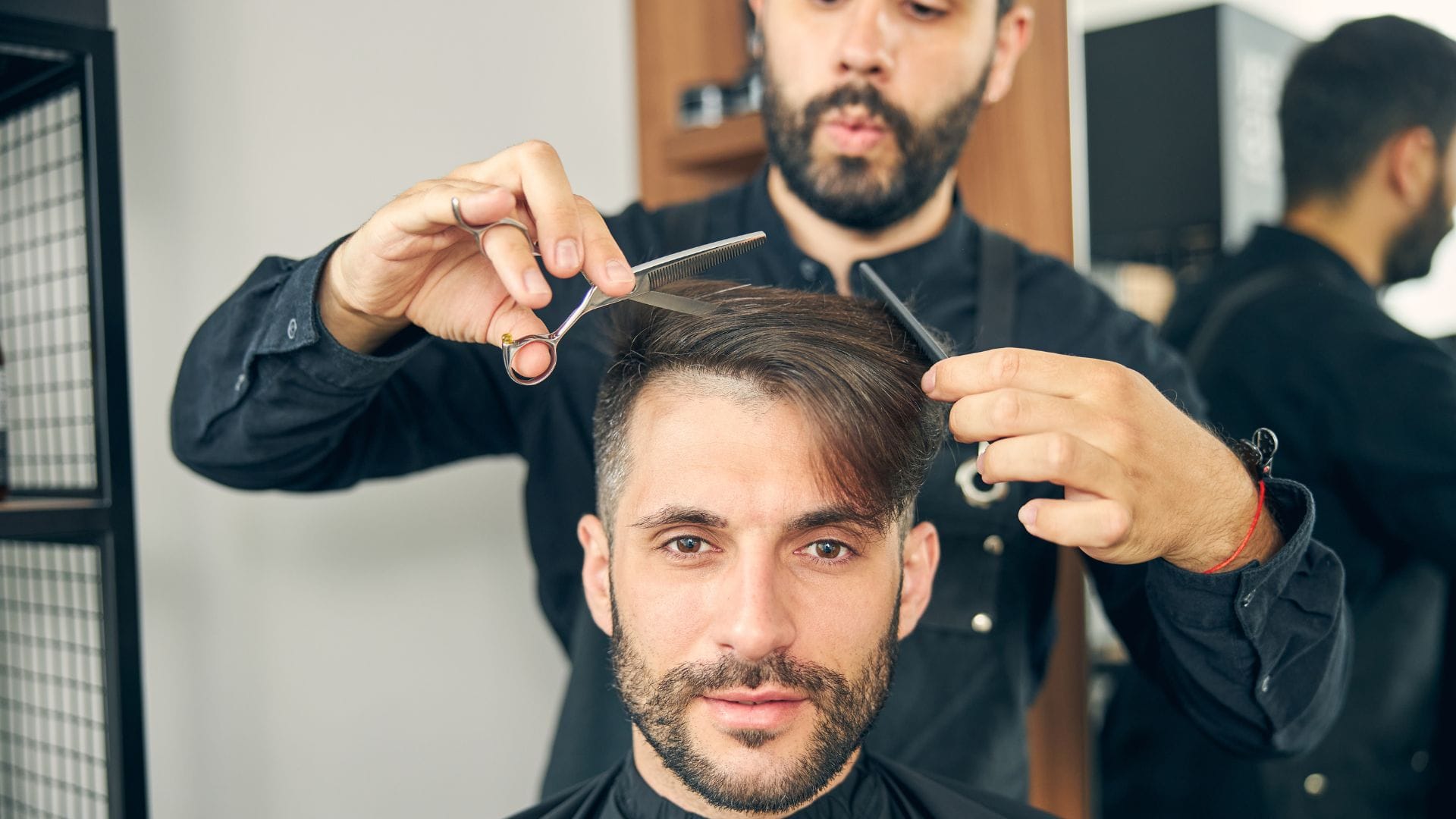
Walking into a barbershop is about more than just getting hair cut off. It is a consultation where a professional analyzes a client’s hair to create a style that looks great and works with their natural attributes. Understanding what barbers look for can demystify the process and help in communicating desired outcomes effectively. This analysis is a detailed check-up for hair, ensuring the final style is a perfect fit.
A barber’s trained eye quickly assesses several key factors. From the moment a client sits in the chair, the evaluation begins, shaping the decisions that lead to the final cut.
1. Hair Density and Thickness
Hair density and thickness are two fundamental elements that a barber assesses when determining the best approach to styling a client’s hair. Hair density refers to the number of individual strands present across the scalp. A person with high density will have more hair strands per square inch, while someone with low density will have fewer strands. Thickness, on the other hand, describes the width of each individual hair strand. A barber evaluates this by running their fingers through the hair and observing its overall volume.
For clients with high density and thick strands, the barber may recommend styles that enhance volume and play with layers. Thick hair is naturally more robust and can hold structured, architectural cuts or textured styles better than thinner hair. Conversely, for clients with lower density, the focus shifts to creating an illusion of fullness. Techniques such as cutting with scissors rather than clippers, adding strategic layers, or incorporating volumizing products can impart the appearance of more body. This thorough understanding of density and thickness enables barbers to tailor styles to flatter each client’s unique hair attributes.
2. The Texture and Feel
The texture and feel of hair shape how it reacts to cutting, styling, and product application. Texture categorization—such as fine, coarse, wiry, or soft—provides essential insight into which techniques will yield the best results. For instance, finer hair may lie flatter against the scalp and can be prone to looking limp if not styled with precision. Coarse hair, on the other hand, has a thicker diameter and is often more resilient but may require specialized tools and methods to tame its natural strength.
A client with curly or wiry hair typically needs a barber skilled in managing natural curls or waves. Curly hair tends to shrink when dry, so understanding how much to cut while wet is critical to avoid unintentional over-trimming. Meanwhile, softer textures may need shaping that prevents them from appearing overly wispy or unstructured. This meticulous analysis helps barbers adapt techniques, such as using appropriate clipper guards, scissors, razors, or styling products, to bring out the hair’s best qualities.
At a professional establishment like a reputable New York Barbershop, barbers often take the time to assess not only the hair’s texture but also the condition of the scalp. Healthy texture and scalp often indicate hair that will respond well to cutting and styling. Incorporating practices like scalp massages, hydrating treatments, or recommending products for maintaining hair texture underscores the level of care and precision. Such attention to detail is not merely functional but a hallmark of excellence in hair artistry. By taking a comprehensive approach to texture and feel, these experts ensure the final haircut aligns seamlessly with the client’s expectations and enhances their natural look.
3. Your Natural Hairline
The natural hairline serves as the foundational frame for your face, making it one of the most critical aspects of a great haircut. Barbers take considerable time to study the unique contours of each client’s hairline, analyzing its specific attributes such as peaks, recession areas, and overall symmetry. These subtle details hold the key to achieving a balanced and natural appearance. For instance, a slight widow’s peak or a more rounded hairline could influence decisions related to shaping techniques. A skilled barber considers factors such as where to position a fringe or bangs, how to contour and taper the temples, and whether or not a sharp lineup would enhance the individual’s facial features.
Tailoring the hairline also means working with the client’s natural patterns to avoid an artificial or overly sharp appearance unless requested. The goal here is to frame the face with precision while maintaining an organic, unforced look. Barbers may use tools like trimmers, razors, and even freehand techniques to shape the area to perfection. Adjustments made to the hairline can accentuate jawlines, call attention to cheekbones, or subtly correct asymmetry. Crafting the perfect hairline requires more than just technical skill; it reflects the barber’s artistry and the ability to complement each client’s unique facial structure.
4. Scalp Health Condition
The condition of the scalp is an often-overlooked element that plays a monumental role in both the quality of a haircut and the overall health of the hair. For this reason, barbers conduct a thorough examination of the scalp during consultations or the initial stages of styling. Indicators such as flakiness can point to dryness, while redness or irritation could signify sensitivity or underlying dry skin conditions. Excessive oiliness, on the other hand, may suggest an imbalance in the scalp’s natural sebum production. Noting these details allows the barber to tailor both the service and aftercare recommendations to the client’s unique needs.
For instance, in cases of dry or flaky scalps, barbers may opt for hydrating shampoos, conditioning treatments, or scalp oils during the session to alleviate dryness and restore comfort. Clients with irritated or sensitive scalps are often advised to switch to gentle, sulfate-free products, reducing the likelihood of further irritation. This attention to scalp health enhances the client’s experience while ensuring the style remains sustainable in the long term. Furthermore, a healthy scalp is essential for maintaining a strong foundation, enabling the hair to grow and maintain its texture and shine. Addressing scalp health doesn’t just ensure the haircut looks excellent immediately after—it sets the stage for lasting results.
5. The Direction of Growth
Hair does not grow in a uniform direction, and this natural variation must be carefully analyzed to deliver a flattering and manageable hairstyle. Elements such as cowlicks, whorls, and irregular growth patterns can pose challenges if they are ignored. A skilled barber will locate and map out these areas early in the process to determine how the hair naturally falls and flows. This analysis is pivotal in ensuring the final cut complements the hair’s inherent tendencies rather than fighting against them.
For example, a cowlick at the crown may mean adjustments need to be made to avoid jagged or unruly sections. By working with the cowlick, barbers can feather or taper the surrounding hair to create a smooth transition that lays naturally. Whorls or circular growth patterns at the back of the scalp can also influence how shorter cuts are layered or blended, preventing one side from appearing uneven or sticking out awkwardly. Additionally, the barber must account for directional growth at the hairline and around the nape, as this can impact the overall balance of the style and its ease of maintenance.
By acknowledging these natural growth patterns, barbers aim to make haircuts adaptable and effortless for the client to manage daily. Strategic cutting techniques, such as cutting against or with the grain and using texturizing scissors, are employed to ensure that areas of unusual growth are effortlessly integrated into the overall style. This thoughtful consideration helps avoid frustration during styling at home while simultaneously delivering a polished, professional finish that feels intuitive and stays looking great throughout the day.
6. Face Shape Proportions
A well-executed haircut goes beyond just trimming hair—it also takes facial proportions into account to complement the client’s natural features and enhance their overall appearance. Barbers carefully analyze the face shape, categorizing it into one of the primary types—oval, round, square, heart-shaped, or oblong. Understanding these shapes allows barbers to tailor their approach and achieve a cut that works in harmony with the client’s face, rather than against it. For example, a round face benefits from a cut that creates height and volume at the crown, helping elongate the overall appearance.
Similarly, softening the angles of an angular or square jawline can create a gentler silhouette, making features appear more balanced and refined. On the other hand, an oval-shaped face, often considered the most versatile, allows for greater flexibility in styling. By thoughtfully planning haircut proportions, barbers subtly accentuate a client’s best features and guide attention away from areas they might want to downplay. This attention to detail ensures the style looks natural, effortless, and specifically tailored to the individual, resulting in a haircut that harmonizes with their unique characteristics and projects confidence.
7. Hair Elasticity and Strength
Healthy hair is characterized by its natural elasticity, an essential factor for achieving certain styles and maintaining the overall structure of a cut. Barbers often conduct a quick elasticity test by gently stretching a strand of hair to observe how it reacts—elastic hair will stretch without breaking and return to its original length, indicating that it is moisturized and resilient.
However, if the hair stretches excessively or breaks easily, it signals reduced elasticity, often caused by damage from chemical treatments, heat styling, or environmental factors like pollution. This type of hair might struggle to hold a specific shape or style, such as curls or intricate layering, making it crucial for barbers to identify and address these issues during the consultation.
Based on their findings, they may recommend targeted conditioning treatments, such as a deep-conditioning regimen or even keratin-based repair solutions, to enhance the health and performance of the client’s hair. Ultimately, assessing hair strength and elasticity allows barbers to determine which styles will hold up over time and what maintenance steps are necessary for the client to keep their hair looking its best. This critical step ensures that the haircut remains not only stylish but also long-lasting and sustainable with proper care.
8. Your Personal Style and Lifestyle
A great haircut is more than just a fashion statement—it should seamlessly adapt to a client’s personal style and daily life. This is why professional barbers prioritize conversations about the client’s routine, profession, and style preferences during the initial consultation. For clients with fast-paced lives and limited time for styling, a low-maintenance, wash-and-go haircut may be the ideal choice.
On the other hand, individuals committed to a more polished, high-fashion look might require haircuts with precision lines or dynamic layers that can be enhanced with product and tools for a more deliberate finish. Barbers also consider the client’s profession to tailor their style to their work environment—perhaps a neat, structured cut for a corporate professional or a relaxed, textured look for someone in a creative field.
Additionally, personal preferences play a pivotal role, whether the client desires a throwback to a classic, timeless look or is eager to experiment with bold, trending styles. These discussions are an integral part of the barbering process and serve as a hallmark of excellence, particularly in the fast-paced, style-conscious world of New York City. By aligning the haircut with the client’s personality and lifestyle, barbers ensure that the final result is both stylish and uniquely personal, embodying functionality and flair that fits effortlessly into the rhythm of everyday life.
9. Wave and Curl Pattern
When assessing a client’s hair, the presence, type, and behavior of waves or curls play a crucial role in determining the approach to a haircut. Curly and wavy hair patterns are highly individual, ranging from loose, flowing waves to tightly coiled curls, each requiring a tailored cutting technique to achieve the best results. Unlike straight hair, curly hair often shrinks when it dries, which can drastically alter its appearance after a cut if not handled carefully. For this reason, many barbers opt to cut curly hair while it is dry, working with its natural movement and texture to ensure accuracy and precision. Dry cutting helps reveal the true length and curl pattern, allowing the New York barber to shape the hair exactly as it will appear in everyday life.
Understanding the curl type, defined using systems like the Andre Walker Hair Typing System (from Type 2 waves to Type 4 coils), allows the barber to maximize the natural form of the hair. For instance, looser wave patterns benefit from layering techniques that add movement and prevent a boxy appearance, while tighter curls often require adjustments for volume and balance, avoiding bulk in certain areas. Precision is paramount when shaping curls because an improper cut can disrupt the curl uniformity, causing uneven growth or patterns.
Additionally, barbers recommend specific products tailored to their client’s curl or wave pattern to enhance definition and control frizz. Tools like diffusers, hydrating curl creams, and anti-humidity serums are commonly suggested to achieve a polished, manageable style. By combining their technical expertise with product knowledge, barbers empower clients to maintain their stylish cut long after leaving the chair.
10. Previous Haircut Lines
Inspecting lines and layers from a previous haircut is an essential step in crafting a fresh and cohesive new style. Over time, as these old haircut lines grow out, they can create unevenness, disrupt a natural flow, or leave behind bulk in areas that no longer suit the intended look. The barber needs to identify these remnants of earlier cuts to either blend them seamlessly into the new style or eliminate them entirely, ensuring a smooth and polished result.
Blending previous lines requires advanced technique and an eye for detail. For example, if the client had a layered style but now desires a sleeker, more uniform look, the barber carefully transitions the jagged layers into a structured shape. This often involves texturizing methods like point cutting or slide cutting to create softness and even out the overall length. Conversely, for clients growing out a faded undercut or a distinctive design, the barber takes measures to camouflage these remnants, progressively reshaping the hair over time to guide it toward the desired style.
The challenge of working with previous haircut lines becomes even more delicate when dealing with harshly cut geometric shapes, overly thinned areas, or poorly executed fades that leave behind imbalanced patches. To address these issues, barbers use tools like blending shears, clippers, and razors to progressively smooth and refine the affected areas. The ultimate goal is creating a cut that not only looks impressive but also grows out gracefully, minimizing the need for frequent touch-ups. This transforms the client’s experience, as they leave the chair with a style that reflects expertise and attention to detail.
11. Overall Hair Health and Damage
Assessing the general health of the hair is a final, crucial step in the haircutting process. Barbers carefully evaluate the strands for signs of damage, which can take many forms, from split ends and frizz to brittle textures caused by overprocessing, heat styling, or environmental exposure. Understanding the condition of the hair informs the decisions behind the cut—specifically, how much needs to be trimmed to restore vitality and what methods can be used to improve the overall look and feel.
Split ends, one of the most common problems, act as a signal for necessary trims. Left unattended, they can travel up the hair shaft, leading to further damage and breakage. Removing split ends with clean, precise cuts helps protect the hair’s overall integrity. Similarly, brittle or overly dry hair may require a more substantial trim, especially if the damage extends beyond the tips.
Barbers also consider chemical damage caused by processes like bleaching, coloring, or relaxers, which can leave the hair fragile and porous. For clients with such issues, cutting away severely damaged sections can breathe new life into the hair. Alongside the cut, barbers often recommend post-maintenance tips, including deep-conditioning treatments or the use of protective products to prevent further harm.
Beyond trimming, a barber’s approach to improving hair health involves selecting styles that complement the client’s current hair condition. For instance, shorter cuts can minimize the appearance of damage while allowing the hair to grow out healthier. Meanwhile, recommending a tailored regimen involving hydrating shampoos, oils, and leave-in treatments reinforces the client’s ability to care for their hair between visits. By focusing on restoring vibrancy and strength, barbers not only enhance the style but also promote the long-term well-being of their client’s hair.
Conclusion
The process of analyzing hair is a comprehensive skill that combines science and art. It ensures that the final haircut is not just a temporary fix but a style that enhances natural features, suits individual lifestyles, and promotes healthy hair. This detailed assessment is what transforms a simple haircut into a personalized grooming experience.