The temptation to cut your own hair can strike at any moment. Maybe you are looking in the mirror late at night and notice your bangs are too long, or perhaps you are trying to save a little money by skipping your monthly appointment. It often starts with a small trim, just a snip here and there to tidy things up. However, what begins as a minor adjustment can quickly spiral into a grooming disaster. While DIY projects are great for home improvement or crafts, your hair is a part of your identity that is visible to everyone you meet. The stakes are much higher than painting a wall or fixing a leaky faucet.
Professional hairstylists and barbers undergo extensive training to understand the complexities of hair structure, growth patterns, and geometry. They know how to manipulate tools to create specific shapes and textures that flatter your face. When you attempt to do this yourself, you lack not only the training but also the proper perspective and equipment. The risk of making an irreversible mistake is incredibly high. Before you pick up those kitchen scissors or that cheap pair of clippers, consider the many reasons why leaving your haircut to the professionals is the only safe choice for maintaining your appearance.
1. Lack of Proper Visibility and Angles
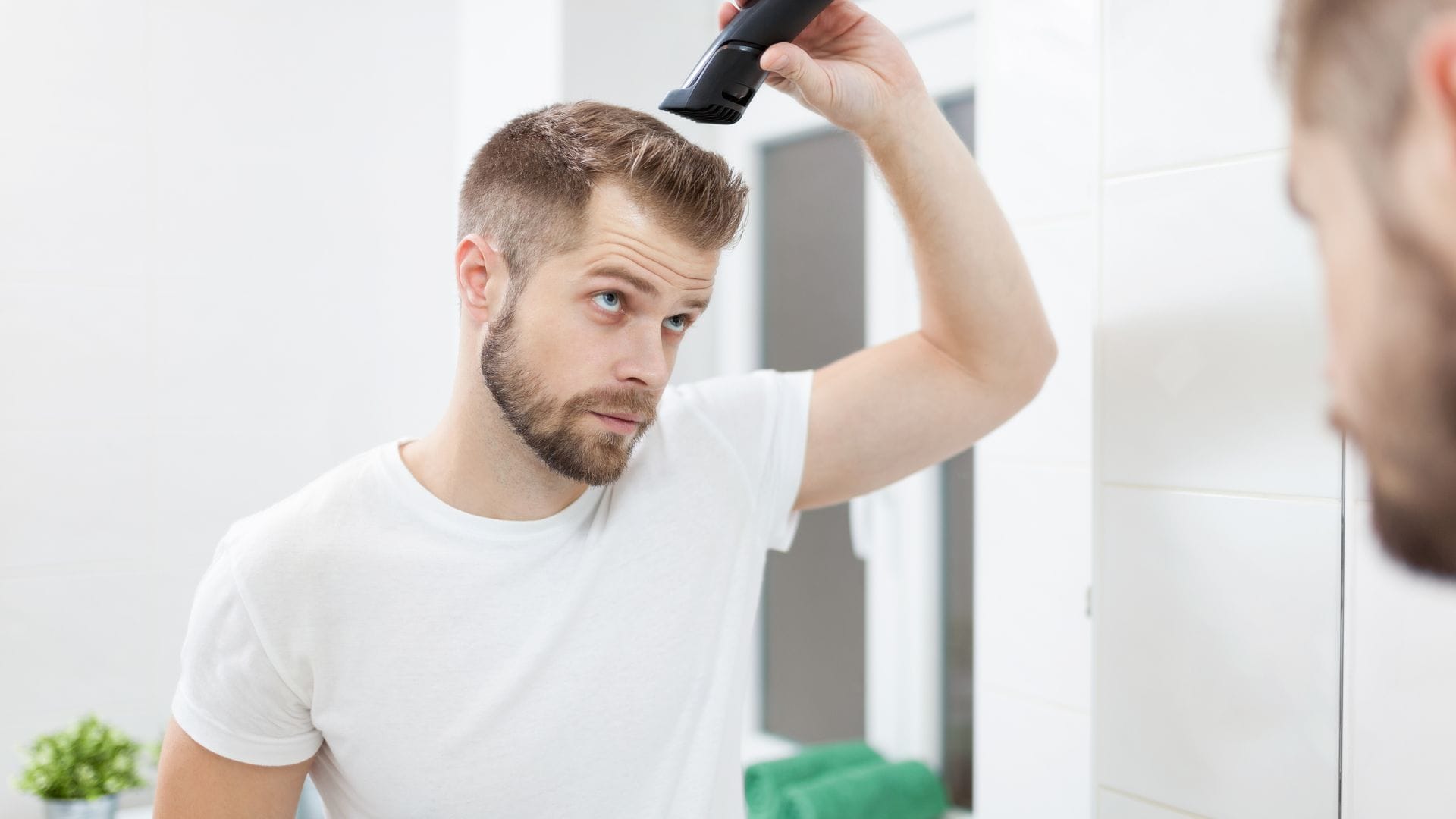
One of the most significant challenges of cutting your own hair is simply seeing what you are doing. You have a clear view of the front of your face in the mirror, but the sides and back are a completely different story. Trying to cut the back of your head requires a complex arrangement of mirrors and contorted arm positions. Even with a multi-mirror setup, your depth perception is altered, and everything is reversed. This makes it nearly impossible to cut a straight line or blend sections smoothly. You are essentially guessing for a large portion of the haircut, hoping that your hands are moving in the right direction. The result is often a jagged, uneven neckline or “steps” in the hair where the fade should be smooth.
Furthermore, your arms are not designed to work effectively behind your head for extended periods. As you struggle to hold the mirror with one hand and the clippers with the other, your arms will tire, and your hands will shake. This fatigue leads to slips and mistakes that can ruin the entire haircut in a split second. A professional stylist moves around you, maintaining a perfect line of sight from every angle. They can step back to check for symmetry and balance, something you cannot do when you are stuck inside the process. The inability to see the full 360-degree view of your head is a guaranteed recipe for a lopsided and amateurish result.
2. Inadequate Tools and Equipment
The tools you have at home are likely not comparable to the professional-grade equipment used in a salon or barbershop. Most household scissors are designed for cutting paper or fabric, not hair. They are often too dull to slice cleanly through the hair shaft, which causes the hair to bend or fold before it is cut. This leads to split ends immediately after the cut and a frayed, messy appearance. Professional shears are incredibly sharp and expensive, designed specifically to create clean lines and texturize without damaging the hair. Using dull scissors can result in a haircut that looks choppy and unfinished, even if your technique was somehow perfect.
Similarly, consumer-grade clippers often lack the power and precision of professional models. They may snag or pull at the hair instead of cutting it cleanly, causing pain and irritation. They also tend to heat up quickly, which can be uncomfortable or even dangerous. When you visit a high-quality New York Barbershop, you will notice the vast array of specialized tools they use, from fading clippers to detailing trimmers and straight razors. Each tool has a specific purpose that contributes to the final polished look. Attempting to replicate these results with a generic grooming kit purchased online is like trying to build a house with a plastic hammer; the tools simply aren’t up to the task.
3. Lack of Technical Training and Knowledge
Haircutting is a skilled trade that requires hundreds of hours of education and practice to master. Stylists learn about the geometry of the head, how to section hair properly, and the specific techniques required for different hair types. They understand elevation, tension, and over-direction—concepts that determine how the hair will fall once it is cut. When you cut your own hair, you are likely cutting it where it lies without accounting for how gravity and movement will affect the final shape. You might cut a piece that looks too long, only to realize that it creates a hole in the style once it springs back into place.
Without this technical knowledge, you are flying blind. You might not know that curly hair shrinks significantly when dry, leading to a cut that is inches shorter than you intended. You might not understand how to blend different lengths seamlessly, leaving harsh lines that are impossible to hide. Professionals spend years refining their skills on mannequins and models before they ever touch a paying client. They know how to troubleshoot issues as they arise during the cut. By skipping this education and doing it yourself, you are ignoring the science and art that goes into a good haircut, and the results will almost certainly reflect that lack of expertise.
4. The High Cost of Fixing Mistakes
Many people turn to DIY haircuts to save money, but this strategy often backfires spectacularly. A bad home haircut usually requires a corrective visit to a professional, which can be far more expensive and time-consuming than a standard trim. Stylists often charge more for corrective work because it is much harder to fix a botched job than to start from scratch. They have to blend uneven layers, fix holes, and sometimes cut the hair much shorter than you wanted just to make it look presentable again. In the worst-case scenarios, the only solution might be a buzz cut, meaning you lose all the length you were trying to maintain.
Additionally, the emotional cost of walking around with a bad haircut cannot be overstated. You might have to buy hats or specialized styling products to hide the damage while it grows out. If the mistake is severe enough, you might feel too embarrassed to go to work or social events. The few dollars you saved by avoiding the salon are quickly outweighed by the stress and additional costs of fixing the mess. It is far more economical to invest in Practical Haircuts from a professional that grow out well and last longer, rather than risking a disaster that requires an emergency intervention and months of regret.
5. Difficulty Handling Texture and Growth Patterns
Every person’s hair is unique, with specific textures, cowlicks, and growth patterns that dictate how it should be cut. A professional stylist analyzes your hair before they even pick up the scissors. They look for whorls at the crown, erratic growth at the neckline, and changes in density across the scalp. They know how to cut around these features so that the hair lays flat and looks natural. When you cut your own hair, you often ignore these nuances. You might cut a cowlick too short, causing it to stick straight up permanently, or you might thin out an area that is already sparse.
Handling texture is particularly tricky. Thick, coarse hair requires different techniques than fine, thin hair. If you have curly or wavy hair, cutting it requires a specific understanding of how the curl pattern clumps together. Cutting through a curl at the wrong point can make it frizzy or cause it to stick out at an odd angle. Professionals know how to texturize and debulk hair to make it manageable without destroying the shape. Without this understanding, you risk turning your head into an unmanageable helmet or a frizzy disaster. Navigating your own unique hair map is a skill that takes an outsider’s perspective and professional experience to execute correctly.
6. The Risk of Injury and Accidents
Cutting hair involves using extremely sharp instruments very close to your skin, eyes, and ears. When you are doing this yourself, especially while looking in a mirror with reversed movements, the risk of injury is surprisingly high. One slip of the hand can result in a painful cut on your ear, a nick on your neck, or even an injury to your eye if you are trimming bangs. Handling sharp shears or a razor behind your head where you cannot see is inherently dangerous. Professional barbers are trained in safety protocols and have steady hands developed over years of practice to ensure you leave the chair without a scratch.
Beyond cuts and nicks, there is also the risk of damaging your hair permanently. Using dull tools or improper chemical treatments (if you are attempting color or texture changes) can cause breakage so severe that the hair snaps off at the root. You could burn your scalp with hot clippers or cause irritation that leads to infection. Dealing with Unruly Hair is frustrating, but dealing with a physical injury or chemical burn is much worse. The safety environment of a salon, with sanitized tools and a trained operator, is there to protect you. Trying to bypass this safety net for convenience puts your physical well-being at unnecessary risk.
7. Inability to Create Symmetry and Balance
The human eye is drawn to symmetry; we find balanced faces and shapes aesthetically pleasing. Creating a symmetrical haircut is one of the hardest parts of the job, even for professionals. It requires constant checking, measuring, and stepping back to compare the left side to the right. When you are cutting your own hair, your perspective is skewed. You might lean your head to one side to see better, which throws off your baseline. By the time you straighten your head, one side is inevitably shorter than the other. You then try to fix it by cutting the longer side, only to make it too short, starting a vicious cycle that ends with uneven, crooked hair.
Balance is also about weight distribution. A good haircut removes weight from areas where it is too heavy and leaves weight where volume is needed. Doing this on your own head is nearly impossible because you cannot feel or see the weight distribution accurately. You might end up with a “shelf” of hair on one side or a flat spot on the other. This lack of balance makes the face look lopsided and unkempt. A professional stylist cuts with the overall structure of your face in mind, ensuring that the silhouette is balanced and complimentary from every angle, not just the front.
8. Missing Out on the Experience and Pampering
Getting a haircut is not just about the final result; it is also about the experience. Visiting a barbershop or salon is a ritual of self-care. It is a time to relax, unplug from the stress of the day, and let someone else take care of you. The experience often includes a hair wash with a scalp massage, hot towels, and the pleasant sensory environment of the shop. When you cut your own hair, you strip away all the enjoyment. It becomes a stressful, high-stakes chore performed in a bathroom filled with hair clippings that you will have to clean up later.
There is also a social aspect to visiting a professional. Many people build a rapport with their barber or stylist, using the time to chat and connect. A New York Barber, for instance, often serves as a confidant and a friend, providing a social outlet that adds value to the service. By doing it yourself, you isolate yourself and turn a potentially rejuvenating experience into a solitary struggle. The stress of trying not to mess up replaces the relaxation of the hot towel. Denying yourself this small luxury reduces hair care to a frantic maintenance task rather than an enjoyable grooming ritual.
9. Cleaning Up is a Nightmare
One practical downside of cutting your own hair that is often overlooked is the mess. Hair clippings get everywhere. They stick to your sweaty skin, fall into your clothes, clog the sink drain, and scatter across the bathroom floor. Short hair trimmings, in particular, are notoriously difficult to sweep up; they seem to embed themselves in grout lines and stick to surfaces with static electricity. You will likely be finding tiny hairs on your toothbrush or in the corners of the room for weeks after your DIY session.
In a salon, the cleanup is seamless and immediate. The capes keep hair off your clothes, the neck strips prevent itching, and the professionals sweep away the mess before you even stand up. They have industrial vacuums and specialized plumbing to handle the hair. When you cut your own hair, the cleanup process can take longer than the cut itself. You have to unclog the drain, sweep, vacuum, and shower immediately to get the itchy hairs off your back. The inconvenience of the cleanup alone is a compelling reason to let a professional handle the job in a space designed for it.
10. The Result rarely Lasts as Long
A professional haircut is designed to grow out gracefully. Stylists use techniques like point cutting and texturizing to ensure that as the hair gets longer, it maintains a decent shape. A good cut can look great for weeks, if not months. A DIY haircut, on the other hand, usually looks awkward within a week or two. Because the lines are blunt and the weight is not distributed correctly, the hair starts to stick out in weird directions as soon as it grows a few millimeters. You will find yourself needing to trim it constantly to keep it looking acceptable.
This creates a cycle of constant maintenance where you are always fixing your hair but never truly happy with it. You end up spending more time fussing with your hair every morning because the foundation of the cut is flawed. A professional cut provides a structural longevity that saves you time in your daily routine. You wake up, and your hair sits right because it was cut with precision. The durability of a professional service means you look better for longer, freeing you from the constant need to touch up your own work.
Conclusion
While the allure of saving time and money by cutting your own hair is understandable, the potential downsides far outweigh the benefits. From the lack of proper visibility and tools to the high risk of making costly mistakes, DIY haircuts are rarely worth the gamble. Haircutting is a complex skill that combines art, geometry, and technique—elements that cannot be easily replicated in a home bathroom mirror.
Trusting a professional ensures that you not only get a symmetrical and stylish cut but also enjoy a relaxing experience without the stress of cleanup or potential injury. Your hair is a major part of your personal presentation; it deserves the care and expertise that only a trained stylist or barber can provide. Save the DIY spirit for household repairs and leave your hair in the capable hands of those who know how to make you look your best.