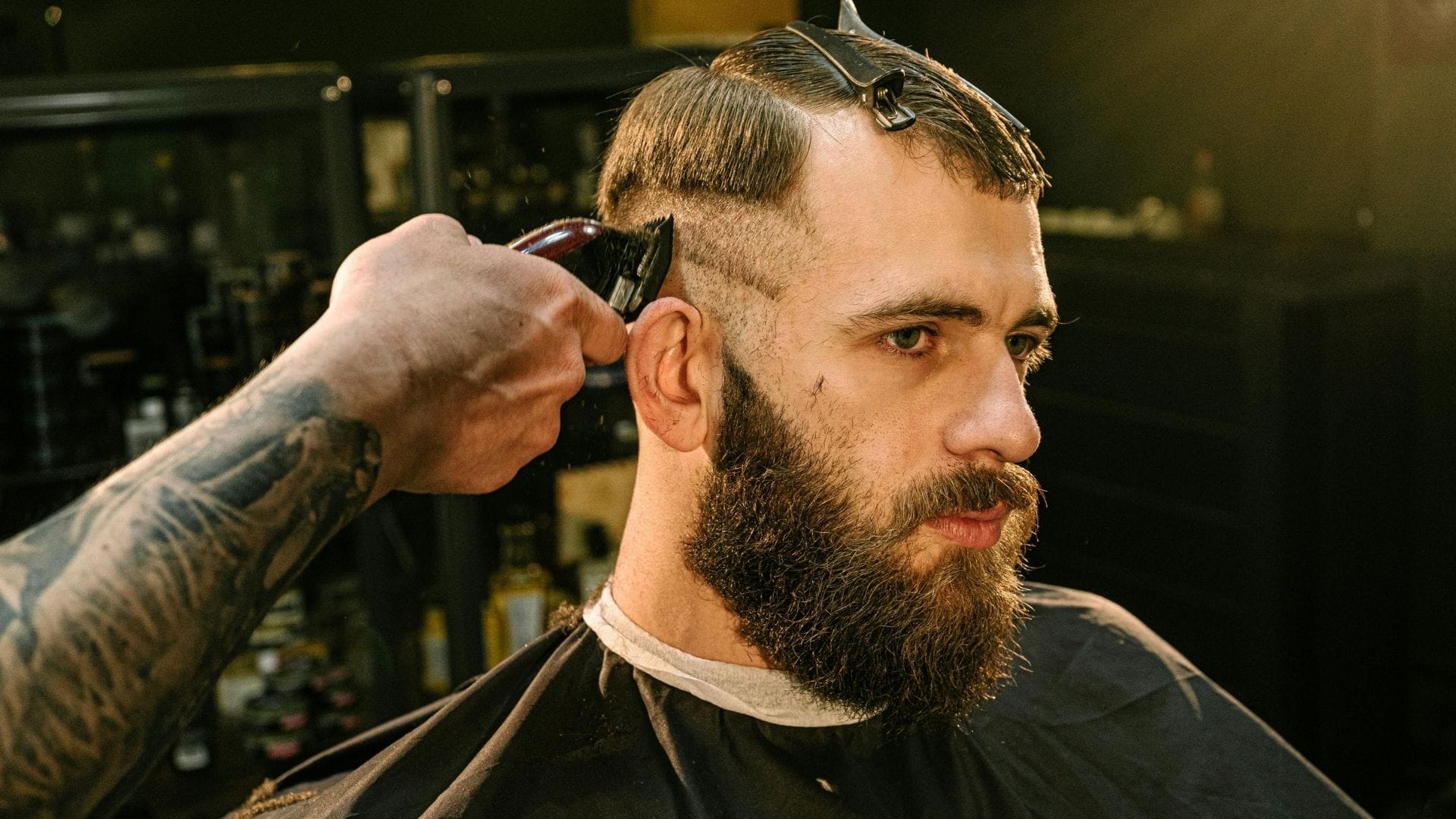
Choosing the right haircut starts with knowing your face shape (oval, round, square, rectangle, triangle, heart, or diamond) and understanding how volume, texture, and length create visual balance. The best haircuts work with your bone structure, hair type, and growth pattern, not against them. This guide walks through every face shape, the science of proportion, specific cuts that work, and exactly what to tell your barber so you leave the chair looking sharp every time.
The Mirror Test: Why Face Shape Changes Everything
The haircut question almost every man gets wrong
Ask ten guys how they pick a haircut and nine of them will say the same thing: “I saw it on someone and liked it.” That’s the entire process. No thought given to bone structure, hair density, or growth pattern. Just a photo on a phone, shoved across the counter to a barber who’s too polite to say “that won’t work on you.”
Here’s the problem. A haircut isn’t a costume you put on. It’s a shape built around the shape you already have. The crop fade that made your buddy look like a magazine cover might make you look like your head is trying to escape your face. Not because the cut is bad. Because it’s the wrong cut for your particular jaw, forehead, and hairline.
Face shape is the single biggest variable in whether a haircut works, and it’s the variable almost nobody thinks about first.
Why a great haircut is really about balance, not trends
Master barbers talk about visual balance the way tailors talk about fit. A suit isn’t good because it’s expensive. It’s good because it’s cut to your shoulders, your waist, your height. A haircut works the same way. It’s not about chasing what’s trending on Instagram this month. It’s about creating proportion between your forehead, cheekbones, and jaw so your whole face reads as balanced.
A round face reads rounder with round hair. A long face reads longer with length left hanging on the sides. Balance means adding where you’re narrow and subtracting where you’re wide. That’s the whole game, and once you understand it, you’ll never hand a barber a random photo again.
What face shape can and cannot tell you
Face shape is a starting point, not a rulebook. It tells you the general strategy: where to add volume, where to take weight off, how short the sides should go. It does not account for your hair texture, your cowlicks, your hairline, or how much time you’re willing to spend with a blow dryer every morning.
Two men with identical square jaws can need completely different haircuts if one has thick curly hair and the other has fine straight hair. Face shape narrows the options. It doesn’t pick the winner by itself.
How barbers read your face in the first five minutes
Walk into a good barbershop and watch what happens before the clippers even come out. A skilled barber tilts your head, checks your hairline from the front and the side, runs fingers through your hair to feel the density, and asks about your daily routine. That’s a diagnosis, not small talk.
According to the Professional Beauty Association, over 60% of client dissatisfaction with haircuts traces back to a poor initial consultation, not poor execution. The cut fails before the clippers even turn on. A five-minute conversation prevents most bad haircuts.
What this guide will help you figure out
By the end of this guide, you’ll know how to identify your face shape without guessing, understand exactly why certain cuts flatter certain faces, and walk into any barbershop near me with the vocabulary to describe what you want. You’ll also know the mistakes that ruin otherwise good haircuts, and how to build a maintenance routine that keeps you looking sharp between visits.
Let’s start with the fundamentals every man should know before the clippers ever touch his head.
Before the Clippers Start: The Basics You Need to Know
What face shape actually means
Face shape refers to the outline created by your forehead, cheekbones, jawline, and chin when viewed straight on. It’s essentially a two-dimensional map of your bone structure. Barbers use seven common categories: oval, round, square, rectangle (oblong), triangle, heart, and diamond. None of these categories are perfect boxes. Most men are a blend, leaning toward one dominant shape.
The difference between face shape, head shape, and profile
Face shape is the front-facing outline. Head shape is the three-dimensional structure of your skull, including how flat or rounded the back and sides are. Profile is the side view, covering your forehead slope, nose projection, and jaw angle. A haircut that’s perfect for your face shape can still look wrong if it ignores a flat spot on the back of your head or a receding profile.
Skilled barbers assess all three. A textured crop might flatter your oval face shape but look strange from the side if your head shape is unusually flat at the crown, because there’s nothing for the texture to sit on.
Why bone structure matters more than most men think
Bone structure doesn’t change with age the way soft tissue does. Jawlines can soften and cheeks can hollow, but the underlying bone framework stays largely consistent from your twenties onward. That’s why a haircut strategy built around your bone structure tends to age well, while one built around trends or muscle tone from your gym-going twenties might not.
How hair density, hairline, and growth pattern affect the result
Hair density determines how much volume you can realistically achieve on top. Thin hair struggles to hold the height needed to lengthen a round face. Hairline shape, whether straight, widow’s peak, or receding at the temples, changes how a fringe or side part will sit. Growth pattern, including cowlicks and swirls at the crown, dictates which direction hair naturally wants to fall, and fighting that direction daily is a losing battle.
| Factor | What It Affects | Why It Matters |
| Hair density | Volume potential on top | Thin hair can’t hold height without product or a shorter cut |
| Hairline shape | Fringe and part placement | A widow’s peak changes how a side part falls |
| Growth pattern | Natural direction of hair | Cowlicks fight against certain styles, especially quiffs |
| Hair texture | Styling effort required | Curly hair needs different products than straight hair |
| Face shape | Overall cut strategy | Determines where to add or remove visual weight |
The barber terms you should understand before asking for a cut
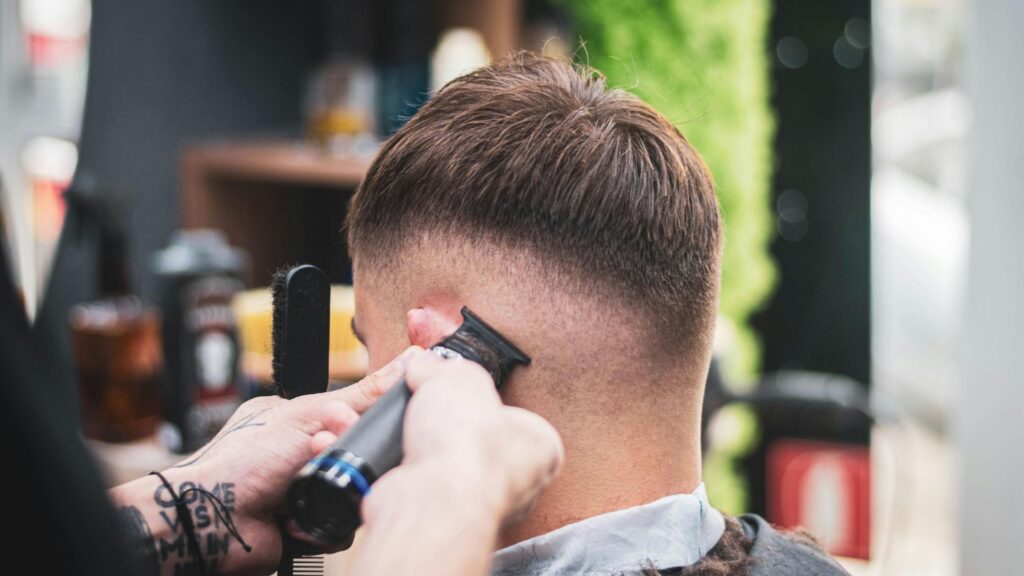
Knowing a few key terms turns a vague request into a clear instruction. A fade haircut gradually shortens hair down to the skin. A taper shortens hair without going all the way to skin. Crop refers to a short, textured style with a fringe left slightly longer on top. Skin fade goes all the way to bare skin at the bottom. Walking in with these words ready is the difference between a guess and a plan, which brings us to the shapes themselves.
The Main Face Shapes and How to Recognize Yours
Oval face shape
The oval face is considered the most balanced shape, with a forehead slightly wider than the jaw and gently curved edges. Length is roughly one and a half times the width. Think of a face that’s neither too angular nor too round, with a jaw that curves rather than sharply angles.
Round face shape
Round faces have similar width and length, with soft jawlines and full cheeks. The widest point sits at the cheekbones rather than the forehead or jaw. There’s minimal angularity, and the chin tends to be less pronounced.
Square face shape
A square face has a strong, angular jawline that’s roughly the same width as the forehead. The hairline is often straight, and the overall face reads as wide and structured, with minimal taper from top to bottom.
Rectangle or oblong face shape
Rectangle faces resemble ovals but stretched vertically. The forehead, cheekbones, and jaw are similar in width, but the overall face is notably longer than it is wide, often with a longer chin or forehead.
Triangle, heart, and diamond face shapes
Triangle faces widen at the jaw and narrow at the forehead. Heart faces are the opposite, wide at the forehead and narrowing to a pointed chin, often with a widow’s peak. Diamond faces are narrow at both the forehead and jaw, with the width concentrated at the cheekbones.
| Face Shape | Key Trait | Widest Point | Jawline |
| Oval | Balanced proportions | Cheekbones, slightly | Softly curved |
| Round | Similar width and length | Cheekbones | Soft, minimal angle |
| Square | Strong angular structure | Even across forehead/jaw | Sharp, defined |
| Rectangle | Elongated oval | Even, but face is longer | Sometimes long chin |
| Triangle | Wide jaw, narrow forehead | Jawline | Wide and heavy |
| Heart | Wide forehead, narrow chin | Forehead | Pointed, narrow |
| Diamond | Narrow top and bottom | Cheekbones | Angular, pointed chin |
How to Figure Out Your Face Shape at Home Without Guessing
The simple mirror method
Pull your hair back, stand directly in front of a mirror in even lighting, and trace the outline of your face with a dry-erase marker or lipstick on the mirror’s surface. Step back and look at the traced shape without your features distracting you. This removes the guesswork that comes from staring at your own eyes and nose instead of the outline.
Measuring width, length, jaw, and forehead the right way
Grab a soft tape measure. Measure across your forehead at its widest point, across your cheekbones, across your jaw at the widest point, and from your hairline straight down to your chin. Compare the four numbers. If forehead, cheekbone, and jaw are close in width and the length is notably longer, you’re likely rectangle. If the jaw measurement is the largest, you’re likely square or triangle depending on the forehead.
Common mistakes men make when identifying face shape
The most common mistake is measuring with facial hair still on, which distorts jaw width. Another is measuring while smiling, which shifts cheek muscles and changes the cheekbone reading. A third is relying on a single selfie taken at an angle rather than straight on with even lighting.
What photos reveal that the mirror sometimes hides
Mirrors flip your image and your brain adjusts to your own asymmetries over years of looking at yourself. A photo, especially one taken by someone else, shows your face the way others actually see it. Comparing three or four photos from different days, lighting is often more accurate than trusting your reflection alone.
The Real Science Behind a Flattering Haircut
How visual balance works
The human eye is drawn to symmetry and proportion. Barbers exploit this by adding visual weight where a face is narrow and removing it where a face is wide. This is the same principle stylists use with clothing, where horizontal stripes widen and vertical lines lengthen.
Why volume on top changes the whole face
Height on top draws the eye upward and elongates the overall appearance of the face. This is why round and square faces often benefit from more volume at the crown, since it counteracts width with vertical length.
What tight sides do to rounder and wider faces
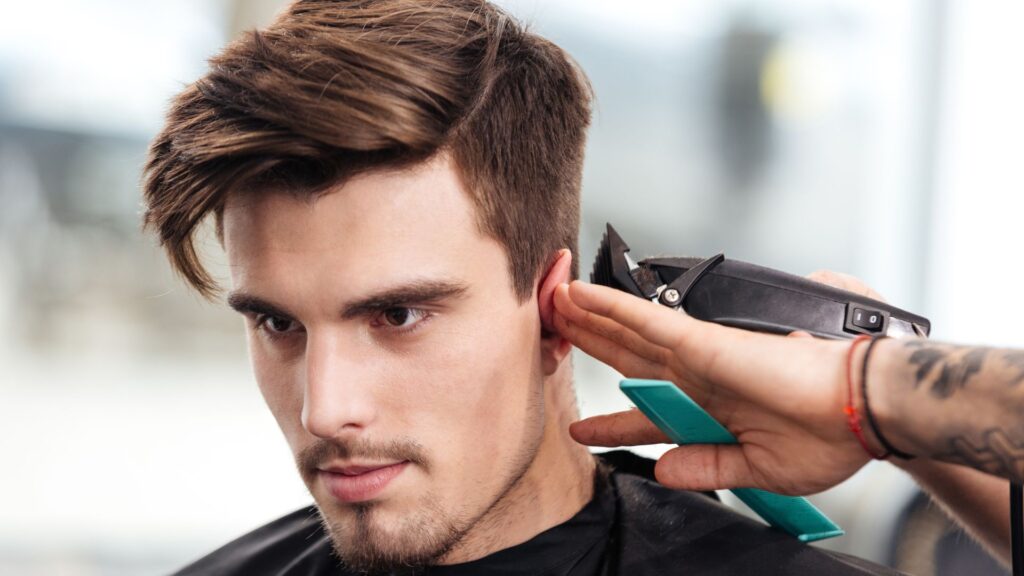
Short, tapered sides remove bulk near the ears and jaw, which narrows the visual width of the face. This is one of the most reliable tricks in a barber’s toolkit for round and square face shapes.
How fringe, texture, and weight shift proportions
A fringe swept to the side can soften a strong forehead. Textured, choppy ends break up heavy, blocky shapes. Weight left at the bottom of a cut can add width exactly where a narrow jaw needs it.
The role of beard shape in the final result
A beard is essentially a second haircut for your jawline. A rounded beard adds length to a round face. A squared-off beard sharpens a soft jaw. Ignoring beard shape while obsessing over the haircut is like tailoring a jacket and ignoring the pants.
The Best Haircuts for Oval Faces
Why oval faces have the most flexibility
Oval faces are already balanced, so nearly every haircut style works without a major correction needed. This is the shape barbers describe as having the most room to experiment.
Cuts that sharpen, soften, or modernize an oval face
A textured crop modernizes an oval face with low maintenance appeal. A pompadour sharpens it by adding height and structure. A classic side part softens it with a more traditional, polished look. All three work because the underlying proportions are already even.
Styles oval-faced men should still be careful with
Excessive volume on top can stretch an oval face into looking too long. Heavy fringes that cover the whole forehead can also throw off the natural balance that makes oval faces so versatile in the first place.
Beard pairings and maintenance advice for oval faces
A light stubble or short boxed beard complements an oval face without adding unnecessary bulk. Since the face is already balanced, the beard’s job is to maintain that balance rather than correct anything.
The Best Haircuts for Round and Square Faces
Best haircut strategies for round faces
Round faces benefit from height on top and shorter, tighter sides. A quiff or textured fringe with a skin fade on the sides elongates the face and removes bulk near the cheeks. Avoid rounded shapes like a classic bowl cut, which mirrors and exaggerates the roundness.
Best haircut strategies for square faces
Square faces have strong bone structure that can carry more texture without looking overwhelmed. A textured crop or side part with taper softens the sharp jawline slightly while still respecting the natural strength of the face.
Round face versus square face: what changes in the barber chair
| Factor | Round Face | Square Face |
| Sides | Very short, tight taper or fade | Short to medium taper |
| Top | Maximum height, vertical volume | Moderate height with texture |
| Fringe | Textured, swept, not heavy | Light, side swept |
| Goal | Elongate the face | Soften angular jawline |
| Cuts to avoid | Bowl cuts, heavy full fringes | Blunt, boxy shapes |
Best beard choices for round and square face shapes
Round faces do well with beards that are longer at the chin and shorter at the cheeks, creating length. Square faces can wear a rounded beard shape that softens the jaw’s natural sharpness.
The Best Haircuts for Oblong, Rectangle, Triangle, Heart, and Diamond Faces
How to cut for length without making the face look longer
Rectangle and oblong faces should avoid excessive height on top, which stretches the face further. Instead, width should be added at the sides through waves, texture, or a fuller silhouette that balances the vertical length.
How to handle narrow foreheads or stronger jawlines
Triangle faces, which narrow at the forehead and widen at the jaw, benefit from volume at the temples to balance the top half. Heart-shaped faces need the opposite: reduced volume at the crown and more fullness near the jaw to balance a pointed chin.
The smartest haircut choices for heart and diamond faces
Heart faces flatter with side-swept fringes that soften a wide forehead. Diamond faces, narrow at the forehead and jaw with width at the cheekbones, benefit from styles with volume at the crown and chin area, such as a textured quiff paired with a beard.
Where texture, fringe, and medium length styles help most
Medium length styles with texture give the most control for irregular or blended face shapes, since they can be styled differently day to day depending on which feature needs balancing most.
Beard strategies for the less talked about face shapes
Triangle faces benefit from beards that are fuller at the cheeks and jaw to balance a narrow forehead. Diamond faces do well with beards that add width at the jawline while keeping the cheeks trimmed close.
Fade, Taper, Crop, Pompadour, Buzz Cut: What Works and Why
Fade versus taper
A fade goes all the way to skin, creating a sharp, high-contrast look best suited for round and square faces needing width reduction. A taper keeps some length throughout, offering a softer transition better suited for oval and rectangle faces.
Clippers versus scissors
Clippers create uniform, precise lengths ideal for fades and tight sides. Scissors allow for texture and movement, better for creating the softer, blended looks that heart and diamond faces often need.
Crop versus quiff
A crop keeps hair short and textured with a straight fringe, working well for oval and square faces. A quiff pushes hair up and back for height, better suited for round faces needing length.
| Style | Best For | Maintenance |
| Crop | Oval, square | Low, trims every 3-4 weeks |
| Quiff | Round, diamond | Medium, daily styling |
| Buzz cut | Oval, square, low maintenance men | Very low |
| Crew cut | Most face shapes | Low to medium |
| Pompadour | Oval, diamond | High, daily product needed |
Buzz cut versus crew cut
A buzz cut is uniformly short across the whole head, best on strong, symmetrical bone structure like oval or square faces. A crew cut leaves slightly more length on top, giving a bit more room to add balance for other face shapes.
Side part versus textured messy finish
A side part offers a polished, professional look that suits most face shapes but works especially well on rectangle and oval faces. A messy textured finish adds visual interest and can soften strong jawlines on square faces.
The Hidden Factors That Matter More Than Face Shape Alone
Straight, wavy, curly, and coily hair all play by different rules
Straight hair holds sharp lines well but can look flat without product. Curly and coily hair naturally add volume and texture, which can reduce the need for a face-shape correction since the hair itself is already doing balancing work.
Cowlicks, widow’s peaks, and uneven growth patterns
A cowlick at the crown can ruin a quiff by pushing hair in the wrong direction no matter how much product is used. Working with the grain, rather than against it, often produces better daily results than fighting for a specific style.
Age, thinning, and a changing hairline
As hairlines recede or crowns thin, styles that rely on heavy volume become harder to maintain. Shorter, textured cuts often age better because they don’t depend on density that may not be there anymore.
Work dress code, gym habits, and how much styling effort you will really give
A style that needs ten minutes of daily blow drying isn’t realistic for a man who showers at the gym twice a day. Be honest about your actual routine before committing to a high-maintenance cut.
Climate, sweat, hats, and seasonal maintenance
Humid climates can undo hours of styling in minutes. Shorter, textured cuts tend to hold up better in heat and humidity than styles relying on height and precise part lines.
What to Tell Your Barber So You Leave With the Right Cut
How to explain what you want without using the wrong words
Describe the goal, not just a style name. Say “I want the sides shorter to slim my face” rather than just naming a cut you saw online, since the same cut name can mean different things at different shops.
The photos you should bring and the ones you should avoid
Bring photos of men with a similar face shape and hair type to yours. Avoid photos of celebrities whose hair type or bone structure is completely different, since the result will never match.
Questions a good barber will ask you
A good barber typically asks about your daily routine, how much time you spend styling, your job’s dress code, and whether you have any cowlicks or thinning areas to plan around.
Red flags that tell you the consultation is going badly
If a barber doesn’t touch your hair, doesn’t ask a single question, and starts cutting within thirty seconds of you sitting down, that’s a sign the consultation was skipped entirely.
Mistakes That Ruin Good Haircuts
Chasing trends that fight your face shape
A trending style on a completely different face shape can look great on the internet and wrong on you. Trends should be adapted to your proportions, not copied exactly.
Asking for a style your hair type cannot support
Fine, thin hair asked to hold a tall quiff all day is fighting biology. Match the style ambition to what your hair density can realistically deliver.
Ignoring beard shape, neck shape, and profile
A great haircut paired with an unshaped beard or an untrimmed neckline undoes the whole effect. These details finish the look.
Waiting too long between cuts
Most cuts start losing their shape within three to five weeks. Waiting eight weeks between visits means you’re only looking sharp for half that time.
Using the wrong products after leaving the shop
A pomade meant for slick, shiny looks won’t create the matte texture needed for a modern crop. Ask your barber which product category matches your specific cut.
Real Barbershop Scenarios: How Good Decisions Get Made
The office professional who wants sharp without looking stiff
A textured side part with a mid taper gives a polished look without the rigid formality of a traditional slick-back, working well for square and oval faces in corporate settings.
The college guy who wants trend without daily hassle
A low maintenance crop or crew cut gives a current look that survives a 9am class without ten minutes of styling beforehand.
The father booking a first proper cut for his son
Simple crew cuts or light taper fades give kids a clean look that grows out evenly and doesn’t require daily parental styling battles.
The man dealing with thinning at the temples
Shorter sides with subtle texture on top draw less attention to thinning areas than longer styles that highlight the contrast between thick and thin sections.
The client growing out a cut that went wrong
A skilled barber can blend an awkward growing-out phase with strategic layering and a slightly longer fade, buying time until the hair reaches a length that works again.
Your Long-Term Plan for Looking Sharp
How often each face-shape-friendly haircut needs maintenance
| Cut Style | Maintenance Frequency |
| Skin fade | Every 2-3 weeks |
| Taper | Every 3-4 weeks |
| Crop | Every 3-4 weeks |
| Buzz cut | Every 2-3 weeks |
| Pompadour | Every 4-5 weeks with regular styling |
Building a simple home styling routine that actually fits your life
Choose two or three products maximum: a matte paste or clay for texture, a light pomade for shine if needed, and a sea salt spray if you have wavy or curly hair. Simplicity keeps a routine sustainable long term.
A practical haircut decision checklist
- Identify your face shape using measurements, not guesswork
- Consider your hair density and natural growth pattern
- Match your styling time to the cut’s actual maintenance needs
- Bring relevant reference photos to your barber
- Discuss beard shape alongside the haircut itself
- Book your next appointment before the current cut grows out
Frequently Asked Questions
How do I know my face shape without a professional?
Trace your face outline in a mirror or measure your forehead, cheekbones, jaw, and length with a tape measure, then compare the numbers against the standard shape definitions.
Can one haircut work for every face shape?
No single haircut flatters every face shape equally, though versatile cuts like a textured crop can be adjusted through length and volume to suit several shapes.
Does hair type change which haircuts I can get?
Yes, curly and coily hair naturally hold volume and texture, while straight hair may need more product to achieve the same lift needed to balance certain face shapes.
How short should I go if I have a round face?
Sides should be cut short and tight, often with a fade, while the top should keep enough length to add vertical height.
Will a beard change what haircut I need?
A beard shifts the visual weight of your lower face, so it should be planned alongside the haircut rather than as an afterthought.
How often should I get a haircut to stay sharp?
Most styles need attention every three to four weeks, though tighter fades often need trims every two to three weeks.
What should I do if my barber doesn’t ask questions before cutting?
Speak up and describe your face shape concerns and daily routine before the clippers start, or consider finding a barber who leads with a consultation.
Can I fix a haircut that doesn’t suit my face shape?
Often yes, through strategic layering, adjusting part placement, or growing certain sections out slightly while a barber reshapes the overall style.
Does age change what haircut works for me?
Yes, thinning hair and a changing hairline often mean shorter, textured styles work better than the higher volume styles that suited you in your twenties.
What’s the biggest mistake men make when choosing a haircut?
Choosing a style based purely on a photo without considering their own face shape, hair density, and growth pattern.
Conclusion: Final word from behind the chair
A great haircut isn’t about finding the coolest style in a magazine or on a phone screen. It’s about understanding your own face, your own hair, and your own daily life, then working with a barber who can translate that into a shape that actually flatters you. Take the time to measure your face, be honest about your routine, and speak up in the chair. That’s how you leave every appointment looking like the best version of yourself, not a copy of someone else’s haircut.