The Question Every Man Asks in the Barber’s Chair
You sit down, the cape snaps around your neck, and the barber runs a comb through your hair. Then comes the question that’s been rattling around your head since your last cut: short or long this time? It sounds simple. It never is. Your hair says something about you before you’ve said a word, and getting that message right matters more than most men admit.
This guide walks through the history, science, psychology, and plain practical math behind short and long haircuts for men. You’ll walk away knowing not just what looks good, but what actually fits your face, your job, your hair type, and the guy you see in the mirror.
Why the Short vs. Long Debate Never Gets Old
Every generation thinks it invented the short-versus-long argument. It didn’t. Soldiers, monks, kings, and rock stars have been fighting this same battle for centuries, just with different weapons: clippers instead of swords, hair gel instead of pomade made from bear fat. The debate sticks around because hair is one of the few things you can change on a whim, and it changes how people treat you almost overnight.
What Your Haircut Actually Communicates to the World
A tight fade tells a room you’re buttoned-up before you shake a single hand. Hair past your collar tells a different story, one about independence, creativity, or just not caring what the room thinks. Neither message is right or wrong. The trouble starts when the message doesn’t match the man sending it.
How This Guide Is Built and What You’ll Walk Away With
We’re going section by section: history, biology, psychology, face shape, hair type, style breakdowns, lifestyle fit, maintenance, cost, transitions, and age. Along the way you’ll find comparison tables, real numbers, and the kind of straight talk you’d get sitting in a barber’s chair, not a boardroom.
A Brief History of Men’s Hair — From Ancient Warriors to Modern Streets
Hair has never been neutral. It’s been a uniform, a protest sign, and a status symbol, sometimes all at once.
Short Hair Through the Ages: Power, Military, and Order
Roman soldiers kept their hair cropped short so enemies couldn’t grab it in close combat. Spartan warriors, oddly enough, went the other way and grew theirs long as a badge of free citizenship, but Roman legionaries stuck with short, practical cuts tied to discipline and rank. Centuries later, military forces across the world adopted short hair for the same reasons: hygiene, uniformity, and control. The crew cut, born in American colleges in the early 1900s and later standardized in the armed forces, became shorthand for order and reliability.
Long Hair Through the Ages: Rebellion, Royalty, and Rock and Roll
Long hair has swung between two extremes: the aristocracy and the outsider. European kings and nobles wore elaborate long wigs as a display of wealth well into the 18th century. Then the pendulum swung hard the other direction. The 1960s and ’70s turned long hair into a political statement, tied to anti-war movements and rock and roll icons like Jimi Hendrix and the members of Led Zeppelin. Long hair on a man in that era wasn’t just a style choice. It was a stance.
The Cultural Tipping Points That Redefined Men’s Hair
A few moments changed everything. The Beatles landing in America in 1964 with their mop-top cuts triggered a wave of longer hairstyles among young men who’d grown up on crew cuts. The 1990s grunge scene brought shaggy, unbothered hair back into fashion. And the 2010s saw the fade and undercut explode globally, driven by athletes, musicians, and social media, proving short hair could be just as expressive as long.
Historical Timeline Table: Men’s Hair by Era
| Era | Dominant Style | Cultural Meaning |
| Ancient Rome | Short, cropped | Military discipline |
| Ancient Sparta | Long | Free citizenship, status |
| 1700s Europe | Long wigs | Wealth, nobility |
| 1950s America | Crew cut | Conformity, order |
| 1960s-70s | Long, shaggy | Rebellion, counterculture |
| 1990s | Grunge, shaggy | Anti-establishment ease |
| 2010s-present | Fades, undercuts | Individual expression |
The Science Behind Hair — What’s Actually Happening on Your Head
Before you pick a style, it helps to know what your hair is actually doing.
Hair Growth Cycles and What They Mean for Your Style Choices
Hair grows in three phases: anagen (active growth), catagen (transition), and telogen (resting, before shedding). The anagen phase for scalp hair typically lasts two to six years, which is why some men can grow hair down their back while others plateau at shoulder length. If you’re chasing a long style and your hair seems stuck, you may simply have a shorter genetically programmed anagen phase, not a growth problem.
Hair Texture, Density, and Type: The Biology You Need to Know
Hair is generally classified by texture (straight, wavy, curly, coily) and by individual strand thickness (fine, medium, coarse). Density refers to how many hairs you have per square inch of scalp. Two men can have the same length of hair and look completely different because one has fine, low-density hair and the other has coarse, high-density hair. Style decisions need to account for texture and density just as much as length.
How Scalp Health Affects Short and Long Styles Differently
Short hair exposes more scalp, so oil production, dryness, and irritation show up faster and more visibly. Long hair hides scalp issues longer, but it also traps oil and product buildup closer to the roots, which can lead to buildup and odor if you’re not washing enough. Neither length is scalp-friendly by default. Both demand attention, just in different ways.
What Dermatology Studies Say About Hair and Self-Perception
Research in the field of dermatology and psychology has repeatedly linked hair condition and hairstyle satisfaction to self-esteem. A frequently cited concept, the “bad hair day” effect studied by psychologists including Marianne LaFrance, found that people who felt dissatisfied with their hair reported lower self-esteem and higher social insecurity on those days, regardless of gender. Your hair isn’t just decoration. It’s tied to how confident you feel walking into a room.
Decoding Personality Through Hair — What the Research Says
Here’s where it gets interesting. Hair length correlates with personality traits, though not in the rigid way barbershop small talk sometimes suggests.
The Psychology of Short Hair: Discipline, Confidence, and Control
Men who choose short, structured cuts often value predictability and control. There’s real psychology behind this: shorter styles require regular upkeep, and men drawn to that rhythm tend to score higher on conscientiousness in personality studies, one of the “Big Five” personality traits associated with organization and reliability.
The Psychology of Long Hair: Creativity, Freedom, and Identity
Men who grow their hair long more often score higher on openness to experience, another Big Five trait linked to creativity, curiosity, and comfort with nonconformity. Long hair takes patience and a willingness to look a little unfinished during the growing-out phase, which itself reflects a tolerance for ambiguity that shorter-haired men sometimes avoid.
Personality Type vs. Hair Style: A Research-Based Breakdown
| Personality Trait (Big Five) | More Common With | Why |
| Conscientiousness | Short, structured cuts | Preference for routine and order |
| Openness to Experience | Long, textured styles | Comfort with nonconformity |
| Extraversion | Bold short styles (fades, undercuts) | Style as a statement |
| Agreeableness | Low-maintenance mid-length | Ease over image |
| Neuroticism | Varies | Not strongly correlated with length |
When Your Haircut Doesn’t Match Your Personality — and Why That’s Okay
Plenty of buttoned-up, disciplined men wear long hair, and plenty of free-spirited creatives keep it buzzed short for practicality. Personality correlations are tendencies, not rules carved in stone. If a style makes you feel like yourself, it’s the right style, full stop.
Face Shape and Hair Length — The Master Barber’s Framework
Twenty years behind the chair teaches you one thing fast: face shape matters more than trend charts ever will.
The Six Face Shapes and How Hair Length Works With Each
Barbers generally work with six face shapes: oval, round, square, rectangular, heart, and diamond. Oval faces are the most versatile, working with nearly any length. Round faces benefit from added height and angles. Square faces look sharp with textured, slightly longer styles that soften the jawline. Rectangular faces need width, not extra length on top. Heart-shaped faces do well balancing a wider forehead with fuller sides. Diamond faces benefit from styles that soften pronounced cheekbones.
Short Cuts That Flatter Every Face Shape
- Oval: Crew cut, buzz cut, textured crop
- Round: High fade with volume on top
- Square: Textured crop with a slight fringe
- Rectangular: Side part with fullness at the sides
- Heart: Fade with a longer top swept to the side
- Diamond: Textured fringe that softens the cheekbones
Long Styles That Work With (and Against) Face Structure
Long hair adds length to the face, which flatters round faces but can overwhelm already-long rectangular faces. Layered long styles work better for square and diamond faces because the layers break up sharp angles. Slicked-back long styles suit oval and heart-shaped faces particularly well.
Face Shape vs. Hair Length Compatibility Table
| Face Shape | Best Short Style | Best Long Style |
| Oval | Crew cut | Slicked-back long |
| Round | High fade, volume on top | Layered shoulder-length |
| Square | Textured crop | Layered long with movement |
| Rectangular | Side part, fuller sides | Avoid excessive length; shoulder-length max |
| Heart | Longer top, fade sides | Longer top swept back |
| Diamond | Textured fringe | Layered, softened ends |
Hair Type, Texture, and Thickness — Matching Length to What You’ve Got
Your face shape tells you the outline. Your hair type tells you whether that outline is realistic.
Straight Hair: Short Precision vs. Long Flow
Straight hair holds sharp lines beautifully, which is why crew cuts and tapers look razor-clean on straight hair. Grown long, straight hair tends to fall flat unless there’s enough density to hold body.
Wavy and Curly Hair: Where Length Changes Everything
Waves and curls behave completely differently depending on length. Short curly cuts can look tight and defined but risk shrinkage that hides length gains. Grown out, curls and waves develop natural volume and shape that straight hair can’t replicate, which is why many curly-haired men lean toward medium-to-long styles.
Coarse, Fine, and Thinning Hair: What Each Needs From Length
Coarse hair holds texture and works well at almost any length. Fine hair looks fuller when kept shorter, since long fine hair tends to look thin and limp. Thinning or receding hair almost always benefits from shorter length, since short cuts minimize the visual contrast between thick and thin areas.
Hair Type vs. Recommended Length Table
| Hair Type | Recommended Length | Reason |
| Straight, fine | Short | Prevents flat, limp appearance |
| Straight, thick | Short or medium | Holds shape well at both lengths |
| Wavy | Medium to long | Develops natural texture with length |
| Curly | Medium to long | Shows curl pattern and volume |
| Coarse | Any length | Holds texture consistently |
| Thinning/receding | Short | Minimizes visible thinning |
Short Haircuts — The Complete Breakdown by Style
The Classic Crew Cut and Its Modern Variations
The crew cut has barely changed since its military origins: short on the sides and back, slightly longer on top. Modern versions add texture on top or a subtle fade on the sides, giving the cut a fresher edge while keeping the low-maintenance core.
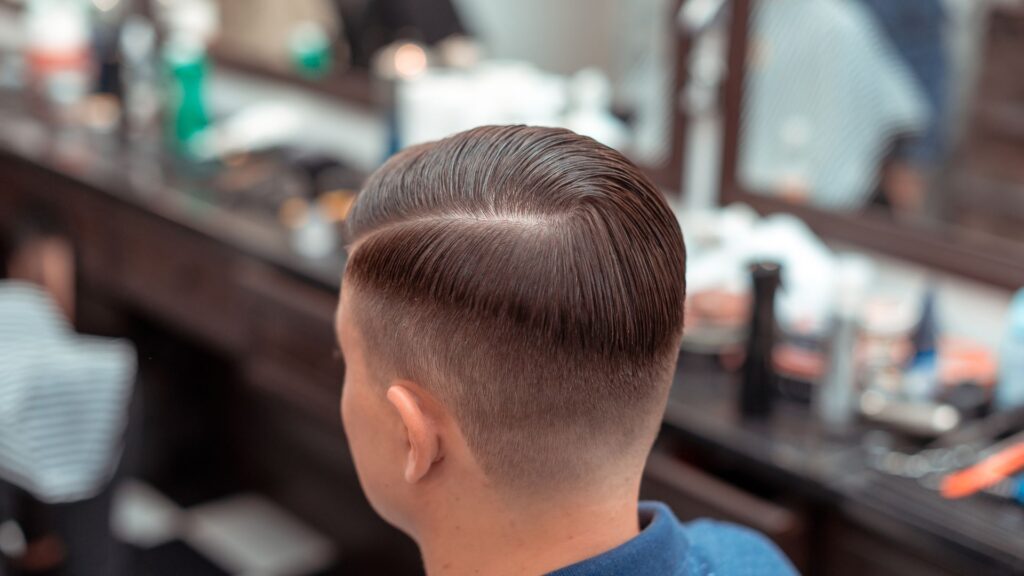
Fades, Tapers, and Undercuts: The Barbershop Standards
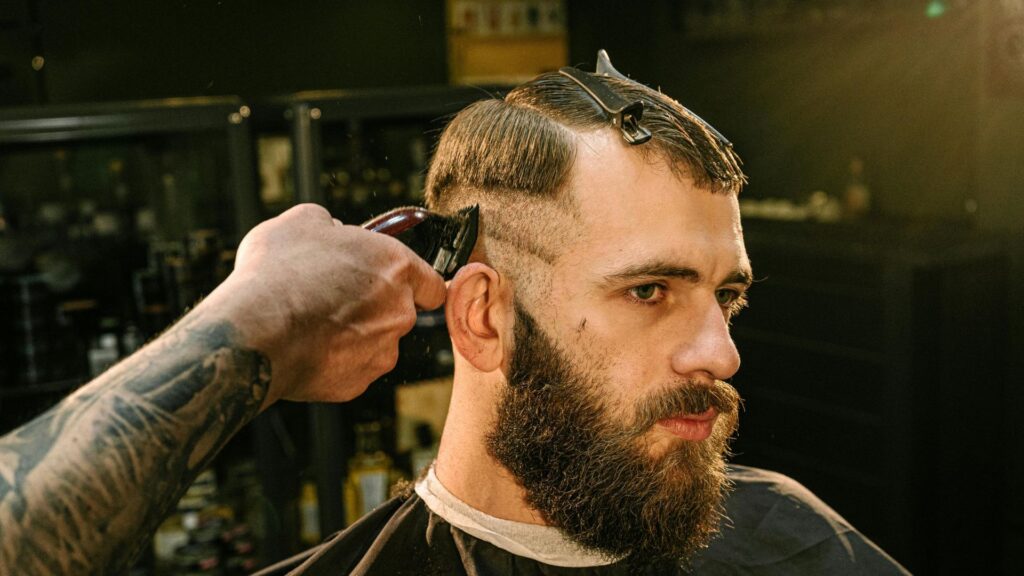
Fades and tapers are the bread and butter of any barbershop. A fade gradually shortens hair from longer at the top to skin at the bottom, while a taper keeps a bit more length throughout without going down to skin. An undercut takes the sides and back drastically short while leaving significant length on top for contrast. These three cuts make up a huge share of what walks through a barbershop door on any given day.
The Buzz Cut: Simplicity as a Statement
Uniform length across the entire head, usually done with clippers on a single guard. It’s the lowest-maintenance style available and works surprisingly well on strong bone structure. It also happens to be the fastest recovery option for thinning hairlines.
Short Textured Cuts: When an Inch Does All the Work
Textured crops use scissor-over-comb or point-cutting techniques to add movement to short hair. Even an inch or two of length, cut correctly, can create a style with real personality instead of a flat, uniform look.
Short Style Comparison Table: Maintenance, Versatility, and Personality
| Style | Maintenance | Versatility | Personality Signal |
| Crew Cut | Low | High | Clean, dependable |
| Fade | Medium | High | Sharp, deliberate |
| Taper | Low-Medium | High | Polished, understated |
| Undercut | Medium | Medium | Bold, contrast-driven |
| Buzz Cut | Very Low | Medium | No-nonsense, direct |
| Textured Crop | Medium | Medium-High | Stylish, detail-oriented |
Long Haircuts — The Complete Breakdown by Style
The Grown-Out Look: When Letting It Go Is the Move
This is hair left to grow with minimal shaping, usually falling naturally around the ears and neck. It reads as relaxed and unbothered, though it needs occasional trims to avoid looking neglected rather than intentional.
Man Buns, Top Knots, and Tied-Back Styles
Once dismissed as a passing trend, the man bun and top knot have held their ground because they solve a real problem: what to do with long hair during workouts, hot weather, or a workday. Tied-back styles also work as a bridge look during the awkward growing-out phase.
Long Textured Cuts and Surfer Styles
Layered, textured long cuts, often associated with surf culture, rely on movement and volume rather than sleekness. They pair especially well with wavy or curly hair types and thrive with minimal product for a lived-in look.
The Shoulder-Length Cut: The Style That Lives Between Two Worlds
Shoulder-length hair sits in a sweet spot: long enough to tie back, short enough to avoid the heaviest maintenance of truly long hair. It’s a popular landing point for men transitioning from short to long who want a destination rather than an endless grow-out.
Long Style Comparison Table: Maintenance, Versatility, and Personality
| Style | Maintenance | Versatility | Personality Signal |
| Grown-Out | Low-Medium | Medium | Relaxed, unbothered |
| Man Bun/Top Knot | Medium | High | Practical, modern |
| Long Textured/Surfer | Medium | Medium | Free-spirited, casual |
| Shoulder-Length | Medium | High | Balanced, versatile |
Lifestyle, Career, and Environment — The Real-World Filter
The best-looking haircut in the world means nothing if it fights against your daily life.
Office, Trades, and Professional Settings: What Works Where
Corporate and client-facing roles still lean toward shorter, structured cuts, though this has loosened considerably in creative and tech industries. Trades and manual labor jobs often favor short hair for safety around machinery and tools, regardless of company dress code.
Active Lifestyles, Sports, and Outdoor Work: Practicality Over Preference
Men who train, play contact sports, or work outdoors in heat often find short hair simply more comfortable, cooler, and easier to manage without constant washing. Long hair in these settings usually needs to be tied back at minimum.
Creative Fields, Music, and the Arts: Where Long Hair Thrives
Creative industries, music, design, and the arts have long embraced longer hair as part of personal branding. In these spaces, long hair rarely raises an eyebrow and often reinforces a creative identity.
Lifestyle vs. Recommended Hair Length Decision Table
| Lifestyle/Field | Recommended Length | Key Reason |
| Corporate office | Short to medium | Professional expectation |
| Trades/manual labor | Short | Safety around equipment |
| Athletics/outdoor work | Short | Comfort and low maintenance |
| Creative fields | Long or flexible | Cultural acceptance, personal branding |
| Remote/flexible work | Any | No external constraints |
Maintenance, Products, and Time — The Honest Cost of Each Choice
How Much Time Short Hair Actually Takes
Short hair takes less daily styling time, often just a few minutes with product, but it demands more frequent trips to the barber to maintain sharp lines, especially with fades.
How Much Time Long Hair Actually Takes
Long hair takes longer day-to-day: washing, detangling, and styling can eat up 15 to 30 minutes depending on texture. However, it needs far less frequent barbershop visits.
Products for Short Hair: What You Need and What You Don’t
Short hair generally needs a matte clay or pomade for texture, a light styling cream for definition, and minimal else. Heavy conditioners and detanglers are largely unnecessary.
Products for Long Hair: Building a Real Routine
Long hair benefits from a proper shampoo and conditioner routine, leave-in conditioner or hair oil to manage frizz, and a wide-tooth comb for detangling. Heat protectant is essential if you’re using a dryer or straightener.
Product Type Comparison Table: Short vs. Long
| Product | Short Hair | Long Hair |
| Pomade/Clay | Essential | Rarely used |
| Leave-in Conditioner | Not needed | Essential |
| Hair Oil | Optional | Highly recommended |
| Wide-Tooth Comb | Not needed | Essential |
| Heat Protectant | Rarely used | Recommended |
The Money Side — Pricing, Frequency, and Value
How Often You Need a Cut: Short vs. Long Hair Frequency
Short, structured styles like fades typically need a trim every two to three weeks to keep their shape. Long hair can go two to three months between trims since a little growth doesn’t ruin the look.
What Barbershop Visits Actually Cost Over a Year
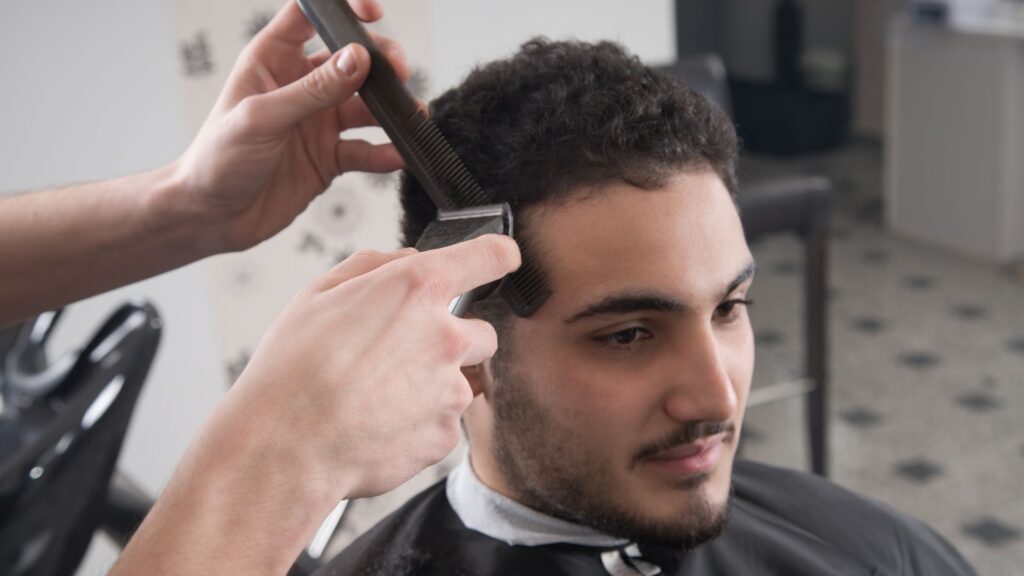
Assuming an average barbershop cut costs between $30 and $50, a short-haired man visiting every three weeks (roughly 17 visits a year) could spend $510 to $850 annually. A long-haired man visiting every ten weeks (about five visits a year) might spend $150 to $250 annually on cuts alone.
Where DIY Fits In — and Where It Doesn’t
DIY works fine for basic buzz cuts with the right clippers at home. It does not work for fades, tapers, or anything requiring blending, which almost always needs a trained barber’s hand and a steady set of clippers to get right.
Annual Cost Comparison Table: Short vs. Long
| Factor | Short Hair | Long Hair |
| Visits per year | ~15-18 | ~4-6 |
| Estimated annual cost | $510-$850 | $150-$250 |
| DIY feasibility | Low for fades, high for buzz cuts | Moderate (trims only) |
| Product spend | Low-Medium | Medium-High |
Growing It Out vs. Cutting It Off — Making the Transition
The Awkward Phase: How to Survive Growing Out Short Hair
Every man growing out short hair hits a stretch, usually between month two and month four, where it’s too long to look sharp short and too short to style long. Regular trims to maintain shape, hats for bad days, and patience get you through it.
The Emotional Side of Cutting Long Hair Short
Cutting off long hair can feel bigger than a haircut, especially if it’s been part of your identity for years. It’s common, and completely normal, to feel a genuine sense of loss in that barber’s chair, even when the cut looks great.
Step-by-Step Transition Plans for Both Directions
Growing out short hair: Trim every 4-6 weeks to maintain shape, switch to a lightweight styling product as length increases, and consider a tied-back style around month three.
Cutting long hair short: Start with a shoulder-length trim to gauge comfort, wait two to three weeks, then commit to the shorter target length once you’ve adjusted.
What to Tell Your Barber When You’re Making the Switch
Be specific. Bring reference photos, mention your face shape concerns, and say plainly whether you want a one-time cut or a plan across multiple visits. A good barber would rather ask three extra questions than guess.
Age, Confidence, and the Haircut That Grows With You
Hair in Your 20s: Experimenting Without Overthinking
Your 20s are for testing extremes, since hair grows back and mistakes cost you six weeks at most. Bold fades, longer grown-out styles, even a razor shave to start fresh, all fair game.
Hair in Your 30s and 40s: Owning the Refined Look
By your 30s and 40s, most men settle into styles that balance professionalism with personal identity. Textured crops, clean tapers, and well-maintained medium lengths dominate this stage.
Hair After 50: What Works and Why It Works
Hair thins and grays for most men after 50, and shorter styles tend to work better with these natural changes since they minimize the appearance of thinning and let gray tones read as distinguished rather than uneven.
Age vs. Style Recommendations Table
| Age Range | Recommended Approach | Why |
| 18-29 | Experiment freely | Low-risk, fast regrowth |
| 30-44 | Refined, professional styles | Career and image balance |
| 45-59 | Shorter, structured cuts | Complements thinning/graying |
| 60+ | Very short, easy maintenance | Practicality and confidence |
Common Mistakes Men Make When Choosing a Hair Length
Copying a Look That Doesn’t Suit Your Face or Texture
Bringing in a photo of a celebrity with a completely different face shape and hair type almost never translates the way you hope.
Ignoring Lifestyle When Choosing a Style
A style that looks great in the mirror but requires 20 minutes of daily upkeep will not survive a demanding job or an early alarm clock.
Holding On Too Long (to a Style That’s Past Its Prime)
Many men keep the same haircut for a decade past its usefulness simply out of habit. Hairlines change, face shapes shift subtly with age, and styles need to shift with them.
Misjudging Maintenance Commitment
Underestimating how often a fade needs touching up, or how much daily effort long hair demands, leads to frustration and a style that never looks quite finished.
The Expert Decision Framework — How to Choose the Right Length for You
The Five Questions Every Man Should Ask Before Choosing a Hair Length
- What does my face shape actually call for?
- What is my hair texture and density working with, not against?
- What does my job or daily environment realistically allow?
- How much time am I willing to spend on maintenance?
- What message do I want my hair to send before I even speak?
Short Hair Checklist
- Limited daily styling time
- Job or environment favoring short hair
- Thinning or receding hairline
- Preference for frequent barber visits over long grow-out periods
Long Hair Checklist
- Willingness to build a proper hair care routine
- Wavy or curly texture that benefits from length
- Career or lifestyle with flexibility
- Patience for the awkward growing-out phase
Decision Matrix Table: Finding Your Ideal Length
| If You Value… | Choose |
| Low daily effort | Short |
| Fewer barbershop visits | Long |
| Sharp, structured lines | Short |
| Natural texture and movement | Long |
| Conservative career image | Short |
| Creative self-expression | Long or flexible |
Frequently Asked Questions
Does hair length actually affect how people perceive you professionally?
Yes, in many industries. Studies on workplace perception have found that shorter, more structured hairstyles are often associated with professionalism and conservatism in corporate settings, though this varies significantly by industry and has loosened in creative and tech fields.
What is the best hair length for thinning or receding hair?
Short hair, generally cropped close, minimizes the contrast between thinning areas and fuller ones, making hair loss far less noticeable than longer styles that expose gaps more clearly.
How long does it take to grow short hair to a medium length?
Hair grows roughly half an inch per month on average, so reaching medium length from short usually takes four to six months, depending on your starting point and hair type.
Can I pull off long hair if I work in a conservative office?
It depends on the specific workplace culture, but a well-maintained shoulder-length or tied-back style often reads as neat and professional even in traditional settings, more so than a messy grown-out look.
What short haircut is easiest to maintain at home?
The buzz cut is the easiest short style to maintain at home with a basic clipper set, since it requires no blending or fading skills to keep looking sharp.
How do I know if a long hairstyle suits my face shape?
Oval and heart-shaped faces generally handle long hair best, while rectangular faces should be cautious about excessive length, since it can exaggerate an already elongated face.
Is there an age where long hair stops looking good on men?
There’s no hard cutoff, but many men naturally shift toward shorter styles after 50 as hair thins and grays, since shorter cuts tend to complement these changes better than long hair.
How often should I visit the barbershop for a short haircut vs. a long one?
Short, structured styles like fades typically need attention every two to three weeks, while long hair can usually go two to three months between trims.
What products do I actually need for short vs. long hair?
Short hair mainly needs a pomade or clay for texture, while long hair benefits from a proper shampoo, conditioner, leave-in treatment, and a wide-tooth comb for detangling.
Can curly or coarse hair work with either length?
Coarse hair adapts well to almost any length, but curly hair tends to shine most at medium to long lengths, where the curl pattern has room to show its natural shape and volume.
Conclusion — Your Haircut, Your Call
Twenty years of clippers, combs, and conversation have taught this much: the right haircut isn’t the one trending on your phone. It’s the one that fits your face, your hair, your job, and the life you’re actually living, not the one you’re pretending to live for the mirror.Know your face shape. Be honest about your hair type. Think hard about your weekly schedule before you commit to a high-maintenance fade or a full grow-out. Then sit down, talk it through with your barber, and trust the guidance of someone who does this every single day.Whatever you choose, short or long, buzzed or grown out, the chair is where it starts. Come in, sit down, and let’s figure out what actually fits you, not just what’s on the wall behind the register.