
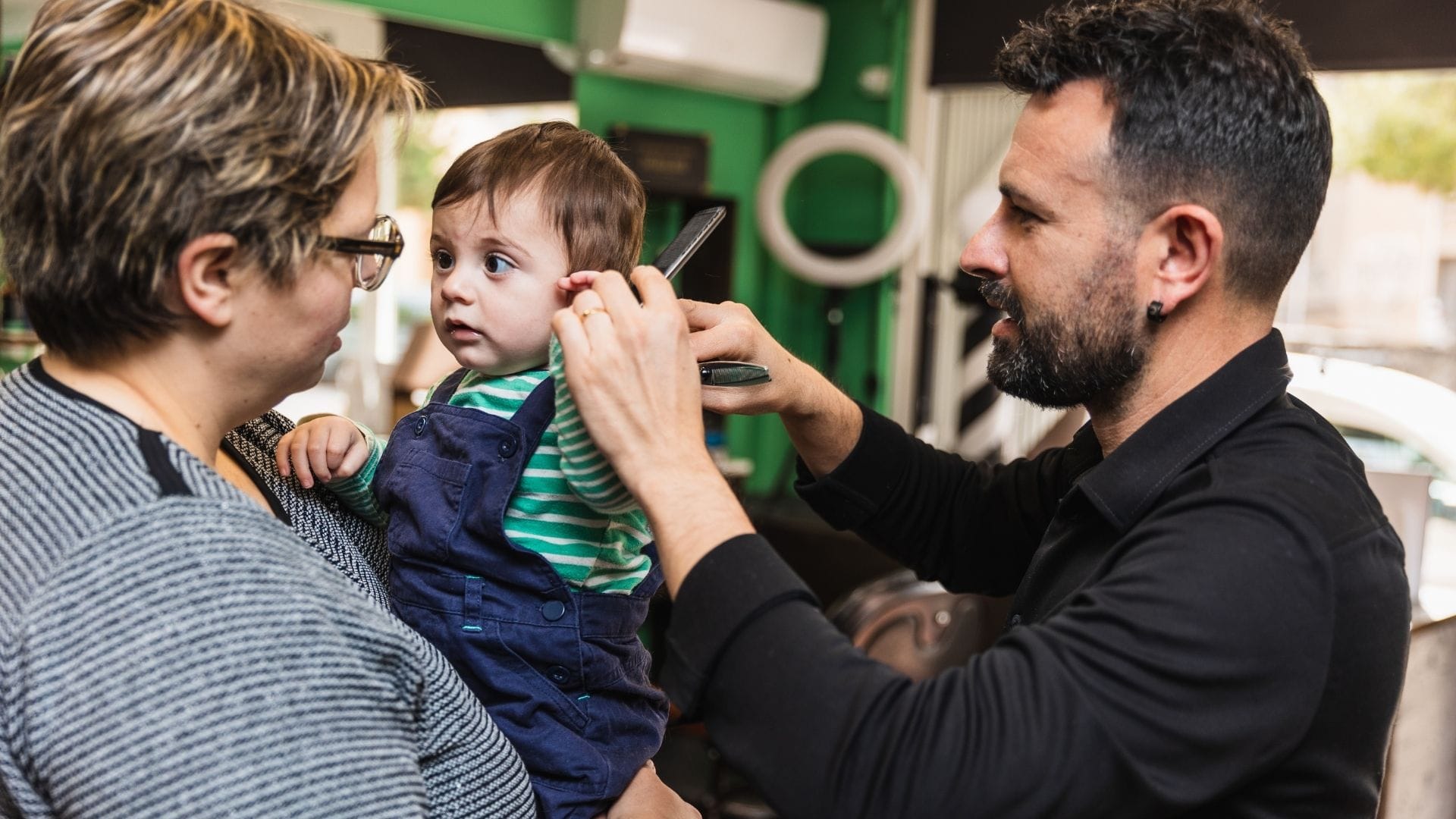
Twenty years behind the chair has taught me one thing above all else: a child’s first haircut is never really about the hair. It’s about trust. The buzz of the clippers, the smell of talc in the air, the cold steel of the scissors catching the light. To an adult, that’s just Tuesday. To a three-year-old, it might as well be a trip to another planet. Parents who walk in prepared, calm, and informed set their kid up for a lifetime of easy trips to the chair. Parents who wing it often end up with a screaming toddler, a rattled barber, and a haircut that looks like it was done in the dark. This guide walks you through everything I’ve learned from thousands of first cuts, so you can make this milestone a good memory instead of a battle story.
Key Takeaways
- The best window for a first professional haircut is typically between 12 and 24 months, though every child’s readiness varies more than their birth certificate suggests.
- Sensory sensitivity, not misbehavior, is the root cause of most first-haircut meltdowns, and preparing for it in advance prevents most of the drama.
- Choosing a genuinely child-friendly barber matters more than choosing a fancy salon; ask about experience with kids before you ever book.
- Bringing the right comfort items, communicating clearly with your barber, and staying calm yourself will do more for the outcome than anything the barber does with the clippers.
- A positive first experience builds a foundation for decades of stress-free grooming, so it’s worth the extra planning.
Why the First Barbershop Visit Is a Bigger Deal Than You Think
The emotional weight of a child’s first haircut
Parents underestimate how much they’ve built up this moment in their own heads long before the kid ever sits in the chair. That first lock of hair often gets saved in a baby book. Grandparents ask for photos. There’s real emotional weight riding on ten minutes in a barber chair, and kids pick up on that energy faster than most parents realize. I’ve watched dads get more nervous than their toddlers.
What parents underestimate about the barbershop environment
A barbershop is a sensory minefield for a small child who has never experienced it. The buzz of clippers vibrating against the scalp, the hiss of an aerosol can, the snip of scissors near the ears, strangers touching their head and face. None of that is normal in a toddler’s world. Add in fluorescent lighting, a cape that restricts movement, and a chair that spins, and you’ve got a lot for a young nervous system to process at once.
How early experiences shape a child’s relationship with grooming
A rough first visit doesn’t just ruin one appointment. It can create a lasting association between haircuts and fear that follows a kid for years. I’ve had grown men in my chair, thirty years old, still flinching at clippers near their ears because their first haircut went badly. On the flip side, a smooth first experience builds confidence that carries forward into every future visit, and eventually into other grooming milestones like their first real shave.
Understanding Child Development and Sensory Sensitivity at the Barbershop
The science of sensory processing in young children
Young children process sensory input differently than adults. According to the American Academy of Pediatrics, sensory systems continue developing well into early childhood, and toddlers in particular can be overwhelmed by combined stimuli that adults barely register. A haircut hits sight, sound, touch, and smell all at once, which is exactly the kind of sensory overload that can trigger a meltdown in a child whose nervous system is still learning to filter input.
Why some kids struggle more than others
Temperament plays a huge role here. Some kids are naturally more sensory-avoidant, reacting strongly to textures, sounds, or unfamiliar touch. Others are sensory-seeking and barely notice the clippers. Birth order matters too in my experience. Firstborns tend to be more cautious in the chair, while younger siblings who’ve watched an older brother get a haircut a dozen times usually climb right up without a fuss.
Age-by-age breakdown of what to expect
| Age Range | Typical Behavior | What to Expect |
| 6-12 months | Limited hair, minimal awareness | Quick trims, often calm since they don’t yet understand what’s happening |
| 12-24 months | Peak sensory sensitivity | Highest likelihood of crying or squirming, short attention span |
| 2-3 years | Growing independence, testing boundaries | May refuse to sit still, benefits heavily from distraction |
| 3-4 years | Better verbal skills, can be reasoned with | Responds well to explanation and choice-giving |
| 4-6 years | Generally cooperative | Can sit for a full cut, may have style preferences |
Sensory-friendly barbershop environments
More shops are recognizing this and adjusting their space accordingly. Dimmer lighting, quieter clipper models, and designated slower time slots for children are becoming more common in family-oriented shops. If your child is particularly sensitive, ask specifically whether the shop offers any of these accommodations before booking.
Choosing the Right Barbershop for a Child’s First Visit
What separates a child-friendly barbershop from the rest
Not every skilled barber is skilled with kids, and that’s an important distinction. A child-friendly shop has staff who move slower, narrate what they’re doing, and don’t take a squirming kid personally. Look for shops that mention kids’ cuts specifically in their service menu rather than treating it as an afterthought.
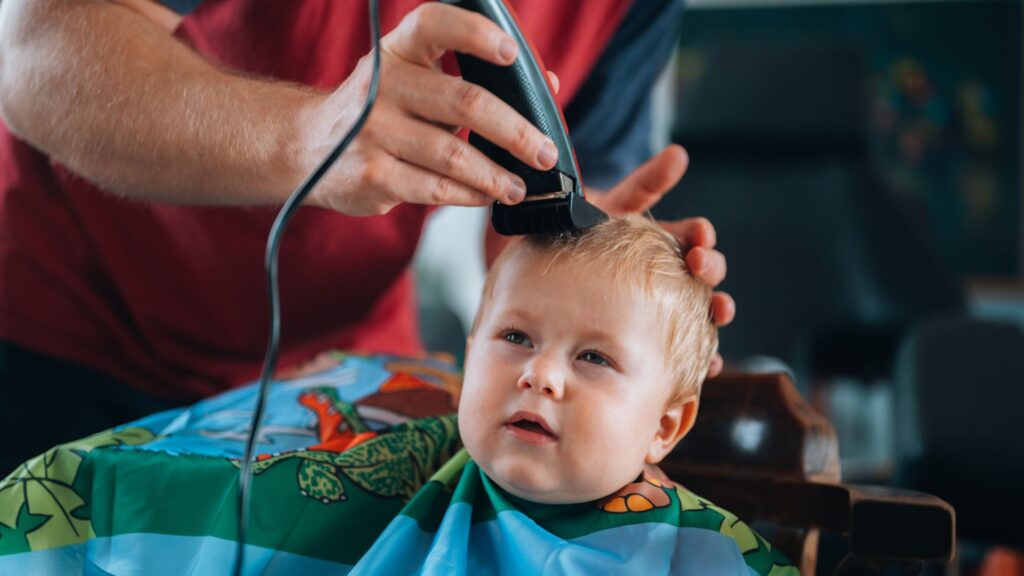
Questions to ask before booking
- Does the barber have specific experience cutting children’s hair?
- Is there a booster seat or car-shaped chair available?
- Can the appointment be scheduled during a quieter time of day?
- Does the shop allow extra time for a first cut without rushing?
- Is there a TV, tablet holder, or other distraction built into the setup?
In-shop atmosphere and what to look for
Walk in before you book if you can. A shop with a warm, unhurried feel, leather chairs, the low hum of conversation, and a barber who greets kids at eye level tells you a lot. A shop that feels rushed or sterile is a red flag for a first-timer.
Chain vs. independent barbershop for kids
| Factor | Chain Salon | Independent Barbershop |
| Consistency | Standardized training across locations | Varies by individual barber’s experience |
| Speed | Often faster turnaround, less personalized time | Frequently more time and patience per client |
| Pricing | Often lower, fixed-rate menus | Ranges widely, sometimes premium pricing |
| Relationship building | Harder to see the same barber every visit | Easier to build a long-term relationship with one barber near you |
| Atmosphere | Bright, retail-style environment | Traditional, sensory-rich barbershop feel |
For a first cut, I generally recommend an independent shop where you can request the same barber every time. Building that relationship pays off for years.
Timing Is Everything — When to Book and What to Avoid
The best age to bring a child for their first professional cut
Most kids are ready somewhere between 12 and 24 months, once there’s enough hair to justify a real cut and enough head control to sit reasonably still. There’s no universal rule here. Some parents wait until 3 years old and have zero issues. Readiness matters more than a specific number on the calendar.
Time of day and day of the week strategies
Book first thing in the morning when your child is well-rested, or right after a nap. Avoid the end of the day when both of you are running on fumes. Weekday mornings tend to be quieter in most shops, which means less noise, less waiting, and a more relaxed barber who isn’t juggling five clients at once.
Scheduling around nap times, meals, and moods
A hungry, tired, or overstimulated toddler is a recipe for disaster in the chair. Feed your child beforehand, avoid scheduling around a missed nap, and skip the appointment entirely if your child is already having an off day. There will always be another slot on the books.
How to Mentally Prepare Your Child Before the Appointment
Role-playing the barbershop experience at home
A few days before, sit your child in a kitchen chair, drape a towel over their shoulders, and pretend to “cut” their hair with your fingers while making a soft buzzing sound. This kind of rehearsal takes the mystery out of the experience and gives them a preview of what’s coming.
Books, shows, and stories that normalize haircuts
Children’s books about first haircuts are widely available at libraries and bookstores, and reading one together builds familiarity before the real thing. Watching an older sibling, cousin, or friend get a haircut also works wonders. Kids learn a huge amount just by watching.
Talking to your child about what will happen step by step
Keep the explanation simple and honest. Tell them they’ll sit in a big chair, wear a cape like a superhero cape, hear a buzzing sound, and that it doesn’t hurt. Avoid over-explaining or dwelling on it for days in advance, which can actually build anxiety rather than easing it.
Managing your own anxiety so it doesn’t transfer
Kids are remarkably good at reading their parents. If you’re anxious about how the appointment will go, your child will sense it. Walk in acting like this is completely normal and no big deal, because to you, it should be.
What to Bring to the Barbershop on the Big Day
Comfort items and distractions that actually work
Bring a favorite stuffed animal, blanket, or small toy that provides a sense of security. Familiar objects anchor a child in an unfamiliar environment far more effectively than anything the shop can offer.
Snacks, tablets, and toys — the parent’s toolkit
| Item | Why It Works | Notes |
| Tablet with headphones | Sustained visual and audio distraction | Confirm the shop allows screens |
| Small snack (crackers, puffs) | Keeps hands and mouth occupied | Avoid anything messy or crumbly |
| Favorite small toy | Provides comfort and familiarity | Keep it lightweight, easy to hold |
| Lollipop or sucker | Distraction plus keeps head still | Ask barber first, some prefer kids not moving jaw |
| Bubbles blown by parent | Visual distraction that encourages looking up | Great for keeping chin lifted |
Reference photos and style inspiration for the barber
Bring one or two clear photos if you have a specific style in mind. It saves time, prevents miscommunication, and gives your barber a clear target instead of guessing.
Working With the Barber — Communication Is Everything
How to brief the barber before the cut starts
Before the cape goes on, tell your barber it’s a first haircut, mention any sensitivities your child has, and share the style you want. A good barber will adjust their pace and approach based on that information.
What a great child-friendly barber does differently
The best barbers with kids talk directly to the child, not just the parent. They explain what they’re doing in simple terms, pause when needed, and never force a squirming child to stay still through sheer pressure. They read the room and adjust on the fly.
When to step in and when to step back as a parent
Let the barber lead unless your child is genuinely distressed, not just mildly fussy. Constant parental interruption can actually make a child more anxious by signaling that something is wrong. Trust the process unless you see real signs of distress.
During the Cut — Keeping Your Child Calm in the Chair
Distraction techniques that work in real time
Singing a familiar song, playing a favorite video, or simply maintaining steady eye contact and a calm voice all help in the moment. The goal is to keep attention away from the sensation of hair falling and the sound of the clippers.
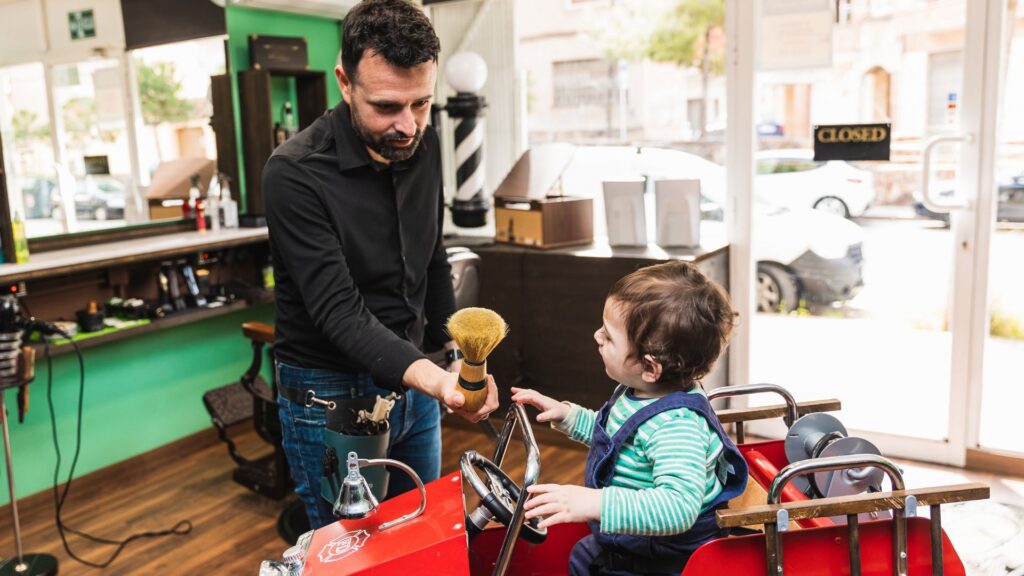
Body language, voice, and positioning tips for parents
Stay in your child’s line of sight, keep your voice low and steady, and avoid hovering anxiously over the barber’s shoulder. Sit or stand where your child can see you without needing to turn their head.
Handling tears, tantrums, and total meltdowns
A little crying is normal and usually passes within the first minute or two once the child realizes nothing hurts. If it escalates into a full meltdown, a short pause, a sip of water, or a brief break can reset the moment without abandoning the appointment entirely.
What to do if the child refuses mid-cut
Sometimes the best move is to stop, let the child calm down fully outside the chair, and finish the cut a few minutes later or even reschedule. Forcing it rarely ends well and can damage trust for future visits.
Hair Types, Textures, and What Parents Need to Know
A breakdown of child hair types and how they differ
| Hair Type | Characteristics | Cutting Considerations |
| Straight | Fine, lies flat, grows evenly | Easy to cut dry or wet, forgiving of small mistakes |
| Wavy | Slight bend, varies in thickness | Cut slightly longer to account for shrinkage |
| Curly | Defined curl pattern, prone to frizz | Best cut dry to see true curl shape |
| Coily | Tight curl pattern, dense | Requires specific technique to avoid uneven shape when it dries |
Curly, coily, straight, and wavy — specific considerations
Curly and coily hair designs often looks longer when wet and shorter once it dries and springs up, which surprises a lot of first-time parents. A skilled barber accounts for this shrinkage rather than cutting purely based on wet length.
Common first-haircut styles by hair type
For straight and wavy hair, a simple trim or light taper works well. For curly and coily textures, many barbers recommend a soft shape-up that preserves length and curl definition rather than an aggressive taper that can look uneven as it grows.
Products safe for children’s hair
Stick to gentle, sulfate-free products formulated for children. Avoid strong-hold gels or pomades on very young kids, since their scalp is more sensitive and prone to irritation than an adult’s.
Pricing, Tipping, and What a First Haircut Actually Costs
Average pricing for children’s cuts across the country
Children’s haircuts typically range from about $15 to $35 at most independent barbershops, with prices climbing higher in major metro areas and specialty kids’ salons. According to industry reporting from IBISWorld on the barbershop industry, service pricing varies significantly by region and shop positioning.
Factors that affect the price
- Location and local cost of living
- Barber experience level and shop reputation
- Length of the appointment for a first cut
- Whether the shop specializes in children’s services
Tipping etiquette when a barber works with kids
A tip of 15 to 20 percent is standard, and honestly, first haircuts often deserve a little extra given the patience involved. If your barber handled a tough appointment with grace, that’s worth rewarding.
Is a kids’ specialty salon worth the extra cost?
| Factor | Kids’ Specialty Salon | Traditional Barbershop |
| Atmosphere | Themed chairs, cartoons, toys | Traditional, classic barbershop feel |
| Price | Generally higher | Generally more affordable |
| Barber skill for adult styles | Limited | Full range, useful as child grows older |
| Long-term relationship | Harder to stick with one barber | Easier to build lasting rapport |
My honest take: specialty salons are great for very young, highly sensitive kids. But if your child adjusts reasonably well, a traditional shop builds a relationship that serves them for the next fifteen years, not just the next haircut.
Common Mistakes Parents Make and How to Avoid Them
Over-explaining and creating anxiety
Talking too much about the haircut Choices in the days leading up to it can build dread rather than prevent it. A brief, matter-of-fact explanation works better than a long buildup.
Choosing the wrong time or environment
Booking during nap time, right before a meal, or during the busiest hour of the shop’s day sets everyone up for frustration before the cape even goes on.
Ignoring the child’s input on style
Even a three-year-old can point to a picture and say yes or no. Giving a small amount of control over the outcome reduces resistance dramatically.
Making it a punishment or a stressful event
Never use a haircut as a threat or a consequence for bad behavior. That association sticks, and it turns a routine appointment into something a child dreads for years.
After the Cut — Reinforcing a Positive Experience
Celebrating the milestone the right way
A small reward, a special photo, or even just enthusiastic praise reinforces that the whole experience was a positive one worth repeating.
How to talk about the experience afterward
Ask your child what they liked, keep the conversation upbeat, and avoid dwelling on any tears that happened. Frame the whole thing as a success, because in most cases, it was.
Building a routine so the next visit is easier
Book the next appointment with the same barber near you before you even leave the shop if possible. Familiarity compounds over time, and by the third or fourth visit, most kids walk in without a second thought.
Special Situations — Neurodivergent Kids, Anxious Children, and Sensory Challenges
Autism, ADHD, and sensory processing disorder at the barbershop
Children with autism, ADHD, or sensory processing disorder often need significantly more preparation and a slower-paced appointment. According to Autism Speaks, sensory sensitivities are common among autistic children, and unfamiliar textures, sounds, and touch can trigger stronger reactions than in neurotypical peers.
How to find and work with a sensory-aware barber
Ask directly whether a shop has experience with neurodivergent clients. Many barbers who work regularly with special needs kids are happy to schedule quieter, slower appointments and welcome the conversation upfront.
Adaptive techniques barbers use for special needs clients
- Turning off clippers between sections to reduce continuous noise
- Using battery-powered, quieter clipper models
- Allowing the child to hold the cape or a comfort object throughout
- Cutting hair in short bursts with frequent breaks
At-home prep strategies for high-sensitivity children
Practice with a soft brush, a turned-off clipper against the skin, and even short exposure to the sound of clippers played from a phone can all help desensitize a child gradually before the real appointment.
The Cultural and Historical Significance of a Child’s First Haircut
First haircut traditions around the world
Many cultures treat a child’s first haircut as a genuine rite of passage. In Hindu tradition, the mundan ceremony marks a child’s first haircut with religious significance. In many Latin American communities, a child’s first haircut is celebrated with family gatherings similar to a small party.
The barbershop as a rite of passage across cultures
Beyond formal ceremonies, the barbershop itself has long served as a cultural institution, particularly in Black communities in the United States, where the shop functions as a gathering place, a mentorship space, and a rite of passage passed from one generation to the next.
How fathers passing down grooming traditions shapes identity
I’ve seen it a thousand times. A dad brings in his son for that first cut, tells the same barber stories his own father told him, and a tradition quietly continues. That connection between generations is part of what makes this industry special, and it’s not something you get from a bottle of clippers bought online.
Expert Tips, Industry Insights, and Trends Shaping Kids’ Haircut Experiences
What top barbers say about working with children
Talk to any veteran barber and they’ll tell you the same thing: patience beats speed every time with a first-time client. Rushing a nervous kid almost always backfires and extends the appointment rather than shortening it.
Industry trends in child-friendly grooming spaces
More shops are investing in dedicated kids’ stations, quieter equipment, and staff training specifically focused on working with young children, reflecting growing demand from parents who want a smoother experience than they remember from their own childhood.
Technology and innovation in the modern barbershop
Quieter cordless clippers, app-based booking that lets parents choose specific low-traffic time slots, and online reviews focused specifically on “great with kids” feedback have all made it easier for parents to find the right barber near their home before ever setting foot in the shop.
Your Complete First Haircut Action Plan and Checklist
The week-before checklist
- Book an appointment during a quiet time of day
- Read a haircut-themed book with your child
- Practice a pretend haircut at home
- Choose a reference photo if you have a style in mind
The morning-of checklist
- Feed your child before the appointment
- Make sure they’re well-rested, not overtired
- Pack comfort items, snacks, and a distraction toy
- Dress your child in something easy to change if hair gets itchy
The in-shop checklist
- Brief the barber on any sensitivities before starting
- Stay within your child’s line of sight
- Let the barber lead unless real distress appears
- Keep your own energy calm and upbeat
The post-visit checklist
- Praise your child for sitting through it
- Take a photo to mark the milestone
- Book the next appointment with the same barber
- Talk about the experience positively afterward
Frequently Asked Questions About Children’s First Barbershop Visits
What age should a child get their first professional haircut?
Most children are ready between 12 and 24 months, though readiness depends more on temperament and hair length than on a strict age cutoff.
How do I stop my toddler from crying at the barbershop?
Bring familiar comfort items, choose a quiet appointment time, and use steady distraction like a video or song. Some crying is normal and usually settles within the first minute.
Should I cut my child’s hair at home first?
A light at-home trim can help a child get used to the sensation of scissors near their head, but it’s not necessary. Many kids do fine going straight to a professional barber for the first real cut.
How long does a child’s first haircut usually take?
Expect anywhere from 10 to 25 minutes, longer than a typical adult cut, since a good barber will move slower and pause as needed for a first-time client.
What should I tell the barber for my child’s first cut?
Let them know it’s a first haircut, mention any sensitivities, and share a reference photo if you have a specific style in mind.
Are clippers safe to use on a toddler’s head?
Yes, clippers are safe and often gentler than scissors since there’s no risk of a sudden movement causing a nick. Many barbers use clippers with a guard specifically for this reason.
How do I find a good barber near me who is great with kids?
Check reviews specifically mentioning children, call ahead to ask about experience with first-time clients, and consider visiting the shop in person before booking to get a feel for the atmosphere.
Is it normal for my child to refuse to sit still?
Completely normal. Most barbers experienced with children have techniques to manage a squirming client, including short breaks and distraction methods that keep the appointment moving.
What if my child has sensory sensitivities or is neurodivergent?
Look for a barber with specific experience working with neurodivergent clients, request a slower-paced appointment, and consider at-home desensitization practice with clipper sounds beforehand.
How much should I tip for a first haircut?
A tip of 15 to 20 percent is standard, and many parents tip a bit extra given the patience a first appointment often requires.
Conclusion
Your child’s first haircut is more than a simple trim—it’s their first introduction to a routine that will become part of growing up. With the right timing, a child-friendly barber, a little preparation, and plenty of patience, you can turn an unfamiliar experience into a positive memory.
Remember, the goal isn’t a perfect haircut. The goal is building trust. Stay calm, let your child adjust at their own pace, communicate with your barber, and celebrate the small victory when it’s over.
A positive first experience can make every haircut that follows easier. Choose a barber your child can grow comfortable with, keep the routine familiar, and let each visit build on the last.