
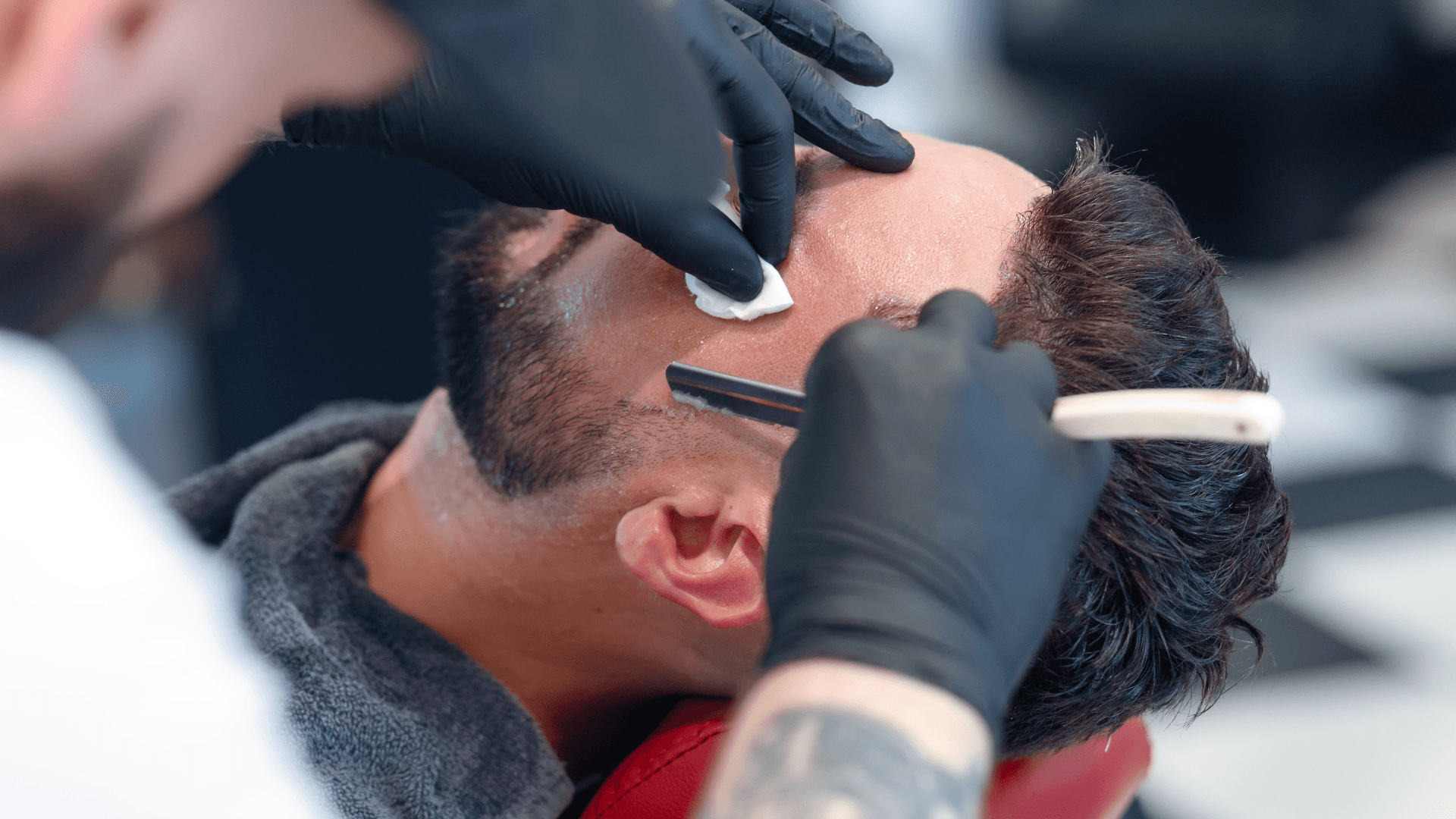
A straight razor shave is the closest thing to a reset button a man has. Cold steel, hot towels, and a barber who knows exactly what he’s doing can turn fifteen minutes into the calmest part of your week. This guide walks through everything from the history of the blade to the science of your skin, the tools you’ll need, the mistakes to avoid, and how to decide whether you should learn this craft at home or leave it to a professional. Whether you’re a first timer nervous about a blade near your throat or a seasoned wet shaver looking to sharpen your technique, you’ll find practical, no nonsense answers here. By the end, you’ll understand why so many men consider this ritual non negotiable.
Key Takeaways
- A straight razor shave cuts hair closer to the skin than cartridge or electric razors, producing a smoother result that can last several days longer.
- Proper prep work, including hot towels, pre-shave oil, and a well-lathered brush, matters as much as the blade itself.
- The barbershop experience offers safety, skill, and ritual that’s difficult to replicate at home, especially for beginners.
- Blade maintenance, through stropping and honing, directly affects shave comfort and skin health.
- The long-term cost of straight razor shaving is often lower than cartridge razors, despite a higher upfront investment.
The First Time Steel Meets Skin
What a straight razor shave actually feels like
The first pass of a straight razor feels nothing like a disposable cartridge dragging across dry stubble. A properly honed blade glides with almost no resistance, guided by lather rather than forced through it. Most men describe a faint scraping sound, almost like tearing paper, paired with a sensation of pressure so light it barely registers. There’s no burn, no tugging, no redness bleeding in five minutes later. That’s the signature of a straight razor shave done correctly: quiet, controlled, and precise.
Why men are rediscovering this ritual
Grooming trends move in cycles, but the return to straight razor shaving over the last decade isn’t just nostalgia. Men are pushing back against rushed five-minute routines and looking for moments that force them to slow down. A straight razor shave can’t be rushed. It demands attention, patience, and a bit of vulnerability, which is exactly why it’s become a small act of self-care for a lot of guys who otherwise never sit still.
Setting the scene: what happens in that barber chair
Picture a leather chair reclined just enough, a warm towel wrapped around the lower half of your face, the smell of talc and bay rum in the air. A barber tests the blade against his palm, strops it twice more out of habit, and starts at the sideburn. The clippers buzz somewhere behind you, another chair, another conversation. This is the scene that’s played out in barbershops for over a century, and it’s exactly why so many men still seek it out today.
A Cut Above History: The Straight Razor Through the Ages
Ancient shaving tools and the birth of the straight razor
Shaving predates written history. Archaeologists have found sharpened flint and shell tools used for hair removal dating back over 30,000 years, and bronze razors appeared in Egypt as early as 3000 BCE. The straight razor as we recognize it today, a folding blade with a fixed edge, emerged in Sheffield, England, during the 1600s, where the city’s steel industry gave rise to the razors that would eventually spread across Europe and America.
The golden era of barbershop shaving (1800s to 1950s)
The straight razor reached its cultural peak in the 19th and early 20th centuries. Barbershops became fixtures of nearly every town, and a shave was a near-daily ritual for working men who couldn’t easily shave themselves before heading to physically demanding jobs. Sheffield and Solingen, Germany, became the two dominant hubs of razor manufacturing, producing blades that are still collected and used today.
How disposable razors nearly killed the craft
King Camp Gillette patented the safety razor in 1901, and by the 1960s, disposable and cartridge razors had all but replaced the straight razor in daily use. Convenience won. Fewer men learned to strop or hone a blade, and barbershops that once specialized in straight razor shaves shifted toward haircuts alone. For nearly fifty years, the straight razor became a niche tool for hobbyists and old-school barbers rather than a mainstream grooming choice.
The modern revival and why it matters
The 2010s saw a resurgence driven by a combination of factors: interest in traditional masculinity, skepticism toward mass-produced disposable products, and a renewed appreciation for craftsmanship. Barbershops offering straight razor shaves as a specialty service have grown steadily, and men’s grooming brands have responded by reintroducing pre-shave oils, shaving soaps, and strops that had nearly disappeared from the market.
| Era | Approximate Years | Key Development |
| Ancient tools | 30,000 BCE onward | Flint, shell, and bronze blades used for hair removal |
| Sheffield origin | 1600s | Folding steel straight razor develops in England |
| Golden age | 1800s to 1950s | Barbershop shaving becomes a daily ritual |
| Safety razor disruption | 1901 to 1960s | Gillette’s safety razor replaces straight razors for daily use |
| Modern revival | 2010s to present | Renewed interest in traditional grooming and craftsmanship |
Anatomy of a Straight Razor: What You’re Actually Holding
Blade types, grinds, and steel explained
Straight razor blades come in a few common grind types, each affecting flexibility and feel:
- Hollow ground: Thin and flexible, offers a closer shave, more common in modern razors.
- Full hollow: An extreme version of hollow ground, very light and fast but less forgiving for beginners.
- Wedge: Thick and rigid, historically common in vintage razors, requires more honing skill.
- Near wedge: A middle ground between hollow and wedge grinds.
Steel type also matters. Carbon steel sharpens to a finer edge and is preferred by most experienced straight razor users, while stainless steel resists rust and requires less maintenance, making it more beginner friendly.
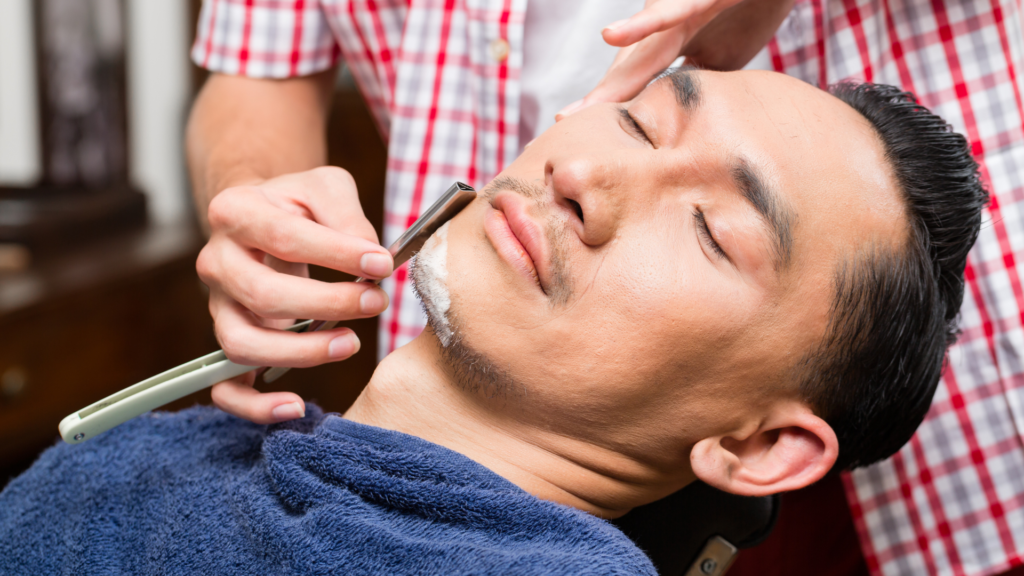
The scales, the tang, the spine: knowing your tool
Every straight razor has a few key parts worth knowing:
- Blade: The cutting edge itself.
- Spine: The thick back edge opposite the blade, which controls the shaving angle when resting flat on skin.
- Tang: The small extension at the base of the blade used for gripping while stropping.
- Scales: The handle, traditionally made from bone, wood, or synthetic material, that houses the folded blade.
- Pivot pin: The point where the blade connects to the scales, allowing it to fold.
How to read razor sizing and what it means for your shave
Straight razors are sized in eighths of an inch, referring to blade width. A 5/8 razor is common for everyday shaving, while smaller sizes like 4/8 or 5/8ths are often recommended for beginners because they’re easier to control. Larger blades, such as 6/8 or 7/8, are typically favored by experienced users or barbers who want more surface area for speed.
Straight razor vs. shavette: understanding the difference
| Feature | Straight Razor | Shavette |
| Blade | Fixed, requires honing and stropping | Replaceable disposable blade insert |
| Maintenance | High, ongoing sharpening required | Low, swap blades as needed |
| Cost over time | Lower after initial investment | Higher due to recurring blade purchases |
| Learning curve | Steeper | Slightly gentler for beginners |
| Best for | Long-term wet shaving enthusiasts | Barbers and casual users wanting convenience |
The Science Behind the Shave: What Happens to Your Skin
How a straight razor cuts hair at the follicle level
A straight razor’s single, extremely sharp beveled edge cuts hair at an angle very close to the skin’s surface, often closer than a multi-blade cartridge. Because the blade makes a single clean pass rather than tugging hair upward through multiple blades (a technique associated with cartridge razors that can cause hair to retract below the skin), a straight razor shave tends to reduce the tugging and micro-trauma associated with ingrown hairs.
The dermatology of exfoliation and why it matters
A straight razor doesn’t just cut hair, it also removes a thin layer of dead skin cells with each pass, functioning similarly to manual exfoliation. Dermatologists note that light exfoliation can improve skin texture and allow better absorption of post-shave products, though over-exfoliating through excessive passes or heavy pressure can cause irritation, especially for sensitive skin types.
Skin types and the straight razor: who benefits most
- Oily skin: Often tolerates straight razor shaving well due to natural lubrication.
- Dry skin: Benefits from extra pre-shave oil and a lighter touch to avoid excess exfoliation.
- Sensitive skin: Can benefit from the reduced irritation of a single sharp pass, provided technique is correct.
- Acne-prone skin: Requires caution, as active breakouts can be aggravated by direct blade contact.
Straight razor shaving and ingrown hairs: the real story
Ingrown hairs, medically known as pseudofolliculitis barbae, are most common in men with curly or coarse facial hair. Shaving with the grain, rather than against it, and avoiding overly close cuts can significantly reduce ingrown hair frequency. A straight razor, used correctly with a single pass along the direction of hair growth, is often recommended by barbers for men prone to this condition, though technique matters more than the tool itself.
Straight Razor vs. Modern Alternatives: An Honest Comparison
Straight razor vs. cartridge razor
| Factor | Straight Razor | Cartridge Razor |
| Closeness of shave | Very close | Close but less precise |
| Cost over 5 years | Lower after initial investment | Higher due to replacement cartridges |
| Skill required | High | Low |
| Ingrown hair risk | Lower with correct technique | Higher due to multi-blade lift and cut |
| Environmental impact | Minimal waste | Frequent plastic cartridge disposal |
Straight razor vs. safety razor
| Factor | Straight Razor | Safety Razor |
| Blade replacement | Requires honing, no replacement needed | Disposable blades replaced regularly |
| Learning curve | Steep | Moderate |
| Shave closeness | Extremely close | Close |
| Portability | Requires case and care | Compact and travel friendly |
Straight razor vs. electric shaver
| Factor | Straight Razor | Electric Shaver |
| Closeness | Very close | Less close |
| Time per shave | 15 to 25 minutes | 3 to 5 minutes |
| Skin contact | Direct blade to skin | Guarded blades, less irritation for sensitive skin |
| Ritual value | High | Low |
At-home shaving vs. barbershop straight razor service
At-home straight razor shaving offers control over your schedule and lower long-term costs, but it comes with a real learning curve and the risk of nicks while you build skill. A barbershop straight razor service, on the other hand, delivers a consistently smooth result from a trained professional, plus the hot towel and lather ritual that’s difficult to replicate solo. Many men start with barbershop shaves to learn proper technique before attempting the blade at home.
Prepping for the Perfect Shave: Before the Blade Ever Touches You
Hot towel preparation and why it works
A hot towel applied for two to three minutes before shaving softens the hair shaft and opens pores, making hair easier to cut and reducing resistance against the blade. Barbers typically apply two rounds: one to prep the skin, and a second closer to the actual shave to keep the area warm and pliable.
Pre-shave oils, creams, and balms: what to use and when
Pre-shave oil is applied directly to dry or slightly damp skin before lather, creating a thin protective layer between the blade and skin. This is especially useful for coarse or dry facial hair. Creams and balms, by contrast, are typically part of the lathering stage itself rather than a separate pre-step.
Lathering up: the art of the shaving brush and soap
A quality shaving brush, whether badger hair or synthetic, does more than spread soap. It lifts hair away from the face and works lather into the base of each follicle, improving blade glide. Traditional shaving soap, worked into a rich lather with warm water, tends to outperform canned foam because it doesn’t dry out as quickly during a multi-pass shave.
Skin stretching and angle basics for beginners
Two fundamentals separate a smooth shave from a nicked one: stretching the skin taut with the free hand, and holding the blade at roughly a 30 degree angle to the skin. Too flat an angle drags without cutting; too steep an angle risks cuts. Beginners are usually advised to practice angle control on the cheeks, the most forgiving area of the face, before attempting the jawline or neck.
The Straight Razor Shave Step by Step: How It’s Done Right
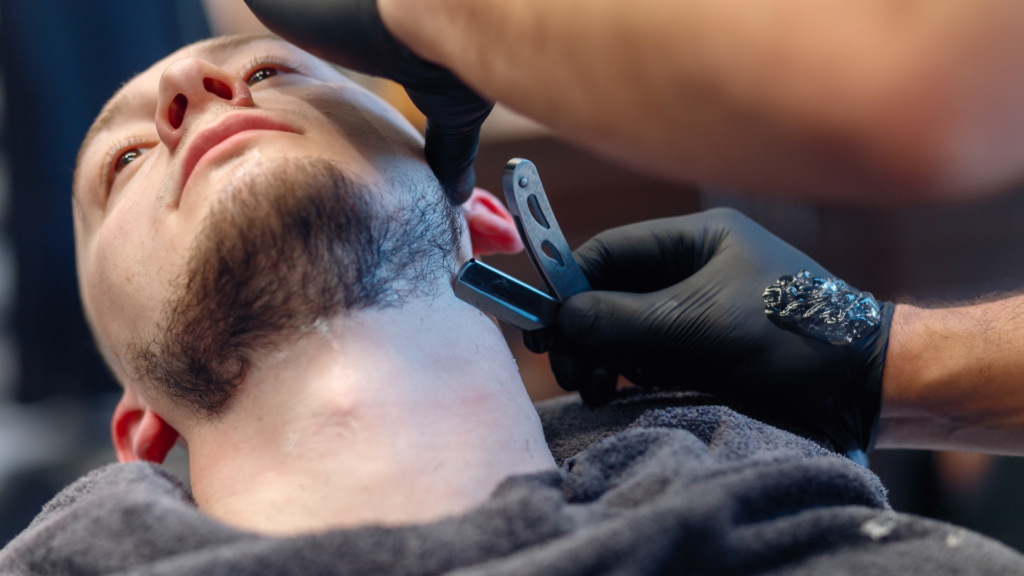
Mapping the face: grain direction and shaving passes
Hair grows in different directions across the face: often downward on the cheeks, sideways or upward on the neck, and in varying directions along the jaw. Understanding this pattern, sometimes called mapping, is essential before making a single pass, since shaving against the wrong direction increases irritation and ingrown hair risk.
The first pass: working with the grain
The first pass always follows the direction of hair growth. This removes the bulk of the length with minimal irritation and sets up the skin for closer passes if desired.
The second and third passes: against and across the grain
Experienced shavers may follow with a second pass across the grain (perpendicular to hair growth) and a third pass against the grain for an extremely close finish. Each additional pass increases closeness but also increases the risk of irritation, so skin condition should be monitored throughout.
Neck, jaw, and lip: the tricky zones explained
The neck has the most inconsistent grain direction and the thinnest skin, making it the most common area for nicks. The jawline requires careful angle adjustment as the face curves, and the upper lip demands short, controlled strokes due to limited space. Barbers often save these zones for last, once the blade has already proven its sharpness on easier terrain.
Finishing touches: cold rinse, alum block, aftershave
A cold water rinse closes pores after the final pass. An alum block, rubbed gently over the skin, disinfects micro-cuts and tightens the skin. Aftershave, ideally alcohol-free for sensitive skin, locks in moisture and soothes any remaining irritation.
What Makes a Great Barbershop Straight Razor Experience
What to expect when you sit in the chair
A quality barbershop experience starts before the blade even comes out: a consultation about your skin, your typical irritation points, and how close you want the finish. Expect hot towels, a proper lathering process, and a barber who checks in throughout rather than rushing from pass to pass.
How to communicate with your barber for the best result
Speak up about sensitivity, past ingrown hair issues, or areas that typically react poorly to shaving. A good barber will adjust pressure, pass count, and even blade angle based on this information rather than applying a one-size-fits-all approach.
The line up haircut connection: shaping the full look
Many men pair their straight razor shave with a line up haircut, using the same sharp precision to clean up the hairline, sideburns, and neckline. The two services complement each other, since a crisp haircut edge paired with a smooth, irritation-free shave creates a finished, put-together look that neither service fully achieves alone.
Reading the quality signals of a skilled shave
Look for a barber who strops the blade visibly before use, works in short controlled strokes rather than long dragging motions, and checks skin tension with their free hand throughout. Redness that fades within minutes is normal; lingering irritation or razor burn suggests rushed technique or excessive pressure.
Maintaining Your Straight Razor: Honing, Stropping, and Storage
Stropping explained: the pre-shave ritual
Stropping realigns the blade’s edge using a leather strap, typically done before every single shave. It doesn’t sharpen the blade so much as it corrects microscopic bending in the edge caused by previous use, restoring smoothness for the next shave.
Honing your blade: when and how
Honing actually removes small amounts of metal to create a new sharp edge, and it’s needed far less often than stropping, typically every few months to once a year depending on frequency of use. This is done with a sharpening stone and requires practice to master the correct angle and pressure.
Cleaning, drying, and storing your razor properly
After each use, the blade should be rinsed, dried thoroughly to prevent rust (especially for carbon steel), and stored in a dry case away from humidity. Moisture is the single biggest threat to a straight razor’s longevity.
When to send your razor to a professional honer
If a blade pulls, drags, or feels dull despite regular stropping, it’s time for a professional hone rather than attempting to fix the issue at home. Many barbershops offer honing services or can recommend a trusted specialist.
Choosing Your First Straight Razor: A Buyer’s Guide
What to look for in a beginner razor
Beginners should prioritize a stainless steel blade for lower maintenance, a moderate size around 5/8, and a hollow grind for easier control. A pre-honed razor, ready to use out of the box, removes one variable while you’re still learning stropping and angle technique.
Top blade materials compared: carbon steel vs. stainless steel
| Factor | Carbon Steel | Stainless Steel |
| Sharpness potential | Higher, takes a finer edge | Slightly lower but still sharp |
| Maintenance | Requires diligent drying to avoid rust | More rust resistant |
| Best for | Experienced users chasing peak sharpness | Beginners wanting lower upkeep |
| Price | Often lower | Often slightly higher |
Reputable brands and what they offer
Well-regarded straight razor makers typically fall into a few categories: heritage European brands known for traditional craftsmanship, Japanese makers known for precision steel, and newer boutique makers focused on modern materials and ergonomic scales. Researching reviews from experienced wet shaving communities is the most reliable way to compare specific models.
New vs. vintage razors: pros, cons, and what to watch for
| Factor | New Razor | Vintage Razor |
| Condition | Consistent, ready to use | Variable, may need restoration |
| Cost | Often higher upfront | Can be found cheaper, but restoration adds cost |
| Steel quality | Modern consistency | Some vintage steel prized for quality |
| Risk | Low | Higher, may have hidden damage or pitting |
The True Cost of the Straight Razor Lifestyle
Upfront investment vs. long-term savings
A quality beginner straight razor, strop, and honing stone typically cost more upfront than a year’s supply of cartridge razors. However, since a well-maintained straight razor can last decades with proper honing, the long-term cost per shave drops dramatically compared to recurring cartridge purchases.
Barbershop pricing for straight razor services
Barbershop straight razor shave services vary by region and shop tier, generally priced as a premium service above a standard haircut, reflecting the added time, hot towel treatment, and specialized skill involved.
The hidden costs of cartridge and disposable shaving
Cartridge razors carry ongoing costs that are easy to underestimate: replacement blades, shaving gel, and more frequent skin irritation products to manage razor burn. These recurring purchases add up steadily over years of use.
Cost comparison table: straight razor vs. alternatives over 5 years
| Method | Approximate 5-Year Cost Factors |
| Straight razor | One-time razor and strop purchase, occasional professional honing, ongoing soap and oil |
| Cartridge razor | Recurring cartridge packs every few weeks, shaving gel or cream |
| Safety razor | Low-cost blade replacements, one-time razor purchase |
| Electric shaver | One-time device purchase, periodic replacement heads |
Skin Care Around the Shave: Products That Actually Work
Pre-shave skincare routine
A simple, effective pre-shave routine includes cleansing to remove oil and debris, a hot towel to soften hair, and a light layer of pre-shave oil to protect the skin barrier before lathering.
Post-shave ingredients that heal and protect
Look for post-shave products containing aloe vera for soothing, witch hazel for gentle toning, and hyaluronic acid for hydration without clogging pores.
What to avoid: irritants, alcohols, and cheap aftershaves
High-alcohol aftershaves can sting freshly shaved skin and strip natural oils, leading to dryness and increased sensitivity over time. Synthetic fragrances in cheap products can also trigger irritation, particularly for sensitive skin types.
Building a complete men’s shaving kit
| Item | Purpose |
| Straight razor or shavette | Cutting tool |
| Shaving brush | Lather application and hair lifting |
| Shaving soap or cream | Lubrication and protection |
| Pre-shave oil | Extra glide and skin protection |
| Alum block | Disinfecting and tightening skin |
| Aftershave balm | Hydration and soothing |
| Strop | Blade maintenance between shaves |
Straight Razor Shaving for Different Skin Types and Tones
Shaving for sensitive skin
Sensitive skin benefits from single-pass shaving with the grain only, generous pre-shave oil, and alcohol-free aftershave to minimize irritation.

Straight razor technique for darker skin tones and coarser hair
Coarser, curlier hair types, more common among men with darker skin tones, are especially prone to ingrown hairs when shaved too closely against the grain. A single, well-executed pass with the grain, combined with proper prep, tends to produce better results than chasing an extremely close multi-pass finish.
Managing razor bumps (pseudofolliculitis barbae) with a straight razor
For men who experience frequent razor bumps, dermatologists often recommend avoiding shaving completely against the grain and allowing at least a day between shaves to let skin recover. A straight razor’s precision can help here, since it allows more controlled single passes than a multi-blade cartridge.
Shaving for men with acne-prone or mature skin
Acne-prone skin requires extra caution around active breakouts, avoiding direct blade contact where possible. Mature skin, which tends to be thinner and less elastic, benefits from lighter pressure and extra skin stretching to maintain a smooth shaving surface.
Common Mistakes and How to Avoid Them
Pressure mistakes: the number one error beginners make
New straight razor users often apply the same pressure they would with a cartridge razor, which is far too much for a single sharp blade. Let the blade do the work, guiding it with light pressure rather than pressing down.
Angle errors and how they cause cuts and irritation
Too steep an angle causes nicks, while too shallow an angle drags and pulls hair rather than cutting cleanly. The ideal angle, around 30 degrees, should feel almost like the blade is barely touching the skin.
Skipping prep: why rushing ruins the shave
Skipping the hot towel or lathering stage to save time is the fastest way to turn a smooth shave into an irritated mess. Prep work isn’t optional, it’s the foundation the entire shave depends on.
Neglecting blade maintenance
A blade that hasn’t been stropped will drag and pull instead of cutting cleanly, no matter how good the technique is. Consistent maintenance matters as much as skill.
The Culture and Brotherhood of the Barbershop
What the barbershop means beyond the haircut
A barbershop has always been more than a place to get groomed. It’s a neighborhood fixture where conversations happen freely, generations mix, and a sense of community forms around something as simple as a chair and a mirror.
The straight razor as a rite of passage
For many men, a first straight razor shave marks a milestone, often tied to a specific occasion like a wedding, graduation, or first job. It carries a symbolic weight that a quick shave at home simply doesn’t replicate.
Fathers, sons, and the shaving ritual passed down
Fathers bringing sons in for their first proper shave is a tradition that spans generations, turning a grooming appointment into a shared memory and an informal lesson in taking care of yourself.
Why the barbershop is still the most important room in the neighborhood
Even as grooming trends shift, the barbershop remains a rare space where men gather without an agenda, building relationships with their barber that often last years, sometimes decades.
Frequently Asked Questions About Straight Razor Shaving
Is a straight razor shave safe for beginners?
Yes, when performed by a trained barber. For beginners attempting it themselves at home, starting with a shavette and plenty of practice on forgiving areas like the cheeks is the safer approach before tackling the neck or jawline.
How often should I get a straight razor shave?
Most men schedule straight razor shaves every one to two weeks, though frequency depends on hair growth rate and personal preference for closeness.
Can I shave at home with a straight razor?
Yes, but it requires practice, patience, and proper maintenance tools like a strop and occasional professional honing. Many men start at the barbershop to learn technique before attempting it solo.
Does a straight razor shave hurt?
A properly executed shave shouldn’t hurt. Mild sensitivity or slight redness immediately after is normal and typically fades within minutes.
How long does a straight razor shave last?
The closeness of a straight razor shave typically lasts two to four days longer than a cartridge razor shave, though this varies by hair type and growth rate.
What skin types benefit most from a straight razor?
Oily and normal skin types tend to tolerate straight razor shaving well, while sensitive and acne-prone skin require gentler technique and careful product selection.
How do I know if my barber is using a straight razor correctly?
Look for visible stropping before use, short controlled strokes, consistent skin stretching, and check-ins about comfort throughout the service.
Are straight razors sanitary at the barbershop?
Reputable barbershops use single-use disposable blades in shavettes or properly sanitize traditional straight razors between clients, following local health regulations.
What is the difference between a straight razor and a shavette?
A straight razor has a fixed blade that requires honing and stropping, while a shavette uses replaceable disposable blade inserts, offering lower maintenance at the cost of higher recurring expense.
Is straight razor shaving worth the investment?
For men who shave regularly and value a close, smooth result along with a bit of daily ritual, the long-term cost savings and quality of shave typically make it worthwhile.
Conclusion
Start with a professional shave at a trusted barbershop before investing in your own blade. Pay attention to how your barber preps your skin, the angle they use, and how your face feels afterward. That firsthand experience will teach you more than any guide. Once you’ve experienced a proper shave, consider working it into a rhythm, whether that’s a weekly barbershop visit or a slower buildup toward shaving at home with your own razor and strop. A single well-executed shave has a way of resetting your entire relationship with grooming. The smoothness lasts longer, the ritual feels earned, and most men find it hard to go back to rushing through a cartridge razor once they’ve felt the difference steel makes.