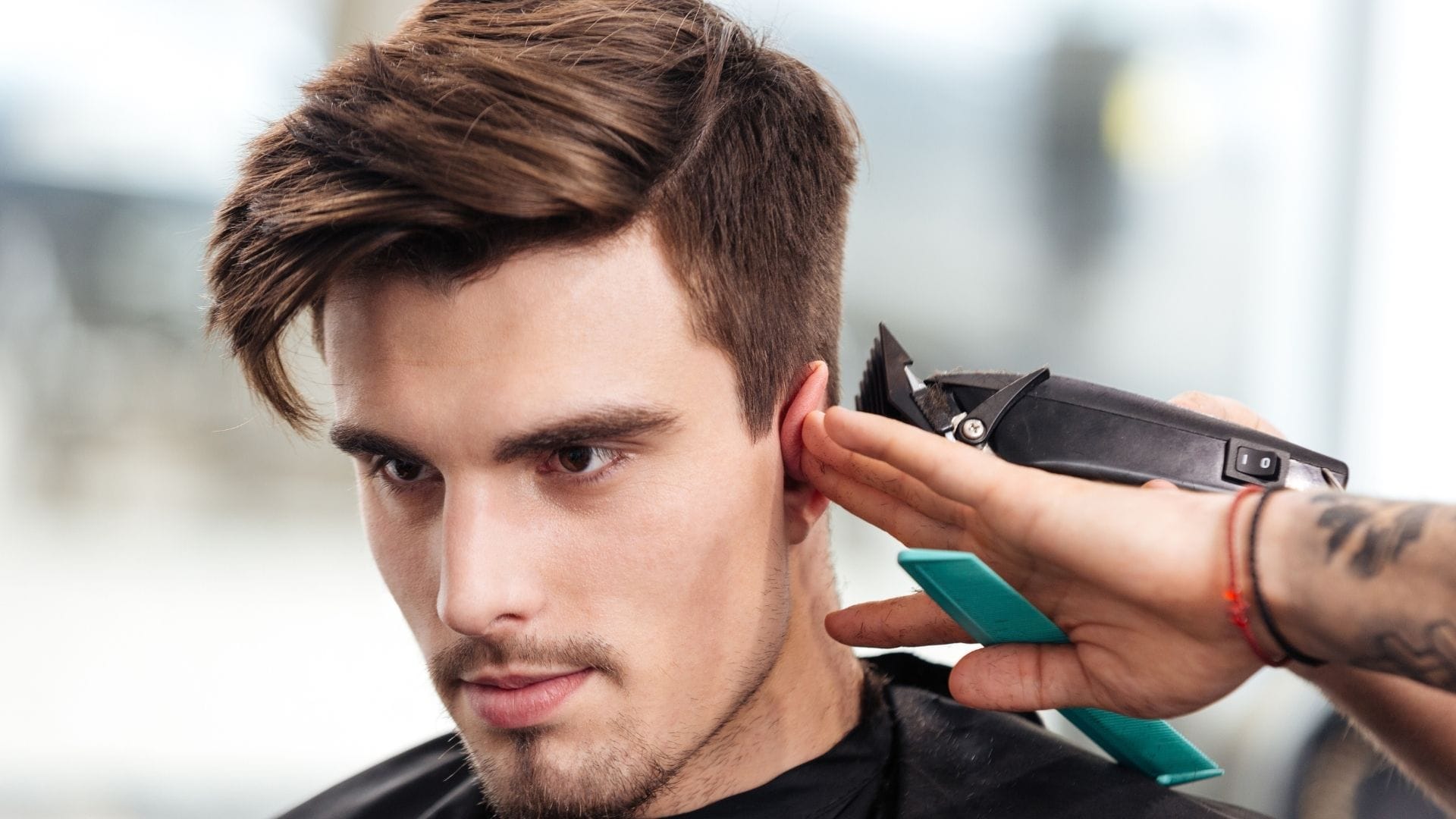
You’ve seen the photo. Some guy on your feed with the perfect textured crop, the fade blended so clean it looks airbrushed. You screenshot it, walk into a barbershop, hand over your phone, and say “this one.” Twenty minutes later you’re staring at a stranger in the mirror. Not a bad haircut. Just not your haircut.
That gap between “good cut” and “your cut” is where most men live their entire lives. This guide closes that gap. You’ll learn how face shape, head shape, hair texture, growth pattern, lifestyle, and even your morning routine combine to point toward one style that works for you specifically, not for the guy in the photo. You’ll walk away with the vocabulary to talk to a barber like you know what you’re doing, a checklist for your next appointment, and a real understanding of why some cuts have survived seventy years while others died in a single summer.
Key Takeaways
- A signature haircut is built from three variables working together: face shape, hair texture, and lifestyle. Chasing a trend usually ignores at least two of the three.
- Classic cuts like the crew cut, taper, side part, and pompadour have survived decades because they adapt to nearly every face shape and hair type when a barber customises the details.
- Knowing basic barbershop vocabulary (guard numbers, fade types, length terminology) prevents miscommunication that leads to disappointing cuts.
- Maintenance is part of the decision. The best haircut for you also has to fit realistically into your schedule and budget.
- A good relationship with a skilled barber, built over multiple visits, does more for your look long-term than any single trending photo.
The Chair Doesn’t Lie: Why Most Men Never Find Their Signature Cut
Most men never actually choose a haircut. They borrow one. They see it on an actor, an athlete, or a friend, and they copy it wholesale, without accounting for the fact that faces, hair, and lives are not interchangeable.
The trend trap and why it costs you more than money
Trends move fast because they’re built on novelty, not fit. A style blows up because it looks striking on one particular face under one particular set of lighting conditions, then a few million men try to recreate it. Some of them get lucky. Most end up with a cut that fights their natural hair pattern or draws attention to a feature they’d rather downplay.
The financial cost is real. A men’s haircut in the United States typically runs between 25 and 60 dollars depending on the market, according to pricing data from the Professional Beauty Association. If you’re switching styles every few months chasing whatever’s trending, you’re also paying for the trial and error of finding out what doesn’t work. But the bigger cost is the years spent in a mirror not quite recognizing yourself. That’s the real price of the trend trap.
What a signature haircut actually means
A signature haircut is not a specific style. It’s the style that stays consistent while trends rotate around it, because it was chosen based on facts about your head and life rather than what’s popular this season. Think of it as your default setting. You can adjust the length or the fade intensity over the years, but the underlying shape and structure remain something you never have to think twice about.
Men with a true signature cut rarely ask “does this look good?” They already know it does, because it was built around measurements and habits that don’t change: their bone structure, their hair’s natural growth direction, and how much time they’re willing to spend styling it each morning.
The difference between a haircut you love and one you settle for
A haircut you settle for looks fine in the mirror at the shop and less fine three days later when your hair has fallen back into its natural pattern. A haircut you love works with that natural pattern from day one. The barber didn’t fight your cowlick, they built the cut around it. They didn’t ignore your receding temple, they used it as a design element.
Settling happens when appointments are rushed, communication is vague, or a client is too focused on replicating someone else’s result. Loving your cut happens when the process starts with an honest inventory of your own features, not somebody else’s.
Know Your Face Before You Know Your Style
Every barber worth their scissors starts with the same question, even if they never say it out loud: what shape am I working with?
The six face shapes and what each one needs
| Face Shape | Key Traits | What It Needs From a Haircut |
| Oval | Balanced proportions, slightly narrower at jaw than forehead | Nearly any style works; use the cut to add personality, not correction |
| Round | Width and length are similar, soft jawline | Height on top, shorter sides to elongate the face |
| Square | Strong, angular jawline, wide forehead | Textured top to soften angles, avoid flat-top styles that emphasize width |
| Rectangular (Oblong) | Long face, narrow width | Volume on the sides, shorter height on top to reduce length |
| Diamond | Narrow forehead and jaw, wide cheekbones | Fringe or volume at the forehead to balance cheekbone width |
| Triangular | Narrow forehead, wide jaw | Volume on top and at the temples to balance a heavier jawline |
How to actually identify your own face shape
Pull your hair back, stand in front of a mirror in good lighting, and trace the outline of your face on the glass with a dry-erase marker, or take a straight-on photo and trace it digitally. Then compare three measurements: the width of your forehead, the width of your cheekbones, and the width of your jaw, along with the overall length of your face from hairline to chin.
If all three widths are close and your face is longer than it is wide, you likely have an oval or rectangular shape. If your jaw is the widest and most angular point, you’re working with a square. If everything is soft and roughly equal in width and length, that’s round. Cheekbones wider than both forehead and jaw usually signals diamond, and a jaw notably wider than the forehead points to triangular.
Face shape vs. head shape, and why both matter
Face shape tells a barber how to frame the front view. Head shape, meaning the actual three-dimensional curvature of your skull from the side and back, tells them how a cut will sit in profile. A flat back of the head needs volume built in through layering or a slightly longer length at the crown to avoid looking pancaked. A rounder skull can carry a tighter, closer cut without looking flat.
This is why two men with the same face shape can need genuinely different haircuts. One might have a prominent occipital bone (the bump at the back of the skull) that a skin fade shows off beautifully. The other might have a flatter profile there and need length retained to avoid an awkward silhouette.
The role of jawline, forehead width, and chin in haircut selection
Beyond the broad face shape category, individual features matter. A strong, defined jawline can handle short, structured cuts that draw the eye downward, like a hard side part or a sharp taper. A softer or recessed chin often benefits from styles that add visual weight at the crown, pulling attention upward. A wide forehead can be balanced with a fringe or textured bangs, while a narrow forehead often looks best with the hairline left more exposed.
Your Hair Has a Personality: Learn to Work With It
Face shape tells you what silhouette to aim for. Hair texture tells you what’s physically achievable.
Hair texture types and what each one can realistically achieve
Hair generally falls into four broad texture categories: straight, wavy, curly, and coily. Straight hair holds sharp lines and precise parts exceptionally well, but it can struggle to hold volume or texture without product. Wavy hair offers natural movement that works beautifully with textured crops and messy styles. Curly hair provides built-in volume and works well with rounded or cropped shapes, but curls resist sharp, razor-thin parts. Coily hair holds shape and definition remarkably well, making it ideal for sculpted designs, tapers, and structured afros.
Density, porosity, and growth direction
Density refers to how many individual hairs you have per square inch of scalp, not the thickness of each strand. High-density hair can carry more weight and volume, while low-density hair often looks best kept shorter to avoid appearing thin or patchy. Porosity, or how well your hair absorbs and retains moisture, affects how products perform and how long a style holds throughout the day. Growth direction, meaning the pattern in which hair naturally grows from the scalp, determines where cowlicks form and which parts will lie flat versus which will fight you.
How to stop fighting your natural hair pattern
The single most common mistake in men’s grooming is choosing a style that requires hair to grow in a direction it doesn’t naturally go. If your crown has a strong clockwise swirl, a razor-sharp side part positioned against that swirl will require constant restyling. Working with the swirl, rather than against it, often produces a cut that looks intentional with a fraction of the daily effort.
A skilled barber will run their fingers through your dry hair before cutting a single strand, checking for cowlicks, double crowns, and natural partings. If yours doesn’t do this, it’s worth mentioning it yourself.
Hair texture comparison table and recommended cuts
| Hair Texture | Natural Strength | Recommended Cuts |
| Straight | Holds sharp lines, easy to part | Side part, crew cut, sharp taper |
| Wavy | Natural movement and texture | Textured crop, messy fringe, quiff |
| Curly | Built-in volume and definition | Curly crop, rounded afro, curly fringe |
| Coily | Excellent shape retention | Tapered afro, fades with sculpted design, close crop |
The History of Men’s Haircuts and What It Teaches Us About Timeless Style
Understanding where enduring styles come from reveals why some cuts survive while trends fade within a single fashion cycle.
Iconic men’s cuts across the decades
The 1950s gave us the pompadour and the classic side part, both popularized through Hollywood and rock and roll culture. The 1960s and 70s introduced longer, looser styles influenced by counterculture movements. The 1980s brought sharper, more angular cuts alongside experimental perms. The 1990s and 2000s saw the rise of the crew cut and buzz cut as low-maintenance staples, while the 2010s onward popularized the skin fade paired with textured tops, largely driven by athletes and social media.
Trends that died vs. classics that survived
Trends that required extreme maintenance, unusual product, or very specific hair textures tended to disappear quickly once the cultural moment passed. Classics like the crew cut, taper, side part, and pompadour survived because barbers could adapt the underlying structure to nearly any face shape or hair texture, simply adjusting length and finish rather than reinventing the whole silhouette.
Cultural roots of the most enduring cuts
Many of today’s classic cuts trace back to military grooming standards, which prioritized practicality and low maintenance, or to specific cultural and musical movements that turned a haircut into an identity statement. The fade, for instance, has deep roots in Black barbershop culture and hip hop, evolving over decades into the wide range of skin and taper fades seen today. Understanding these roots adds context to why a style holds meaning beyond simply looking good.
Face Shape, Hair Type, and Lifestyle: The Three-Variable Formula
Once you understand your face and your hair, the final variable is how you actually live day to day.
Matching your cut to your job and daily routine
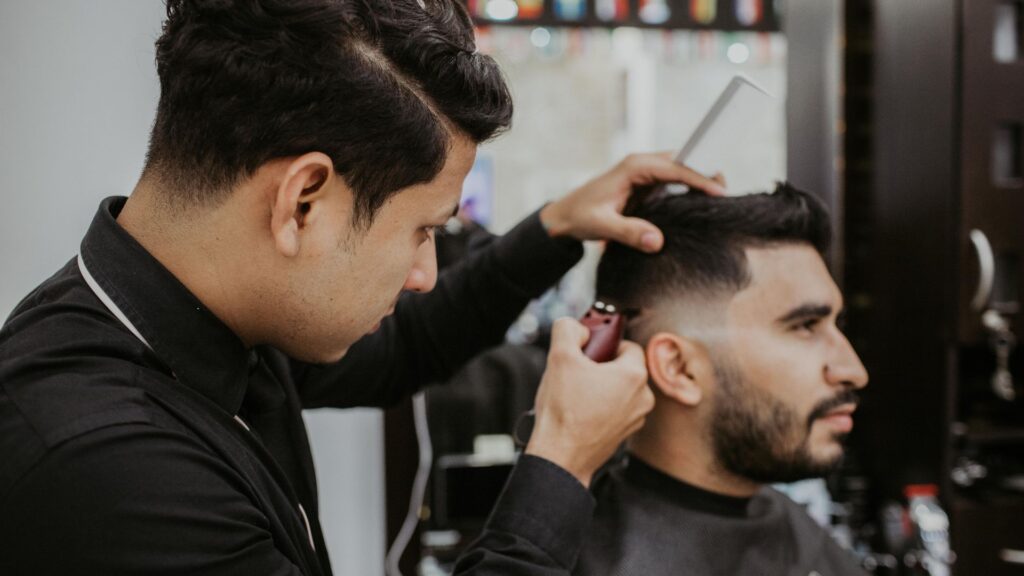
A corporate role with client meetings generally calls for a more polished, structured cut, something like a classic taper or side part that photographs well and reads as put-together with minimal daily styling. Creative or casual work environments allow more room for textured, expressive cuts that can look intentionally undone.
Athletic and active lifestyles vs. office environments
Men who train frequently, sweat daily, or wear helmets and hats for work often benefit from shorter, lower-maintenance cuts that don’t require restyling after every workout. A tight fade or crew cut holds its shape through sweat and hat hair far better than a longer, product-dependent style. Office environments with more climate control and less physical activity give more flexibility for styles that need a blow dryer and product each morning.
How much time you spend on your hair every morning matters
Be honest about this one. A style that looks incredible in the barber’s chair but takes fifteen minutes of blow drying and product application every morning will only look that good on the days you have time. Most men underestimate this variable and end up disappointed with a cut that was never realistic for their actual schedule. If you have five minutes most mornings, choose a cut built for five minutes.
The Vocabulary You Need to Actually Communicate in the Chair
Miscommunication is the number one reason men leave a barbershop unhappy. Precision in language prevents most of it.
Essential barbershop terms every man should know
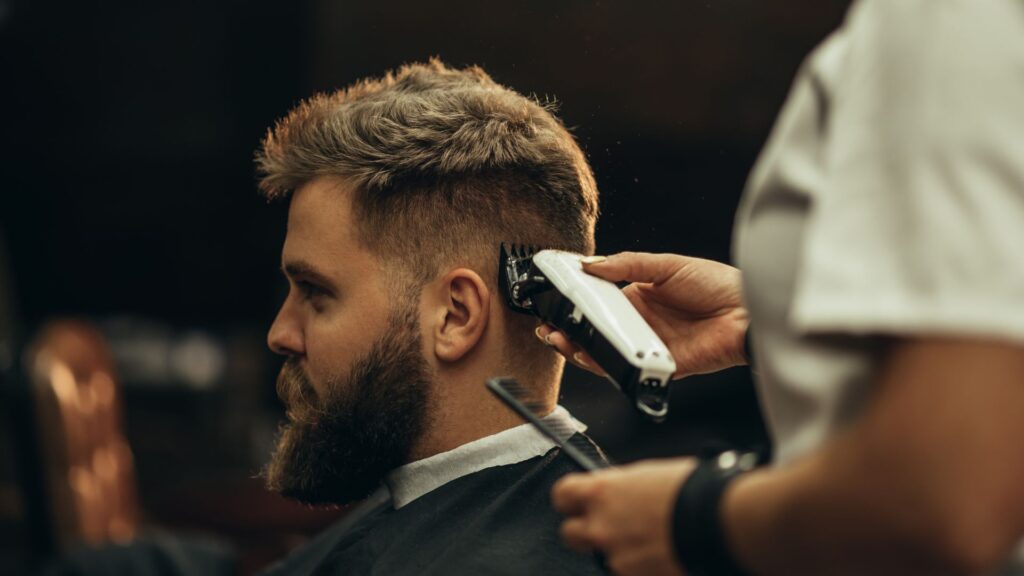
Fade refers to hair that gradually shortens from longer at the top to very short or skin at the sides and back. Taper refers to a more gradual, subtle version of the same concept, typically kept a bit longer overall. Undercut describes short, often disconnected sides beneath longer hair on top. Crop refers to a short, textured style on top, usually paired with a fade or taper. Blend means the transition between lengths is smooth with no visible line.
How to use guard numbers, length references, and fade terminology
Clipper guards range typically from a 0, which is skin, up to an 8, which leaves over an inch of hair. A number 1 guard leaves about an eighth of an inch, a 2 leaves a quarter inch, and so on in roughly eighth-inch increments. When describing a fade, specify where you want it to start: a high fade starts near the temple, a mid fade starts around the middle of the side of the head, and a low fade starts just above the ear.
How to use reference photos effectively
Bring two to three photos rather than one, ideally showing the same haircut from multiple angles, and be clear that you want the shape adapted to your own hair and face, not copied exactly. A single front-facing photo tells a barber almost nothing about how the back and sides were actually cut.
What to say and what not to say when you sit down
Say specific things: “I want a mid fade with a 2 on the sides blending into scissor work on top, about three inches of length there.” Avoid vague requests like “just clean it up” or “surprise me” unless you genuinely trust your barber’s judgment completely and have an established relationship with them.
Classic Cuts That Have Outlasted Every Trend
The crew cut, the taper, the side part, and the pompadour
The crew cut is short and uniform, slightly longer on top, and works on nearly every face shape and hair texture with minimal daily maintenance. The taper gradually shortens hair from top to bottom without a hard line, offering a polished but adaptable look. The side part uses a defined parting line to create an intentional, classic silhouette that reads as professional. The pompadour builds volume at the front and sweeps hair upward and back, adding height that benefits round or square faces in particular.
Why these cuts work on almost every face type
Each of these classics is really a structural framework rather than a fixed look. A barber can lengthen or shorten the top, adjust the fade height, or change the part’s sharpness to flatter nearly any face shape, which is exactly why they’ve remained relevant across generations of changing fashion.
How each classic can be modernized without losing its soul
A crew cut updated with a skin fade and slightly more textured top feels current without abandoning its low-maintenance core. A pompadour with a disconnected undercut instead of a tapered side reads as more modern and edgy. A side part paired with a hard part line and a fade underneath brings a decades-old style firmly into today’s aesthetic.
Classic vs. trendy cut comparison table
| Factor | Classic Cuts | Trendy Cuts |
| Longevity | Remain stylish for decades | Often look dated within a year or two |
| Face shape flexibility | Adaptable to most shapes | Often designed around one specific shape |
| Maintenance | Generally low to moderate | Frequently high maintenance |
| Barber familiarity | Nearly every barber knows how to execute well | Newer trends require more specialized skill |
| Long-term cost | Lower, since regrowth is easy to maintain | Higher, due to frequent restyling and touch-ups |
Finding a Barbershop and Professional Who Understands Your Vision
What to look for in a grooming professional
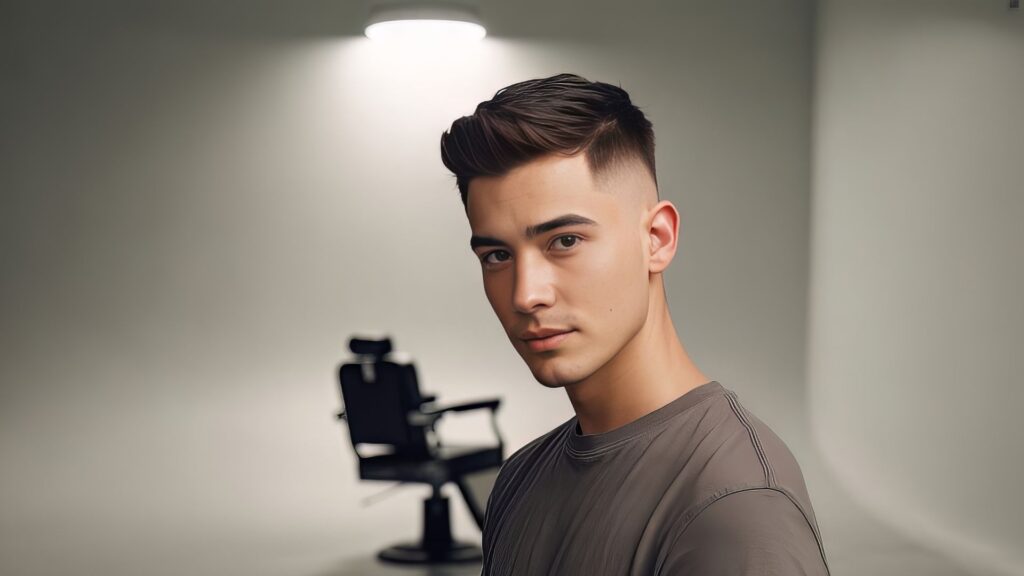
Look for a barber who asks questions before picking up scissors, things about your lifestyle, your hair’s natural behavior, and what you didn’t like about previous cuts. A good local barbershop will also have a range of visible work across different hair textures, not just one type of client.
How to evaluate portfolio photos for your specific hair type
Search for portfolio images featuring hair similar to yours in texture and density, not just similar desired styles. A barber’s stunning work on straight hair tells you very little about their skill with coily or curly textures, and vice versa.
Building a long-term relationship with your barber
The best results tend to come after three or four visits, once a barber has learned your growth pattern, your styling habits, and your preferences well enough to make small, confident adjustments without you needing to explain everything from scratch each time. Sticking with one skilled professional, rather than shop-hopping for the cheapest appointment, generally pays off in consistency.
Red flags in a first visit
Be cautious if a barber doesn’t ask about your hair’s natural growth pattern, rushes through the consultation, or seems dismissive when you bring reference photos. A rushed first appointment rarely produces a cut you’ll want to repeat.
The Maintenance Reality: What Keeping a Signature Cut Actually Costs
Frequency and cost benchmarks by cut type
| Cut Type | Recommended Frequency | Typical Cost Range (USD) |
| Skin fade | Every 1 to 2 weeks | 25 to 50 |
| Taper | Every 3 to 4 weeks | 25 to 50 |
| Crew cut | Every 3 to 5 weeks | 20 to 45 |
| Side part | Every 4 to 6 weeks | 25 to 55 |
| Pompadour | Every 4 to 6 weeks | 25 to 60 |
| Longer textured styles | Every 6 to 8 weeks | 30 to 65 |
Home maintenance tools and routines that extend shop results
A quality trimmer allows you to clean up neck hairlines and sideburns between visits, extending the crisp look of a fade by a week or more. A boar bristle brush helps distribute natural oils and train hair in its intended direction, while a good comb keeps parts sharp on straight and wavy textures.
What happens when you skip maintenance too long
Fades grow out unevenly, side parts lose their defined line, and pompadours lose the structure that gives them height. Beyond appearance, waiting too long between cuts on short styles often means more length needs to be removed at the next appointment, essentially restarting the growth cycle rather than maintaining it.
Products, Styling, and Making Your Cut Work Every Day
Matching the right product to your hair type and cut
Pomade suits slicked styles and side parts, providing shine and strong hold. Clay works well for textured, matte finishes on crops and messy styles. Wax offers medium hold with more flexibility, good for styles that need to move throughout the day. Sea salt spray adds texture and volume, particularly effective on wavy hair.
Product type comparison table
| Product | Hold Level | Finish | Best For |
| Pomade | Strong | Shiny | Side parts, pompadours |
| Clay | Medium to strong | Matte | Textured crops, faux hawks |
| Wax | Medium | Semi-matte | Flexible, movable styles |
| Sea salt spray | Light to medium | Matte, textured | Wavy or beach-style looks |
| Gel | Strong | High shine | Sleek, controlled styles |
Morning routines for different cut styles
A crew cut typically needs nothing more than a quick towel dry and a small amount of product worked through with fingers. A pompadour requires a blow dryer, a round brush for lift, and a stronger hold product applied while hair is still slightly damp. A textured crop benefits from air drying partially before applying a small amount of clay or wax to define pieces by hand.
Common Mistakes Men Make When Choosing or Maintaining a Haircut
Chasing someone else’s cut without accounting for your face
The photo trap mentioned earlier bears repeating here. A cut that looks incredible on someone with different bone structure and hair texture rarely translates directly onto you.
Ignoring growth patterns and cowlicks
Fighting a cowlick with a style that requires it to lie flat is a losing battle fought every single morning. Working with it almost always produces better long-term results than against it.
DIY decisions that cost more to fix
Attempting to fix a fade at home with a trimmer, without understanding blending technique, often creates visible lines that a barber then has to correct, sometimes requiring more hair removed than if you’d simply waited for your next appointment.
Switching styles too frequently
Jumping between dramatically different cuts every few months prevents a barber from learning your hair and prevents you from ever developing the low-effort familiarity that comes with a true signature style.
Haircuts for Different Ages and Life Stages
Cuts for men in their 20s building their identity
This is often the experimental decade, and it’s a reasonable time to try different lengths and textures before settling into a signature look. Textured crops, fades, and longer styles all tend to work well given generally fuller hair density at this stage.
Cuts for men in their 30s and 40s balancing style and professionalism
Many men shift toward more polished, versatile cuts during these decades as career demands increase. Tapers and side parts remain popular because they read as professional while still allowing personality through fade height or texture.
How thinning hair changes the equation
As hair thins, shorter overall lengths generally look fuller and more intentional than longer styles that reveal scalp through thinning areas. A closer crop or a well-executed fade can make thinning hair far less noticeable than an attempt to maintain length and volume that’s no longer naturally there.
Fathers choosing cuts for their sons
Kids’ hair is often finer and their skulls are still developing shape, so simpler, low-maintenance cuts like a crew cut generally serve them better than complex styles requiring daily product application they’re unlikely to manage themselves.
Special Considerations: Scalp Health, Hair Loss, and Making It Work
How scalp health affects your cut options
A dry, flaky, or irritated scalp can make certain products uncomfortable and may affect how hair sits and holds a style. According to the American Academy of Dermatology, regular scalp cleansing and avoiding excessive product buildup supports healthier hair overall, which in turn helps any cut hold its intended shape longer.
Cuts that work with thinning hair and receding hairlines
Shorter fades and crops minimize the visual contrast between hairline and scalp that longer styles tend to exaggerate. A receding hairline paired with a slightly shorter length on top and a well-blended fade often looks more intentional than fighting to maintain a hairline that’s naturally moving.
Dermatology-backed advice on scalp care
The American Academy of Dermatology recommends washing hair based on scalp oil production rather than a fixed schedule, using a gentle shampoo suited to your scalp type, and avoiding excessive heat styling, all of which support the health of the hair a barber has to work with in the first place.
Frequently Asked Questions About Finding Your Signature Haircut
How do I know if a haircut actually suits my face shape?
The clearest sign is balance. A well-matched haircut makes your face appear more proportional, whether that means adding height for a round face or softening angles for a square one. If you find yourself needing significant styling effort to make a cut look “right,” it’s often a sign the underlying shape wasn’t matched to your face in the first place.
Can I have a signature haircut if my hair texture is unpredictable?
Yes. Unpredictable hair, meaning hair with multiple cowlicks or inconsistent curl patterns, still has a natural resting state. A skilled barber can design a cut around that resting state rather than against it, which often produces more consistent results than hair textures that seem simpler on the surface.
How often should I really be getting haircuts to maintain my style?
This depends entirely on the cut. Short, structured styles like skin fades need attention every one to two weeks to stay sharp, while longer or looser styles can often go six to eight weeks between visits.
Is it bad to change barbers frequently?
It’s not inherently bad, but it does slow down how quickly you develop a true signature style, since each new barber has to relearn your hair’s growth pattern and your personal preferences from scratch.
What’s the difference between a barbershop and a regular hair salon for men’s cuts?
A barbershop typically specializes in men’s grooming, including fades, beard work, and traditional techniques like straight razor lineups, while a general salon may offer a broader range of services without that same depth of specialization in men’s short haircuts.
How do I find a good barbershop near me if I’ve just moved to a new city?
Look at portfolio photos on social media rather than relying on star ratings alone, since ratings don’t tell you whether a barber’s specific skill set matches your hair type. Booking a simple trim as a first visit, rather than a dramatic change, is also a low-risk way to evaluate a new local barbershop near me before committing to something more significant.
Does my haircut need to change as I get older?
Not necessarily in a dramatic way, but subtle adjustments, like slightly shorter lengths as hair thins or a more polished finish as professional demands shift, are common and often improve how a signature style continues to suit you over time.
What should I do if I hate my new haircut?
Give it three to five days before making a final judgment, since many cuts look different once they’ve settled and you’ve styled them yourself at home a couple of times. If you still don’t like it after that, communicate specifically what’s bothering you at your follow-up visit rather than starting over completely with a new barber.
Can product alone fix a haircut that doesn’t fit my face or hair type?
Product can improve styling and hold, but it can’t fundamentally change a haircut’s underlying shape. If the structure doesn’t fit your face or work with your natural texture, no amount of pomade or clay will fully solve that.
Your Signature Cut Action Plan: A Step-by-Step Checklist
Pre-appointment preparation
Identify your face shape using the tracing method described earlier. Note your hair’s natural growth pattern, including any cowlicks or double crowns. Gather two to three reference photos showing the style from multiple angles. Be honest with yourself about how much time you’ll actually spend styling each morning.
In-chair communication guide
State your face shape and any features you want to emphasize or soften. Share your reference photos along with specific guard numbers or length preferences. Mention any past haircuts you disliked and explain specifically why. Ask your barber directly how they’d adapt the reference style to your particular hair and face.
Post-cut maintenance schedule
Book your next appointment before you leave, based on the frequency benchmarks outlined earlier for your specific cut type. Invest in a quality trimmer for touch-ups between visits. Track how your cut looks and holds over the following two weeks, and bring notes on what worked and what didn’t to your next visit.
Conclusion
Your signature haircut isn’t hiding on someone else’s Instagram feed. It’s sitting in the combination of your face shape, your hair’s natural texture and growth pattern, and the realities of your daily life. Every classic cut that’s survived decades of changing trends did so because it could be shaped around those three variables rather than forcing a single rigid look onto every client who sat in the chair. Every barber has seen a client transform the moment they stop asking for someone else’s haircut and start asking for their own. It usually happens quietly, somewhere around the third or fourth visit, once trust has built and the guesswork has faded. That’s the cut worth keeping. Walk into your next appointment with the vocabulary, the self-knowledge, and the confidence to ask for exactly that, and you’ll walk out with something worth keeping for years, not just for one trending season.