
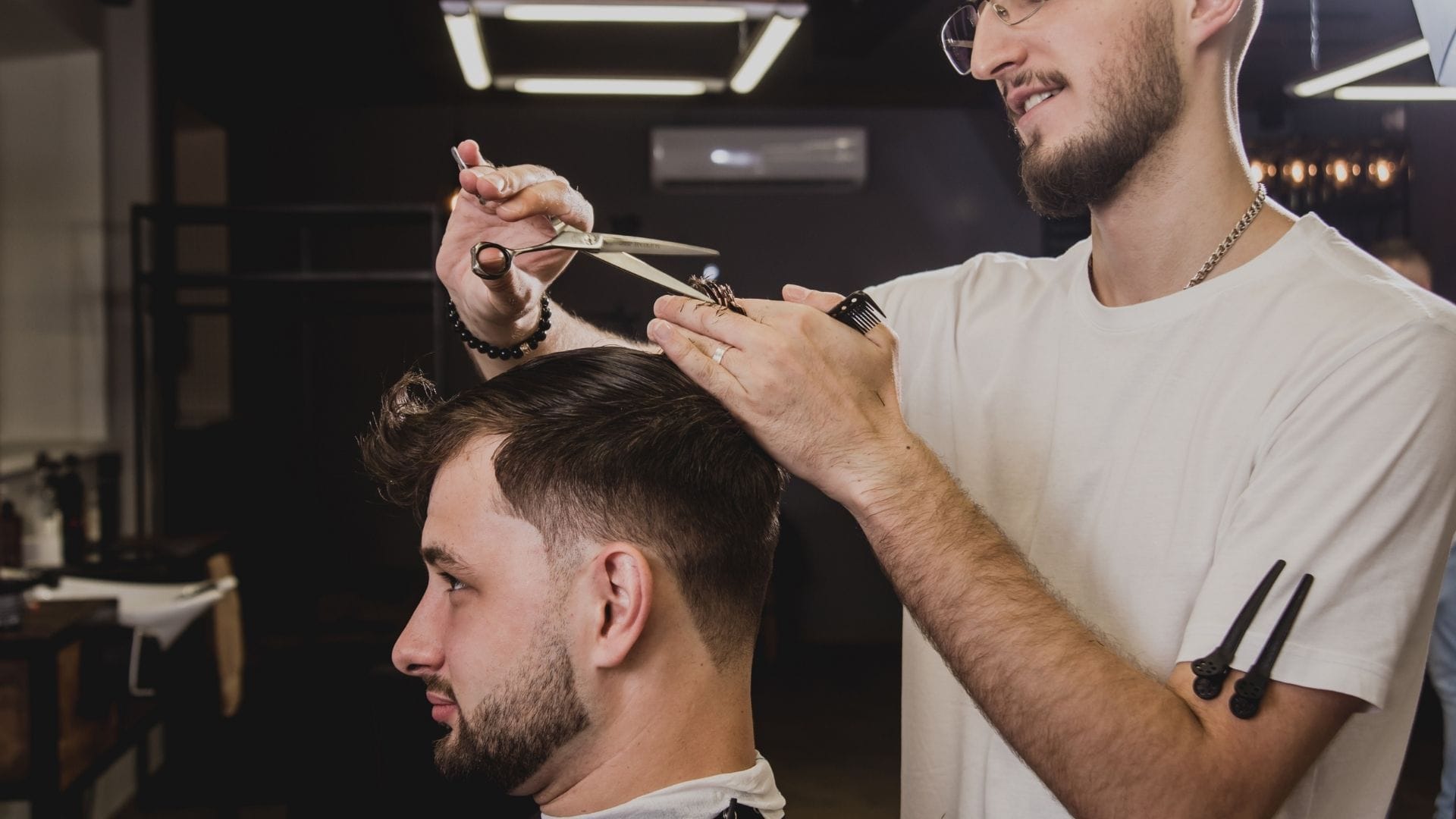
Every barber has a story about the cut that haunted them. Maybe it was a guard number mix-up that turned a trim into a buzz cut, or a fade that split down the middle like a bad Photoshop job. Haircuts are one of the few services where a mistake walks out the door and into the world, visible to everyone from your boss to your barista. Some mistakes are a quick save with a little extra blending. Others require patience, a calendar, and a serious talk about what hair actually does when it grows. This guide breaks down the haircut mistakes that give even seasoned professionals a headache, what causes them, how they get fixed (or don’t), and how you can avoid becoming the next cautionary tale in the shop.
Key Takeaways
- Cutting hair too short is the hardest mistake to fix because there is no way to add length back. Recovery depends entirely on hair growth rate, which averages about half an inch per month.
- Structural problems like uneven fades, blown-out necklines, and destroyed blends are harder to correct than simple length issues because fixing them often requires removing even more hair.
- DIY haircuts and combined cut-and-color mistakes create the most complicated starting points for a barber, since there are multiple layers of damage to work around.
- A thorough consultation with reference photos and clear guard-number communication prevents the majority of haircut disasters before the clippers even turn on.
- Growing out a bad haircut takes real strategy. Styling products, trims to reshape (not shorten), and scalp care all speed up a clean recovery.
The Moment Every Barber Dreads: When a Fix Is Harder Than the Original Cut
Every barber knows the feeling. The client sits down, you take one look at the back of their head, and your stomach drops. Something has gone wrong before you even picked up your shears. Maybe a guard was switched out mid-cut, or a previous barber chased an uneven line until there was nothing left to chase. These are the moments that separate a quick tune-up from a project that eats into your whole afternoon.
Why some mistakes can’t be undone on the same day
Hair is not clay. You cannot add it back once it hits the floor. This single fact drives everything about corrective barbering. A cut that is too long can be shortened in seconds. A cut that is too short has only one real fix: time. Barbers can soften the appearance of a bad cut with texturizing, strategic layering, or clever styling, but they cannot restore length that has already been removed. This is why length-related mistakes sit at the top of nearly every barber’s list of nightmares. There is no tool in the shop, no amount of skill, and no product that can reverse a guard-number mistake once the hair is gone.
The difference between a correctable mistake and a grow-it-out situation
Not every mistake requires months of recovery. A barber can usually solve asymmetry issues, choppy transitions, or a slightly crooked part within a single appointment, sometimes even in the same sitting where the mistake happened. The real trouble starts when the fix requires removing more hair than the client wants to lose. If correcting an uneven fade means shaving both sides down to a number one, that is no longer a touch-up. That is a compromise, and clients do not always want to hear about compromises. Barbers have to make a judgment call every time: is this fixable today, or are we now managing a multi-week recovery plan?
How client communication failures lead to the hardest fixes
A surprising number of “impossible to fix” haircuts actually start as communication breakdowns. The client says “short on the sides” and pictures a number three. The barber hears “short” and reaches for a number one. Nobody said anything wrong, but nobody confirmed anything right either. According to the Professional Beauty Association, miscommunication during consultation is one of the leading causes of client dissatisfaction in barbershops and salons nationwide. The fix for this problem is not a better pair of clippers. It is a five-minute conversation before the cape goes on, and it is the single biggest factor separating shops with repeat clients from shops with one-time visitors.
Cutting Too Short: The Mistake That Offers No Mercy
If there is one mistake that strikes fear into every barber’s heart, it is cutting too short. There is no undo button, no quick patch, and no clever styling trick that brings length back once it is gone. This is the mistake that turns a routine Tuesday appointment into an uncomfortable conversation.
Why over-cutting is the number one irreversible error
Length loss is permanent until the hair grows back. That is the blunt truth of this business. A barber can fix almost anything else in the chair: an uneven line, a crooked part, a rough blend. But once hair hits the floor, it is gone. This is why experienced barbers treat the first few passes of the clipper with so much caution, especially around the crown and temples where mistakes are most visible. A seasoned professional will often start with a longer guard than requested and work down gradually, because going shorter is always an option, while going longer never is.
Guard number confusion and how it causes drastic length loss
Clipper guards are numbered, but the numbers do not mean the same thing to every client. A number two means something different to someone who has never had short hair compared to someone who gets a fade every two weeks. Guard sizes typically range from a 0 (roughly 1/16 inch) to an 8 (roughly 1 inch), and the jump between consecutive numbers can look dramatic on hair that has not been cut in months. A client asking for “a two on the sides” without specifying may end up with far less hair than they expected if the barber interprets the request differently than intended. This is why many shops now use laminated guard-size charts during consultation, letting clients see and feel the actual difference between a 1 and a 3 before any clippers come out.
What a barber can actually do when the damage is done
Once a cut is too short, the barber’s job shifts from cutting to damage control. This usually means evening out the rest of the head to match the shortest section, which keeps the cut looking intentional rather than accidental. A good barber will also offer styling advice, recommend specific pomades or texturizing sprays that add the illusion of volume, and sometimes suggest a different part placement to minimize the appearance of thinness. None of this brings the hair back, but it can make the next few weeks far more bearable for the client.
How long it realistically takes to recover from a too-short cut
Hair grows at an average rate of about half an inch per month, according to the American Academy of Dermatology. That means a cut that removed two inches of length needs roughly four months before it returns to its previous state, and that is assuming healthy growth with no breakage. Clients hoping for a quick bounce-back are often disappointed to learn that patience is the only real remedy. Scheduling a follow-up trim around the six-week mark to clean up the shape as it grows can make the process feel more intentional and less like waiting out a sentence.
The Uneven Fade: When One Side Doesn’t Match the Other
A fade is one of the most technically demanding cuts in the barbering trade, which also makes it one of the easiest to get wrong. An uneven fade is immediately noticeable, and correcting it often creates a frustrating cycle.
Why asymmetry is so hard to fix without going shorter
The challenge with fixing an uneven fade is that the only tool available to even things out is to cut more hair, not less. If the left side blends cleaner and higher than the right, the barber’s only real option is to bring the right side up to match, which almost always means removing additional length. There is no way to “add” fade to the shorter side. This is the same core problem as the too-short mistake, just localized to one section of the head instead of the whole thing.
The compounding problem of chasing an uneven line
Barbers call this “chasing the line,” and it is a trap that catches even skilled professionals when they are tired or rushing. One side looks slightly higher, so the barber trims the other side to match. Now that side looks slightly higher. The cycle continues, and with each pass, the overall length gets shorter and shorter until the fade that was supposed to start at the ears now starts above them. The only way to break this cycle is to stop, step back, and assess both sides from a distance rather than cutting reactively.
Comparing fixable fade unevenness vs. structural asymmetry
| Type of Unevenness | Cause | Fix Difficulty | Typical Solution |
| Minor line unevenness | Slight angle difference in trimming | Low | Quick touch-up in the same session |
| Blend height mismatch | Guard change applied unevenly | Medium | Re-blend both sides, slight length loss |
| Structural asymmetry | Natural head shape or growth pattern ignored | High | Requires redesign of the cut, significant length loss |
| Client head movement during cut | Client shifted position mid-service | Medium | Re-check level, correct higher side |
Minor issues can often be solved in minutes. Structural asymmetry, especially when caused by ignoring a client’s natural head shape, sometimes requires rethinking the entire cut rather than a simple patch.
The Blown-Out Neckline: One of the Most Visible Mistakes in the Shop
Few mistakes draw as much attention as a blown-out neckline. It sits right at the collar, visible to everyone standing behind the client, including coworkers, partners, and anyone taking a photo at the wrong angle.
What a blown-out neckline actually is and how it happens
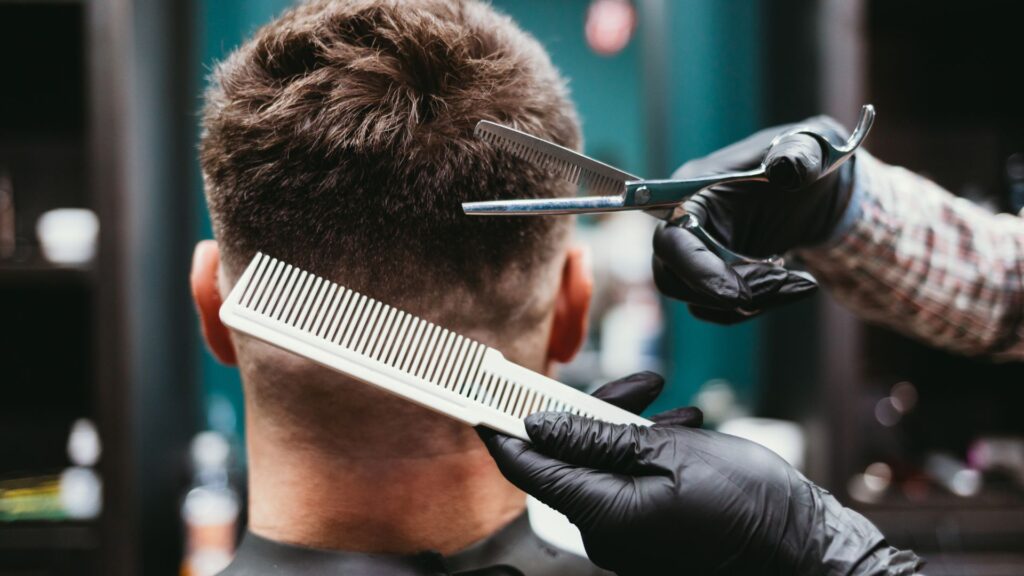
A blown-out neckline happens when the barber removes too much hair while defining the bottom edge of the haircut, creating a visible gap or an unnaturally high, uneven line at the nape of the neck. This usually results from using too short a guard, applying too much pressure with the clipper, or going over the same section multiple times while trying to “clean it up.” Once the hairline at the neck is cut too high, there is no way to lower it until new growth comes in.
Why fixing a neckline often requires sacrificing length
Because the neckline sits at the very bottom of the haircut, a mistake there often forces the barber to raise the entire back section to blend with the new, higher starting point. This can shift the whole silhouette of the cut, sometimes making a mid-length style look noticeably shorter in the back than the client intended. It is one of the clearest examples of how a small, localized mistake can ripple outward and affect the entire haircut.
Natural vs. squared necklines and which is more forgiving of error
A natural neckline follows the client’s own hairline without cutting a defined shape into it, while a squared neckline creates a crisp, straight edge across the nape. Squared necklines look sharp but leave far less room for error, since any unevenness is immediately obvious against the straight line. Natural necklines are more forgiving because small irregularities blend into the client’s existing hair pattern rather than standing out against a geometric shape. Barbers working with first-time clients or those unsure about upkeep often recommend a natural neckline specifically because it hides minor inconsistencies better and requires less frequent maintenance.
Taking the Signature Haircut Too Far: When a Style Gets Overdone
Every regular client eventually develops a go-to look, a Signature Haircut that becomes part of their identity. The risk comes when a barber, trying to impress or experiment, pushes that familiar style past the point the client actually wanted.
The risk of over-processing a client’s defining look
A client’s go-to cut works because it fits their face shape, lifestyle, and personal brand. When a barber decides to “elevate” the look with extra texture, a sharper taper, or a trendy modification without checking first, the result can feel like a stranger looking back in the mirror. Clients do not always articulate this feeling as a technical complaint. More often they simply say the cut “doesn’t feel like me,” which is just as damaging to the barber-client relationship as an outright mistake.
How a Signature Haircut identity makes mistakes harder to hide
Because a regular client’s friends, family, and coworkers know their usual style, any deviation is noticed immediately by people outside the shop. A one-inch difference in length might go unnoticed on a first-time client, but on someone whose look has stayed consistent for years, that same change draws comments and questions. This social visibility raises the stakes significantly and makes barbers more cautious about experimenting on long-term clients without an explicit conversation first.
Barber and client alignment failures that cause overdone results
The root cause here is almost always a lack of explicit confirmation. A barber might assume a client wants the usual, slightly updated version of their cut, while the client expected exactly what they got last time, no changes. Shops that keep detailed client notes, including guard numbers, preferred part placement, and specific requests from past visits, dramatically reduce this risk. Without that record, even a great barber is relying on memory, and memory fades faster than hair grows back.
Patch Jobs and Uneven Texture: The Mess Left by DIY Attempts
Nothing tests a barber’s skill quite like fixing a haircut the client attempted at home. DIY cuts often arrive with inconsistent lengths, missing sections, and texture problems that complicate even the simplest correction.
Why home clipper cuts are the hardest starting point for a barber
Home haircuts usually involve limited mirror angles, inconsistent clipper pressure, and guards that may not even match professional-grade equipment. The result is often patchy, with some sections buzzed close and others barely touched. A barber walking into this situation has to reverse-engineer what happened before they can even think about styling, which takes significantly more time than a standard appointment and often costs more as a result.
Texturizing disasters and how they limit reshaping options
Thinning shears and texturizing scissors are powerful tools in professional hands, but they are unforgiving when used without training. Over-texturized hair loses the weight needed to hold a shape, leaving it thin, wispy, and difficult to style regardless of length. Unlike a simple length mistake, texture damage cannot be fixed by waiting for growth alone, since the hair shaft itself has been thinned unevenly along its length. Barbers sometimes have to cut the affected sections shorter just to remove the damaged texture and start fresh.
Comparing a clean slate vs. a patchy DIY job as a starting canvas
| Starting Point | Barber’s Approach | Time Required | Likely Outcome |
| Unfilled growth (clean slate) | Standard consultation and cut | 20-45 minutes | Predictable, client’s desired style |
| Minor DIY trim gone wrong | Targeted correction of problem area | 30-50 minutes | Close to desired style with minor compromise |
| Full DIY clipper attempt | Reconstruct the cut from scratch | 45-75 minutes | Shorter overall style, limited options |
| Over-texturized DIY attempt | Remove damaged sections, rebuild shape | 45-90 minutes | Significant length loss, simplified style |
A clean head of unstyled, evenly grown hair is actually the easiest possible canvas for a barber. Every layer of DIY intervention adds complexity and reduces the final options on the table.
The Wrong Hairline: When the Shape Is Set in the Wrong Place
The hairline frames the entire face, which means even small placement errors are highly visible and surprisingly difficult to correct.
How hairline placement errors happen and why they’re hard to reverse
Hairline shaping, sometimes called line-up or edge-up work, involves cutting a crisp boundary at the forehead or temples. A barber who sets this line too high has effectively erased hair that cannot be replaced until new growth fills in. Unlike fades, which can be blended upward to disguise unevenness, a hairline set too far back has no camouflage option. The forehead is simply larger until the hair grows back.
The difference between a too-high and a too-low hairline cut
A hairline cut too high creates a visibly larger forehead and can age a client’s appearance or clash with their natural face shape. A hairline cut too low, while less common, can look unnatural and overly severe, almost like a hairpiece edge rather than natural growth. Both mistakes are jarring, but barbers generally agree that a too-high hairline is harder to live with day to day, since it is impossible to disguise with styling and remains obvious from every angle.
What barbers can do to minimize a bad hairline shape
While a barber cannot lower a hairline that has been cut too high, they can soften the harshness of the line by rounding sharp corners, blending the edge into the surrounding hair, and adjusting the client’s part or fringe to draw the eye elsewhere. Recommending a slightly longer style on top can also help balance the proportions of the face while the hairline grows back in, which typically takes several months depending on the individual’s natural hair growth cycle.
Destroying the Blend: When the Transition Between Lengths Falls Apart
A clean blend is what separates an amateur fade from a professional one. When that transition fails, the entire haircut can look unfinished no matter how clean the rest of the work is.
What a blending failure looks like and why it happens
A failed blend shows a visible line or ridge where one length meets another instead of a smooth gradient. This typically happens when a barber moves too quickly between guard sizes, skips intermediate lengths, or does not spend enough time with the clippers angled correctly to soften the transition. It can also occur when a barber switches tools mid-cut, such as moving from clippers to shears, without matching the previous section’s angle and tension.
The shelf effect and how it becomes its own problem to solve
When a blend fails badly enough, it creates what barbers call a “shelf,” a hard ridge of hair sitting on top of a much shorter section below it. This shelf is not just a visual problem. It becomes a styling problem too, since hair lying on top of the shelf tends to flip up or sit unnaturally no matter what product is applied. Fixing a shelf almost always requires removing the ridge entirely, which means cutting into the longer section above it and often shortening the overall style more than the client wanted.
Scissor vs. clipper blending errors and their different fix paths
| Blending Method | Common Error | Fix Approach | Length Impact |
| Clipper-over-comb | Comb angle inconsistent | Re-blend with consistent angle | Minimal to moderate |
| Clipper guard transition | Skipping guard sizes | Add intermediate guard passes | Moderate |
| Scissor-over-comb | Uneven tension while cutting | Rework section with lighter passes | Minimal |
| Mixed clipper-to-scissor | Angle mismatch between tools | Full re-blend of transition zone | Moderate to significant |
Clipper-based blending errors are generally easier to fix than mixed-tool mistakes, since clippers alone offer more consistent, repeatable results during the correction process.
Cowlicks, Growth Patterns, and Cutting Against the Grain
Hair does not grow in one uniform direction, and ignoring that fact is one of the most common reasons a technically “correct” haircut still looks wrong once it is dry and styled.
Why ignoring natural growth patterns creates problems no product can solve
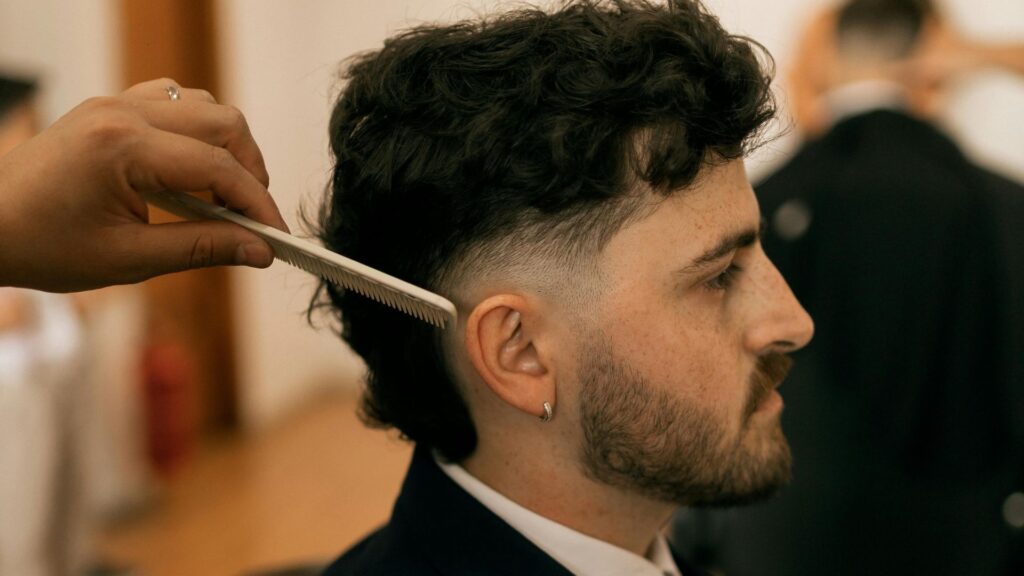
Every head has at least one cowlick or growth pattern where hair grows in a different direction than the surrounding area, most commonly at the crown. A barber who cuts without accounting for this pattern may create a style that looks perfect while the client is still in the chair, wet hair lying flat, but transforms into an unmanageable mess once it dries and the cowlick reasserts itself. No amount of pomade or hairspray can permanently override a strong growth pattern; it can only be temporarily tamed.
How cutting against a cowlick compounds into a visible mistake
When a barber cuts hair at a length that is too short near a cowlick, the short strands are too stiff to be weighed down by surrounding hair and instead stand straight up, creating a visible tuft that draws the eye to exactly the spot the client least wants attention. Lengthening the surrounding hair to disguise it is not an immediate option, which means the client is often stuck managing the issue with product and patience until enough growth returns to add weight to the area.
The barber’s responsibility to assess growth before the first cut
Experienced barbers check for cowlicks and growth pattern irregularities during the consultation, often by looking at the hair dry before it gets wet and styled for the cut. This single step, checking dry hair patterns before cutting, prevents a significant number of “mystery” complaints that come in days after a haircut once the client has washed and dried their own hair at home.
Color and Cut Mistakes Together: The Double Disaster
When a bad haircut is paired with a color mistake, the complexity of the fix increases substantially, since each service affects what can safely be done with the other.
Why cut mistakes paired with color errors multiply the damage
Hair that has been chemically processed, whether through bleach, dye, or a corrective color treatment, is often more fragile and prone to breakage than untouched hair. A barber trying to fix a cut on hair that has also just undergone a color correction has to work more gently, use sharper tools, and sometimes accept a less aggressive fix to avoid further damaging compromised strands. This is one of the rare situations where the safest option for hair health directly conflicts with the fastest path to the client’s desired look.
How corrective color affects haircut options and timing
Many stylists recommend waiting at least a week between a significant color correction and a dramatic haircut, giving the hair and scalp time to recover from chemical processing before introducing additional mechanical stress from cutting and styling. This waiting period can be frustrating for clients eager for a complete fix, but rushing the process increases the risk of further breakage, which only extends the overall recovery timeline.
Comparing single-service mistakes vs. combined cut-and-color disasters
| Scenario | Complexity Level | Average Fix Time | Recovery Timeline |
| Cut mistake only | Moderate | 1 session | Weeks to months |
| Color mistake only | Moderate to high | 1-3 sessions | Weeks to months |
| Combined cut and color mistake | High | 2-4 sessions | Several months |
| Combined mistake with chemical damage | Severe | 3-5+ sessions | 6+ months |
Combined mistakes nearly always take longer and cost more to correct than either issue would on its own, simply because the hair’s structural integrity has to be factored into every decision.
What Happens When You Visit the Wrong Barbershop for Your Hair Type
Not every shop is equipped to handle every hair type equally well, and this mismatch is a surprisingly common source of haircut mistakes.
The mismatch between barber specialization and client hair texture
Barbering is a craft with specializations, just like any skilled trade. A barber who has spent years perfecting sharp fades on straight, fine hair may not have the same depth of experience working with tightly coiled or very curly textures, and vice versa. This is not a reflection of talent so much as exposure and repetition. A barber gets better at what they practice most often, which means walking into a shop that primarily serves a different hair type than yours increases the odds of a mismatch between expectation and result.
How coarse, curly, and fine hair types each face unique mistake risks
Coarse and curly hair can hide length loss differently than straight hair, since curl shrinkage can make a cut look shorter immediately after service than it will once fully dry and in its natural state. Fine, straight hair shows every line and texture inconsistency immediately, since there is little natural volume to disguise unevenness. Barbers unfamiliar with a particular texture may misjudge how much length to remove or how a style will behave once the client leaves the chair and the hair settles into its natural pattern.
Finding a barbershop near me that actually specializes in your hair type
The solution is not complicated, but it does take a little research. Before booking, look at a shop’s portfolio of recent work, check reviews that specifically mention your hair type or texture, and do not hesitate to ask directly whether the barber has experience with hair like yours. Searching for a barbershop near me that highlights curly, coarse, or fine hair expertise in its portfolio or reviews is a far more reliable strategy than simply booking the most convenient location.
The Cost of a Bad Haircut: Financial and Emotional
A bad haircut costs more than just the price of the original service, and the full impact often extends well beyond the chair.
What corrective appointments actually cost vs. an original service
Corrective haircuts frequently take longer than a standard appointment, and many shops charge accordingly, sometimes at a premium rate given the additional skill and time required. A client who paid for a basic cut may end up spending significantly more on a correction, especially if the fix requires a specialist or a more senior barber within the shop.
| Service Type | Typical Time | Relative Cost |
| Standard haircut | 20-30 minutes | Base rate |
| Minor touch-up correction | 15-20 minutes | Often free or discounted |
| Moderate corrective cut | 30-45 minutes | 1.0-1.5x base rate |
| Major reconstructive cut | 45-75 minutes | 1.5-2x base rate |
| Combined cut and color correction | 2+ hours | 2-4x base rate |
The emotional toll of a bad haircut before a major event
Timing makes everything worse. A bad haircut two weeks before a routine Tuesday is an inconvenience. A bad haircut two days before a wedding, job interview, or photoshoot is genuinely distressing. Many barbers report that client frustration is rarely about the hair alone; it is about the loss of control over how they present themselves during an important moment. Recognizing this emotional weight, rather than just the technical error, often shapes how a barber approaches the correction and the conversation around it.
Tipping, refunds, and the etiquette of addressing a bad result
Industry norms vary, but most reputable shops will offer a free correction appointment if a client is unhappy with a result, provided the concern is raised promptly. Tipping for a corrective service is generally at the client’s discretion and often reduced or skipped if the correction is addressing the shop’s own mistake. Clear, calm communication works far better than confrontation; most barbers want the chance to make it right, and a direct conversation shortly after the appointment produces better results than frustration voiced weeks later.
Prevention: How to Stop These Mistakes Before They Happen
The best fix for a bad haircut is one that never has to happen. Nearly every mistake covered in this guide traces back to a preventable gap in communication or preparation.
The consultation habits that eliminate most preventable errors
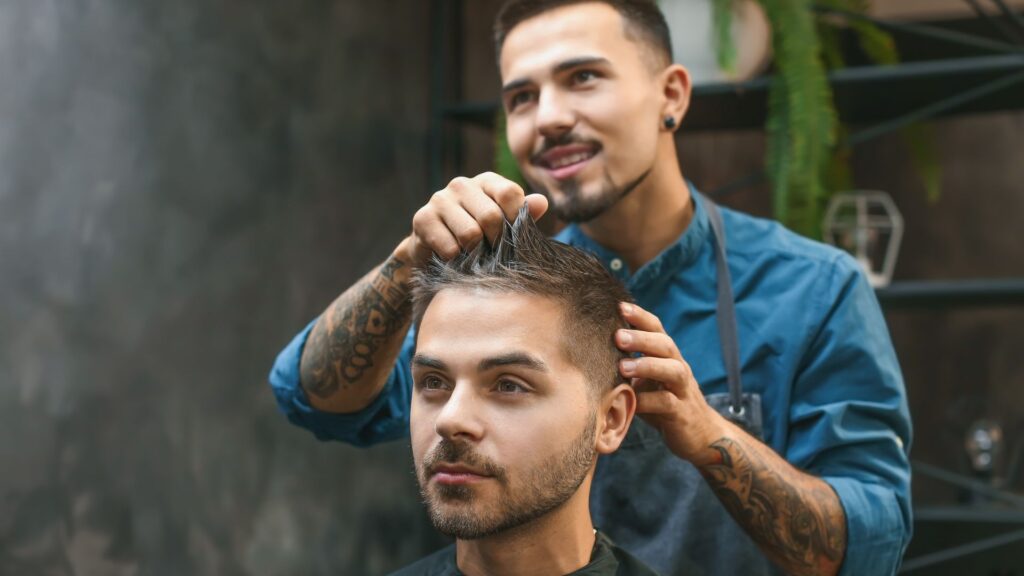
A thorough consultation takes no more than five minutes but prevents the vast majority of haircut disasters. This means discussing not just desired length but also styling habits, how much time the client spends on their hair daily, and any problem areas like cowlicks or scars that might affect the cut. Barbers who skip this step in the name of speed are gambling with a result that could cost far more time to fix later.
Reference photos, guard numbers, and specific communication tools
Words like “short” and “medium” mean different things to different people, but a photo removes almost all ambiguity. Bringing two or three reference images, including one showing length and one showing the desired finish style, gives a barber a concrete target. Confirming specific guard numbers out loud before the first pass of the clippers, rather than relying on descriptive words alone, closes the gap between what a client imagines and what a barber executes.
How to choose a barber whose skill set matches your style goals
Not every skilled barber excels at every style. Some specialize in classic, clean cuts while others build a reputation around intricate fades or texture work. Reviewing a barber’s portfolio for examples of the specific style you want, rather than general skill, is the single best predictor of a satisfying result. A client seeking a sharp skin fade should look for a portfolio full of skin fades, not just general haircut photos.
Recovery Timelines: A Realistic Guide to Growing Back What Was Lost
Once a mistake has happened, understanding the realistic timeline for recovery helps manage expectations and plan next steps.
Average hair growth rates and what they mean for each mistake type
Hair grows at an average rate of about half an inch per month, though this varies slightly based on genetics, age, diet, and overall health, according to dermatological research. A minor length mistake of a quarter inch may be unnoticeable within three to four weeks, while a drastic cut removing two or more inches can take four to six months to fully grow back to its previous length.
| Mistake Type | Approximate Length Lost | Estimated Recovery Time |
| Minor guard mix-up | 1/4 to 1/2 inch | 3-4 weeks |
| Moderate over-cut | 1 inch | 2 months |
| Significant over-cut | 2 inches | 4 months |
| Severe over-cut or shaved section | 3+ inches | 6+ months |
Products and treatments that support healthy regrowth
While no product can accelerate hair growth beyond its natural genetic rate, certain habits support healthy growth and reduce breakage that would otherwise slow visible progress. Regular scalp massages improve circulation, a balanced diet rich in protein and biotin supports keratin production, and minimizing heat styling during the recovery period reduces the risk of damage to new, more fragile growth.
Managing your look during the grow-out phase with styling strategies
Strategic trims, rather than avoiding the barbershop entirely, actually help the grow-out process look more intentional. Shaping the sides and back every few weeks while leaving the top to grow can create a style that looks like a deliberate transitional cut rather than an accident in progress. Texturizing products, hats for difficult in-between stages, and adjusted part placement all help bridge the gap until the hair reaches a length the client is happy with again.
Expert Perspectives on the Hardest Fixes in the Shop
Barbers who have spent decades behind the chair tend to agree on which mistakes are the most dreaded, even if their shops and specialties differ.
What experienced barbers say about the mistakes they fear most
Across interviews and industry discussions, veteran barbers consistently point to irreversible length mistakes and botched necklines as the two errors they fear most, precisely because both are immediately visible and impossible to undo. Newer barbers, by contrast, often cite blending failures as their biggest personal challenge, since achieving a seamless fade takes years of repetition to master consistently.
Industry data on client complaints and service corrections
Client satisfaction research from organizations like the Professional Beauty Association consistently identifies poor communication during consultation as a top driver of complaints in the hair services industry, reinforcing that most “technical” mistakes actually begin as misunderstandings rather than skill failures.
Trends in client education that are reducing error rates
More shops are adopting digital intake forms, visual guard-size charts, and even short video consultations for new clients before their first appointment. These tools help set clear expectations before the client ever sits in the chair, and early data from shops that have adopted them report fewer correction appointments and higher first-visit satisfaction rates.
Frequently Asked Questions About Haircut Mistakes
What is the hardest haircut mistake for a barber to fix?
Cutting the hair too short is widely considered the hardest mistake to fix because there is no way to restore lost length. Every other mistake on this list can be at least partially corrected with more cutting, but a too-short cut can only be solved with time and patience as the hair grows back.
How long does it take to grow out a bad haircut?
Recovery time depends on how much length was lost. Since hair grows at an average of about half an inch per month, a minor mistake might resolve within a few weeks, while a drastic over-cut can take four to six months to fully grow back.
Can a barber fix an uneven fade without cutting it shorter?
Usually not. Fixing an uneven fade almost always requires evening out the higher side to match the lower one, which means additional length is removed. There is no way to add fade height to the shorter side without cutting the taller side down.
Why is a blown-out neckline so hard to correct?
A blown-out neckline sits at the very base of the haircut, so fixing it often means raising the entire back section of the style to blend with the new, higher line. This can shift the overall shape and length of the cut more than the client expected.
Is it harder for a barber to fix a DIY haircut or a professional mistake?
DIY haircuts are generally harder to fix because they often include inconsistent lengths, uneven texture, and sections cut with home clippers that do not match professional standards. A barber usually needs more time to assess and correct a DIY attempt than a mistake made by another trained professional.
Should I tip my barber if they made a mistake on my haircut?
Tipping is at your discretion, and most clients reduce or skip the tip if the correction is addressing the barbershop’s own error. Many reputable shops will also offer a free correction appointment to make things right.
How can I prevent haircut mistakes before they happen?
Bring reference photos, confirm specific guard numbers out loud, and give your barber a clear sense of your styling habits during the consultation. These steps remove ambiguity and are the single most effective way to prevent most common haircut mistakes.
Does combining a haircut with a color correction make mistakes harder to fix?
Yes. Chemically processed hair is often more fragile, which limits how aggressively a barber can correct a cutting mistake without risking further damage. Combined cut-and-color corrections typically take longer and may require multiple sessions.
What should I do if I notice a mistake right after my haircut?
Speak up calmly and promptly, ideally before leaving the shop. Most barbers would rather make an adjustment immediately than have a client leave unhappy, and minor issues are often much easier to correct in the same sitting than days later.
Conclusion
Every barber, no matter how skilled, has cut something a little too short or chased an uneven line further than they meant to. It is part of working with a material that cannot be undone once it hits the floor. What separates a great shop from an average one is not the absence of mistakes but how those mistakes get handled: honest communication, a clear plan for correction, and respect for how much a haircut actually means to the person in the chair. If you are dealing with a result you did not expect, talk to your barber directly, be specific about what is bothering you, and give the fix a fair chance before writing off the whole experience. And if you are a few guard numbers deep into a growing-out phase, take heart. Hair grows back, patience pays off, and your next cut is always just one good consultation away from getting it exactly right.