A great haircut doesn’t start with a photo on your phone. It starts with what’s actually growing out of your scalp. Texture, density, and porosity determine how a cut will fall, how it will behave on day three without product, and whether it will hold its shape through a humid afternoon or a sweaty gym session. This guide breaks down every major hair texture category, the science behind why your hair does what it does, and exactly which cuts, tools, and products work best for each type. Whether you’re walking into your first appointment or you’ve been in the chair for twenty years, understanding your texture is the single most useful thing you can bring to a conversation with your barber.
Key Takeaways
- Texture, not face shape, is the primary driver of which haircut will actually work day to day.
- Density and porosity change the math even when two guys have the same curl pattern.
- Straight, wavy, curly, and coily hair each demand different cutting techniques, from dry cutting to point cutting to clipper-over-comb work.
- Product pairing by texture prevents the two most common complaints barbers hear: too much volume or too little hold.
- Maintenance schedules and pricing vary by texture, and knowing this ahead of time helps you get more value from every visit.
Why Hair Texture Is the First Thing a Barber Reads
Before a single word is exchanged about style preferences, an experienced barber is already reading the hair. Texture tells a story that a client’s verbal description often can’t.
What barbers actually look at in the first 30 seconds
In the first half-minute behind the chair, a barber is scanning for three things: curl pattern, how the hair sits when dry versus wet, and the growth direction at the crown and hairline. These three data points predict almost everything about how a cut will perform once the client leaves the shop. A barber who skips this step and jumps straight to cutting based on a reference photo is setting the client up for disappointment, because the same photo can produce three completely different results depending on the texture underneath it.
The difference between texture, density, and porosity
These three terms get used interchangeably by clients, but they mean very different things.
| Term | What It Means | Why It Matters for a Haircut |
| Texture | The shape of the hair strand, from straight to tightly coiled | Determines how the cut falls and moves |
| Density | How many hairs per square inch on the scalp | Determines how much bulk needs to be removed |
| Porosity | How well the hair shaft absorbs and holds moisture | Determines product choice and how the hair responds to humidity |
A client can have curly texture with low density, meaning the curls are loose and airy rather than tightly packed. Another client can have straight texture with extremely high density, meaning the hair looks thick and heavy even though each strand is fine. Treating all three as the same variable is one of the fastest ways to end up with an unflattering cut.
Why texture beats face shape as the primary cut driver
Face shape charts are everywhere online, and they’re not useless, but they’re incomplete. A cut recommended for an “oval face” might look sharp on straight hair and completely shapeless on curly hair, because curl pattern changes how volume sits around the face regardless of bone structure. Texture determines the starting silhouette. Face shape then fine-tunes that silhouette. Get the order backward and the haircut fights the hair for weeks until it grows out.
Understanding this hierarchy sets the foundation for everything else in this guide, starting with the biology that creates texture in the first place.
The Science Behind Hair Texture
Texture isn’t random. It’s the product of follicle shape, growth cycles, and genetics, and understanding the mechanics helps explain why some cuts hold their shape and others don’t.
Follicle shape and how it determines curl pattern
Hair grows from a follicle, and the cross-sectional shape of that follicle is the single biggest factor in determining curl pattern. A round follicle produces straight hair. An oval follicle produces wavy hair. A flattened, asymmetrical follicle produces curly to coily hair. The more elliptical the follicle, the tighter the curl, because the hair grows unevenly on one side of the strand as it exits the scalp, forcing it to curve.
Hair growth cycles and how they affect texture behavior
Hair moves through three phases: anagen (active growth), catagen (transition), and telogen (resting and shedding). Texture can shift slightly across these phases, which is why some men notice their curl pattern loosening or tightening at different points in their growth cycle. A full growth cycle can take years, so texture changes are usually gradual rather than sudden, unless triggered by an outside factor.
Hormones, genetics, and why texture changes over time
Genetics set the baseline follicle shape, but hormones can shift texture over a lifetime. Puberty often coarsens hair texture. Aging can thin density and sometimes straighten curl pattern slightly as follicles change shape with time. Stress, certain medications, and hormonal shifts can also alter texture temporarily or permanently. This is why a cut that worked perfectly five years ago might not sit the same way today, even with no change in styling routine.
With the biology established, the next step is understanding the major texture categories and what each one means for cut selection.
The Major Hair Texture Categories and What They Mean for Cuts
Most classification systems break hair into four broad categories, each with its own subtypes. Knowing which category you fall into is the starting point for every cut decision that follows.
Straight hair — strengths, limitations, and best cuts
Straight hair reflects light evenly, which gives it a natural shine that other textures don’t have in the same way. It has no bend to break up fine lines, which makes sharp edges and crisp partings look exceptionally clean. The limitation is volume. Straight hair tends to lie flat against the scalp, so cuts that rely on natural lift often need product or a blow-dry assist to hold shape. Straight hair also shows every imperfection in a cut line, since there’s no curl to camouflage uneven sections.
Wavy hair — the most versatile texture and how to work with it
Wavy hair sits between straight and curly, and it’s widely considered the easiest texture to style because it holds both structure and movement. It has enough bend to create natural texture without the volume challenges of curlier hair. The key with wavy hair is cutting with the wave pattern rather than against it, since a cut that ignores the natural S-shape of the strand can end up looking unintentionally messy instead of styled.
Curly hair — managing volume, shrinkage, and shape
Curly hair coils into a defined spiral shape and experiences noticeable shrinkage, meaning the strand length when dry is visibly shorter than when stretched wet. This is the single most important factor curly-haired clients and their barbers need to account for, because cutting curly hair wet without factoring in shrinkage often results in a cut that looks far shorter than intended once it dries and springs up.
Coily and kinky hair — structure, shrinkage, and style options
Coily hair has the tightest curl pattern of the four categories, often forming tight zigzags or corkscrews. It experiences the most dramatic shrinkage, sometimes 50 to 75 percent of its stretched length. This texture also tends to be the driest, since the natural oils from the scalp have the hardest path to travel down a tightly coiled strand. Cuts for coily hair need to account for both shrinkage and moisture retention to avoid a result that looks uneven or feels brittle.
| Texture Type | Shrinkage Level | Natural Shine | Styling Difficulty |
| Straight | None | High | Low |
| Wavy | Minimal | Medium | Low to Medium |
| Curly | Moderate to High | Low to Medium | Medium to High |
| Coily/Kinky | High to Very High | Low | High |
Texture alone doesn’t tell the whole story, though. Two men with identical curl patterns can need completely different cuts once density enters the equation.
Hair Density — Why Two Men with the Same Texture Get Different Cuts
Density measures how many strands occupy a given area of scalp, and it changes the cutting approach even when texture stays constant.
High density hair — cutting for bulk reduction and movement
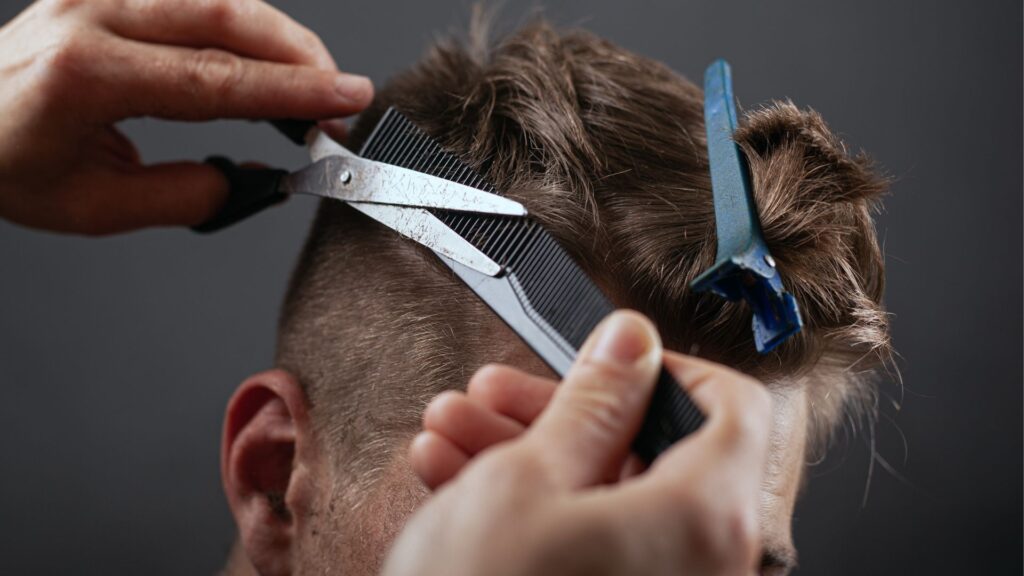
High density hair looks thick and can feel heavy, regardless of whether the texture is straight or curly. The priority with high density hair is bulk reduction. Barbers use thinning shears, texturizing techniques, and strategic layering to remove weight without sacrificing length, since cutting high density hair with a single blunt line often results in a triangular, bottom-heavy silhouette.
Low density and fine hair — cutting for the illusion of thickness
Low density hair needs the opposite approach. Instead of removing weight, the goal is building the illusion of fullness. Blunt cutting, rather than heavy layering, helps preserve the appearance of density, since thinning fine hair further can leave it looking sparse or wispy.
Mixed density — how to handle uneven growth patterns
Many men have uneven density across the scalp, often thinner at the temples or crown and thicker elsewhere. A skilled barber will customize the cutting technique by zone rather than applying one approach across the whole head, blending weight removal in dense areas with preservation techniques in thinner ones.
| Density Level | Cutting Priority | Common Technique |
| High | Reduce bulk | Thinning shears, layering |
| Low/Fine | Build illusion of fullness | Blunt cutting, minimal thinning |
| Mixed | Zone-specific blending | Combination approach by area |
With texture and density covered, it’s time to get specific about cuts, starting with straight hair.
Straight Hair Haircuts — Structure, Shine, and Limitations
Straight hair rewards precision. Every line is visible, so clean execution matters more here than with any other texture.
Best classic cuts for straight hair
Classic options like the side part, the crew cut, and the ivy league hold their shape exceptionally well on straight hair because the strand’s natural rigidity keeps the line crisp between visits. These cuts also showcase the natural shine straight hair produces, giving them a polished, put-together look with minimal daily effort.
Best modern cuts for straight hair
Modern takes, including the textured crop and the disconnected undercut, work well on straight hair when paired with the right product to fake texture that the hair doesn’t naturally have. A light matte paste or clay can add grip and create the illusion of movement that straight strands lack on their own.
Common mistakes barbers make with straight hair
The most frequent mistake is over-layering straight hair in an attempt to create volume, which instead causes the ends to look thin and splayed. Straight hair generally performs better with cleaner, more structured lines than with heavy layering techniques borrowed from curlier textures.
Classic vs. Modern for straight hair: Choose a classic cut if low daily maintenance and long-term structure matter most. Choose a modern textured cut if you’re comfortable using product daily and want a more current silhouette.
Straight hair’s predictability makes it a useful baseline. Wavy hair introduces a new variable: natural movement that a cut needs to work with rather than erase.
Wavy Hair Haircuts — Working With Movement, Not Against It
Wavy hair offers the best of both worlds, but only when the cutting approach respects its natural pattern.
How wavy hair behaves differently wet vs. dry
Wavy hair often looks nearly straight when wet and only reveals its wave pattern as it dries. This means cutting wavy hair exclusively wet, the traditional method for straight hair, can lead to a misjudged line length. Many barbers now check the hair at various stages of drying to confirm how the cut will actually sit once fully dry.
Cuts that enhance natural wave without going overboard
The textured quiff, the medium-length crop, and the natural side part all work well on wavy hair because they give the wave room to show without letting it turn into unruly volume. Cuts that are too short can make wavy hair look frizzy rather than textured, while cuts that are too long can weigh the wave down into a flatter, less defined shape.
Product and maintenance pairing for wavy cuts
A lightweight sea salt spray or texturizing cream enhances wavy hair’s natural pattern without adding heaviness. Wavy hair generally does best with products that define rather than flatten, since over-styling can erase the very movement that makes this texture appealing.
Wet cutting vs. dry-check cutting for wavy hair: Wet cutting alone works for simpler, shorter wavy cuts. A dry check partway through is better for longer or more textured wavy cuts where precise wave placement matters.
Wavy hair sits at the midpoint of the spectrum. Curly hair pushes the volume and shrinkage considerations even further.
Curly Hair Haircuts — Volume Control and Shape Retention
Curly hair requires a fundamentally different mindset than straight or wavy hair, starting with how it’s cut in the first place.
Dry cutting vs. wet cutting for curly hair
Many curl specialists now cut curly hair dry, curl by curl, because this is the only way to see exactly how each curl will fall once it springs back into shape. Wet cutting curly hair risks cutting it too short, since the stretched wet length doesn’t match the dry, shrunken result. That said, some barbers use a hybrid approach, shaping the overall silhouette wet and then dry-cutting individual curls for precision.
The best cuts for loose, medium, and tight curls
| Curl Tightness | Best Cut Style | Why It Works |
| Loose curls | Longer layered cuts | Preserves length while allowing movement |
| Medium curls | Rounded or curl-aware fades | Balances volume with a clean perimeter |
| Tight curls | Shape-up with defined curl clusters | Controls shrinkage visually with structured edges |
Shrinkage — the factor most men don’t account for
Shrinkage is the number one reason curly-haired clients leave a barbershop unhappy. A curl that measures six inches stretched might only hang at three and a half inches once fully dry. Communicating desired length in terms of stretched versus dry measurements, and confirming the barber accounts for this, prevents the most common curly haircut complaint.
Dry cutting vs. wet cutting: Choose dry cutting if precision and curl-by-curl shaping matter most. Choose wet cutting if the style is simpler and shrinkage is less dramatic, such as with looser curl patterns.
Curly hair demands precision around shrinkage. Coily and kinky hair takes every one of these considerations and intensifies them further.
Coily and Kinky Hair — The Most Misunderstood Texture in the Shop
Coily hair is frequently the texture barbers receive the least formal training on, despite it requiring some of the most specialized technique.
Understanding Type 4 hair structure
Type 4 hair, the classification system’s term for coily and kinky textures, has the tightest curl pattern and the flattest follicle shape of all texture types. This structure makes the hair naturally fragile, since the tight coils create weak points along the strand where breakage is more likely. It’s also the driest texture, since natural scalp oils struggle to travel down the coiled shaft.
Cuts and styles built specifically for coily hair
Tapered cuts, sponge-friendly crops, and styles that work with the hair’s natural shrinkage, rather than against it, tend to perform best. Length retention is often a goal for coily-haired clients, which means barbers need to minimize unnecessary trimming and focus cuts on shape rather than repeated length removal.
The Children Haircut conversation — introducing coily-haired kids to the chair
A Children Haircut appointment for a coily-haired child requires extra patience and a gentler approach than an adult cut. Many parents report better outcomes when they choose a barber who specifically advertises experience with textured and coily children’s hair, since cutting technique, chair comfort, and communication style all need to adjust for a younger, often more sensitive, client. Starting kids early with a barber who understands their specific texture builds a foundation of trust that carries into adulthood.
Coily hair’s unique needs lead naturally into a broader question: how does texture interact with the face shape guidelines so many men rely on?
Texture and Face Shape Together — The Full Decision Matrix
Face shape and texture aren’t competing factors. They work together, with texture setting the foundation and face shape refining the details.
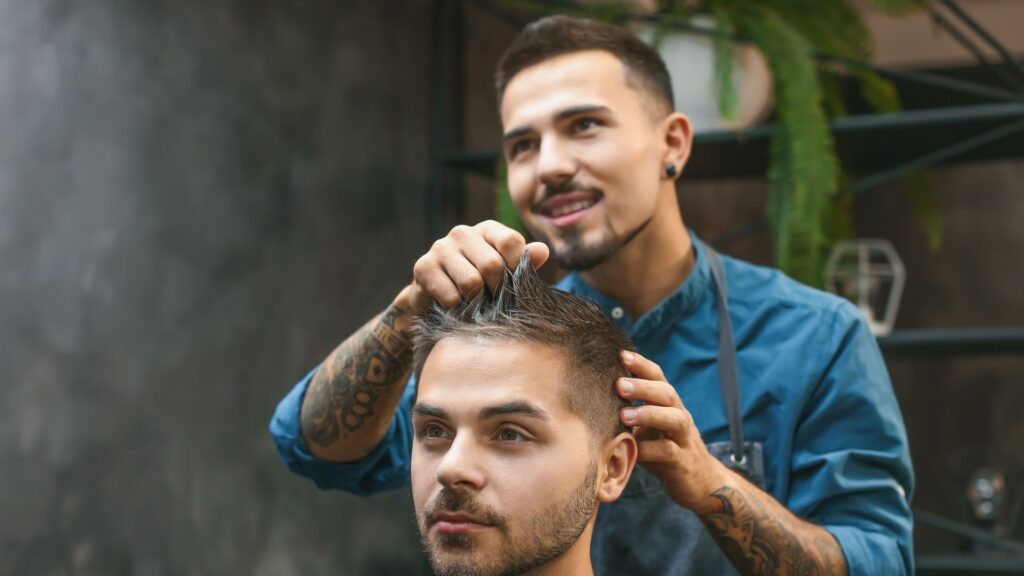
How texture amplifies or contradicts face shape recommendations
A round face is often advised to add height on top to create a more elongated appearance. Straight hair achieves this with a simple pompadour or quiff, since it holds vertical lift cleanly. Curly hair naturally creates volume and height just by existing, so a curly-haired client with a round face might need a cut that controls width at the sides rather than adding more height on top, since curls alone can already provide that lift.
Decision matrix — matching texture, density, and face shape to a cut
| Texture | Round Face | Square Face | Oval Face | Long Face |
| Straight | Add height, taper sides | Soften angles with layers | Most cuts work well | Keep length shorter on top |
| Wavy | Textured height, trimmed sides | Rounded layers | Flexible, most styles work | Side-swept styles |
| Curly | Control width, define shape | Rounded curl clusters | Natural curl patterns shine | Avoid excessive top volume |
| Coily | Taper to balance width | Shape-defined fades | Nearly all shapes work | Lower top volume, tapered sides |
When barber instinct overrides the formula
Charts and matrices are useful starting points, but an experienced barber will sometimes deviate from the formula based on growth patterns, cowlicks, or a client’s personal styling habits. A cowlick at the crown, for example, might make a universally recommended cut for a given face shape and texture completely impractical for that specific client.
Understanding how texture and face shape interact sets up the next practical question: which tools actually produce these results?
Tools and Techniques That Change by Texture
The right haircut depends as much on tool selection as it does on styling decisions made beforehand.
Scissors, clippers, and razors — which texture needs which tool
Scissors offer the most control and are often preferred for curly and coily textures, where precision curl-by-curl work matters. Clippers excel at creating clean, consistent fades across any texture, though guard length selection needs to account for shrinkage in curlier hair. Razors can create soft, blended edges on straight and wavy hair but are generally avoided on curly and coily textures, since the cutting action can cause more frizz and weaken already fragile strands.
Point cutting, slide cutting, and texturizing shears explained
Point cutting involves cutting into the ends of the hair at an angle to soften a blunt line, a technique that works across nearly all textures. Slide cutting removes bulk while maintaining length, making it a favorite for high-density straight and wavy hair. Texturizing shears, which have small teeth built into the blade, remove weight from thick or coarse hair without shortening overall length, a useful tool for high-density curly and coily textures.
How blade sharpness and clipper tension affect textured cuts
A dull blade dragging through coily hair can cause split ends and frizz almost immediately, while the same dull blade on straight hair might only cause a slightly less clean line. Clipper tension matters too: too tight, and the clipper can pull and snag tightly coiled hair, causing discomfort and uneven cutting.
| Texture | Preferred Primary Tool | Avoid |
| Straight | Scissors or clippers | Overuse of thinning shears |
| Wavy | Scissors, light razor work | Heavy razor cutting |
| Curly | Scissors, curl-specific shears | Razors |
| Coily | Scissors, clippers with wide guards | Razors, dull blades |
Tool selection is only half the equation. What happens after the cut, in terms of product, determines whether the style holds up day to day.
Products Matched to Texture — What Works, What Doesn’t
The wrong product can undo even a perfectly executed haircut, which is why product pairing deserves the same attention as the cut itself.
Straight hair product pairings
Straight hair benefits from lightweight pomades, clays, and texturizing powders that add grip without weighing the hair down. Heavy creams or oils tend to make straight hair look greasy rather than styled, since there’s no curl pattern to absorb the extra product.
Curly and coily hair product pairings
Curly and coily hair thrives with leave-in conditioners, curl creams, and oils that lock in moisture, since dryness is the primary challenge for these textures. Gels can help define curl patterns and reduce frizz, particularly when applied to soaking wet hair using a scrunching technique rather than rubbing, which can disrupt curl formation.
Ingredient breakdowns and what to avoid by texture
| Texture | Beneficial Ingredients | Ingredients to Avoid |
| Straight | Light silicones, clay, matte pastes | Heavy oils, thick creams |
| Wavy | Sea salt spray, light creams | Heavy waxes |
| Curly | Shea butter, glycerin, curl creams | Sulfates, heavy silicones |
| Coily | Castor oil, shea butter, leave-in conditioners | Alcohol-based products, sulfates |
Sulfates, in particular, strip natural oils aggressively, which is a bigger problem for curly and coily textures that are already prone to dryness than it is for straight hair, which produces and distributes oil more easily.
Choosing the right products is only useful if the cut and routine around it avoid common pitfalls, which brings up a set of mistakes seen across every texture type.
Common Texture-Related Mistakes Men Make Before and After the Chair
Even a skilled barber can’t fully compensate for mistakes made before or after the appointment.
Arriving with product in your hair
Walking into an appointment with heavy product buildup makes it harder for a barber to accurately assess natural texture, curl pattern, and how the hair will fall once washed. Clean, product-free hair, or hair styled the way it’s normally worn, gives the most accurate starting point for a cut.
Requesting cuts that fight your natural texture
Asking for a cut designed for straight hair while having naturally curly or coily hair sets up a frustrating cycle of daily styling battles. A better approach is bringing reference photos of people with a similar texture, rather than simply the desired end result, since the same cut name can produce wildly different outcomes across texture types.
Ignoring moisture and scalp health between visits
Curly and coily hair in particular suffers when moisture routines lapse between appointments, leading to dryness, breakage, and a cut that looks less defined over time. Straight hair is more forgiving here, but scalp health still affects shine and overall hair condition regardless of texture.
Fighting texture vs. working with texture: A cut that fights natural texture requires daily high-maintenance styling to force a shape the hair doesn’t naturally hold. A cut that works with texture needs less daily effort and holds its intended shape longer between washes.
Avoiding these mistakes sets realistic expectations heading into the next consideration: how texture affects pricing and how often a return visit is needed.
Pricing, Maintenance, and Texture-Specific Scheduling
Texture doesn’t just affect the cut itself. It affects the business side of the haircut experience too.
Why curly and coily cuts often cost more
Curly and coily cuts frequently take longer to execute properly, particularly when dry cutting curl by curl, which translates into higher service pricing at many shops. Specialized training in textured cutting techniques is also less widely available, meaning barbers who’ve invested in that skill set often price their services accordingly.
Maintenance schedules by texture type
| Texture | Typical Maintenance Interval |
| Straight | 3-4 weeks |
| Wavy | 4-5 weeks |
| Curly | 5-7 weeks |
| Coily | 6-8 weeks |
Coily and curly textures often go longer between cuts since the goal is frequently length retention and shape maintenance rather than complete restyling.
Getting value from every visit regardless of texture
Asking a barber for styling tips specific to your texture during the appointment, rather than after leaving the shop, ensures the investment in the cut translates into daily styling success at home. Clients who bring their usual styling products to the appointment also help the barber finish the cut in a way that matches real-world, everyday results.
Pricing and scheduling naturally lead to a bigger question: how do you find a barber equipped to handle your specific texture in the first place?
Finding the Right Barber for Your Texture
Not every barber has equal experience across every texture type, and finding the right fit makes a measurable difference in results.
What to look for in a barber portfolio by texture
A strong portfolio should include multiple examples of the specific texture type in question, not just a general range of haircuts. A barber with dozens of sharp straight-hair fades but no curly or coily examples may not be the right fit for a client with tighter curl patterns, regardless of their overall skill level.
Questions to ask before sitting down
Useful questions include asking how the barber typically approaches shrinkage on curly or coily hair, whether they cut dry or wet for textured hair, and how they’d recommend maintaining the style between visits. Clear, specific answers signal real experience with that texture.
Using a haircut near me search to find texture specialists
A simple haircut near me search often surfaces dozens of options, but filtering further by texture specialty, through reviews, portfolio photos, or direct messages to the shop, narrows the list to barbers genuinely equipped for a specific hair type. Many shops now tag stylist profiles by specialty, including curly cuts, coily cuts, or textured fades, making this filtering process faster than it used to be.
With the right barber identified, it’s worth looking ahead at where grooming trends are headed, particularly around texture.
Texture Trends — Where Men’s Grooming Is Heading
The grooming industry has shifted considerably in how it approaches natural texture over the past several years.
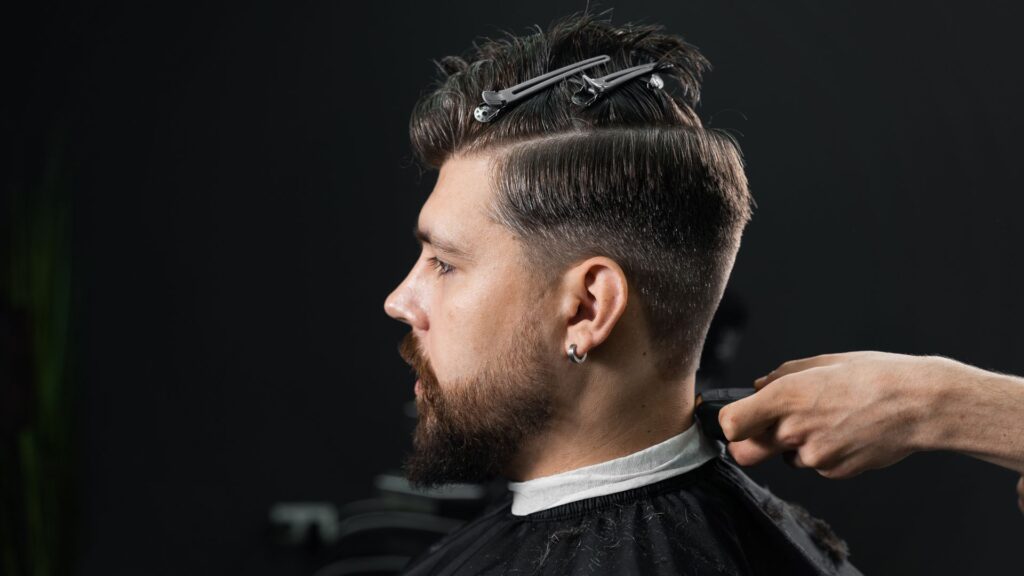
The embrace of natural texture in modern style
Styles that highlight rather than suppress natural curl and wave patterns have grown significantly more popular, moving away from the older trend of straightening or forcing texture into shapes it doesn’t naturally hold. This shift has pushed barbershops to invest more heavily in texture-specific training.
Sustainable and texture-friendly product trends
Demand has grown for sulfate-free, cruelty-free, and more environmentally conscious product lines, particularly among curly and coily-haired clients who need gentler formulas to avoid stripping moisture. Brands have responded with expanded lines specifically formulated for textured hair.
Technology in the shop and texture mapping tools
Some shops have begun experimenting with texture mapping tools and apps that analyze curl pattern, density, and porosity before a cut even begins, giving barbers a more data-informed starting point. While not yet standard across the industry, this technology points toward a future where texture assessment becomes even more precise than visual inspection alone.
These trends point toward a more texture-informed grooming industry overall, which makes it a good moment to address the specific questions clients ask most often.
Frequently Asked Questions About Hair Texture and Haircuts
How do I know what my natural hair texture actually is?
Look at freshly washed, product-free hair as it air dries. Straight hair will lie flat with no visible bend. Wavy hair will form a loose S-shape. Curly hair will form distinct spirals. Coily hair will form tight zigzags or corkscrews with significant shrinkage.
Can my hair texture change over time?
Yes. Hormonal shifts, aging, certain medications, and even significant stress can alter curl pattern and density over months or years. It’s common for texture to coarsen during puberty and sometimes loosen or thin with age.
Should curly hair be cut wet or dry?
Many specialists prefer dry cutting for curly hair since it shows exactly how each curl will fall once fully dry, accounting for shrinkage. Some barbers use a hybrid approach, shaping wet and refining dry.
Why does my curly hair look shorter after it dries?
This is shrinkage, a natural property of curly and coily hair where the dry length is noticeably shorter than the stretched wet length. It’s normal and should be factored into any length discussion with a barber.
Do I need different products for curly versus straight hair?
Yes. Curly and coily hair generally needs more moisture-focused products like leave-in conditioners and curl creams, while straight hair does better with lighter products like clays and pomades that won’t weigh it down.
How often should I get a haircut based on my texture?
Straight hair typically needs a trim every 3-4 weeks, wavy hair every 4-5 weeks, curly hair every 5-7 weeks, and coily hair every 6-8 weeks, though individual growth rates and style goals can shift these windows.
Why do curly and coily haircuts sometimes cost more?
These cuts often take more time, particularly with dry, curl-by-curl cutting techniques, and require specialized training that not all barbers have invested in, which can be reflected in service pricing.
What’s the best way to find a barber who understands my specific texture?
Review portfolios for multiple examples of your specific texture type, ask direct questions about their approach to shrinkage and dry versus wet cutting, and consider shops that tag stylists by texture specialty.
At what age should a child with coily hair get their first professional haircut?
There’s no universal age, but many parents choose a barber experienced with coily children’s hair once the child can sit relatively still, often between ages 2 and 4, to start building comfort with the grooming routine early.
Does face shape matter more or less than texture when choosing a cut?
Texture should be considered first, since it determines how a cut will actually fall and behave. Face shape then refines the details within the options that texture makes realistic.
The questions above cover the most common points of confusion. What remains is translating all of this into a simple pre-appointment routine.
Know Your Texture, Own Your Cut — A Final Checklist
Understanding texture is the foundation of every good haircut, and a small amount of preparation goes a long way toward getting it right the first time.
The pre-appointment texture checklist
- Wash hair and let it dry naturally before the appointment, avoiding heavy styling products
- Identify your texture category: straight, wavy, curly, or coily
- Note your density: does your hair feel thick and heavy, or fine and light
- Bring reference photos of people with a similar texture, not just the desired cut
- Ask your barber directly how they plan to account for shrinkage if you have curly or coily hair
- Confirm a realistic maintenance schedule before leaving the shop
- Pick up or confirm the right products for your specific texture before you go home
Conclusion
The best haircuts aren’t the ones copied exactly from a photo. They’re the ones built around what’s actually growing out of your head. Texture dictates the starting point, density refines the approach, and the right tools and products carry the result through the weeks between visits. Walk into your next appointment knowing your texture, and you’ll walk out with a cut that actually works for you, not against you.