
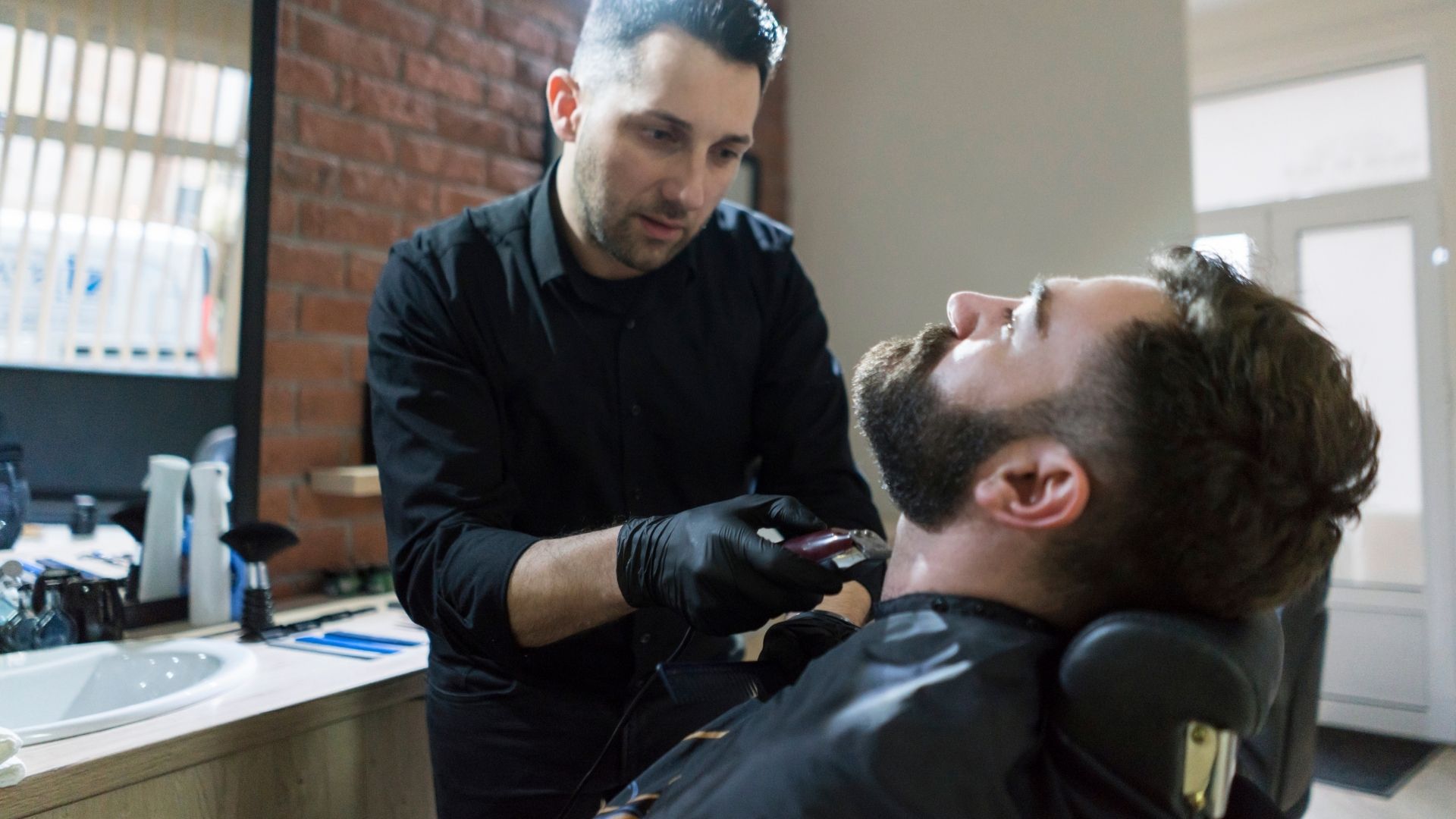
Sit in my chair long enough and you’ll hear the same question from guys of every age: “Why does my neck grow back so fast when the rest of my hair takes forever?” It’s not your imagination, and it’s not bad luck. There’s real biology at play, along with a few habits and myths that make the problem feel worse than it is. In this guide, I’m pulling back the curtain on what actually happens at your hairline, why the neck acts like its own ecosystem, and how to keep that strip of skin looking sharp between visits. Think of this as the conversation we’d have if you had an extra twenty minutes in the chair and I didn’t have another client waiting.
Key Takeaways
- Neckline hair often appears to grow faster because it’s finer, less pigmented in some areas, and sits in a zone with high follicle density, not because it physically grows at a different speed than hair on your scalp.
- Testosterone and DHT sensitivity drive how thick and fast facial and neck hair grows, which is why most men notice changes in their late teens and into their twenties.
- Shaving does not make hair grow back thicker, darker, or faster. That’s one of the most persistent myths in grooming, and it’s simply not supported by the biology of the hair follicle.
- Genetics and ethnicity play a bigger role in neckline growth patterns than most men realize, affecting everything from density to curl pattern to how prone the skin is to irritation.
- A consistent maintenance schedule, the right tools, and basic skin care reduce irritation, ingrown hairs, and that “five o’clock shadow by lunch” feeling far more than any single product or trick.
What Is Actually Happening to the Hair on Your Neck?
Your neck isn’t growing hair faster than your head. I know that sounds like I’m contradicting the headline, but stay with me because this is where most guys get it wrong.
The Hair Growth Cycle, Broken Down Simply
Every hair on your body moves through three phases: anagen (active growth), catagen (transition), and telogen (resting, followed by shedding). Scalp hair can sit in the anagen phase for two to six years. Neck and facial hair, by contrast, typically only stays in that growth phase for about 30 to 45 days before cycling through to rest and shed, according to dermatological research on facial hair growth cycles. That shorter cycle means neck hair sheds and regrows far more often, which creates the illusion of faster growth even though each individual strand isn’t racing ahead of the hair on your scalp.
Why Short Cycles Create the “Fast Growth” Illusion
Picture two barbers cutting the same length off a hedge. One hedge regrows a new branch every six weeks. The other regrows one every three years. Technically, neither branch grows at different speed per day, but the one with the short cycle looks unruly far more often. That’s your neck versus your scalp in a nutshell.
Terminal Hair Versus Vellus Hair at the Neckline
Not all neck hair is created equal. Vellus hair is the soft, fine, often colorless fuzz most of us have everywhere as kids. Terminal hair is the coarser, pigmented hair that shows up during puberty, driven by hormones. The neckline is a transition zone where vellus hair converts to terminal hair earlier and more aggressively than in other areas, which is part of why it can look patchy or uneven as a man matures.
How Blood Flow and Follicle Depth Factor In
Follicles closer to major blood vessels tend to receive more nutrients and oxygen, which can support more consistent growth cycles. The neck sits close to the carotid arteries and jugular veins, giving follicles in that region strong circulation. That’s not the only factor, but it’s one more reason the neckline behaves differently than, say, the hair on your forearm.
| Hair Zone | Average Growth Cycle | Hair Type | Typical Growth Rate |
| Scalp | 2 to 6 years | Terminal | ~0.5 inch/month |
| Neckline/Jaw | 30 to 45 days | Transitional to terminal | ~0.3 to 0.4 inch/month |
| Cheeks | 4 to 6 weeks | Terminal | ~0.35 inch/month |
| Chest/Back | Several months | Terminal | ~0.2 inch/month |
Once you understand that the neck isn’t cheating the clock, it’s just running on a different one, the next question becomes obvious: what’s actually setting that clock?
The Hormone Behind the Hustle: Testosterone and DHT
If the hair growth cycle is the engine, testosterone and its byproduct dihydrotestosterone (DHT) are the fuel. This is where biology gets interesting, and honestly, a little bit personal for a lot of guys.
How Testosterone Triggers Terminal Hair Growth
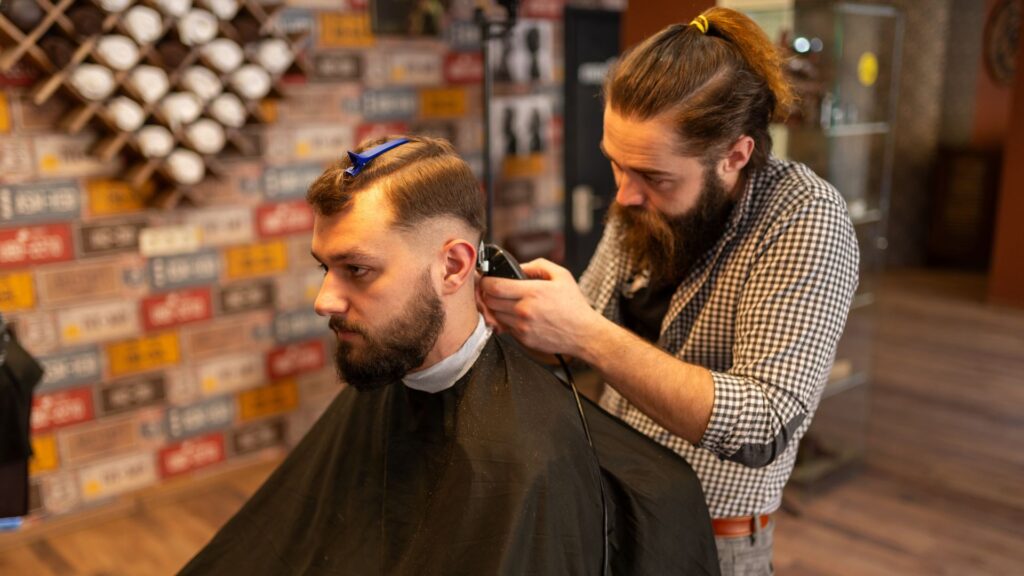
During puberty, rising testosterone levels signal certain follicles to switch from producing vellus hair to terminal hair. The neck, jaw, and chin are some of the most androgen-sensitive zones on the body, which is why facial and neck hair often shows up before chest or back hair for most men.
DHT’s Specific Role in Facial and Neck Hair Density
Testosterone converts to DHT through an enzyme called 5-alpha reductase. DHT binds more strongly to androgen receptors in facial and neck follicles than testosterone alone, according to endocrinology research on androgen-dependent hair growth. That’s why DHT sensitivity, not just raw testosterone levels, determines how dense and coarse your neckline hair becomes.
Why Hormone Levels Differ Man to Man
Two guys can have similar testosterone levels and still grow completely different neck hair patterns. The number and sensitivity of androgen receptors in the skin is largely inherited, which brings genetics back into the conversation. I’ve cut hair for identical twins who had nearly matching haircuts but very different neck hair thickness, and the only real explanation was receptor sensitivity passed down differently even within the same family tree.
Hormonal Shifts Later in Life
Testosterone naturally fluctuates with age, stress, sleep, and overall health. Some men in their 40s and 50s notice their neckline hair becoming coarser or patchier, which often tracks with hormonal shifts rather than anything happening at the follicle level itself.
Hormones explain the “why” behind density and texture, but they don’t act alone. Up next is the piece almost every guy assumes controls everything: how many follicles you’ve actually got packed into that small strip of skin.
Hair Density and Follicle Patterns Around the Neck
Density is about real estate. The neckline happens to be prime property for hair follicles, and that changes how fast regrowth becomes visible.
Why the Neck Has More Follicles Per Square Inch Than You Think
Facial and neck skin contains a notably higher concentration of hair follicles compared to areas like the arms or legs. Combine that density with a short growth cycle, and you get a region that always seems to be “catching up” visually, even when individual hairs aren’t outpacing hair elsewhere on the body.
The Follicle Map of a Typical Male Neckline
Most men have three loose zones at the neckline: the upper zone just below the jaw, which tends to be densest; the middle zone along the natural neckline curve; and the lower zone near the collar, where hair often thins out. Understanding your own map helps you (or your barber) create a cleaner line that works with your natural pattern instead of against it.
How Density Changes With Age
Follicle density at the neck typically increases through the 20s and can plateau or slightly decrease by the 40s and 50s, following similar patterns to other androgen-sensitive hair zones. This is why a 22-year-old and a 52-year-old can have wildly different maintenance needs even with a similar haircut.
Density Versus Perceived Thickness
Density refers to the number of follicles. Thickness refers to the diameter of each hair shaft. You can have high density with fine hair that looks soft, or lower density with coarse hair that looks heavier. Knowing the difference helps set realistic expectations for how your neckline will look a week or two after a cut.
| Age Range | Average Follicle Density (Neck) | Typical Hair Texture | Common Concerns |
| 18 to 25 | Increasing | Fine to medium | Uneven patchiness |
| 26 to 35 | Peak density | Medium to coarse | Fast visible regrowth |
| 36 to 45 | Stable | Coarse | Ingrown hairs |
| 46 to 55 | Slight decline | Coarse, sometimes graying | Texture changes, dryness |
Density sets the stage, but it only tells half the story. The other half comes down to something you can’t change with any product on the shelf: your genes.
Genetics: Why Some Men Grow Faster Than Others
I’ve had brothers sit in my chair back to back needing completely different maintenance schedules. That’s genetics doing exactly what genetics does.
The Inherited Nature of Androgen Receptor Sensitivity
Research into androgen receptor genetics suggests that sensitivity to DHT is significantly influenced by inherited genes, often linked to the X chromosome passed down from the mother’s side. That’s part of why guys often say they got their hair pattern “from the mother’s side of the family,” and in some cases, that’s more than just a saying.
Ethnic and Regional Variations in Neck Hair Growth
Hair growth patterns, density, and curl type vary meaningfully across ethnic backgrounds. Men of Mediterranean, Middle Eastern, and South Asian descent often report denser, faster-appearing facial and neck hair growth, while some East Asian and Indigenous populations tend to have lower overall body and facial hair density. Neither pattern is better or worse, but it does mean one-size-fits-all advice rarely fits everyone.
Curl Pattern and Its Role in Ingrown Hair Risk
Genetics also determines curl pattern, which matters enormously at the neckline. Men with tightly curled hair, a trait more common in some Black and mixed-race populations, face a higher risk of ingrown hairs and razor bumps because curved hair shafts are more likely to curl back into the skin after cutting.
Can You “Outgrow” Your Genetic Pattern?
Not really, and that’s okay. What you can do is adjust your tools, technique, and schedule to work with your pattern instead of fighting it. I’ll get into specific tool recommendations by hair type later in this guide.
Genetics sets your starting hand, but how you play it depends partly on habits, and there’s no habit more surrounded by myth than shaving itself.
The Myth of “Shaving Makes Hair Grow Back Thicker, Darker, and Faster”
This is the one I correct more than any other, usually from a teenager whose dad told him this exact thing thirty years ago because his dad told him the same.
Where This Myth Actually Came From
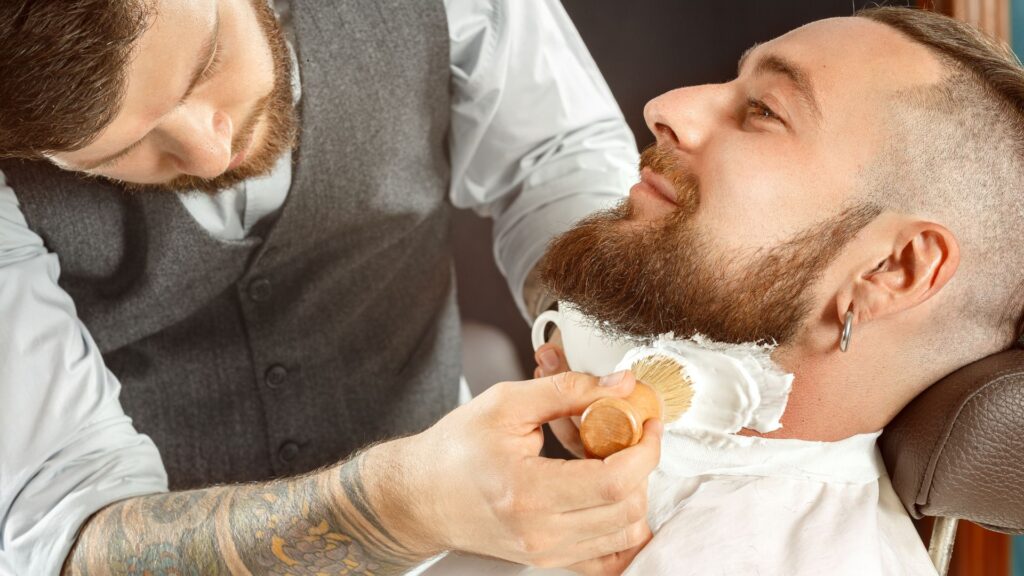
The myth likely traces back to a small 1928 study and decades of anecdotal reinforcement. When you shave, you cut the hair at a blunt angle rather than the naturally tapered tip, which can make regrowth feel coarser and look darker simply due to the blunt edge and shorter length, not any actual change in growth rate, color, or thickness.
What the Science Actually Shows
Multiple dermatological studies, including research published in reviews on hair growth myths, confirm that shaving has no effect on the rate, color, or thickness of hair regrowth. The hair follicle itself, buried beneath the skin, is completely unaffected by what happens at the surface.
Why the Blunt Tip Feels Different to the Touch
A freshly shaved hair has a flat, blunt edge instead of the soft, tapered natural tip. Run your hand across it and it genuinely feels coarser, even though under a microscope the hair’s actual diameter hasn’t changed at all.
The Psychological Trap of “Feeling Like It’s Worse”
Because stubble feels rougher right after shaving, a lot of guys assume they made a mistake by shaving in the first place. That mental loop keeps the myth alive generation after generation, which is honestly more persistent than the hair itself.
| Myth | Reality |
| Shaving makes hair grow back thicker | No effect on diameter; blunt tip feels coarser |
| Shaving makes hair darker | No change in pigment production |
| Shaving speeds up growth rate | Growth rate is controlled by the follicle, unaffected by cutting |
| Shaving more often trains hair to grow faster | Follicles don’t “learn” from surface-level cutting |
Busting that myth clears up a lot of confusion, but it also raises a fair comparison most guys ask about next: how does neckline hair stack up against the hair growing on the rest of your face?
Neckline Hair Versus Beard Hair: What Sets Them Apart
These two zones sit inches apart but behave like different neighborhoods.
Growth Rate Comparison
Beard hair on the chin and jawline often grows slightly faster per month than neckline hair in many men, partly because those areas carry even higher androgen receptor density. The neckline tends to lag just behind in raw speed but catches attention faster because it’s meant to stay clean-cut rather than grown out.
Texture and Coarseness Differences
Beard hair is generally coarser and more uniformly terminal across the jaw and chin. Neckline hair often includes a mix of terminal and vellus hair, especially in the lower collar zone, giving it a softer, patchier feel in some men.
Styling Expectations: Groomed Versus Grown
A beard is meant to be shaped and often grown out intentionally. A neckline is meant to stay invisible, a clean boundary that most people never consciously notice unless it’s messy. That different purpose is exactly why neckline upkeep feels more frequent and more frustrating.
Maintenance Frequency Needed for Each
| Factor | Neckline | Beard |
| Growth cycle length | Shorter (30 to 45 days) | Slightly longer |
| Maintenance goal | Invisible, clean edge | Shaped, visible feature |
| Recommended touch-up frequency | Every 1 to 2 weeks | Every 2 to 4 weeks (shape), daily trim optional |
| Primary risk | Ingrown hairs, stray strands | Patchiness, unevenness |
Once you see the neckline as its own category rather than an extension of your beard, scheduling your upkeep gets a lot easier. But age changes this equation too, and that’s worth walking through decade by decade.
How Neck Hair Growth Changes From Age 18 to 55
A neckline at 18 and a neckline at 50 are rarely the same animal, even on the same guy.
The Late Teens: Hormonal Onset and Uneven Patterns
Between ages 16 and 19, testosterone surges drive the conversion of vellus to terminal hair, but unevenly. Patchy necklines, sparse spots, and inconsistent density are completely normal at this stage and usually fill in more evenly over the next several years.
The 20s: Peak Density and Fastest Visible Regrowth
This is typically when follicle density and androgen sensitivity hit their stride. Most men in their mid to late 20s report needing the most frequent touch-ups of their lives, because the system is running at full capacity.
The 30s and 40s: Stabilization With New Challenges
Growth rate tends to stabilize, but skin sensitivity can increase, and ingrown hairs become more common as skin texture changes slightly with age. This is also when early graying can start showing up at the neckline before anywhere else on the face.
The 50s and Beyond: Texture Shifts and Thinning
Some men notice their neckline hair becoming wirier even as overall density slightly declines. Gray or white hair also tends to be coarser in texture due to the loss of pigment-producing melanocytes, which changes the internal structure of the hair shaft.
| Age Group | Growth Speed | Common Pattern | Maintenance Tip |
| 16 to 19 | Variable | Patchy | Patience, light shaping |
| 20 to 29 | Fastest | Dense, uniform | Frequent touch-ups |
| 30 to 44 | Stable | Coarser | Watch for ingrowns |
| 45 to 55 | Slightly slower | Wiry, graying | Moisturize, gentle tools |
Age changes the equation gradually, but there’s another factor that shapes growth patterns just as dramatically and often gets left out of the conversation entirely: ethnicity.
Ethnicity and Neck Hair Growth Patterns
I’ve worked behind the chair in neighborhoods with every background walking through the door, and the differences in neck hair are real, documented, and worth understanding rather than ignoring.
Documented Differences in Hair Density by Ethnic Background
Research comparing hair characteristics across populations has found that hair density and growth rate vary by ethnicity, with East Asian populations generally showing lower facial and body hair density compared to Mediterranean, Middle Eastern, and South Asian populations.
Curl Pattern Variance and Its Practical Impact
Black and mixed-race men often have tightly coiled hair shafts, which statistically increases the risk of pseudofolliculitis barbae, commonly known as razor bumps, because curved hairs are more prone to re-entering the skin after cutting.
Skin Sensitivity Differences Worth Knowing
Skin sensitivity and reactivity to razors, clippers, and grooming products can vary by skin type and ethnicity, which is why one client’s go-to aftershave might cause irritation for another sitting in the exact same chair an hour later.
Why This Matters for Tool and Product Selection
Understanding these patterns isn’t about stereotyping, it’s about giving better advice. A barber (or you, at home) adjusting blade guards, pressure, and product choice based on actual hair type gets better, more comfortable results than following generic advice built for a different hair type entirely.
Ethnicity and genetics explain a lot of the “why,” but they don’t change the fact that humans have been managing this exact problem for a very long time. Let’s take a quick trip through history.
The Barbershop Neckline: A Brief History of Tradition
Long before clippers existed, men were already obsessing over clean neck edges, and the story behind that is more interesting than most guys realize.
Ancient Grooming and the Origins of the Clean Neck
Archaeological evidence shows that ancient Egyptians used copper razors as early as 3000 BCE, and a clean, defined neckline was associated with status and cleanliness across many ancient civilizations, from Egypt to Rome.
The Rise of the Modern Barber Shop in the 1800s
The traditional shop as we know it today took shape in the 19th century, becoming a cornerstone of community life where straight razor shaves and precise neckline work were considered essential services, not luxuries.
How Clipper Technology Changed Neckline Maintenance Forever
The invention of the electric hair clipper in 1921 by Leo J. Wahl transformed how barbers approached necklines, allowing for faster, more consistent lines than straight razors alone could achieve, especially on thicker or coarser hair.
Cultural Shifts in What a “Clean Neckline” Even Means
Styles have shifted from the razor-sharp, high-contrast lines popular in certain decades to softer, more natural fades that blend rather than sharply define. What counts as “clean” today looks different depending on the era, the region, and honestly, the client’s personal taste.
| Era | Primary Tool | Common Neckline Style |
| Ancient Egypt/Rome | Copper or bronze razors | Sharp, status-driven clean edge |
| 1800s | Straight razor | Defined, formal lines |
| 1920s to 1950s | Early electric clippers | Tapered, military-influenced |
| 1980s to 2000s | Clippers with guards | Sharp fades, high contrast |
| Today | Clippers, trimmers, straight razor combo | Soft blends, natural lines |
History shows this has always been a craft worth getting right, which brings us to the modern toolkit and the age-old debate over which tool actually does the job better.
Clippers Versus Straight Razor: Which Wins for Necklines?
This is a debate I’ve had more times than I can count, and the honest answer is: it depends on your hair, your skin, and what you’re going for.
How Clippers Handle Volume and Speed
Clippers excel at removing bulk quickly and evenly, especially with guards that create a gradual taper. They’re forgiving for beginners and faster for high-volume shop days, but they can leave slightly less precision at the very edge of the line compared to a blade.
How Straight Razors Deliver Precision
A straight razor, used correctly, creates the crispest, sharpest line possible because it cuts hair at skin level with zero guard interference. The tradeoff is skill and risk. A shaky hand with a blade near the neck is not a beginner’s game.
Comfort and Irritation Differences
Clippers generally cause less irritation for sensitive skin because they don’t cut as close to the surface. Straight razors, while sharper in result, carry higher risk of nicks, razor burn, and ingrown hairs if the skin isn’t properly prepped with a hot towel and quality lather first.
Which One Should You Choose at Home?
If you’re maintaining your own neckline between visits, a quality trimmer with adjustable guards is almost always the safer, more forgiving choice. Save the straight razor precision for the professional chair, where skill, angle, and steady hands make all the difference.
| Factor | Clippers | Straight Razor |
| Precision | Good | Excellent |
| Skill required | Low to moderate | High |
| Irritation risk | Lower | Higher if done incorrectly |
| Best for | At-home maintenance | Professional sharp lines |
| Speed | Fast | Slower, more deliberate |
Tool choice matters, but it’s only half the equation. The other half is deciding who’s actually holding that tool, which leads into one of the most common questions I get asked.
DIY Neckline Maintenance Versus Professional Touch-Ups
Can you keep your own neckline clean between appointments? Absolutely. Should you replace your regular visits entirely? Let’s talk through it honestly.
The Case for At-Home Touch-Ups
Between visits, light maintenance with a trimmer helps control stray hairs and keeps the line from looking overgrown, especially if your schedule doesn’t allow for appointments every week or two.
The Case for Leaving It to a Professional
A trained eye can see your natural hairline, head shape, and growth pattern in ways a bathroom mirror simply can’t replicate. Professionals also use proper lighting, steady angles, and tools suited for precision work that’s genuinely difficult to pull off solo.
The Risk of Over-Correcting at Home
The most common mistake I see walking through the door is a neckline pushed too high, too far up the natural hairline, because someone got trigger-happy with a trimmer and kept “fixing” an uneven line until there wasn’t much hairline left to work with.
Finding the Right Balance
A smart middle ground works for most guys: light stray-hair cleanup at home between visits, with the actual line and shape reserved for your regular professional appointment, roughly every two to three weeks depending on your personal growth rate.
| Approach | Pros | Cons |
| Fully DIY | Convenient, cheap, flexible timing | Risk of uneven lines, over-correction |
| Fully professional | Precise, consistent, expert-shaped | Requires regular scheduling, cost |
| Hybrid approach | Balanced, cost-effective | Requires some trimmer skill at home |
Deciding between DIY and professional help naturally leads to the next practical question every guy eventually asks me: how often should this actually happen?
How Often Should You Get a Neckline Cleanup?
There’s no single right answer here, but there is a smart range depending on your hair type and lifestyle.
Fast Growers: Weekly to Every 10 Days
Men with high androgen sensitivity and dense neck follicles, often in their 20s, may notice visible regrowth within a week. For these guys, a touch-up every 7 to 10 days keeps things sharp without constant over-trimming.
Average Growers: Every 2 to 3 Weeks
Most men fall into this middle range, where a cleanup every two to three weeks keeps the neckline looking intentional without requiring constant upkeep.
Slower Growers: Every 3 to 4 Weeks
Men with finer hair, lower density, or slower cycles, often due to age or genetics, can stretch appointments further without the neckline looking neglected.
Special Occasion Timing
Got a wedding, interview, or big event coming up? Schedule your cleanup two to three days before, not the morning of. This gives any minor redness or razor bumps time to calm down while the line still looks crisp.
| Hair Type | Recommended Frequency | Why |
| Fast-growing, dense | Every 7 to 10 days | High follicle turnover |
| Average | Every 2 to 3 weeks | Standard growth cycle |
| Slower-growing, fine | Every 3 to 4 weeks | Lower density, slower cycle |
| Before special events | 2 to 3 days prior | Allows irritation to settle |
Knowing your ideal frequency is half the battle. The other half is avoiding the mistakes that make even a well-timed cleanup look rough.
Common Neckline Mistakes and How to Avoid Them
After two decades behind the chair, I’ve seen every mistake in the book, and most of them are fixable with just a little awareness.
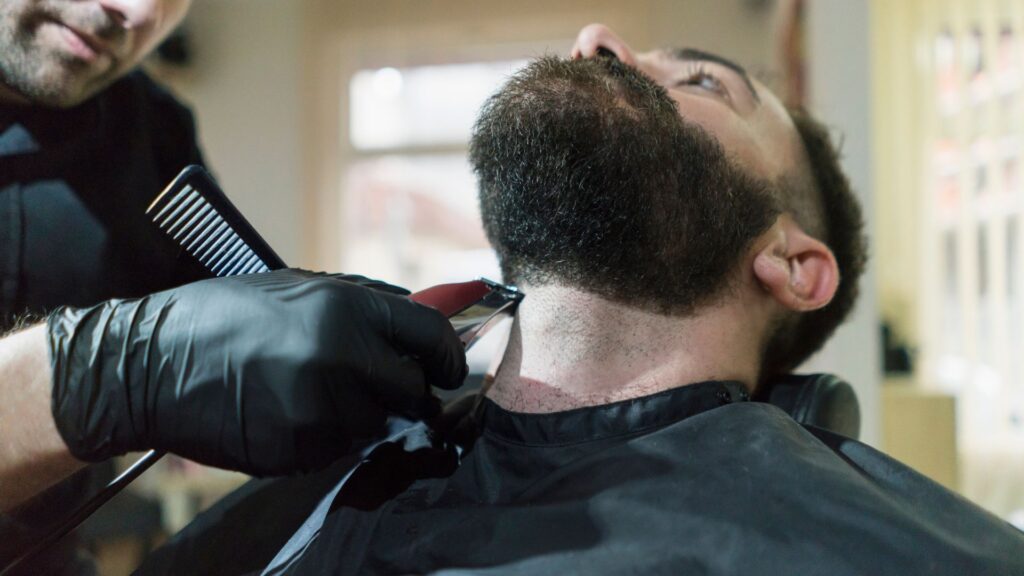
Mistake One: Shaving Too High Above the Natural Hairline
Your natural neckline curves with your head shape. Pushing it too high creates an unnatural, boxy look that doesn’t match how your hair actually grows in.
Mistake Two: Using a Dull Blade
A dull blade tugs instead of cutting cleanly, which increases irritation, redness, and the odds of ingrown hairs. Replace trimmer blades or razor cartridges more often than you probably think you need to.
Mistake Three: Skipping Skin Prep
Cutting dry, unprepped skin is like trying to cut cold butter with a plastic knife. A warm towel or shower beforehand softens hair and opens pores, making for a cleaner, more comfortable result.
Mistake Four: Cutting Against the Grain Too Aggressively
Going against the direction of hair growth gets you closer, but it also increases the chance of irritation and ingrown hairs, especially for guys with curlier hair textures.
Mistake Five: Ignoring Aftercare
Skipping a post-trim cooldown, whether that’s a cold towel, alcohol-free aftershave, or soothing balm, leaves skin more vulnerable to bumps and redness over the following days.
| Mistake | Consequence | Fix |
| Shaving too high | Unnatural line | Follow natural curve |
| Dull blade | Irritation, tugging | Replace blades regularly |
| No skin prep | Rough cut, discomfort | Warm towel or shower first |
| Against-grain overuse | Ingrown hairs | Go with the grain first, light pass against |
| Skipping aftercare | Redness, bumps | Cold towel, soothing balm |
Avoiding these mistakes solves most problems at the surface, but what’s happening underneath the skin deserves its own conversation, especially when things go wrong.
Skin Health at the Neckline: Bumps, Ingrowns, and Irritation
The neck is thinner-skinned and more sensitive than most guys give it credit for, which is exactly why it reacts the way it does.
Why Ingrown Hairs Happen More at the Neck
Curved or cut-at-an-angle hairs can curl back into the follicle instead of growing straight out, especially in men with coarser or curlier hair types, leading to the small, irritated bumps known as ingrown hairs.
Razor Bumps Versus Ingrown Hairs: What’s the Difference?
Razor bumps, medically called pseudofolliculitis barbae, are a specific type of ingrown hair reaction common in curly-haired men, often appearing as small, inflamed bumps shortly after cutting. Standard ingrown hairs can happen to anyone, regardless of hair type, and often show up as a single trapped hair with mild swelling.
How to Calm an Already Irritated Neckline
Stop cutting the area for a few days, apply a warm compress to encourage the hair to release naturally, and use a gentle exfoliant to clear dead skin without aggravating the area further.
Long-Term Skin Care Habits That Prevent Future Irritation
Regular gentle exfoliation, proper hydration, and switching to single-blade or specialty razors designed for sensitive, curly-prone skin can dramatically reduce recurring bumps over time.
| Issue | Cause | Treatment |
| Razor bumps | Curved hair re-entering skin | Exfoliation, single-blade tools |
| Standard ingrown hair | Hair trapped under skin | Warm compress, gentle extraction |
| General redness | Irritation from blade/friction | Cold compress, alcohol-free aftercare |
| Chronic irritation | Repeated improper technique | Adjust tools, technique, or professional reassessment |
Skin health sets the foundation, but the products you put on before and after a trim can make or break how that skin actually feels and looks.
Product Guide: Before and After Your Neckline Trim
The right products won’t change your genetics, but they’ll absolutely change your comfort level and results.
Pre-Trim Products: Softening and Prepping
A hot towel softens hair and opens pores before any blade touches skin. Pre-shave oils add a protective layer that reduces friction, especially helpful for guys prone to razor burn.
Lathers and Creams for a Clean Cut
A quality shaving cream or gel provides slip and cushion, allowing the blade to glide rather than drag. Avoid cheap, alcohol-heavy foams that dry the skin out before you’ve even finished.
Post-Trim Aftercare Essentials
An alcohol-free aftershave balm soothes skin without the sting of traditional alcohol-based splashes. Look for ingredients like aloe vera, witch hazel in low concentration, or chamomile for calming freshly cut skin.
Weekly Maintenance Products Between Visits
A gentle exfoliating scrub used once or twice a week helps prevent dead skin buildup that traps hair and causes ingrown hairs, keeping your neckline smoother between appointments.
| Product Type | Purpose | When to Use |
| Pre-shave oil | Reduces friction, softens hair | Before cutting |
| Shaving cream/gel | Provides slip for clean cuts | During cutting |
| Alcohol-free balm | Soothes, hydrates post-cut | Immediately after |
| Exfoliating scrub | Prevents ingrown hairs | 1 to 2 times weekly |
| Moisturizer | Maintains skin barrier | Daily |
Products matter, but at the end of the day, what keeps men coming back isn’t a single product or tool. It’s the overall experience, and that brings us to how the modern shop has evolved around what clients actually want.
Customer Preferences and the Modern Grooming Experience
Grooming today looks different than it did even ten years ago, and understanding what Customer Preferences actually want shapes everything from scheduling to service menus.
The Shift Toward Convenience and Shorter Wait Times
Modern clients increasingly value efficient scheduling, online booking, and predictable appointment windows over walk-in-only models that dominated earlier decades.
Personalization Over One-Size-Fits-All Service
Clients today expect their specific hair type, skin sensitivity, and style preferences to be factored into every visit, rather than receiving a generic cut regardless of individual needs.
The Growing Demand for Combined Services
Many men now prefer bundling services in a single visit, pairing a haircut with a neckline cleanup and even a quick beard trim, maximizing the value of each appointment rather than scheduling separate trips.
Loyalty, Trust, and the Value of a Consistent Professional
Clients consistently report higher satisfaction when they see the same trusted professional over time, someone who already knows their growth pattern, skin sensitivity, and style preferences without needing to re-explain everything at every visit.
| Preference Trend | What It Means for Service |
| Convenience | Online booking, flexible scheduling |
| Personalization | Tailored technique by hair type |
| Combined services | Haircut, neckline, and grooming bundled |
| Consistency | Value placed on a trusted, familiar professional |
Understanding these shifts helps you get more out of every appointment and sets up the final, most practical question of all: what should you actually do with everything we just covered?
Frequently Asked Questions
Does neck hair really grow faster than hair anywhere else on the body?
Not exactly. Neck hair has a much shorter growth cycle, typically 30 to 45 days compared to years for scalp hair, which makes regrowth appear more frequently even though the actual daily growth rate isn’t dramatically different.
Will shaving my neckline make the hair grow back thicker or darker?
No. This is one of the most common grooming myths, and dermatological research consistently shows that shaving has no effect on hair thickness, color, or growth rate. The blunt cut edge simply feels coarser to the touch temporarily.
How often should I get my neckline trimmed?
Most men do well with a cleanup every two to three weeks, though faster-growing or denser hair may need attention every 7 to 10 days, while finer or slower-growing hair can stretch to three or four weeks.
Why do I get more ingrown hairs on my neck than anywhere else?
The neck has thinner, more sensitive skin and often denser follicle concentration, which combined with curved or coarse hair strands increases the likelihood of hairs curling back into the skin after cutting.
Is a straight razor better than clippers for neckline maintenance?
Straight razors offer sharper precision, but they require more skill and carry higher risk of irritation if used incorrectly. Clippers with guards are generally safer and more forgiving for at-home maintenance.
Does ethnicity really affect how my neck hair grows?
Yes, documented research shows hair density, curl pattern, and growth rate vary across ethnic backgrounds, which affects everything from ingrown hair risk to how often maintenance is needed.
Can I maintain my neckline entirely at home without professional help?
You can manage light touch-ups between visits, but a trained professional can see your natural hairline and head shape more objectively, which helps avoid common mistakes like shaving the line too high.
What’s the biggest mistake men make when maintaining their own neckline?
Shaving too far above the natural hairline is the most common issue, often caused by repeated “fixing” of a slightly uneven line until the natural curve is lost entirely.
Does age change how often I need to maintain my neckline?
Yes. Growth tends to peak in the 20s, stabilize through the 30s and 40s, and shift toward coarser, sometimes slower growth by the 50s, which gradually changes how often upkeep is needed.
Conclusion
Your neck hair isn’t betraying you, it’s just running on a faster internal clock than the rest of your head, shaped by hormones, genetics, density, and a growth cycle built for quick turnover. Once you understand that, the frustration fades and the strategy becomes simple: know your growth pattern, choose the right tools for your hair type, stick to a maintenance schedule that actually fits your biology, and don’t skip the aftercare that keeps your skin calm between cuts. Whether you’re managing it yourself between visits or trusting a professional to keep that line crisp, the goal is the same. A clean, well-kept neckline isn’t about fighting your biology. It’s about working with it.