
Your haircut is a silent form of communication. It tells your boss whether you take yourself seriously, tells a date whether you take care of yourself, and tells the person cutting your hair how much you respect the craft and your own time. A sharp, well-maintained cut signals discipline and self-respect before you say a single word, while a neglected one quietly undercuts your credibility.
I’ve been standing behind a chair for over twenty years now. In that time I’ve watched thousands of men sit down, settle their weight into the leather, and exhale like they’ve been holding their breath all week. What happens in those forty-five minutes is more than a trim. It’s a conversation, even when nobody says a word.
Talc on the back of the neck. The buzz of clippers warming up. The smell of hot towel steam rising off a fresh shave. These are the small rituals that have shaped men’s lives for generations, and they still matter today, maybe more than ever. Your hair opens the first chapter of every story you tell about yourself, long before your resume, your dating profile, or your handshake gets a chance.
This piece is my honest, chair-side take on what your cut communicates in three very different rooms: the boardroom, the first date, and the barbershop itself. I’ll walk you through the history, the psychology, the data where it exists, and the practical fixes for the mistakes I see week after week. Pull up a seat.
The Silent Language of Hair (Opening Hook)
Why Your Hair Speaks Before You Do
A client walks through my door and I know things about him before he opens his mouth. Overgrown sideburns and a collar brushing his ears tell me he’s been avoiding the chair, probably buried in work or dodging a decision about his style. A crisp fade with sharp edges tells me he planned his morning around looking put together. Hair is the fastest, loudest piece of nonverbal communication most men carry, and it’s working around the clock whether you intend it to or not.
The Psychology of First Impressions and Grooming
Psychologists have long understood that people form judgments about competence, trustworthiness, and attractiveness within seconds of meeting someone, often before any conversation begins. Grooming sits right at the center of that snap judgment. A clean, intentional haircut reads as organized and capable. A messy or outdated one reads as careless, regardless of how sharp the man underneath actually is.
What Researchers Say About Appearance and Judgment
Princeton researchers Janine Willis and Alexander Todorov found that people form trait impressions, including competence and trustworthiness, from facial appearance in as little as one-tenth of a second (Willis & Todorov, 2006). Hair is part of that facial frame. It shapes the first impression before your voice, your handshake, or your resume gets a vote.
A Brief History of What Haircuts Have Always Meant
Ancient Civilizations and the Power of Hair
Hair has carried meaning since the earliest civilizations. Ancient Egyptians shaved their heads and wore wigs to signal status and cleanliness in the heat. Roman soldiers kept hair short to prevent enemies from grabbing it in combat, a practical choice that became a symbol of discipline. Across cultures, the length and style of a man’s hair has always said something about his role in society.
Barbershops Through the Centuries
The barbershop itself has ancient roots. In medieval Europe, barbers doubled as surgeons, pulling teeth and letting blood alongside trims and shaves, which is where the red and white striped pole comes from. By the nineteenth century, barbershops had become social hubs in towns and cities, places where news traveled as fast as the scissors.
How Wars, Movements, and Pop Culture Shaped Men’s Hair
Military regulations during both World Wars pushed short, uniform cuts into the mainstream. The counterculture movements of the 1960s and 70s flipped that script, with long hair becoming a symbol of rebellion and individuality. Hip-hop culture in the 1980s and 90s brought fades and high tops into barbershops everywhere, while the 2010s saw a full revival of classic pompadours and tapers, pulling old-school style back into modern life.
The Modern Era and the Return of the Classic Cut
Today we’re living through a grooming renaissance. Men are more invested in their appearance than they’ve been in decades, and the classic cuts your grandfather wore are back in heavy rotation, often paired with modern texture and styling products that didn’t exist fifty years ago.
What Your Haircut Says to Your Boss
The Unwritten Grooming Code at Work
Every workplace has a grooming code, even if it’s never written down. Walk into a law firm and you’ll notice tight, conservative cuts. Walk into a design studio and you’ll see far more freedom in color, length, and texture. Understanding the unwritten code of your specific environment matters just as much as the haircut itself.
Which Cuts Signal Ambition, Competence, and Leadership
Clean lines, consistent maintenance, and age-appropriate styling consistently read as ambition and competence in professional settings. A sharp taper, a well-kept crew cut, or a tidy side part tells colleagues and superiors that you manage the details of your own life, which people quietly assume translates to managing the details of your job.
Industry by Industry Breakdown (Finance vs. Creative vs. Trades)
| Industry | Expected Grooming Standard | Cuts That Fit | Cuts That Clash |
| Finance & Law | Conservative, polished | Classic taper, side part, short crew cut | Undercuts, bold color, long shaggy styles |
| Creative & Tech | Flexible, expressive | Textured crops, fades with design, longer curls | Not much is off-limits, but neglect still reads poorly |
| Trades & Manual Labor | Practical, low-maintenance | Buzz cuts, crew cuts, shorter fades | Long styles that interfere with safety gear |
| Healthcare | Clean and professional | Short tapers, neat crew cuts | Anything requiring frequent hands-through-hair adjustment |
| Hospitality & Retail | Approachable, tidy | Mid-length tapers, classic fades | Overly severe or trend-heavy cuts that distract from service |
When Your Hair Costs You the Promotion
Choose a conservative, well-maintained cut if you’re angling for a leadership role in a traditional industry, because unspoken bias around appearance still shapes who gets tapped for the next opportunity. I’ve had clients tell me, half joking and half not, that they got serious about their haircut the same month they got serious about asking for a raise. The two aren’t unrelated.
The Rise of Grooming Flexibility in Modern Workplaces
The good news is that workplace grooming standards have loosened considerably over the last decade, especially in creative and tech-driven industries. Tattoos, beards, and more expressive hairstyles are accepted in far more boardrooms today than they were even ten years ago. Choose expressive styling if your industry rewards individuality, but choose a sharper, more conservative cut if you’re unsure how your workplace will read it.
What Your Haircut Says on a First Date
What Women and Partners Actually Notice First
In my chair-side conversations over the years, the number one thing dates notice first is not length or style. It’s cleanliness and intention. A fresh, well-shaped cut signals that you put effort into the evening before it even started.
The Cuts That Communicate Confidence vs. Carelessness
| Signal | Confidence | Carelessness |
| Hairline | Clean, sharp edges | Uneven, overgrown neckline |
| Styling | Intentional texture or part | Flat, unstyled, or overly product-heavy |
| Maintenance | Recent trim, fresh fade | Weeks overdue, split ends visible |
| Facial hair pairing | Trimmed and intentional | Patchy or neglected |
Choose a fresh, sharp cut before a first date if you want to communicate confidence, because a date reads a recent trim as effort invested specifically for them, while an overgrown cut can read as indifference even if that’s not the intention.
Grooming Habits as a Proxy for Lifestyle and Self-Respect
A consistent grooming routine signals something bigger than style. It suggests discipline, self-respect, and the ability to take care of responsibilities, qualities that matter in a partner regardless of how the actual haircut looks.
Real Talk: Haircut Mistakes Men Make Before a Date
The most common mistake I see is men getting a haircut the same day as a big date. Fresh cuts need a day or two to settle, especially fades, which can look harsh and overly sharp right out of the chair. Book your cut three to five days before the date. Give it time to soften and look natural.
What Your Haircut Says to Your Barber
How Barbers Read a Client Before a Word Is Spoken
The moment a client sits down, I’m already reading the state of their hair: how overgrown it is, how it was last cut, whether it’s been color treated, how they’ve been maintaining it at home. That read tells me what kind of conversation we’re about to have and how much correction the cut needs.
The Vocabulary of the Barbershop Chair
| Term | What It Means |
| Taper | Hair gradually shortens toward the neckline and sides |
| Fade | A more dramatic blend from skin to longer hair up top |
| Skin fade | Fade taken all the way down to bare skin |
| Guard number | Clipper attachment size, lower numbers mean shorter hair |
| Line up | Sharpening the hairline and edges with a trimmer or razor |
| Texturizing | Thinning or layering hair to reduce bulk without shortening length |
What Your Maintenance Schedule Says About You
A client who books every three weeks like clockwork tells me grooming is a non-negotiable part of his routine. A client who shows up every three months, hair well past where it should be, tells me a different story, usually that life got busy and grooming slipped down the priority list. Neither is a moral failing, but the schedule itself is information.
How to Communicate What You Actually Want
Bring a reference photo if you’re unsure how to describe what you want. Use specific language: guard numbers, fade height, how much length you want left on top. Vague requests like “just clean it up” leave too much room for interpretation and often lead to disappointment that isn’t really the barber’s fault.
The Science Behind Hair and Human Perception
Social Psychology Studies on Hair and Attractiveness
Research into appearance-based judgment consistently shows that grooming cues, including hair, influence perceived attractiveness, competence, and even perceived income (Willis & Todorov, 2006). These judgments form almost instantly and are difficult to reverse once made.
The Halo Effect and Why Groomed Men Get the Benefit of the Doubt
The halo effect describes our tendency to assume that one positive trait, like a well-groomed appearance, means other positive traits are also present. A sharp haircut can make people assume you’re also more competent, more trustworthy, and more organized, even before you’ve demonstrated any of those qualities directly.
Hair Color, Texture, and Cultural Bias in Perception
Hair texture and color carry cultural associations that vary by region and industry. Men with naturally curly or textured hair have historically faced more scrutiny in conservative workplaces, a bias that thankfully continues to shift as grooming standards modernize and natural hair gains wider acceptance.
Decoding the Most Common Men’s Haircuts and Their Signals
The Fade and What It Says About Your Standards
A sharp fade signals attention to detail and a willingness to maintain a higher upkeep schedule, since fades grow out faster than other cuts and need a refresh every two to three weeks to stay crisp.
The Classic Taper vs. the Hard Part
Choose the classic taper if you want a versatile, low-maintenance option that works across nearly every industry and age group. Choose the hard part if you want a sharper, more styled look with a defined line shaved into the side, best suited to creative fields or social settings where a bolder statement is welcome.
The Crew Cut, the Buzz Cut, and the Shaved Head
Choose a crew cut for a classic, professional look with minimal daily styling. Choose a buzz cut if you want the lowest possible maintenance and don’t mind the uniform, no-nonsense signal it sends. Choose a shaved head if you’re working with thinning hair and want a deliberate, confident alternative rather than fighting a losing battle with a comb.
Longer Styles, Man Buns, and What They Actually Communicate
Longer styles and man buns often signal creativity, individuality, and comfort stepping outside conventional norms. They work well in creative industries and casual social settings but can face more resistance in conservative professional environments.
Textured Cuts, Afros, and Natural Hair in Professional Settings
Natural textured cuts and afros have gained significant and overdue acceptance in professional settings over the last decade, reflecting a broader cultural shift toward celebrating natural hair rather than requiring it to be altered to fit outdated standards.
Hair Type, Face Shape, and the Signals You Send Without Knowing It
Matching Your Cut to Your Face Shape (and Why It Matters to Others)
| Face Shape | Recommended Cuts | Cuts to Avoid |
| Round | Taller cuts with height on top, angular fades | Very short buzz cuts that emphasize roundness |
| Square | Textured crops, side parts | Flat-top styles that exaggerate jawline width |
| Oval | Almost anything works well | Minimal restrictions |
| Long | Cuts with width, like crew cuts or fringe | Very tall, height-heavy styles |
| Heart | Side-swept fringe, textured top | Slicked-back styles that emphasize a narrow chin |
How Hair Texture Changes the Message of the Same Cut
The same haircut can send a completely different message depending on hair texture. A textured crop on curly hair looks effortlessly stylish, while the identical cut on straight, fine hair can look flat and require more product to achieve the same effect.
The Mistake of Copying a Cut That Does Not Suit You
Bringing in a photo of a celebrity with a completely different face shape and hair texture is one of the most common mistakes I see. Choose a cut based on your own features, not someone else’s, and ask your barber to adapt a style rather than replicate it exactly.
The Role of Maintenance Between Cuts
How Often Should You Actually Get a Haircut
| Cut Type | Recommended Frequency |
| Skin fade | Every 2 to 3 weeks |
| Taper | Every 3 to 4 weeks |
| Crew cut | Every 4 weeks |
| Longer styles | Every 6 to 8 weeks |
| Buzz cut | Every 1 to 2 weeks |
What Overgrown Hair Signals vs. a Fresh Cut
Overgrown hair, particularly a grown-out fade or a shaggy neckline, often signals neglect even when the rest of a man’s appearance is sharp. A fresh cut resets that signal instantly and is one of the fastest, most affordable confidence boosts available to any man.
Products, Tools, and Daily Habits That Keep the Message Strong
A quality pomade or clay, a boar bristle brush, and two minutes in front of the mirror each morning keep a cut looking intentional between barbershop visits. Small daily habits extend the life and the message of a good haircut far longer than most men expect.
Haircut Pricing, Value, and What Cheap vs. Premium Says About You
The Real Cost of a Bad Haircut
A bad haircut costs more than the price on the receipt. It costs confidence, it costs the extra weeks waiting for it to grow out, and in some cases it costs the first impression that mattered most, whether in an interview or on a date.
Budget Barbershop vs. Premium Barbershop: What You Actually Get
| Factor | Budget Barbershop | Premium Barbershop |
| Price Range | $15 to $30 | $40 to $100+ |
| Time Spent | 10 to 20 minutes | 30 to 60 minutes |
| Extras | Rarely included | Hot towel, scalp massage, styling consultation |
| Consistency | Varies by barber on duty | Typically assigned to one trusted barber |
| Best For | Simple, low-maintenance cuts | Precision fades, styling guidance, special occasions |
Choose a budget barbershop if you have a simple, low-maintenance cut and a barber you already trust. Choose a premium barbershop if you want precision work, consultation, and a more relaxed, elevated experience.
Tipping Culture and What It Says to Your Barber
| Tip Amount | What It Signals |
| No tip | Dissatisfaction or unfamiliarity with the norm |
| 10 to 15% | Standard appreciation |
| 20%+ | Strong loyalty and respect for the craft |
| Cash tip directly | Personal gratitude, often remembered by name |
When to Splurge and When to Save
Splurge before high-stakes events like interviews, weddings, or important dates where precision matters most. Save on routine maintenance trims between those bigger moments, especially for simpler cuts that don’t require advanced technique.
Cultural Identity and What Your Hair Says About Where You Come From

Black Hair Culture and the Barbershop as Sacred Space
The Black barbershop holds a uniquely important place in American culture, functioning as a community hub, a mentorship space, and a site of cultural pride that extends far beyond the haircut itself. Fades, line-ups, and natural textured styles carry deep significance tied to identity and heritage.
Latino Grooming Traditions and Pride in Presentation
Latino grooming culture places a strong emphasis on sharp, intentional presentation, with tight fades, clean lines, and well-maintained facial hair serving as points of pride passed down through generations of family and community barbershops.
International Grooming Standards and Cross-Cultural Perception
Grooming expectations shift significantly across countries and cultures. A cut that reads as professional in one country might read as overly casual or overly formal in another, which is worth keeping in mind for anyone navigating international business or travel.
Reclaiming Identity Through Hair
Across many cultures, natural hair and traditional cuts have become powerful acts of reclaiming identity in the face of historically narrow beauty standards, turning something as personal as a haircut into a quiet form of self-expression and pride.
The Father-Son Haircut Tradition and What It Teaches
Why the Barbershop is a Rite of Passage
The first trip to the barbershop is a milestone for many fathers and sons, marking a transition and an early lesson in self-presentation that sticks with boys well into adulthood.
What Dads Signal to Their Sons Through Grooming Habits
Kids notice everything, including how often dad gets a haircut and how much care goes into it. A father who prioritizes his own grooming quietly teaches his son that self-respect and appearance matter without ever needing to say a word about it.
Booking Your Son’s First Haircut: A Practical Guide
Book the first haircut when hair starts getting into the eyes or ears, usually between twelve and eighteen months. Choose a barbershop that’s patient with kids, bring a small toy or snack for distraction, and keep the first visit simple rather than attempting anything complicated.
Common Haircut Mistakes and How to Fix Them
The Most Damaging Haircut Mistakes Men Make at the Chair
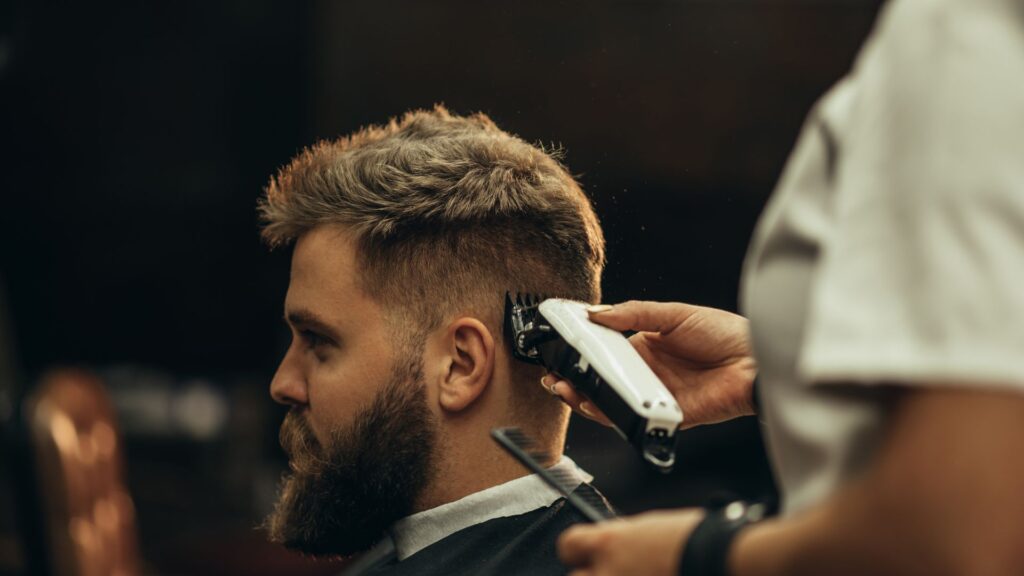
The most common Haircut Mistakes I see include waiting too long between cuts, copying a style that doesn’t suit the face shape or hair texture, and failing to communicate clearly with the barber about what’s actually wanted.
How to Recover From a Bad Cut
Give it time. Most bad cuts look worse in the first few days than they will after a week of settling and growth. A light trim to clean up edges, combined with the right styling product, can salvage most situations within two to three weeks.
What Not to Say to Your Barber (and What to Say Instead)
| Instead of Saying | Try Saying |
| “Just make it look good” | “I want a taper, guard 3 on the sides, keep length on top” |
| “Surprise me” | “I’m open to suggestions but want to keep it professional” |
| “Shorter than last time” | “Take an inch off, keep the same shape” |
Finding the Right Barber for Your Hair Type
Search for a barber who specializes in your specific hair texture and the style you’re after, read reviews that mention your hair type specifically, and don’t be afraid to search “barber near me” and try a few consultations before committing to one chair long-term.
Building Your Personal Grooming Identity
Aligning Your Cut With Your Lifestyle and Goals
Your haircut should match the life you’re actually living, not the one you wish you had more time for. A high-maintenance fade makes little sense for a man who can’t commit to visits every two weeks, no matter how good it looks on someone else.
How to Evolve Your Style Without Losing Yourself
Evolve gradually rather than making dramatic changes all at once. Small adjustments, like shifting from a crew cut to a slightly longer taper, let you test new territory without losing the core identity your style has built over time.
The Confidence Feedback Loop: How Good Hair Changes Your Behavior
A great haircut doesn’t just change how others see you. It changes how you carry yourself, how you make eye contact, and how you walk into a room, creating a feedback loop where confidence and good grooming reinforce each other.
Expert Tips, Trends, and What the Best-Dressed Men Know
Grooming Trends That Are Actually Worth Following
Textured crops, modern mullets with cleaner tapers, and curly fades have real staying power because they balance personality with professionalism. Treat more extreme trends as short-term experiments rather than long-term commitments.
What Stylists and Barbers Wish Men Knew
Most barbers wish clients understood that communication matters more than vocabulary. Bringing a photo, pointing to a length on your own head, or simply saying what you didn’t like about your last cut goes a long way toward a better result.
The Non-Negotiables of a Well-Groomed Man
Regular trims, a clean neckline, trimmed facial hair, and a hairstyle that matches your face shape and lifestyle are the non-negotiables that separate a consistently put-together man from one who’s simply hoping for the best.
Frequently Asked Questions
How often should I really get a haircut?
Most men should visit the chair every three to four weeks for standard cuts, and every two to three weeks for fades or skin fades that grow out faster and lose their shape quickly.
Does my haircut actually affect job interviews?
Yes. Appearance-based first impressions form within seconds and influence perceived competence and trustworthiness, so a clean, industry-appropriate cut can genuinely improve how an interviewer perceives you.
What’s the biggest haircut mistake men make before a date?
Getting a fresh cut the same day as the date. Book it three to five days ahead so the cut has time to soften and settle naturally.
Is it worth paying more at a premium barbershop?
It’s worth it for precision work, special occasions, and if you want a consistent relationship with one trusted barber. For simple, low-maintenance cuts, a budget barbershop often delivers the same result for less.
How do I find a good barber near me?
Search local listings and reviews specifically mentioning your hair type and desired style, ask friends with similar hair for recommendations, and book a simple trim first before committing to a more complex cut.
What should I bring to communicate my desired style?
Bring a reference photo, know your preferred guard number if you get fades, and be specific about length on top versus the sides.
Can a bad haircut be fixed quickly?
Most bad cuts improve significantly within one to two weeks as hair settles and grows slightly, and a small corrective trim can speed up the recovery.
How much should I tip my barber?
Fifteen to twenty percent is standard, with higher tips reflecting loyalty and appreciation for barbers you see regularly.
Does hair texture limit which haircuts I can get?
Texture changes how a cut looks and behaves rather than ruling styles out entirely. A good barber can adapt almost any style to work with curly, straight, thick, or fine hair.
Are longer hairstyles acceptable in professional workplaces?
It depends heavily on the industry. Creative and tech fields are generally flexible, while conservative industries like finance and law still favor shorter, more traditional cuts.
The Final Word From the Chair
After twenty years behind the chair, the lesson I come back to again and again is simple: your hair never stops talking, even on the days you forget it’s there. It speaks to the people deciding whether to promote you, the person deciding whether to see you again, and the professional trying to understand exactly what you want from a forty-five minute visit.Book your next appointment before you need it, not after your hair has already gotten away from you. Bring a clear reference and specific language about length and guard numbers. Match your cut to your actual lifestyle, your face shape, and the standards of the room you’re walking into. Tip fairly, show up on schedule, and trust the person holding the scissors. Your next haircut is a small decision that carries a surprisingly loud message. Make sure it’s the one you actually want to send.