Hair looks different indoors and outdoors because light sources vary in color temperature, wavelength, and the Color Rendering Index (CRI). Warm incandescent bulbs amplify golden and red tones, cool fluorescent lighting flattens and grays out hair, and full-spectrum daylight shows your truest color and texture. A professional haircut is built to hold up across every lighting condition, which is why barbers evaluate their work under multiple light sources before you leave the chair.
The Moment That Makes Every Man Question His Mirror
You know the feeling. You step out of the barbershop, clippers still buzzing faintly in your ears, the smell of talc and aftershave trailing behind you, and you catch your reflection in a store window. Something looks different. Not bad, necessarily, just different. The fade that looked razor sharp under the shop lights now looks softer. The color you thought was deep brown suddenly reads almost black in the afternoon sun.
This isn’t your imagination playing tricks. It’s physics.
Your bathroom mirror at home is lit by a single bulb, usually mounted above or beside the glass, casting light at an angle that flattens texture and shifts color. It’s convenient, but it’s not honest. That overhead bulb you use every morning to shave or comb your hair was never designed to show you an accurate picture. It was designed to be bright enough to see by, nothing more.
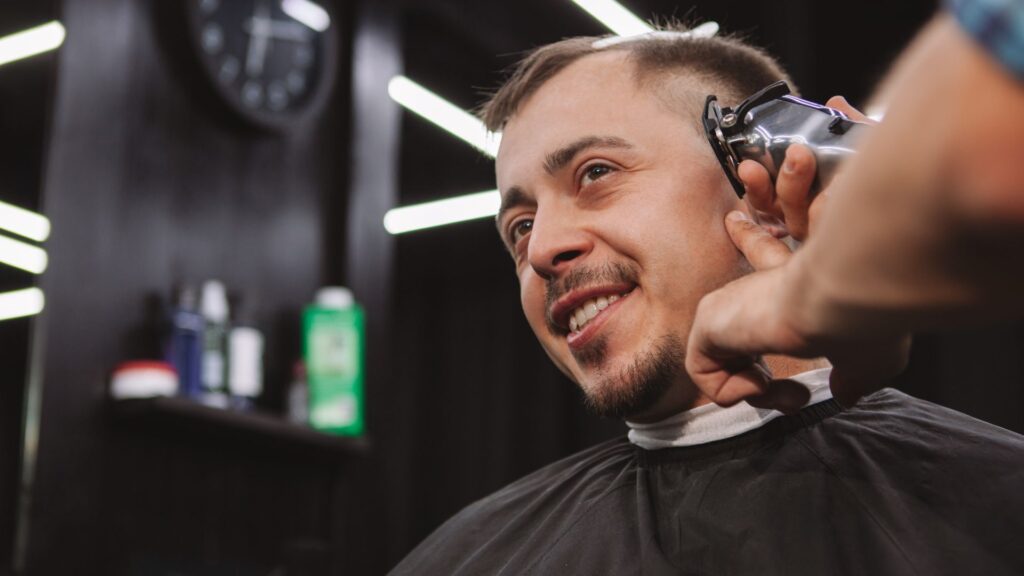
A good barbershop, on the other hand, is lit deliberately. Overhead fixtures, mirror-side sconces, and sometimes even daylight-balanced bulbs are positioned specifically so a barber can see true color and true texture while they work. That’s part of why a cut from a skilled barber tends to look sharper and more defined than one you attempt in your own bathroom. The lighting setup is doing real work behind the scenes, and once you understand how, you’ll never look at your bathroom mirror the same way again.
What Light Actually Is (And Why Your Hair Cares)
Light is a form of electromagnetic radiation, and the portion we can see with the naked eye is called the visible spectrum. It ranges roughly from 380 to 700 nanometers in wavelength, running from violet on one end to red on the other. Every object you see, including your hair, only appears colored because it absorbs some of those wavelengths and reflects others back to your eyes.
Color temperature, measured in Kelvin (K), describes the warmth or coolness of a light source. Lower Kelvin values, around 2,700K to 3,000K, produce warm, amber-toned light similar to candlelight or a classic incandescent bulb. Higher Kelvin values, around 5,000K to 6,500K, produce cooler, bluer light closer to daylight. This single number has an outsized effect on how your hair color reads to the human eye.
| Light Source | Color Temperature (K) | Visual Effect on Hair |
| Candlelight | 1,800K | Deep amber, warm red tones amplified |
| Incandescent bulb | 2,700K | Golden, warm, flatters brunettes and redheads |
| Halogen bulb | 3,000K | Warm but brighter, closer to natural tone |
| Fluorescent tube | 4,000K–5,000K | Cool, can wash out or gray hair color |
| Daylight (midday sun) | 5,500K–6,500K | True-to-life, most accurate color rendering |
| Overcast sky | 6,500K–7,500K | Soft, diffused, slightly cool |
| LED (varies by bulb) | 2,700K–6,500K | Depends entirely on the specific bulb |
When your hair absorbs and reflects light under one of these sources, your brain interprets the result as “color.” Change the light, and you change what your brain sees, even though your actual hair pigment hasn’t moved an inch.
Indoor Lighting Breakdown: What Each Bulb Does to Your Hair
Walk into most homes and you’ll find a mix of bulb types, often without much thought given to how they interact with each other or with your hair.
Incandescent bulbs, the classic warm glow most of us grew up with, sit around 2,700K. They enrich warm tones, making brown hair look richer and red highlights more vibrant. This is flattering, but it’s also a little deceptive. Your hair isn’t actually that warm in tone; the bulb is doing the work.
Fluorescent lighting, common in offices, garages, and older bathrooms, produces a cooler, flatter light. It can strip warmth from your hair, making brunettes look dull and blondes look slightly green or ashy. If you’ve ever caught your reflection under office lighting and thought you looked tired or washed out, fluorescent bulbs are often the culprit.
LED lighting is the wild card. Because LEDs are manufactured across a huge range of color temperatures, two LED bulbs sitting side by side in a hardware store can produce completely different effects. A “warm white” LED behaves more like an incandescent bulb, while a “daylight” LED behaves more like direct sun. This is why two bathrooms with LED lighting can give you two very different impressions of the exact same haircut.
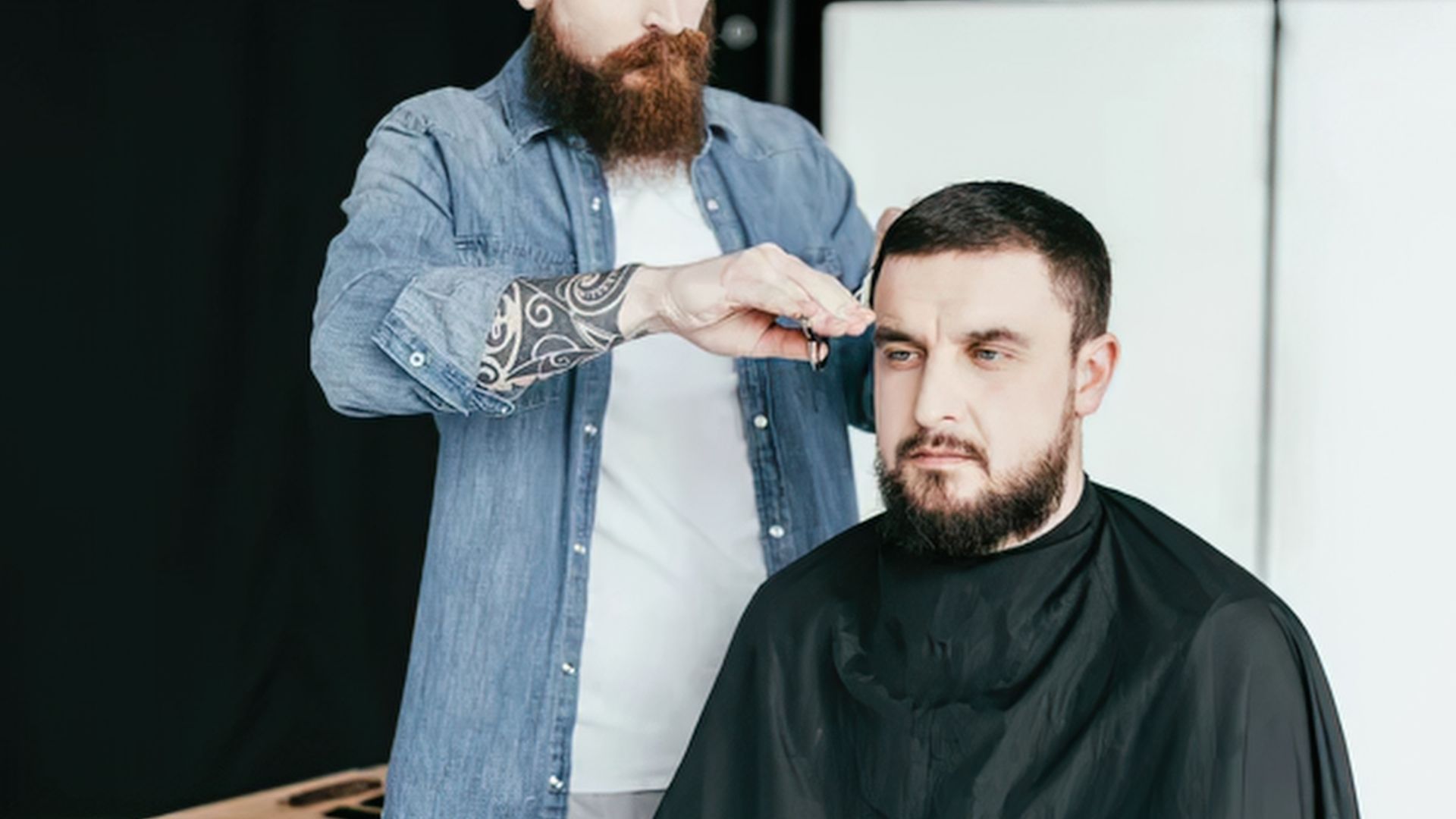
Barbershops tend to combine several of these sources deliberately. Many shops use a mix of warm ambient lighting for comfort and brighter, higher-CRI task lighting directly around the mirror and chair, specifically so a barber can judge true tone and line work while cutting. That combination is part of what separates professional haircuts from a rushed trim under a single bathroom bulb.
Outdoor Light: The Most Honest Mirror You’ll Ever Have
If you want to know what your hair actually looks like, step outside. Direct sunlight delivers the full visible spectrum fairly evenly, which is why photographers and colorists alike treat natural daylight as the gold standard for accurate color judgment.
Overcast days diffuse that same sunlight through cloud cover, softening shadows and reducing harsh contrast. Many professional colorists actually prefer overcast light for checking hair color because it avoids the glare and blown-out highlights that can occur in direct midday sun.

Time of day matters too. Early morning and late afternoon light, often called “golden hour” by photographers, sits at a lower color temperature and casts warmer tones, similar to indoor incandescent lighting but with far greater intensity and depth. Midday sun, by contrast, is cooler and more neutral, giving the truest overall read of your hair’s natural pigment.
Seasonal shifts play a role as well. Winter sunlight tends to be cooler and lower in the sky, while summer sunlight is higher, brighter, and warmer in feel. If you’ve ever noticed your hair looking lighter in summer and darker in winter without any change in your routine, seasonal light angle is part of the explanation, alongside genuine sun-lightening from UV exposure.
Hair Color Science: Why Pigment Behaves Differently in Every Light
Your natural hair color comes from two types of melanin: eumelanin, which produces brown and black tones, and pheomelanin, which produces red and yellow tones. The ratio and density of these pigments determine your base color, but how that color is perceived depends heavily on the light bouncing off each strand.
Color-treated hair behaves differently than natural hair because dye molecules sit differently within the hair shaft, often altering how light scatters across the cuticle. This is why a dye job that looked perfect in the salon’s lighting can look slightly off once you get home or step outside, and why many colorists recommend checking a fresh color in natural light before leaving the chair.
Gray and white hair presents its own unique challenge. Because gray hair lacks melanin, it reflects light more like a mirror than like pigmented hair, which is why gray strands can appear almost silver or even blue-tinted under cool fluorescent or LED lighting, and warmer and softer under incandescent bulbs or sunset light.
Hair porosity, meaning how easily your hair absorbs and releases moisture, also affects light reflection. Higher porosity hair tends to scatter light more diffusely, often appearing slightly duller, while lower porosity hair has a smoother cuticle that reflects light more directly, often appearing shinier and more saturated in color.
Hair Texture and Light: Straight, Wavy, Curly, and Coily
Texture changes everything about how light interacts with your hair, independent of color.
Straight hair has a smooth, flat cuticle structure, which means it reflects light almost like a mirror. This is why straight hair often appears shinier and more uniformly colored, since light bounces off in a consistent direction.
Curly and coily hair have a more irregular surface, with bends and twists along each strand. Light hitting curly or coily hair scatters in multiple directions rather than reflecting cleanly, which can make the color appear slightly more matte or muted, even when the underlying pigment is identical to straight hair.
Wavy hair sits in between, picking up some of the shine of straight hair and some of the light-scattering of curlier textures, which is part of why wavy hair can look noticeably different from one lighting environment to the next.
| Texture | Light Behavior | Appearance Indoors | Appearance Outdoors |
| Straight | Reflects light directly | Can look shiny but flat under warm bulbs | Glossy, color reads true in daylight |
| Wavy | Mixed reflection and scatter | Moderate shine, color shifts with bulb type | Natural depth, texture well-defined |
| Curly | Scatters light across bends | Can look matte or duller under cool light | Richer depth, highlights visible in sun |
| Coily | Heavy light scattering | Often appears darker under weak lighting | Full dimension visible, shrinkage more apparent |
The Color Rendering Index: The Number That Changes Everything
The Color Rendering Index, or CRI, measures how accurately a light source reveals the true colors of an object compared to natural daylight, on a scale from 0 to 100. Natural sunlight sits at or near 100 CRI by definition.
Most cheap fluorescent bulbs sit in the 60 to 75 CRI range, which explains why they tend to distort hair color so noticeably. Standard LED bulbs vary widely, often between 70 and 90 CRI, while high-quality “high-CRI” LED bulbs, often marketed specifically to photographers, makeup artists, and salons, can reach 90 to 98 CRI.
If you want to check the CRI of the bulbs in your own bathroom, look at the packaging or the manufacturer’s website; reputable lighting brands list CRI alongside color temperature. As a general rule, anything above 90 CRI will give you a far more accurate read of your hair color and skin tone than standard household bulbs.
Indoor vs. Outdoor: A Direct Lighting Comparison
| Scenario | Color Temperature | CRI Range | Hair Color Accuracy | Texture Visibility |
| Home bathroom (incandescent) | 2,700K | 95–100 | Warm bias, inaccurate | Moderate |
| Home bathroom (cheap LED) | 3,000K–6,000K | 70–85 | Variable, often inaccurate | Low |
| Office fluorescent | 4,000K–5,000K | 60–75 | Cool bias, often inaccurate | Low |
| Barbershop (mixed/high-CRI setup) | 3,000K–4,500K | 85–95+ | High accuracy | High |
| Overcast daylight | 6,500K–7,500K | ~100 | Most accurate | High |
| Direct midday sun | 5,500K | ~100 | Accurate, high contrast | High |
Outdoor light, especially on an overcast day, consistently gives the most honest read of both color and texture. If you ever want to truly judge a haircut or a color treatment, step outside before making a final verdict.
How Hair Products Interact With Light
Products change how light bounces off your hair just as much as texture does.
High-shine pomades and waxes create a smooth, reflective surface, which works beautifully under warm indoor lighting but can look almost wet or overly glossy under harsh fluorescent light. Matte products, by contrast, absorb more light than they reflect, which can make hair appear slightly darker and flatter, especially under already dim or cool lighting.
Natural oils, whether from your scalp or from a grooming product, add a subtle sheen that interacts differently depending on the light source. Under warm bulbs, oil-enhanced shine reads as healthy and rich. Under cool fluorescent light, that same oil can sometimes create a slightly greasy appearance that isn’t really there.
| Product Type | Shine Level | Indoor Appearance | Outdoor Appearance |
| High-shine pomade | High | Glossy, can look wet under warm light | Natural shine, reads well in daylight |
| Matte clay/paste | Low | Can look flat or dull | Texture and depth more visible |
| Natural oil finish | Medium | Warm, healthy glow under incandescent | Subtle, natural sheen in sunlight |
| Powder/fiber product | Very low | Minimal reflection, texture-focused | Matte finish holds consistent |
What Barbers Know That Most Men Don’t
A good barber isn’t just cutting hair; they’re constantly reading how light interacts with your head shape, hairline, and texture. Professional haircuts are typically evaluated under at least two light sources before the cape comes off: the overhead shop lighting and the brighter, more direct task lighting around the mirror.
Many experienced barbers will also walk a client toward a window or doorway for a final check in natural light, especially for color work or precision fades, because they know indoor lighting alone can hide uneven lines or missed spots. Tools like handheld mirrors angled toward a window, combined with a trained eye for how different bulbs distort tone, are part of how a skilled professional compensates for tricky lighting conditions.
This is one of the quiet reasons working with a trusted barber near me search result, rather than a rotating cast of unfamiliar stylists, pays off over time. A barber who knows your hair, your lighting habits, and your preferences can account for all of this without you ever having to ask.
Choosing a Haircut and Style That Works in Every Light
Some cuts are simply more forgiving across lighting conditions than others. Textured crops and cuts with natural movement tend to hold their shape and definition whether you’re under office fluorescents or walking outside at golden hour, because the texture itself creates visual interest independent of light.
Color treatments that stay closer to your natural base tone, rather than dramatic departures, also tend to translate more consistently from indoor to outdoor environments. Dramatic color changes are more prone to looking “off” under certain bulbs simply because they’re further from what your eye expects to see.
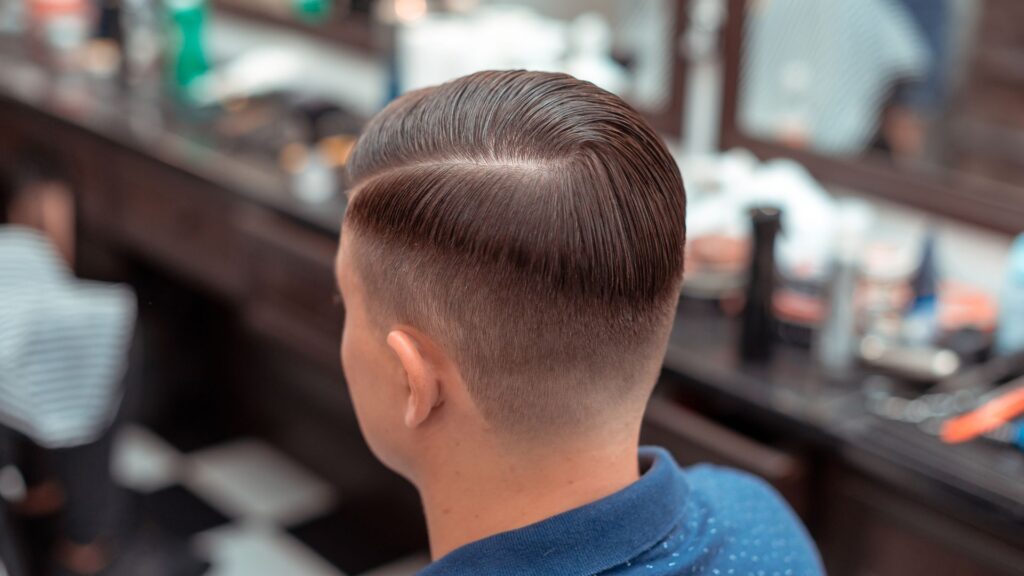
Fades deserve special mention here, since their entire appeal rests on sharp, visible contrast. A fade that looks crisp under bright, high-CRI barbershop lighting needs genuinely clean technical execution to hold that same sharpness outdoors, which is another reason precision matters more than trend when choosing a style.
Skincare, Skin Tone, and How Light Changes the Hair-Skin Contrast
Lighting doesn’t just affect your hair in isolation; it affects the contrast between your hair and your skin, which shapes your entire overall look.
Darker skin tones often show more dramatic contrast against lighter hair colors or gray under warm indoor lighting, while that same contrast can soften slightly under cooler, bluer outdoor light. Lighter skin tones can sometimes appear “flattened” under harsh fluorescent lighting, where both hair and skin lose some of their natural depth and warmth, an effect that tends to disappear in natural daylight.
Understanding this relationship is part of why a good barber will often comment on how a cut or color choice reads against your skin tone specifically, not just your hair in isolation.
Common Mistakes Men Make Because of Bad Lighting
| Mistake | Why It Happens | Better Approach |
| Trimming at home under a single overhead bulb | Flattens texture, hides unevenness | Use a bright, high-CRI bulb near the mirror, check in daylight after |
| Choosing hair color from an indoor swatch | Swatch books often lit differently than home | Ask to see swatches in natural light or near a window |
| Judging a fresh cut before stepping outside | Shop lighting differs from daily environments | Always do a final check in daylight before deciding you love or hate it |
| Mixing multiple bulb types in one bathroom | Creates inconsistent, confusing color cues | Standardize on one color temperature near your mirror |
How to Set Up Better Lighting at Home
If you want your bathroom mirror to finally tell you the truth, a few small changes go a long way. Aim for bulbs in the 3,500K to 4,000K range with a CRI of 90 or above; this strikes a balance between the warmth of incandescent and the honesty of daylight, without the harshness of cheap fluorescent tubes.
Mirror placement matters too. Wherever possible, position your main grooming mirror near a window, so you can supplement artificial light with natural daylight during morning or daytime grooming routines. Even a few extra feet closer to a window can noticeably improve what you see.
Budget-friendly upgrades don’t require an electrician. Swapping a single vanity bulb for a high-CRI LED, adding a small daylight-balanced mirror light, or simply moving your grooming routine near a window on sunny mornings can all meaningfully close the gap between what you see at home and what a skilled barber sees under proper shop lighting.
With your at-home lighting improved, let’s bring everything together with a direct comparison of what barbers see versus what you typically see.
Frequently Asked Questions
Why does my hair look darker indoors than outside?
Indoor bulbs, especially warm incandescent or low-CRI LED lights, often have a narrower range of wavelengths than natural sunlight. This can mute lighter tones and make your hair appear darker or flatter than it does under the full-spectrum light of the sun.
Why does my haircut look better at the barbershop than at home?
Barbershops typically combine bright, high-CRI task lighting with ambient fixtures, deliberately set up so a barber can see true color and texture while cutting. Most home bathrooms rely on a single bulb that wasn’t chosen with this kind of precision in mind.
Does lighting affect how gray hair looks?
Yes. Because gray hair lacks melanin and reflects light more directly, it can look cool and silvery under fluorescent or cool LED lighting, and warmer and softer under incandescent bulbs or golden-hour sunlight.
What color temperature is best for checking your hair?
A range of 3,500K to 4,500K with a high CRI (90 or above) gives a good balance between accuracy and comfort. For the truest possible read, natural daylight, especially on an overcast day, remains the most reliable option.
Why does my hair look shinier outside?
Direct sunlight delivers far more intense and even illumination than most indoor bulbs, which amplifies natural shine from your hair’s cuticle and any grooming products you’re wearing.
Can lighting make a bad haircut look better?
Temporarily, yes. Warm, flattering indoor lighting can soften an uneven line or a slightly rushed trim. But uneven work tends to become obvious again once you step into natural daylight, which is why a proper professional haircut should hold up under any lighting condition.
How do barbers choose their lighting?
Many barbershops use a mix of warm ambient lighting for comfort and brighter, higher-CRI task lighting focused directly on the chair and mirror, so the barber can accurately judge tone, texture, and line work throughout the cut.
Your Action Plan for Seeing Your Hair Clearly
Next time you want an honest read on your hair, follow this simple checklist. First, check your reflection under your home lighting, then immediately step outside or near a window and compare. Second, note any major differences in tone, shine, or sharpness between the two environments. Third, if something looks off outdoors that looked fine indoors, that’s usually the more accurate signal, not the other way around.
When you sit down with your barber, it’s worth mentioning your typical daily lighting environment, whether that’s a bright office, a dim apartment, or mostly outdoor work. A good barber can factor that into how they shape and finish your cut, so it holds up where you actually spend your time, not just under shop lighting.
Small changes compound. Upgrading a single bulb, moving your mirror closer to a window, or simply remembering to do a final outdoor check before committing to a new color or cut can save you from a lot of unnecessary second-guessing.
The Last Word From the Chair
Understanding how light shapes what you see doesn’t just satisfy curiosity; it makes you a sharper, more informed grooming client. You’ll ask better questions, trust your own reflection more, and know exactly why that fade looks slightly different walking out the door than it did sitting in the chair.
The barbershop remains the gold standard for a reason. Between trained eyes, deliberate lighting setups, and years of experience reading hair under every condition imaginable, a skilled barber accounts for variables most men never think twice about. That’s the value of sitting in the chair rather than guessing at home.
Your hair is one of the first things people notice about you, in every room you walk into and under every kind of light. Take it seriously, because it shows, whether you’re standing under fluorescent office lights, golden afternoon sun, or the warm glow of your own bathroom mirror.