The Photo Problem in the Chair
The Screenshot Moment
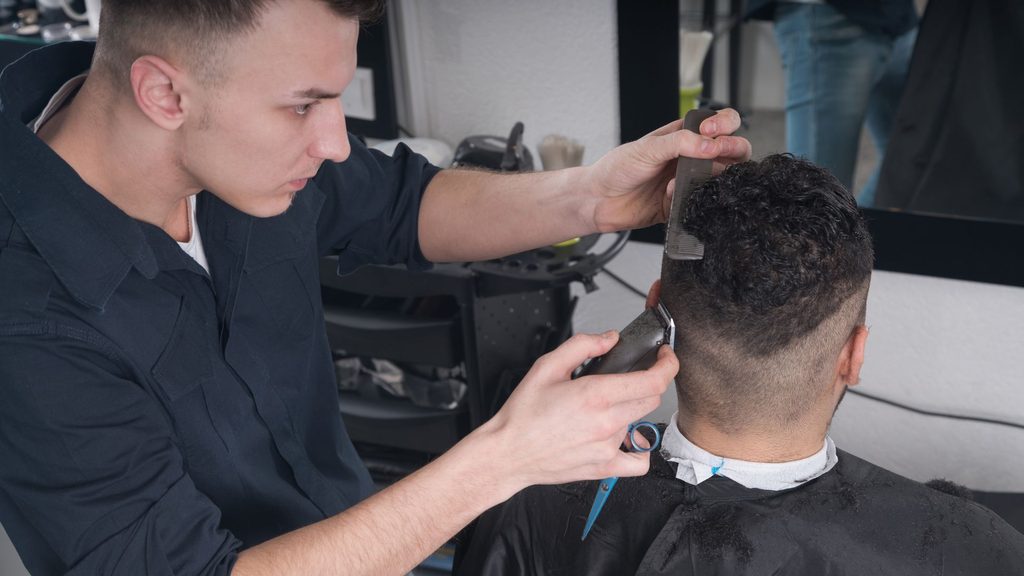
The cape goes on with a soft snap. The neck strip tightens. You can smell the talc on the counter and hear the clippers humming on their charging base. Then, before I’ve even picked up a comb, out comes the phone.
“Can you make it look like this?”
I’ve seen that screen a thousand times. Sometimes it’s an athlete, sometimes an actor and sometimes a stranger with flawless lighting and a jawline sharp enough to slice bread. I always look carefully, because that photo tells me something real about what you want. But I’ve noticed it rarely tells me what you’ll actually get.
Why Photos Promise More Than They Deliver
A photo freezes one moment. One angle, one light, one fresh-from-the-chair day, often with styling product, a ring light and a little editing on top. It doesn’t show how the hair behaves on a humid Tuesday, how it grows out by week three or whether the person in the picture has twice your density.
It’s a bit like picking a pickup truck from a commercial. The truck is real, but it’s parked on a mountain at sunset, polished and posed. You need to know how it handles your driveway in February.
That gap between the photo and real life is where most haircut disappointment lives. The cut wasn’t necessarily wrong. The comparison was.
A Different Way to Compare
So what if you compared haircuts the way a good cutter does? By looking at hair type, head shape, lifestyle, upkeep and how a cut grows over a month, rather than how it looked for one perfect second.
In the sections ahead, you’ll find what to look for, why photos mislead, how to read your own hair, honest head-to-head comparisons, common mistakes, stories from the chair, costs, current trends and a simple plan for your next visit.
Before we can compare anything, though, it helps to agree on what we’re actually comparing.
What Comparing Haircuts Really Means
Shape, Length, Texture and Finish
Every haircut can be broken into four parts. Once you see them, you’ll never look at a cut the same way.
Shape is the outline, the silhouette you’d see if someone traced your head against a bright window. Length is how much hair sits in each area: sides, back, top and fringe. Texture is how the ends are cut, solid and blunt or broken up and choppy. Finish is how it’s styled: matte, shiny, messy, slick or natural.
| Element | What It Describes | Questions to Ask Yourself |
| Shape | Overall silhouette | Do I want it rounded, square, tall or flat? |
| Length | Amount of hair in each zone | How short on the sides? How long on top? |
| Texture | How the ends are cut | Clean and solid, or soft and choppy? |
| Finish | How it’s styled daily | Product or no product? Neat or relaxed? |
| Transition | How sides blend into top | Gradual fade, soft taper or visible line? |
When you compare two cuts by these parts instead of by the overall “vibe” of a photo, the differences become clearer. Two cuts that look identical online might differ completely in how the sides blend or how the top is textured.
The Language of the Chair
Every trade has its own vocabulary. Mechanics talk torque. Coaches talk zones. In the chair, a few words do most of the heavy lifting, and knowing them can replace a photo almost entirely.
| Term | Plain Meaning |
| Guard number | Clipper attachment length; a #1 is about 1/8 inch, a #4 about 1/2 inch |
| Fade | Sides go very short, often to skin, blending upward |
| Taper | A gentler shortening, usually at the neckline and sideburns |
| Weight line | Where the heavier top meets the shorter sides |
| Texturizing | Breaking up the ends for movement |
| Blocked vs. tapered neckline | Square cut line vs. natural, faded edge |
| Disconnected | A sharp, intentional jump in length between sides and top |
You don’t need to memorize all of it. Even two or three words can shift a conversation from “kind of like this guy” to something your cutter can actually build.
Comparing for Your Head, Not Someone Else’s
Here’s the honest heart of it. A haircut isn’t a product you pick off a shelf. It’s a collaboration between a style and a specific head of hair.
Perhaps that’s why comparing photos feels so tempting and so frustrating at once. You’re comparing finished results on other people, when the real question is how each option will behave on you. I like to think of it like borrowing your buddy’s golf clubs. They’re great clubs. They just fit his swing.
With that in mind, it’s worth looking closely at why the photos themselves can steer you wrong.
Why Social Media Photos Mislead

Lenses, Angles and the Selfie Effect
Phone cameras distort faces, especially up close. A study by Brittany Ward and colleagues, published in JAMA Facial Plastic Surgery in 2018, found that a selfie taken about 12 inches from the face can make the nose look roughly 30 percent wider than it appears from a normal portrait distance.
That same distortion affects hair. Close-range wide lenses make the top look taller, the sides look tighter and the head look narrower than it really is. Shoot from slightly above and the top gains volume. Shoot from below and the fade looks sharper.
So when you hold up a photo, you might be asking for a cut that only exists at one angle, two feet from one particular lens.
Lighting, Filters and Fresh-Cut Syndrome
Lighting can make or break a haircut photo. A ring light fills shadows and hides patchy spots. Hard side light exaggerates texture. Warm light flatters, while the cool fluorescents in an office show every uneven blend.
Then there are filters. According to Dove’s 2021 Self-Esteem Project research, 80 percent of girls had used a filter or photo-editing app to change how they look by age 13. Men aren’t immune. Smoothing tools sharpen lines, darken fades and add fullness that real hair can’t hold.
Add fresh-cut syndrome, where photos are snapped within minutes of the cut, styled by a pro, before the hair has seen a pillow, and you have a picture of the best hour that haircut will ever have.
| Photo Factor | What It Changes | What You Might Not See |
| Wide close lens | Narrower head, taller top | True proportions |
| High camera angle | More volume on top | Thin crown spots |
| Ring light | Even, flattering glow | Patchy blends |
| Filters and smoothing | Sharper lines, fuller hair | Real texture and density |
| Fresh-cut timing | Peak sharpness | How it looks by week three |
| Professional styling | Perfect hold and shape | Your daily 3-minute routine |
The Hair Underneath the Hair
The biggest difference between you and the photo is usually invisible: the hair itself. The person in the picture may have thicker strands, a different curl pattern, a tighter crown or no cowlick at all.
According to the American Academy of Dermatology, a typical scalp holds about 100,000 hair follicles, but density varies a great deal from person to person. Two men can get the exact same cut and walk out looking like they visited different shops.
I noticed long ago that the most successful photo requests come from men whose hair already resembles the photo. The rest of the time, the photo is a wish rather than a plan.
The Highlight Reel Problem
Social feeds reward the stunning, not the typical. According to Pew Research Center’s 2024 survey on social media use, about 47 percent of U.S. adults use Instagram and 33 percent use TikTok, platforms that thrive on the most striking images, not the most wearable ones.
It’s the same as watching sports highlights. You see the one-handed catch in the end zone, not the hundreds of routine plays that won the game. A haircut lives in the routine plays: rainy mornings, hat days, gym sessions, the week before your next appointment.
If photos only show the highlight reel, it’s worth remembering how men picked haircuts before the feed existed.
How Men Chose Haircuts Before the Feed
Poster Charts on the Shop Wall
Walk into an old-school shop and you might still see one: a yellowed poster of illustrated men, each with a numbered style. The Crew Cut. The Flat Top. The Ivy League. The Princeton.
Those charts weren’t photos of real people. They were simple, clear drawings that showed shape and length. In a way, they were more honest than today’s feeds, because nobody mistook a drawing for a promise. They started a conversation, and the cutter finished it with the comb and shears.
Movie Stars, Ballplayers and Album Covers
Of course, men have always borrowed looks from heroes. Soldiers came home from the world wars with short back and sides. In the 1950s, young men copied the pompadours they saw on rock and roll album covers. The Beatles’ mop tops sparked a wave of longer cuts in the 1960s, and the 1980s and 1990s brought hi-top fades, flat tops and the curtained looks of TV heartthrobs.
The difference was frequency. You saw your hero on a record sleeve, in a magazine or on Saturday night TV. You weren’t served 300 perfect haircuts before breakfast.
| Era | How Men Chose a Cut | Main Influence |
| 1940s | Shop wall charts, military standards | Service and uniformity |
| 1950s | Movie posters, record sleeves | Film stars, early rock and roll |
| 1960s | TV, music magazines | British bands, counterculture |
| 1980s to 1990s | Magazines, music videos | Hip-hop, sports, TV stars |
| 2000s | Celebrity websites, forums | Athletes, actors, boy bands |
| 2010s to today | Social media feeds | Influencers, edited images |
| Today’s shift | Consultations, word of mouth, in-person examples | Personal fit over trend copying |
From Feeds Back to Face-to-Face
It seems the pendulum is swinging back. More men are asking for consultations, watching how cuts look on real people and trusting the conversation in the chair. The tools changed, but the oldest method still works best: look at real hair on real heads, then talk it through with someone who knows.
And the most important real head to look at is your own.
Start With Your Own Hair
Texture and Curl Pattern
Before comparing any style, know what you’re working with. Is your hair straight, wavy, curly or coily? It sounds obvious, but many men aren’t sure. Wavy hair often hides under short cuts, and curly hair can look straight when it’s wet or weighed down.
A simple test: wash your hair, skip all product and let it air-dry completely. What it does on its own is your true texture. That’s the starting point every comparison should build on.
| Hair Texture | Natural Behavior | Cuts That Often Work | Cuts That Fight It |
| Straight | Lies flat, shows lines | Side parts, crops, crew cuts | Styles needing lift without product |
| Wavy | Bends and lifts unevenly | Textured tops, medium lengths | Super-flat, slicked shapes |
| Curly | Springs, shrinks, adds volume | Curly tops with tapers, defined shapes | Heavy-thinning, flat styles |
| Coily | Tight pattern, high shrinkage | Fades, sponge twists, waves, high tops | Cuts relying on straight lay |
Density and Strand Thickness
Density is how many hairs grow per square inch. Strand thickness is how wide each individual hair is. They’re different, and both matter.
Clarence Robbins’ reference text, Chemical and Physical Behavior of Human Hair, notes that human hair diameter varies widely, from very fine to quite coarse. Fine hair with high density can look full but go limp. Coarse hair with low density can look thick in spots but show scalp in others.
| Combination | How It Looks | Comparison Tip |
| Fine and low density | Flat, scalp shows | Favor shorter, textured cuts |
| Fine and high density | Full but soft, limp when long | Keep structure, avoid over-thinning |
| Coarse and low density | Wiry, uneven coverage | Choose cuts that blend gaps |
| Coarse and high density | Bulky, puffs out | Look for weight-removal styles |
When you see a cut you like, ask yourself: does that person’s hair look like mine in density and thickness? If not, the cut may need adjusting.
Growth Patterns, Whorls and Cowlicks
Most men have at least one whorl, the spiral at the crown where hair grows outward in a circle. Research by Amar Klar, published in the journal Genetics in 2003, found that most people’s crown whorls spiral clockwise, though plenty don’t, and some have two.
Whorls and cowlicks decide where hair wants to part, lift and stick up. A side part placed against the growth will fight you every morning. A short crown cut on a double whorl may leave tufts standing at attention.
I noticed that many “bad haircuts” were really good haircuts placed against a growth pattern. Find your pattern first and comparisons get easier.
Hairline and Crown Changes
Hairlines shift with age. According to the American Academy of Dermatology, about 50 million men in the United States experience male pattern hair loss. A cut that suited you at 22 might feel different at 38.
When comparing cuts, look at your temples and crown honestly. A receding hairline often pairs well with shorter sides and a textured front. A thinning crown often benefits from shorter overall length, so contrast between hair and scalp softens. There’s no shame in any of it. It’s simply information.
Your hair is half the story. The head it grows on is the other half.
Your Head, Face and Frame
Head Shape Matters More Than Face Shape
You’ve probably seen charts telling you which haircut suits an oval, square or round face. They’re not useless, but in my experience, head shape often matters more.
Run your hand over the back of your head. Is it flat, rounded or does it have a bump near the crown? A flat back of the head can look boxy with a tight fade. A slight bump might show through a very short cut. Leaving a little length in the right place can balance either.
| Head Feature | Common Challenge | Cut Adjustment |
| Flat back of head | Looks boxy in short cuts | Leave weight at the crown |
| Prominent occipital bone | Bump shows under tight fades | Keep the fade lower |
| Narrow head | Long hair looks thin and tall | Add width with side length |
| Wide head | Bulky sides make it wider | Tighter sides, height on top |
| High forehead | Looks larger with slicked-back hair | Textured fringe or forward styling |
Proportion, Neck and Shoulders
A haircut doesn’t sit on a floating head. It sits on a neck, on shoulders, on a whole frame. A very tall top on a slim, tall man can feel like a lighthouse. A tight crop on a broad-shouldered guy can make his head look small.
Think of it like a suit. A great jacket fits your shoulders, not just your chest. Step back from the mirror and look at your whole body. Does the haircut match your build?
Glasses, Beards and Ears
Small details can change everything. Glasses push hair outward at the temples, so heavier sides may stick out. Beards change the overall shape of your face, so the haircut and beard should connect smoothly or contrast with purpose.
Ears matter too. If yours stick out a bit, an extremely tight fade puts them on display. That might be exactly what you want. Or perhaps a slightly longer side would feel better. Neither is wrong. It’s about knowing before the clippers start.
Once your hair and head are mapped out, the next question is how you actually live.
Comparing Cuts by Lifestyle and Upkeep
Your Morning Routine
Be honest: how much time do you give your hair in the morning? Thirty seconds with your fingers, or ten minutes with a dryer and two products?
A cut that needs styling to look right will look wrong without it. I like to ask clients to time their routine for a week before deciding. Many discover they have less patience than they thought, and that’s useful.
| Morning Time | Cuts That Fit | Cuts That Struggle |
| Under 1 minute | Buzz cuts, crew cuts, short crops | Pompadours, quiffs |
| 1 to 3 minutes | Textured crops, short side parts | Longer slick-backs |
| 3 to 5 minutes | Classic side parts, medium textured | Very structured volume |
| 5+ minutes | Pompadours, quiffs, longer styles | Few limits |
Work, Sport and Weekend Life
A banker, a roofer and a college swimmer might all love the same cut. That doesn’t mean it suits all three lives.
Helmets, hard hats and ball caps flatten hair. Chlorine dries it out. Strict workplaces may favor clean necklines. Hot jobs and heavy workouts reward shorter cuts that dry fast. A good comparison asks not only “How does it look?” but “How does it survive my Tuesday?”
Maintenance Intervals
According to the American Academy of Dermatology, scalp hair grows roughly six inches per year, about half an inch a month. That sounds slow until you remember a skin fade is measured in fractions of an inch.
| Style | Typical Visit Interval | Why |
| Skin fade | 2 to 3 weeks | Blend softens quickly |
| Taper | 3 to 5 weeks | Gentler, grows out gracefully |
| Crew cut | 3 to 4 weeks | Short all over, shape fades evenly |
| Textured crop | 4 to 6 weeks | Forgiving, texture hides growth |
| Classic side part | 4 to 5 weeks | Part and lines need upkeep |
| Longer flow | 6 to 10 weeks | Mostly shape and ends |
Comparing two cuts? Compare their schedules too. A sharp fade looks amazing, but if you can only visit every six weeks, you’ll spend half that time wearing a cut you didn’t choose.
Knowing yourself is the foundation. Now let’s look at where to find real examples worth comparing.
Real-World Ways to Compare Haircuts
People-Watching With Purpose
Some of the best haircut research happens at the grocery store, the airport or your kid’s soccer game. Real people, real light, real days.
Look for men whose hair resembles yours in texture and density. Notice how their cuts hold up after hours of wear. Notice the back and the sides, not just the front. You’re watching the routine plays, not the highlight reel.
| Comparison Source | Shows Real Wear? | Shows Your Hair Type? | Reliability |
| Social media photos | Rarely | Rarely | Low |
| People in public | Yes | Sometimes | Medium to high |
| Clients in the shop | Yes | Often | High |
| Friends and family | Yes | Sometimes | High |
| Your own past cuts | Yes | Always | Highest |
The Shop Floor as a Showroom
Here’s a tip most men never use: watch the other chairs. While you wait, notice which cuts look good walking out the door. Notice clients with hair like yours.
You can even ask, politely, “What’s that cut called?” or tell your cutter, “Something like the guy who just left, but a bit longer on top.” Real hair, real lighting, no filter. It might be the best showroom in town.
Friends, Family and Honest Mirrors
Your brother, your best friend and your partner see your hair every day from angles you never will. Ask them what they liked about past cuts, and what they didn’t.
According to Nielsen’s Global Trust in Advertising survey, 83 percent of people trust recommendations from people they know more than any other source. That holds for haircuts too. The people closest to you remember the cut that made you look rested and the one that made you look like you lost a bet.
Keeping a Haircut Journal
This one might sound odd, but stay with me. Keep a simple note on your phone after each cut: the date, the cutter, the guard numbers, the length on top and how you felt at week one, two and four.
Add a few plain, unfiltered photos of your own hair in natural light. Front, side, back. These are the only photos that truly matter, because they show your hair. Over time, patterns appear. You might notice that a #2 on the sides suits you better than a #1, or that your crown needs more length.
These sources give you raw material. The consultation is where it all comes together.
The Consultation: Your Best Comparison Tool
Questions That Reveal the Right Cut
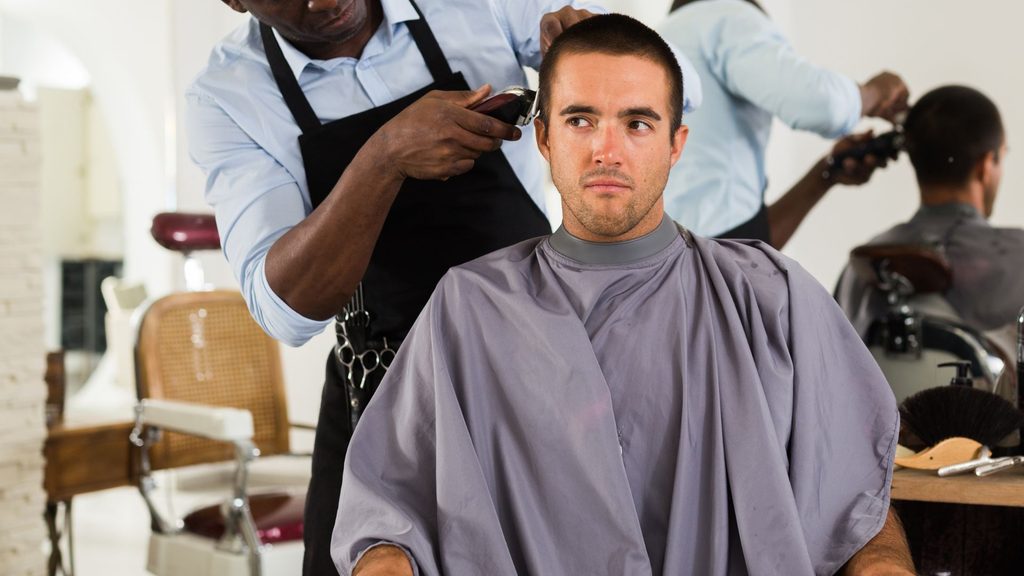
The best tool in the shop isn’t the clipper or the steel shears. It’s the conversation. When you sit down in your barber’s chair, the first few minutes should feel like a good coach reviewing film before the game.
A skilled pro will ask questions. If he doesn’t, you can start:
- “What would you recommend for my hair type?”
- “How will this look in three weeks?”
- “How much styling will this need?”
- “Will my cowlick or crown cause any trouble?”
- “What would you change from the cut I have now?”
Describing What You Want in Words
Words often work better than photos because they describe the parts you actually care about. Try sentences like these:
- “Short on the sides, but no skin showing.”
- “Enough length on top to push it to the side.”
- “I want it to look neat even when I don’t style it.”
- “I don’t want a hard line between the sides and top.”
| Approach | Strength | Weakness |
| Showing a photo | Quick visual reference | Hides angle, lighting and hair type |
| Describing in words | Specific and personal | Requires some vocabulary |
| Combining both | Context plus precision | Takes a minute longer |
The Pinch, Hold and Fold Test
Here’s a trick I use all the time. Instead of guessing lengths, your cutter can pinch a section of your hair between two fingers and hold it where the cut would land.
“About here?” I’ll ask, holding the hair at an inch and a half. You look in the mirror and decide. For the sides, I might fold the hair against the head to show what a #3 versus a #2 roughly looks like. It’s a live preview on your own head, which no photo can match.
Reading the Cutter’s Response
Pay attention to how your cutter responds. A thoughtful pro will explain trade-offs: “We can do that, but your crown will stick up unless we leave it longer.”
If someone agrees to everything instantly without touching your hair, that might be worth noticing. It’s a bit like a doctor who prescribes without asking how you feel. Good answers sound like reasoning. They make you feel heard, not hurried.
With a clear consultation, comparing specific styles becomes much easier.
Head-to-Head Haircut Comparisons
Fade vs. Taper
These two get mixed up constantly. A fade shortens the sides and back dramatically, often down to skin, blending upward. A taper shortens more gently, usually only at the neckline and sideburns.
| Factor | Fade | Taper |
| Shortest length | Often skin | Usually a short guard |
| Area affected | Sides and back | Mostly neckline and sideburns |
| Look | Sharp, modern, high contrast | Classic, clean, subtle |
| Maintenance | Every 2 to 3 weeks | Every 3 to 5 weeks |
| Best for | Bold looks, coarse or coily hair | Professional settings, gradual grow-out |
Rather than comparing photos, ask yourself how much contrast you want. Bold or quiet?
Scissor Cut vs. Clipper Cut
A scissor cut shapes the hair with shears, often scissor-over-comb on the sides. A clipper cut uses guards for speed and consistency.
| Factor | Scissor Cut | Clipper Cut |
| Feel | Softer edges, natural movement | Uniform, crisp |
| Time | Longer | Shorter |
| Grow-out | Gentle and even | Can look fuzzy sooner |
| Best for | Medium lengths, fine hair | Short sides, fades, buzz cuts |
Many great cuts combine both, clippers for the sides, shears for the top.
Textured Crop vs. Classic Side Part
The textured crop is short, forward-styled and choppy on top, often with a fade or taper. The classic side part is neater, combed to one side with a defined part.
| Factor | Textured Crop | Classic Side Part |
| Styling time | 1 to 2 minutes | 3 to 5 minutes |
| Product | Matte clay or paste | Pomade or cream |
| Forgiveness | High, messy is the point | Lower, lines show |
| Best hair | Wavy, thick, cowlicky | Straight, fine to medium |
| Hides receding temples | Often | Sometimes highlights them |
Short Back and Sides vs. Longer Flow
Short back and sides is a timeless, low-fuss classic. A longer flow, the kind that brushes the collar and tucks behind the ears, offers more personality and movement.
A long haircut asks for patience during the grow-out, often a few awkward months. It also needs regular trims to keep the ends healthy. Short back and sides asks for frequent visits but very little daily effort.
| Factor | Short Back and Sides | Longer Flow |
| Visit interval | 3 to 4 weeks | 6 to 10 weeks |
| Daily styling | Minimal | Moderate |
| Grow-out phase | None | 3 to 6 months |
| Weather resilience | High | Varies with humidity |
Air-Dried Finish vs. Styled Finish
This comparison gets overlooked. Some cuts are built to look good air-dried. Others only come alive with a blow-dryer and product.
If you know you’ll never touch a dryer, tell your cutter. Ask to see the cut air-dried, or at least lightly finger-styled, before you leave. That’s how you’ll wear it, so that’s how you should compare it.
Even with clear comparisons, some mistakes keep coming back.
Mistakes Men Make When Choosing a Cut
Chasing a Face Instead of a Haircut
Sometimes the photo isn’t about the hair at all. It’s about the confidence, the jawline, the lifestyle. A haircut can lift your confidence, but it can’t give you someone else’s bone structure.
I’ve gently said, more than once, “You like his whole look, and that’s fair. Let’s find what part of it fits you.” Perhaps the question to ask is: what feeling am I really after?
Judging the Cut on Day One
Day one is the hair’s red-carpet moment. By day four, the cut has settled, the edges have softened and you’ve styled it yourself. That’s the real test.
Ignoring the Grow-Out
Every cut grows. Some grow gracefully. Some grow into a mushroom. Before choosing, ask how it’ll look in three weeks, and decide whether you can live with that.
| Mistake | Why It Happens | Better Approach |
| Copying a celebrity face | Admiring the whole look | Identify specific hair elements |
| Judging on day one | Fresh-cut excitement | Reassess at day 4 and week 3 |
| Ignoring grow-out | Focus on peak sharpness | Ask how it looks in 3 weeks |
| Saying “just a trim” | Vague language | Specify amounts and areas |
| Ignoring your routine | Wishful thinking | Choose a cut that fits real time |
| Skipping hair-type check | Assuming any cut works | Compare on similar hair only |
Saying “Just a Trim” and Hoping
“Just a trim” means something different to everyone. For one man, it’s a quarter inch. For another, it’s a full reshape. Be specific: “Half an inch off the top, clean up the neckline, keep the sides the same.” Your cutter will thank you, quietly, with a better result.
Lessons stick best when they come from real people, so let me share a few.
Stories From the Chair
The Footballer Photo
Marcus came in at nineteen with a photo of a famous soccer player: high skin fade, tall textured top. His hair was fine and fairly low in density.
We talked it through. I pinched the top to show how much height his hair could realistically hold, then suggested a mid fade with a shorter, textured crop. He was skeptical. Two weeks later, he came back grinning. “My buddies asked if I changed barber shops.” I didn’t correct him. Perhaps the win wasn’t copying the photo, but finding the version that belonged to him.
The Dad Who Brought a Drawing
A father once brought in a pencil drawing his seven-year-old had made: a stick figure with spiky hair and “COOL” written underneath. No phone, no photo.
We had a great conversation. I asked the boy what “cool” meant to him. “Pointy,” he said, very seriously. So we did a short textured cut on top, with a little gel to make it stand. He looked in the mirror like he’d just hit a home run. I’ve noticed kids often know exactly what they want. They just describe it in feelings instead of guard numbers.
The Groom With Three Weeks to Go
Ethan booked a consultation three weeks before his wedding. He’d saved twenty photos and felt overwhelmed. Instead of scrolling, we looked at his hair, his suit and his collar.
We planned a classic taper and scheduled the final cut five days before the wedding, so the edges would be sharp but settled. On the big day, his hair looked natural, not freshly shorn. His bride later told me it looked like him, only on his best day. That’s the goal, isn’t it?
Families bring many of my favorite moments, so let’s talk about them.
Fathers, Sons and Gift-Buyers
Helping a Kid Pick a Cut Without a Phone
Kids are easily swayed by whatever’s trending at school. Instead of scrolling with them, try asking simple questions. Do you want it short or a bit longer? Spiky or smooth? Do you like it in your eyes or out of them?
| Factor | Short Cuts for Kids | Longer Cuts for Kids |
| Morning effort | Almost none | Brushing and maybe product |
| Sports and helmets | Very practical | Can get sweaty and tangled |
| Visit interval | 3 to 4 weeks | 6 to 8 weeks |
| Self-expression | Limited | More room to play |
| Best for | Active, low-fuss kids | Kids who enjoy styling |
Letting a child have a say, within reason, builds confidence. It’s a small way of saying, “Your choice matters.”
Booking for Someone Else
If you’re booking for a son, partner or friend, share a few details: hair type, current length, how they style it and anything that bothered them about past cuts. Mention cowlicks or sensitive spots. These details help the cutter prepare far more than a screenshot.
Gifting a Consultation
A gift card for a cut is lovely. A gift card for a cut plus consultation, hot towel and neck shave is memorable. Many shops offer longer first appointments for exactly this reason.
It seems the most meaningful gifts aren’t about the style at all. They’re about the time: thirty unhurried minutes in a leather chair, the warm towel, the quiet buzz of clippers and someone actually listening.
Of course, gifts and haircuts both come with a price tag, so let’s look at value.
Cost, Time and Where the Value Lives
What Actually Drives the Price
Haircut prices vary widely depending on city, shop reputation, experience and time. The U.S. Bureau of Labor Statistics projects employment in hair-cutting and styling occupations to grow faster than the average for all occupations over the coming decade, a sign that skilled hands remain in demand.
| Service | Typical Price Range | What You’re Paying For |
| Basic clipper cut | $20 to $35 | Speed and consistency |
| Fade or taper | $30 to $50 | Blending skill |
| Scissor cut | $35 to $60 | Time and precision |
| Cut with consultation | $45 to $75 | Planning and personalization |
| Kids’ cut | $15 to $30 | Patience and quick work |
| Cut, hot towel and beard | $50 to $90 | Full experience |
Treat these as rough guides. Prices shift by region and shop.
Cost Per Day of Wearing It
Here’s a way to compare that I find useful. Divide the price by the number of days the cut looks good. A $40 skin fade that looks sharp for 14 days costs about $2.85 a day. A $50 textured crop that holds for 35 days costs about $1.43 a day.
| Cut | Price | Days Looking Good | Cost Per Day |
| Skin fade | $40 | 14 | ~$2.85 |
| Taper | $35 | 28 | ~$1.25 |
| Textured crop | $50 | 35 | ~$1.43 |
| Longer flow trim | $55 | 56 | ~$0.98 |
Suddenly the “expensive” cut might be the bargain.
DIY vs. Professional
| Factor | DIY | Professional |
| Upfront cost | $30 to $100 for clippers | $20 to $75 per visit |
| Seeing the back | Very difficult | Full view |
| Accounting for hair type | Usually guesswork | Built into the plan |
| Consultation | None | Included |
| Best for | Buzz cuts, quick neckline cleanups | Anything with shape or blending |
Professional haircuts earn their value in what a bathroom mirror can’t show you: the balance of the back, the weight at the crown, the way the cut grows over a month. You’re paying for judgment, not just length removed.
Judgment keeps evolving, so let’s look at what pros are discussing right now.
What Pros Are Seeing Now
Word of Mouth Still Wins
For all the talk about social media, word of mouth remains powerful. According to BrightLocal’s 2023 Local Consumer Review Survey, about 98 percent of consumers read online reviews of local businesses at least occasionally. But reviews often send people in. Personal recommendations keep them coming back.
When I chat with other pros over coffee before the shop opens, it seems most of their loyal clients came from a friend, a brother or a coworker who said, “Go see my guy.”
Personalized Cutting Over Trend Copying
More men now ask, “What would suit me?” instead of “Can you copy this?” It’s a quiet shift, but a meaningful one. Consultations are getting longer, and cutters are spending more time explaining their reasoning.
| Trend | What It Looks Like | Why It Matters |
| Consultation-first visits | Longer intake conversations | Fewer disappointing results |
| Texture-friendly cuts | Crops, curls, natural movement | Works with real hair |
| Lower-maintenance styles | Tapers, forgiving crops | Fits busy routines |
| Personal photo journals | Clients tracking their own cuts | Real data over filtered images |
| Kid-friendly consultations | Kids choosing within guidance | Builds confidence early |
Using Photos Wisely, Not Blindly
None of this means photos are useless. They’re a starting point, a way to show a feeling or a direction. The trick is using them wisely.
If you bring a photo, bring two or three of the same style from different angles, ideally on people with hair like yours. Then point to what you like specifically: “The sides here,” “The length on top there.” A photo becomes much more useful when you treat it like a sketch, not a blueprint.
By now you might have a few questions of your own, so let’s cover the common ones.
Frequently Asked Questions
Is it bad to bring a photo to my haircut?
Not at all. A photo can be a helpful starting point. The key is understanding its limits: angles, lighting, filters and different hair types all affect what you see. Bring a few photos from different angles and explain exactly what you like about each one. Then let your cutter tell you how it might translate to your hair.
How do I describe a haircut without a photo?
Break it into parts: how short on the sides, how long on top, how the sides blend into the top and how you want to style it. Phrases like “short on the sides but no skin,” “enough on top to push to the side” and “low maintenance” go a long way. Guard numbers help if you know them.
How do I know which haircut suits my face shape?
Face shape is one factor, but head shape, hair type, density and growth patterns often matter more. Instead of relying on a chart, ask your cutter to look at your whole head, including the back and crown, and suggest options that balance your features.
What’s the difference between a fade and a taper?
A fade takes the sides and back very short, often to skin, with a gradual blend upward. A taper is more subtle, usually shortening only the neckline and sideburns. Fades look bolder and need more frequent upkeep. Tapers grow out more gracefully.
How often should I get my hair cut?
It depends on the style. Skin fades usually need a visit every two to three weeks. Tapers and crew cuts often last three to five weeks. Textured crops can stretch to four to six weeks, and longer styles to six to ten weeks.
Why doesn’t my haircut look like the photo I showed?
Usually because your hair differs from the hair in the photo in texture, density, growth pattern or head shape. Lighting, camera angles, styling products and editing also change how a cut looks online. A good consultation helps adapt the idea to your actual hair.
How can I compare two cuts before committing?
Look for both cuts on real people with hair similar to yours. Ask your cutter to pinch and hold your hair at different lengths to preview each option. Consider styling time, maintenance intervals and how each cut will grow out over three to four weeks.
Is a consultation worth paying extra for?
Often, yes, especially if you’re making a big change, have curly or textured hair or keep feeling unhappy with your cuts. A consultation gives you a plan tailored to your hair, which tends to save money and frustration over time.
Questions are a good start. A plan is even better.
Your Action Plan and a Final Word
The Pre-Visit Checklist
Before your next appointment, try running through this list:
- Know your texture. Air-dry your hair once without product and notice what it does.
- Know your routine. Time your morning styling honestly.
- Know your schedule. How often can you realistically visit?
- Notice real examples. Find cuts you like on people with hair similar to yours.
- Prepare your words. Write down two or three plain descriptions of what you want.
- Bring your own photos. Pictures of your past cuts in natural light, if you have them.
- Plan a check-in. Decide how the cut should look at day four and week three.
A Simple Comparison Scorecard
When choosing between two cuts, score each from 1 to 5 in these areas:
| Factor | Cut A | Cut B |
| Suits my hair type | ||
| Works with my head shape | ||
| Fits my morning routine | ||
| Matches my work and lifestyle | ||
| Grows out gracefully | ||
| Fits my visit schedule | ||
| Fits my budget per day | ||
| Feels like me |
The highest total isn’t always the winner. Sometimes the last row matters most.
A Final Word From the Chair
I’ve cut hair for thousands of men over the years, and I’ve noticed something. The happiest clients rarely got the exact photo they brought in. They got a cut that fit their hair, their head and their life. Perhaps that’s the real answer to how you compare haircuts without relying on social media. You compare them against yourself. Your texture, your crown, your mornings, your work, your budget. A photo shows one perfect second. You live with a haircut for weeks. So next time you settle into the leather chair, with the clippers humming nearby and that faint smell of talc in the air, maybe leave the phone in your pocket for a minute. Start with a conversation instead. What do you want your hair to do for you on an ordinary Tuesday? If any of this rings true, take it with you. If it doesn’t quite fit, that’s fine too. Every head of hair tells its own story, and after all these years, I’m still learning to listen.