

There’s no single birthday candle that magically transforms a boy’s haircut into a man’s haircut. The honest answer is that the right time depends on hair texture, puberty, confidence, and a handful of other factors that most parents never think to ask a barber about until they’re already sitting in the chair. This guide walks you through the real science behind hair changes during adolescence, the age ranges where most boys make the switch, the signs that your son is ready, and how to pick the right first men’s cut so the transition feels like a milestone instead of an afterthought. By the end, you’ll know exactly what to ask for, what to expect to pay, and how to make the appointment something your son actually looks forward to.
Key Takeaways
- Most boys transition from a kids’ cut to a men’s cut somewhere between ages 11 and 16, but hair texture and puberty timing matter more than the calendar.
- Puberty triggers real physical changes in hair, including increased thickness, oil production, and sometimes a shift from straight to wavy or curly texture.
- A men’s cut typically involves sharper techniques like fades, tapers, and razor work, while a kids’ cut is usually a simpler trim built for speed and squirming.
- The right first men’s cut depends heavily on hair type, so straight, coily, wavy, and coarse hair all call for different approaches.
- A good barber adjusts the entire experience, not just the haircut, when a boy moves from the kids’ chair to the adult chair.
The Question Every Dad Eventually Asks in the Barber Chair
Every parent eventually asks some version of the same question while sitting in the waiting area: “Is he too old for the kids’ cut now?” It’s a fair question, and it comes up more often than you’d think.
Why This Transition Matters More Than You Think
A haircut might seem like a small thing, but for a lot of boys, the first men’s cut is a quiet rite of passage. It’s the first time a barber treats him less like a kid getting a trim and more like a young man getting a style. According to a 2022 survey by the Professional Beauty Association, grooming habits formed between ages 10 and 16 tend to stick with men for the rest of their lives, which means the first men’s cut often sets the tone for decades of haircare decisions.
The Moment That Usually Sparks the Conversation
Most parents don’t plan this transition in advance. It usually happens organically, often triggered by one of a few common moments: a growth spurt, a new school, a sports team photo, or simply a son asking for a specific style he saw on a YouTuber or an athlete. Sometimes it’s the boy himself who brings it up, tired of sitting in the race car chair while his friends get real fades.
What the Barbershop Has Seen Across Generations
Barbershops have been quietly tracking this shift for generations, long before anyone wrote articles about it. Veteran barbers will tell you the same thing: there’s always a moment, usually somewhere in middle school, when a kid stops wiggling in the chair and starts paying attention to the mirror. That shift in attention is often a bigger signal than age alone.
Understanding why this moment matters sets the stage for the next big question: what actually separates a kids’ cut from a men’s cut in the first place.
What Actually Defines a Kids’ Cut vs. a Men’s Cut
A kids’ cut and a men’s cut aren’t just priced differently. They’re built around completely different goals, techniques, and expectations.
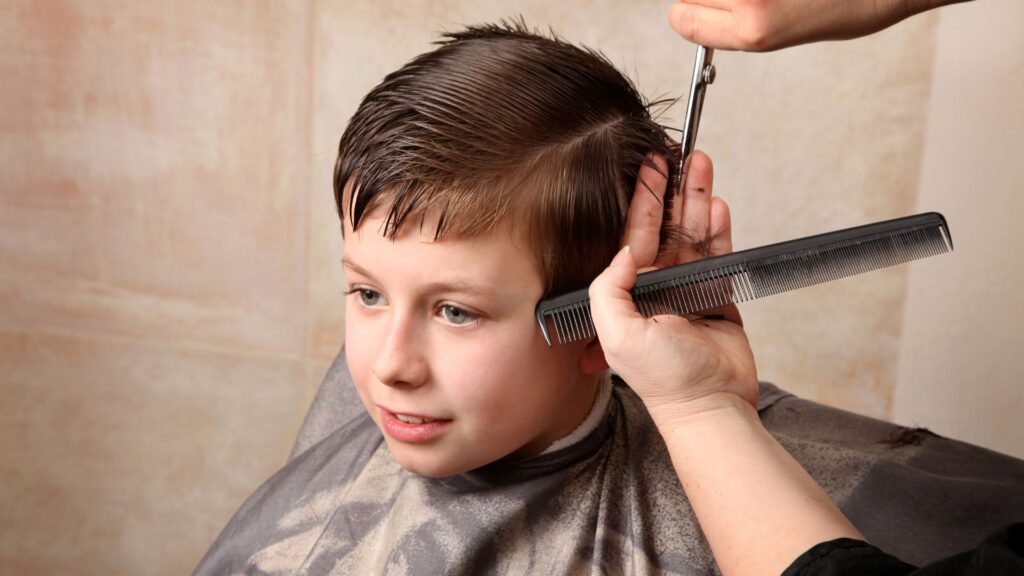
Breaking Down the Kids’ Cut
A kids’ cut is designed around speed, simplicity, and patience. Barbers who specialize in children’s haircuts are trained to work fast, keep things simple, and manage wiggling, crying, or outright refusal to sit still. The cuts themselves are usually basic: a simple trim, a light taper, or a buzz cut with minimal detail work. There’s rarely any razor work involved, and the focus is almost entirely on function over style.
Breaking Down the Men’s Cut
A men’s cut is a completely different service. It typically involves more precise techniques like skin fades, tapers, line-ups, and texturizing. Many men’s cuts also include a straight razor finish around the neckline and edges, which is where the first mention of a razor shave often comes up for a young man getting his hairline cleaned up for the first time. The appointment itself usually takes longer, costs more, and involves a consultation about the style the client actually wants.
Where the Line Gets Blurry
Plenty of barbershops don’t have a hard cutoff between the two services. Some shops base it purely on age, others base it on hair length or complexity of the cut, and some leave it up to the barber’s judgment during the appointment. This is part of why the “right age” question doesn’t have one clean answer. It depends as much on the shop’s policy as it does on the child.
A Side-by-Side Comparison
| Feature | Kids’ Cut | Men’s Cut |
| Typical age range | 1 to 10 years old | 11 and up |
| Average appointment length | 15 to 20 minutes | 30 to 45 minutes |
| Techniques used | Basic trim, light taper, buzz cut | Skin fade, taper fade, texturizing, razor edging |
| Consultation involved | Minimal | Detailed style discussion |
| Price range (national average) | $15 to $25 | $25 to $45 |
| Styling products used | Rarely | Often |
| Focus | Speed and simplicity | Style and precision |
Once you understand what separates the two services, it becomes clear why the “right age” is less about a number and more about readiness. That leads directly into the real answer parents are looking for.
The Real Answer: It’s Not Just About Age
If you’re hoping for a single magic number, here’s the truth: age is only one piece of the puzzle. Readiness is a mix of physical development, emotional maturity, and how a boy’s hair actually behaves.
Physical Development and Hair Texture Changes
Hair doesn’t stay static throughout childhood. As boys grow, their hair often becomes thicker, coarser, or more textured, especially once puberty hormones kick in. A boy with fine, straight hair at age 8 might have noticeably thicker or wavier hair by age 13, and that change alone can make a kids’ cut look flat or unstyled.
Emotional and Social Readiness
Some boys are ready for a more grown-up haircut emotionally before their hair ever changes. They start caring about how they look, asking for specific styles, or wanting to sit in the adult chair simply because their older brother or dad does. Emotional readiness often shows up well before age 10 for some kids and well after age 14 for others.
The Role of Puberty in Hair Behavior
Puberty is the single biggest driver of hair changes in boys, and it’s rarely talked about outside of dermatology offices. Hormonal shifts affect everything from oil production to hair density, which directly impacts how a haircut looks and holds up day to day.
When Age Is Just a Number
Two boys can be the exact same age and need completely different cuts. One might still have baby-fine hair that barely holds a style, while the other already has thick, coarse hair that needs a proper fade to look clean. Treating age as the only factor ignores all the biology happening underneath the surface.
This biological piece is worth understanding in more detail, because it explains exactly why certain ages tend to be turning points.
What Happens to Hair During Puberty (The Science Behind the Switch)
Puberty doesn’t just change height, voice, and muscle mass. It changes hair, and the effects are more dramatic than most parents realize.
Hormones and Hair Follicle Changes
During puberty, rising testosterone levels stimulate hair follicles throughout the body, including the scalp. According to research published in the Journal of Investigative Dermatology, androgen hormones can increase hair shaft diameter and density, which is part of why a boy’s hair often looks noticeably thicker in his early teen years compared to early childhood.
Sebum Production and Scalp Health in Adolescence
Alongside hormonal shifts, sebaceous glands become significantly more active during puberty. This increase in sebum, the natural oil produced by the scalp, is why many teenage boys suddenly need to wash their hair more often or switch to clarifying shampoos. Excess oil can also make certain haircuts, especially longer styles, look greasy faster than they did in childhood.
Hair Thickness, Density, and Growth Rate Shifts
Hair growth rate and density also shift during adolescence. The American Academy of Dermatology notes that scalp hair density tends to peak in the teenage and young adult years before gradually declining later in life, which means a boy’s early teen years are often when his hair is at its fullest and most workable for structured styles like fades and tapers.
How Different Hair Types React Differently
Not every hair type reacts to puberty the same way. Straight hair might simply get thicker. Wavy hair can develop more defined waves. Curly and coily hair often becomes tighter and more voluminous. This is why the “right” men’s cut for one boy might look completely wrong on another, even at the exact same age.
With the biology covered, it’s time to get practical and look at what actually tends to happen at each age range.
Age Ranges and What to Expect at Each Stage
While every boy is different, barbershops across the country tend to see consistent patterns at each age range.
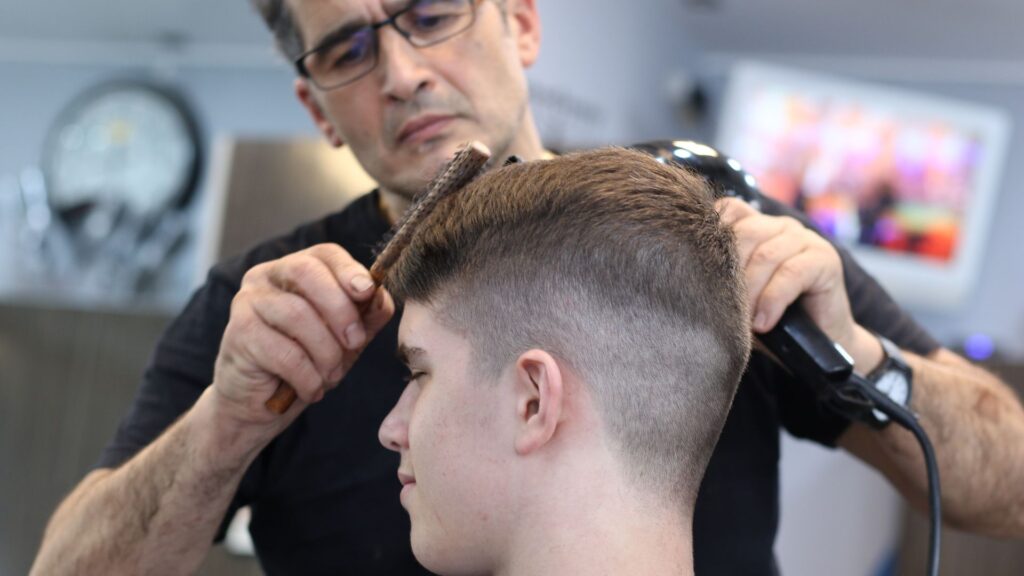
Ages 3 to 6: The Wiggler Years
At this stage, haircuts are purely functional. Kids squirm, get distracted, and often need a parent nearby for comfort. Simple trims and buzz cuts dominate, and most shops use kid-friendly chairs, tablets, or cartoons to keep things calm.
Ages 7 to 10: The Routine Begins
Boys in this range usually start sitting still on their own and may begin expressing preferences about their hair, even if it’s as simple as “not too short.” This is often when parents start noticing the first signs of personal style preferences.
Ages 11 to 13: The Tween Transition Zone
This is the most common window where the switch begins. Hair often starts thickening due to early puberty, and boys frequently start requesting specific styles they’ve seen on friends, athletes, or social media. Many barbershops report this as the age where kids first ask to sit in the “big chair.”
Ages 14 to 16: The Real Crossover Window
By this age, most boys have fully transitioned to men’s cuts. Puberty is typically in full swing, hair texture has often changed noticeably, and most teens have developed clear style preferences. This is also when regular maintenance appointments every 3 to 4 weeks become more common.
Ages 17 and Up: Full Men’s Cut Territory
By 17, nearly all young men are firmly in men’s cut territory, often with established barbers and consistent style preferences. Some even start experimenting with beard grooming alongside their haircuts.
Age ranges offer a helpful general guide, but they’re not the whole story. The next step is learning to spot the specific signs that indicate your son is ready, regardless of what the calendar says.
Signs Your Son Is Ready for a Men’s Cut (Beyond Age)
Age gives you a ballpark, but these specific signs tell you it’s actually time.
Physical Signs to Look For
Watch for thicker, coarser hair that no longer lies flat the way it used to, visible changes in hair texture or curl pattern, and increased oiliness that requires more frequent washing. These are strong indicators that his hair is behaving more like an adult’s.
Behavioral and Social Cues
If your son starts commenting on his own haircut, asking to see specific references on your phone, or expressing frustration with his current style, that’s a clear behavioral cue. Social cues matter too, especially if his friend group has already made the switch.
What He’s Asking For vs. What He Needs
Sometimes a boy asks for a style that’s technically beyond what his current hair can support. A fine-haired 10-year-old asking for a high skin fade with a sharp line-up might need to wait a bit, or at least have realistic expectations set by the barber about how the style will actually look on his hair type.
The Confidence Factor
Confidence is often the most overlooked sign. A boy who walks differently, stands taller, or simply smiles more after a sharp haircut is telling you something important. That confidence boost is often reason enough to make the switch, even if the hair itself isn’t dramatically different yet.
Once you’ve identified that he’s ready, the next step is figuring out which style will actually work best for his specific hair type.
Hair Type Matters: How to Choose the Right Men’s Cut for Your Son
Hair type should drive the style decision far more than trends or age ever should.
Straight and Fine Hair
Straight, fine hair tends to look best with cuts that create the illusion of volume and texture, such as textured crops or crew cuts with slightly longer length on top. Overly short fades can sometimes make fine hair look even thinner.
Thick and Coarse Hair
Thick, coarse hair handles structured cuts extremely well, including classic taper fades and skin fades. This hair type holds shape longer and tends to look sharper with crisp lines.
Curly and Coily Hair
Curly and coily hair benefits from cuts that work with the natural curl pattern rather than against it. Textured crops, curly fringes, and fades that leave enough length on top to let curls express themselves tend to work best.
Wavy Hair and Mixed Textures
Wavy hair is often the most versatile, handling everything from fades to longer textured styles. Mixed textures, which are increasingly common, may need a barber who can blend techniques across different sections of the head.
Hair Type Comparison Table
| Hair Type | Best Cut Style | Styling Difficulty | Maintenance Frequency |
| Straight/Fine | Textured crop, crew cut | Low | Every 4 to 5 weeks |
| Thick/Coarse | Taper fade, skin fade | Medium | Every 3 to 4 weeks |
| Curly/Coily | Textured crop with length | Medium to High | Every 4 to 6 weeks |
| Wavy | Fade with textured top | Medium | Every 3 to 5 weeks |
With hair type sorted out, the next logical step is looking at the most popular first men’s cuts boys actually ask for.
Popular First Men’s Cuts for Young Guys
These are the styles barbershops see most often when boys make the switch.
The Classic Taper Fade
The taper fade is a timeless choice that gradually shortens hair toward the neckline and sides. It works across nearly every hair type and is often recommended as a safe, sharp first men’s cut.
The Crew Cut
The crew cut is short, clean, and low maintenance, making it a great option for boys who want a grown-up look without a big styling commitment.
The Textured Crop
The textured crop keeps more length on top with texture added through scissor or clipper-over-comb work. It’s especially popular for wavy and curly hair types.
The Low Fade with Length on Top
This style balances a subtle fade on the sides with noticeable length on top, giving boys room to experiment with styling products as they get older.
Styles to Avoid for First-Timers
Extremely high skin fades, intricate hair designs, or styles requiring daily product use can be overwhelming for a first adult cut. It’s often smarter to start simple and build complexity over future appointments.
Choosing the right style is only part of the picture. The entire barbershop experience changes once a boy moves from the kids’ chair to the adult chair.
The Barbershop Experience: Kids’ Chair vs. Adult Chair
The shift from kids’ chair to adult chair involves more than just a different seat.

How Kids’ Cuts Are Typically Priced and Structured
Kids’ cuts are usually priced lower and structured around quick turnaround times, often without an extensive consultation.
The Adult Chair: What Changes in the Service
The adult chair typically includes a full consultation, more detailed cutting techniques, and often a hot towel or razor finish at the end.
Managing the First Adult Appointment
Parents can help by letting their son speak directly to the barber about what he wants, rather than answering for him. This small shift helps build his confidence and gives the barber accurate information.
What a Good Barber Will Do Differently
A skilled barber will ask about lifestyle, hair care habits, and even upcoming events like school photos before recommending a style, treating the appointment as a genuine consultation rather than a routine trim.
That shift in service naturally affects pricing, which is often the first question parents ask once they realize the kids’ cut era is ending.
Cost, Pricing, and Value: What Parents Should Know
Pricing is one of the most practical parts of this transition, and it varies more than most parents expect.
Average Kids’ Cut Pricing Across the U.S.
According to industry pricing data compiled by the Professional Beauty Association, kids’ cuts typically range from $15 to $25 depending on region and shop type.
Average Men’s Cut Pricing and What Drives It
Men’s cuts generally range from $25 to $45, with urban barbershops and specialty shops often charging more due to added services like razor edging, beard lineups, and longer appointment times.
Is It Worth Paying More for a Men’s Cut?
For most boys transitioning into puberty, yes. The added precision and consultation time directly affect how well the cut suits changing hair texture and face shape, which matters more during this rapidly changing stage.
Pricing Comparison Table
| Service | Low End | High End | National Average |
| Kids’ Cut | $15 | $25 | $20 |
| Men’s Cut | $25 | $45 | $35 |
| Men’s Cut with Razor Finish | $35 | $55 | $45 |
Pricing aside, plenty of parents stumble through this transition in avoidable ways. Here’s where things commonly go wrong.
Common Mistakes Parents Make During the Transition
A few missteps show up again and again across barbershops nationwide.
Waiting Too Long to Make the Switch
Some parents hold onto the kids’ cut long after their son’s hair and attitude have clearly outgrown it, which can lead to frustration and a loss of confidence.
Letting the Son Dictate Entirely Without Guidance
On the flip side, giving a young teen complete control without any guidance can lead to unrealistic style choices that don’t match his hair type or face shape.
Choosing the Wrong Barbershop for the First Adult Cut
Not every shop handles the transition well. Some barbers specialize heavily in either kids’ cuts or adult cuts, and picking a shop with experience in both makes the first adult appointment smoother.
Skipping the Consultation
Walking in and asking for “just a haircut” without discussing style, hair type, or lifestyle often leads to a disappointing first men’s cut experience.
Avoiding these mistakes is much easier once you know how to actually talk to your son about the switch in the first place.
How to Talk to Your Son About the Switch
The conversation itself matters more than most parents realize.
Having the Conversation Without Making It Weird
Keep it casual. Something as simple as “You’re getting older, want to try a real men’s cut this time?” is usually enough to spark interest without making it a big production.
Building Excitement Around the Transition
Framing the appointment as a milestone, similar to getting a first bike or a first phone, can build genuine excitement rather than treating it as just another errand.
When He Resists or Doesn’t Care
Some boys genuinely don’t care about their hair yet, and that’s fine. In these cases, it helps to let the barber lead the conversation during the appointment instead of forcing enthusiasm at home.
Using the Barbershop as a Bonding Ritual
Many fathers use this transition as an opportunity to start a recurring father-son barbershop tradition, turning routine haircuts into consistent bonding time.
This kind of bonding ritual looks different across cultures, and understanding those differences adds valuable context to the whole transition.
Cultural Perspectives on Boys’ Hair Transitions
Hair transitions carry different meanings depending on cultural background, and barbershops often reflect those traditions directly.
African American Barbershop Traditions and Rites of Passage
Black barbershops have long served as community hubs where first men’s cuts are treated as meaningful rites of passage, often involving family members and close friends celebrating the moment together.
Latino Grooming Culture and the First Adult Cut
In many Latino households, grooming and personal presentation are emphasized early, and the first adult-style cut, often paired with a sharp lineup, is treated as a point of pride.
European and Asian Perspectives on Youth Haircuts
In parts of Europe and Asia, youth haircuts often lean toward understated, low-maintenance styles longer into adolescence, with the switch to bolder adult styling sometimes happening slightly later than in American barbershop culture.
How Pop Culture and Athletes Influence the Timing
Across all cultures, professional athletes and musicians heavily influence when and how boys want to switch styles, often accelerating the timeline well before puberty changes would naturally demand it.
Cultural influences aside, once the switch happens, the real work shifts to daily grooming habits and product use.
Products, Tools, and Grooming Habits for the Newly Transitioned Young Man
A men’s cut often requires more than just a new haircut. It requires new habits.
When to Introduce Hair Products
Most barbers recommend introducing lightweight styling products once a boy’s cut requires actual shaping, typically once he moves into a textured crop, fade, or similar structured style.
The Right Products for Teen and Young Adult Hair
Water-based pomades, light clays, and sea salt sprays tend to work well for teens, offering control without the heavy buildup associated with older wax-based products.
Building a Morning Grooming Routine
A simple routine of washing with a gentle shampoo, applying a small amount of product, and styling with fingers or a comb takes less than five minutes but makes a noticeable difference in how a cut looks day to day.
Product Ingredients to Embrace and Avoid
Look for lightweight, water-soluble ingredients and avoid heavy alcohol-based sprays or sulfate-heavy shampoos, which can dry out a teenager’s increasingly oil-prone scalp.
Good grooming habits start at home, but the barber behind the chair plays an equally important role. Here’s what the pros actually recommend.
Expert Barber Tips for a Smooth Transition
Barbers who handle this transition daily have a few consistent pieces of advice for parents.
What Barbers Wish Parents Knew Before the Appointment
Most barbers wish parents would let their son answer questions directly during the consultation instead of speaking for him, since it builds the boy’s confidence and gives the barber more accurate information about Customer Preferences.
How to Brief the Barber for Best Results
A quick heads-up about hair texture changes, upcoming events, or specific references helps the barber tailor the cut appropriately from the very first appointment.
Realistic Expectations for the First Few Men’s Cuts
The first men’s cut rarely looks perfect right away, especially if hair is still adjusting to puberty-related changes. It often takes two or three appointments to dial in the exact style that works best.
How to Maintain the Cut Between Appointments
Encouraging light daily maintenance, like a quick comb-through or a small amount of product, helps the cut hold its shape between barbershop visits.
With all that expert insight covered, here are quick, direct answers to the most common questions parents and young guys ask about this exact transition.
FAQ: Everything Parents and Young Guys Are Asking
At what age should a boy get his first men’s haircut?
Most boys transition to a men’s cut somewhere between ages 11 and 16, though the exact timing depends more on hair texture and puberty onset than on age alone.
What is the difference between a kids’ cut and a men’s cut at a barbershop?
A kids’ cut is a simple, fast trim built for young children, while a men’s cut involves more detailed techniques like fades, tapers, and razor edging, along with a full style consultation.
Can a 10-year-old get a fade haircut?
Yes, a 10-year-old can absolutely get a fade. Fades aren’t restricted by age and can work well on kids as long as the hair texture and growth pattern support the style.
How do I know if my son is ready for a men’s cut?
Look for signs like thicker or coarser hair, increased interest in his appearance, specific style requests, and general restlessness with his current cut.
Do barbershops charge more for men’s cuts than kids’ cuts?
Yes, men’s cuts typically cost $10 to $20 more than kids’ cuts due to longer appointment times and more advanced techniques.
What men’s hairstyle is best for a teenage boy getting his first adult cut?
A classic taper fade is usually the safest and most versatile first men’s cut, since it works well across most hair types and face shapes.
How often should a teenage boy get a haircut?
Most teenage boys should visit the barber every 3 to 5 weeks to keep structured cuts like fades and tapers looking sharp.
Should I let my son choose his own hairstyle?
Yes, with guidance. Letting him express preferences builds confidence, but a good barber should help steer the final decision based on his actual hair type.
What if my son’s hair changed texture during puberty?
This is extremely common. A good barber can adjust cutting techniques to accommodate new texture, and sometimes a complete style change is the best solution.
All of this information points toward one simple truth: this transition is bigger than a haircut, and it’s worth handling with intention.
Conclusion
The first men’s cut is never really about the haircut itself. It’s about a boy starting to see himself a little differently, standing a little taller, and beginning to take ownership of how he presents himself to the world. Watch for the physical and behavioral signs covered throughout this guide, choose a barbershop experienced with both kids’ and adult cuts, and let your son take an active role in the consultation.Whenever that moment arrives, a good barber will be ready to treat your son with the same care, precision, and respect given to any adult client, making the switch feel less like a change and more like a welcome.