

He slid into the chair on a Friday afternoon, phone already out, scrolling to a photo. Razor-sharp skin fade. A hard part carved like a highway line. Six inches of sculpted texture on top, blow-dried into a wave that looked like it had its own weather system.
“Can you do this?” he asked.
“I can,” I said. “The real question is whether you can keep doing it.”
He laughed, but I wasn’t joking. I’ve been behind the chair for more than twenty years. The clippers hum, the talc puffs off the brush, and I’ve watched thousands of men pay for a cut at the register. What I don’t see is the money, time and patience they keep paying after they walk out the door.
That’s the hidden cost of a high-maintenance haircut. The receipt is just the opening bid.
What I Mean by High-Maintenance
Let’s be clear. I’m not knocking anybody’s style. Some of the best cuts I’ve ever done were high-maintenance, and the men wearing them loved every minute.
When I say high-maintenance, I mean a cut that needs at least one of these to look right:
- Professional visits every one to two weeks
- More than five minutes of daily styling
- Two or more styling products
- Heat tools like a blow-dryer or flat iron
- Chemical services like color, bleach or perms
- Precise lines that blur within days
One of these isn’t a problem. Three or four, and the cut starts running your calendar. Think of it like owning a sports car. Gorgeous on the road. Pricey at the mechanic.
The Four Currencies Every Cut Spends
Every haircut spends four currencies, whether you notice or not:
- Money: visits, add-ons, products and tools
- Time: mornings in the mirror, trips to the shop, waiting for an opening
- Hair and scalp health: heat, chemicals, tension and buildup
- Mental energy: worrying about rain, humidity, helmets, hats and missed appointments
A low-maintenance cut spends a little of each. A high-maintenance cut can spend a lot of all four. The goal of this guide isn’t to talk you out of anything. It’s to hand you the full bill so you can decide what’s worth paying.
First, we need a fair way to measure upkeep.
Sorting Low, Medium and High Upkeep
A Working Scale for Haircut Upkeep
I use a simple scale in the chair. It helps men see where their cut lands before they commit.
| Upkeep Level | Visit Rhythm | Daily Styling | Products | Typical Examples |
| Low | Every 4 to 6 weeks | 0 to 2 minutes | 0 to 1 | Buzz, classic taper, short textured cut |
| Medium | Every 3 to 4 weeks | 3 to 5 minutes | 1 | Side part, textured crop, Ivy League |
| High | Every 1 to 2 weeks | 6 to 15+ minutes | 2 or more, plus heat | Skin fade with design, pompadour, colored or permed styles |
| Very High | Weekly, plus chemical touch-ups | 15+ minutes | Several, plus tools | Bleached textures, sculpted quiffs, intricate line art |
Most men sit between low and medium. That’s not a coincidence. It’s where effort and payoff meet comfortably.
Signs Your Cut Is Running Your Life
A cut is running you, rather than the other way around, when:
- You plan weekend activities around rain or humidity
- You skip the gym or pool to protect your style
- You feel anxious if you miss an appointment by even a few days
- You own more hair products than kitchen spices
- Wearing a hat feels like a crisis
I had a client who refused to ride roller coasters with his kids because the wind would wreck his quiff. When he told me that, he laughed. Then he stopped laughing. “That’s kind of sad, isn’t it?” We changed his cut the following month.
High-Maintenance vs. High-Style
Here’s a myth worth busting. Plenty of men think a sharp look requires high maintenance. It doesn’t.
| Factor | High-Maintenance Cut | High-Style, Low-Maintenance Cut |
| Look on day one | Striking | Sharp |
| Look on day ten | Often fading | Still polished |
| Daily effort | High | Low |
| Relies on | Precision lines, heat, product | Smart shaping, working with hair type |
| Forgiveness | Low | High |
| Annual cost | High | Moderate |
Style comes from shape, proportion and fit. Maintenance comes from how fragile those things are. A well-built cut can be both stylish and sturdy, like a good pair of leather boots that look better with every scuff.
To understand why some cuts got so demanding, it helps to look back.
How Men’s Hair Got So Fussy
Brilliantine, Pomade and the Weekly Visit
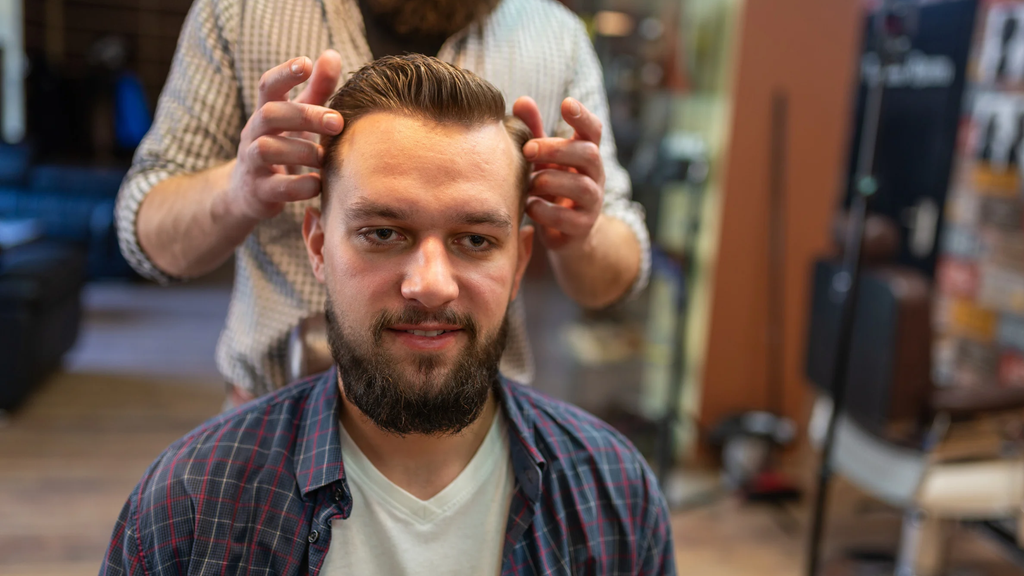
High maintenance isn’t new. In the early 1900s, a well-groomed man might stop at the neighborhood barbershop several times a week for a shave and visit weekly for a trim. Hair was slicked flat with brilliantine, an oily tonic that smelled faintly of flowers and shone like wet paint.
By the 1940s and 1950s, petroleum-based pomades held up pompadours and ducktails. Those styles looked fantastic under neon lights, but they demanded daily combing, heavy product and frequent trims. Ask an older client about it and he’ll tell you about pomade stains on his mother’s pillowcases.
The Long-Hair Decades and the Blow-Dryer Boom
The 1960s and 1970s loosened things up. Hair grew longer, and the weekly trim faded. But maintenance didn’t vanish. It shifted.
The handheld blow-dryer moved into men’s bathrooms, along with feathered styles that needed brushing, drying and hairspray. Some men went further with perms. The visits got farther apart, but the morning routine stretched longer. It’s a pattern that keeps repeating: when one cost drops, another often rises.
Skin Fades and the Social Media Mirror
| Era | Signature Look | Main Maintenance Demand |
| 1900s to 1920s | Slicked side part | Frequent visits, tonic |
| 1940s to 1950s | Pompadour, ducktail, flattop | Heavy pomade, regular trims |
| 1960s to 1970s | Longer hair, feathering | Blow-drying, hairspray, perms |
| 1980s | Mullets, volume, frosted tips | Color, gel, mousse |
| 1990s | Buzzes, curtains, spiky gel | Gel, frequent short trims |
| 2000s | Faux hawks, spikes | Wax, daily styling |
| 2010s | Skin fades, undercuts, pompadours | Weekly or biweekly fades, multiple products |
| 2020s | Textured crops, tapers, perms, bleached tops | Mixed: some low, some very high |
The 2010s brought the skin fade to the center of the stage. Phone cameras and social media made every haircut a portrait. A fade looks incredible in a fresh photo. It also starts blurring in about a week. That sharp, filtered look created a new standard: look perfect at all times. That standard is expensive.
History shows how cuts got fussy. Biology shows why they can’t stay perfect.
The Biology Behind the Bill
Half an Inch a Month, No Matter What
According to the American Academy of Dermatology, scalp hair grows about half an inch per month. That’s roughly an eighth of an inch per week, and it doesn’t care what cut you paid for.
That steady growth is the engine behind every maintenance cost. Your hair is always moving. The only question is how much that movement shows.
Why Sharp Lines Fade First
The shorter the hair, the bigger the percentage change when it grows. That’s why the sharpest, shortest parts of a cut lose their look first.
| Area of the Cut | Starting Length | After 1 Week | Visible Change |
| Skin fade bottom | 0 inches (shaved) | About 1/8 inch | From skin to stubble shadow, obvious |
| Edge-up line | Shaved crisp | About 1/8 inch | Line blurs noticeably |
| #1 taper | 1/8 inch | 1/4 inch | Length doubles |
| #3 sides | 3/8 inch | 1/2 inch | Moderate softening |
| 2-inch top | 2 inches | 2 1/8 inches | Barely noticeable |
| 5-inch top | 5 inches | 5 1/8 inches | Unnoticeable, though shape may drop |
A skin fade goes from bare skin to visible shadow within days. That’s why men who love fades end up in the chair every week or two. You’re not paying for a haircut so much as renting a look by the week.
Fighting the Way Your Hair Wants to Grow
Every head has a crown whorl, and many have cowlicks along the hairline. When a cut works with your Natural Growth Pattern, it falls into place on its own. When it fights that pattern, you pay every morning.
I see it most with slick backs on men whose front cowlick wants to push forward and sideways. They end up using a blow-dryer, a strong pomade and a fine comb just to win a daily battle. It’s like trying to make a river flow uphill. You can do it with enough pumps, but you’ll be paying for the electricity forever.
A good barber reads those patterns before picking up the shears. That one habit can save you hundreds of dollars and hours of frustration.
Now let’s put real numbers on the table.
The Money, Visit by Visit
Shorter Intervals, Bigger Totals
Most men compare cuts by the price of a single visit. That’s the wrong number. What matters is price times frequency.
A $30 cut every two weeks costs more per year than a $45 cut every five weeks. It sounds obvious when you say it out loud, but I’ve watched men bargain-hunt on price while signing up for twice the visits.
The Annual Math
| Cut Style | Typical Price | Visit Rhythm | Visits Per Year | Annual Cost |
| Classic taper | $35 | Every 5 weeks | 10 to 11 | $350 to $385 |
| Textured crop | $40 | Every 4 weeks | 13 | $520 |
| Mid fade | $40 | Every 3 weeks | 17 | $680 |
| Skin fade | $45 | Every 2 weeks | 26 | $1,170 |
| Skin fade with design | $55 | Weekly to biweekly | 26 to 52 | $1,430 to $2,860 |
| Bleached textured top | $45 cut plus $100 color | Cut every 3 weeks, color every 6 to 8 | 17 cuts, 7 colors | $1,465 |
Prices vary widely by region and shop, so treat these as ballpark figures. The pattern holds, though. The jump from a classic taper to a weekly skin fade with a design can be a difference of over $2,000 a year. That’s a used car down payment. Or a family vacation.
Add-Ons, Upcharges and Rising Prices
High-maintenance cuts tend to attract add-ons like a magnet picks up nails. A hot towel here, a beard lineup there, a design refresh, a scalp treatment, a blow-dry finish. Each one feels small. Together they can push a $40 cut toward $70.
Prices also keep rising. The Bureau of Labor Statistics tracks haircuts and personal care services in its Consumer Price Index, and that category has climbed steadily in recent years as rent, supplies and wages go up. A cut that’s frequent today gets more expensive every year you keep it.
I’m not against add-ons. A hot towel at the end of a long week is one of life’s simple pleasures. Just choose them on purpose, not on autopilot.
The chair isn’t the only place the money goes. Your bathroom shelf takes its share.
The Product Shelf Nobody Budgets For
The Styling Arsenal and What It Costs
A high-maintenance cut often comes with a shopping list. Here’s what a typical shelf looks like.
| Product | Typical Cost | How Long It Lasts | Annual Cost |
| Pomade or clay | $18 to $30 | 2 to 3 months | $80 to $180 |
| Pre-styler or sea salt spray | $15 to $25 | 2 to 3 months | $60 to $150 |
| Hairspray | $10 to $20 | 2 months | $60 to $120 |
| Heat protectant | $12 to $25 | 3 months | $50 to $100 |
| Clarifying shampoo | $10 to $20 | 3 to 4 months | $30 to $80 |
| Conditioner or leave-in | $10 to $25 | 2 to 3 months | $40 to $150 |
| Blow-dryer | $40 to $200 | 2 to 4 years | $15 to $100 |
| Round brush, combs | $15 to $40 | 2+ years | $10 to $20 |
A man using four or five of these can easily spend $300 to $600 a year on product alone. Add that to the visit totals above and the gap between low and high maintenance grows fast.
Pomade vs. Clay vs. Cream vs. Gel
Choosing the right single product can cut your shelf in half.
| Product | Hold | Shine | Washes Out | Best For | Upkeep Burden |
| Water-based pomade | Medium to strong | Medium to high | Easy | Slick backs, side parts | Medium |
| Oil-based pomade | Strong | High | Hard, builds up | Classic greaser styles | High |
| Matte clay | Medium to strong | Low | Moderate | Textured crops, messy looks | Low to medium |
| Cream | Light | Natural | Easy | Curly hair, relaxed styles | Low |
| Gel | Very strong | Wet look | Easy, can flake | Spiky or sharp shapes | Medium |
Oil-based vs. water-based pomade is a comparison worth knowing. Oil-based holds beautifully and smells like a Saturday in 1958, but it can take two or three washes to remove. Water-based rinses out in one. If you want a classic look without a scalp coated in grease, water-based is usually the smarter pick.
The Cleanup Crew: Shampoo, Clarifiers and Conditioners
Every product you put in has to come out. Heavy styling means heavier washing, and heavier washing can strip natural oils.
A 2015 review in the International Journal of Trichology by Maria Fernanda Gavazzoni Dias explained how shampoo pH and harsh cleansing agents can rough up the hair’s outer cuticle, leading to frizz and breakage. So men who use a lot of product often find themselves buying conditioner to repair damage caused by the shampoo they need to remove the product. It’s a bit like buying a bigger truck to haul the stuff you bought to fill your garage.
Money is easy to count. The next currency is harder to see.
Time: The Currency You Can’t Earn Back
Morning Minutes Add Up
The Bureau of Labor Statistics’ American Time Use Survey tracks grooming as its own category, and men consistently log a meaningful slice of each day there. Hair is a big part of that slice.
| Daily Styling Time | Weekly Total | Yearly Total |
| 1 minute | 7 minutes | About 6 hours |
| 5 minutes | 35 minutes | About 30 hours |
| 10 minutes | 70 minutes | About 61 hours |
| 15 minutes | 105 minutes | About 91 hours |
Fifteen minutes a day equals more than two full work weeks a year. That’s time you could spend sleeping, reading to your kids, or getting to the gym. If you love that styling ritual, great. It’s yours. Just know what you’re trading.
Travel, Waiting and the Booking Scramble
A 30-minute cut rarely costs 30 minutes. Add a 15-minute drive each way, ten minutes of waiting, and the visit takes over an hour.
| Factor | Cut Every 5 Weeks | Cut Every 2 Weeks |
| Visits per year | 10 to 11 | 26 |
| Time per visit (with travel) | About 75 minutes | About 75 minutes |
| Yearly time spent | About 13 hours | About 32 hours |
High-maintenance cuts also create a booking scramble. Popular barbers fill up. Miss your slot, and your weekly fade turns into a three-week fade while you hunt for an opening.
The Mental Load of a Demanding Cut
This one never shows up on a receipt. It’s the low hum of worry: Will it rain? Can I wear a helmet? Should I skip the pool? Is my line-up still sharp for Friday’s interview?
A father I cut for years put it best. “When my hair needed babysitting, I had two kids and a haircut to look after.” He switched to a simple taper and said it felt like setting down a backpack he didn’t know he’d been carrying.
Time and worry wear on you. Heat, chemicals and tension wear on your hair.
What Heat, Chemicals and Tension Do to Hair and Scalp
Blow-Dryers and Flat Irons
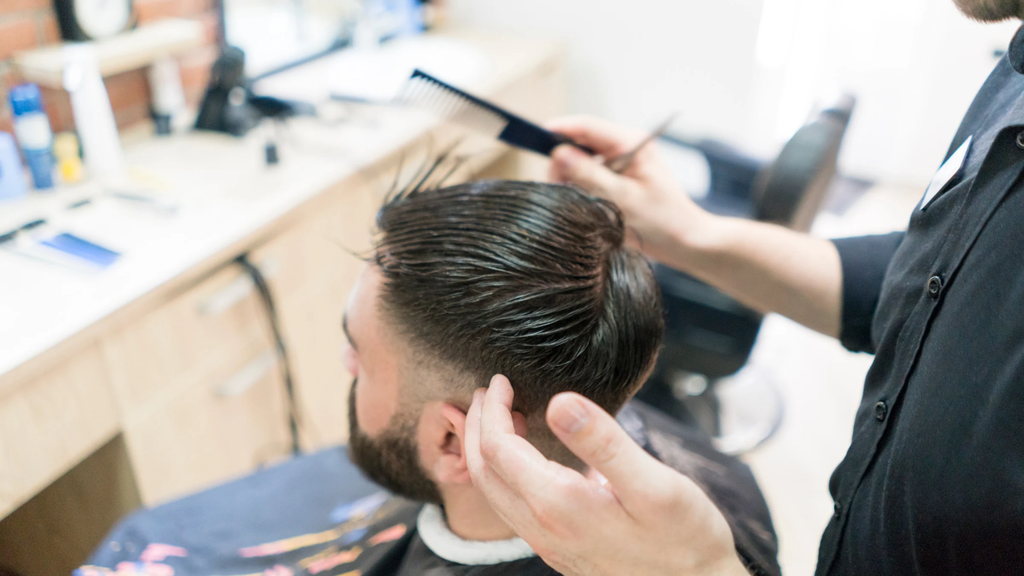
Many high-maintenance styles depend on heat. A 2011 study by Lee and colleagues in the Annals of Dermatology found that hotter drying settings caused more surface damage to the hair cuticle, while keeping the dryer about 15 centimeters away and moving it continuously reduced the harm.
Blow-drying vs. air-drying comes down to technique. Used gently, a dryer isn’t a villain. Used daily on high heat, held close, it slowly roughens the cuticle, leaving hair dull, frizzy and prone to snapping. That’s when men start buying heat protectants, masks and repair treatments, which brings us back to the product shelf.
Color, Bleach and Perms
Chemical services can look sharp, but they come with real costs.
Bleach opens the cuticle and breaks down pigment inside the hair. Perms break and reform bonds inside the strand to change its shape. Both weaken hair, and both need touch-ups as new growth comes in.
Allergies matter too. The American Contact Dermatitis Society named paraphenylenediamine (PPD), a common ingredient in permanent dark hair dyes, its Allergen of the Year in 2006. Reactions can range from itching to serious swelling. Always ask for a patch test before coloring.
| Service | What It Does to Hair | Touch-Up Rhythm | Hidden Costs |
| Bleach | Weakens cuticle and inner structure | Every 6 to 8 weeks | Toner, bond treatments, breakage |
| Permanent color | Deposits pigment, some damage | Every 4 to 8 weeks | Allergy risk, root lines |
| Perm | Reshapes inner bonds | Every 3 to 6 months | Dryness, special products |
| Daily heat styling | Roughens cuticle | Daily | Protectants, frizz control |
| Tight styles | Pulls on follicles | Ongoing | Thinning at edges |
Tight Styles and Traction Alopecia
Man buns, tight ponytails, braids and locs pulled too firmly can stress the follicles. The American Academy of Dermatology warns that styles that pull on the hair over time can cause traction alopecia, a type of hair loss that’s often reversible early but can become permanent if the tension continues.
I check hairlines on men who wear tight styles. If I see thinning along the temples or a shiny, sparse edge, I’ll mention it quietly. Loosening the style or giving the hair breaks between installs can save a hairline that can’t easily be bought back.
Product Buildup and Edge-Up Irritation
Heavy daily product can coat the scalp and trap oil. For men prone to seborrheic dermatitis, that buildup can mean more flaking and itching.
Frequent razor edge-ups bring their own problems. According to the American Osteopathic College of Dermatology, razor bumps affect an estimated 45 to 83 percent of Black men who shave regularly, and constant razor work along the hairline and neck can trigger similar irritation.
| Ingredient | What It Does | Helps With |
| Salicylic acid | Loosens buildup and dead skin | Product residue, rough scalp |
| Zinc pyrithione | Calms flaking | Dandruff from buildup |
| Ketoconazole | Antifungal | Stubborn flaking |
| Aloe vera | Soothes skin | Post-edge-up irritation |
| Tea tree oil (diluted) | Mildly soothing | Itch |
| Glycolic acid | Gentle exfoliation | Bumps along the hairline |
If you love a crisp line, ask your barber about using a trimmer instead of a straight razor on irritation-prone skin. You’ll keep most of the sharpness with far less fallout.
How much of this hits you depends heavily on what’s growing out of your head.
Hair Type Changes the Math
Straight and Fine
Fine, straight hair falls flat easily. Men with this hair often chase volume with blow-dryers, sprays and texturizing powders. That’s where costs climb.
The fix is usually a cut that creates the illusion of thickness: shorter sides, a choppy textured top and a single matte product. Fighting fine hair into a tall pompadour is like trying to build a sandcastle out of dry sand. It’s possible, but you’ll be patching it all day.
Thick and Coarse
Thick hair grows out as much as down. A cut that looks perfect on day one can puff up by week three. Men with dense hair often need more frequent thinning or shaping.
The good news? Thick hair holds shape beautifully once it’s cut right. Smart weight removal on the sides and back can stretch the time between visits by a week or more.
Curly and Coily
Curly and coily hair has its own rules. Many high-maintenance looks here involve sharp edge-ups, skin fades and designs, which need frequent touch-ups. Some men also use heat or chemical treatments to change texture.
The lower-cost path often means leaning into natural texture: a soft taper, a twist-out or sponge curls on top, and gentle edges. A good curl cream and a weekly moisture routine usually beat a cabinet full of products.
Thinning and Receding
According to the American Hair Loss Association, about two-thirds of American men experience some noticeable hair loss by age 35, and roughly 85 percent have significantly thinning hair by age 50.
Thinning is where high maintenance can turn costly fast. Comb-overs, fibers, concealer sprays and long tops styled to hide gaps all need daily effort, and they rarely fool anyone up close.
| Hair Type | High-Maintenance Trap | Lower-Cost Path | Main Saving |
| Straight and fine | Volume chasing with heat and spray | Short textured cut, one matte product | Time and products |
| Thick and coarse | Long sculpted shapes that puff up | Weight removal, structured taper | Fewer visits |
| Curly | Straightening, heavy heat | Defined curls with cream | Less damage |
| Coily | Weekly skin fades and razor edges | Soft taper, gentle edges | Fewer visits, less irritation |
| Thinning | Comb-overs, fibers, long tops | Short cut or buzz | Products, stress |
Owning the thinning with a shorter cut often looks more confident than hiding it. Many men tell me it feels like a weight off their shoulders.
With hair types in mind, let’s rank some of the most requested cuts.
Popular Cuts Ranked by Upkeep
The Low-Maintenance Lineup
These cuts grow out gracefully and need little daily work:
- Buzz cut: almost no styling, though very short buzzes need frequent clipping
- Classic taper: soft blend, forgiving for four to six weeks
- Short textured cut: a little matte clay or nothing at all
- Crew cut haircut: short sides with a little more length up front, the kind of cut that looks the same on a Monday as it did on a Friday
These are the cuts I recommend to new dads, shift workers and anyone who travels a lot.
The Middle Ground
These need a few minutes daily and a visit every three to four weeks:
- Textured crop with a mid fade
- Ivy League
- Classic side part
- Low taper with a curly top
Medium cuts are where most men feel happiest. They look intentional without demanding devotion.
The High-Maintenance Club
| Cut | Visit Rhythm | Daily Styling | Products | Heat or Chemicals | Upkeep Score (1 to 10) |
| Buzz cut | 2 to 4 weeks | None | 0 | No | 2 |
| Classic taper | 4 to 6 weeks | 1 to 3 min | 0 to 1 | No | 3 |
| Short textured cut | 4 to 5 weeks | 1 to 2 min | 1 | No | 3 |
| Textured crop with fade | 3 to 4 weeks | 3 to 5 min | 1 | No | 5 |
| Side part | 3 to 4 weeks | 3 to 5 min | 1 | Sometimes | 5 |
| Skin fade | 1 to 2 weeks | 2 to 5 min | 1 | No | 7 |
| Pompadour | 3 weeks | 10 to 15 min | 2 to 3 | Blow-dryer | 8 |
| Skin fade with design | Weekly | 2 to 5 min | 1 | No | 8 |
| Bleached textured top | 3 weeks plus color | 5 to 10 min | 2 to 3 | Bleach | 9 |
| Permed long top with fade | 2 to 3 weeks plus perm | 5 to 10 min | 2 to 3 | Perm | 9 |
Notice the jump. The leap from a score of 5 to a score of 8 doubles or triples the yearly cost and time. There’s no shame in the club. Just know the membership dues.
Now let’s put some of these cuts head to head.
Head-to-Head Comparisons That Settle the Argument
Skin Fade vs. Low Taper
| Factor | Skin Fade | Low Taper |
| Look on day one | Dramatic, crisp | Clean, polished |
| When it starts blurring | 5 to 7 days | 2 to 3 weeks |
| Visit rhythm | Every 1 to 2 weeks | Every 4 to 5 weeks |
| Annual cost estimate | $1,000+ | $350 to $500 |
| Scalp irritation risk | Higher, shaved to skin | Lower, visible hair at the bottom |
The low taper keeps most of the clean look at a fraction of the upkeep. For many men, it’s the best trade in the shop.
Textured Crop vs. Slick Back
| Factor | Textured Crop | Slick Back |
| Daily styling | 1 to 3 minutes | 5 to 10 minutes |
| Product | Matte clay or none | Pomade, often a blow-dryer |
| Messy days | Still looks fine | Falls apart |
| Hats and helmets | Easy recovery | Ruins the shape |
| Grow-out | Forgiving | Loses shape at length |
The crop is like a pair of good sneakers. The slick back is like polished dress shoes. Both look great, but only one handles a rainy walk to the car.
Shop Visits vs. Home Touch-Ups
| Factor | Professional Visits Only | Home Touch-Ups Between Visits |
| Cost | Higher | Lower, after buying tools |
| Quality | Consistent | Depends on skill |
| Risk | Low | Uneven necklines, gouges |
| Best for | Fades, tapers, designs | Buzz cuts, neckline cleanups |
| Time | Travel and waiting | 10 to 15 minutes at home |
A trimmer for your neckline between visits can stretch a cut by a week. Trying to touch up your own fade is a different story. I’ve rescued enough DIY fades to know it usually ends in a shorter cut than you wanted.
Long Hair vs. Short Hair
| Factor | Long Hair | Short Hair |
| Visit rhythm | Every 8 to 12 weeks | Every 3 to 5 weeks |
| Daily care | Washing, conditioning, detangling | Quick wash, minimal styling |
| Products | Conditioners, oils, leave-ins | One styling product or none |
| Damage risk | Split ends, tension from ties | Low |
| Annual cost | Lower visit costs, higher product costs | Higher visit costs, lower product costs |
Long hair trades frequent visits for daily care. Short hair trades daily care for frequent visits. Neither is free. You’re just choosing where to pay.
Comparisons help. Avoiding a few classic mistakes helps even more.
Mistakes That Make Any Cut Costlier
Choosing From a Photo Alone
Photos are useful. But the man in the photo has his own hair type, head shape and, very often, a professional stylist and good lighting. I’ve had men bring in a picture of an actor with thick, wavy hair when their own hair was fine and straight.
Bring the photo. Then tell me what you like about it. The shape? The length? The texture? We can borrow the best parts and build something that works on your head, not someone else’s.
Stretching the Cut, Then Paying for the Rescue
A man skips his fade for four weeks to save money. By the time he comes back, the shape is gone and we’re starting over. Sometimes he’s tried to fix it himself and carved a shelf into the sides.
Stretching a high-maintenance cut rarely saves money. It often leads to a longer, pricier rescue visit. If you can’t keep up the rhythm, switch to a cut built for a longer rhythm.
Piling On Product
More product doesn’t mean more hold. It usually means heavy, greasy hair, a coated scalp and more washing. Most short and medium cuts need a pea-sized or dime-sized amount, warmed between your palms.
| Mistake | What It Costs | Simple Fix |
| Photo-only requests | Wrong cut, frustration | Explain what you like, not just what you see |
| Stretching high-upkeep cuts | Rescue visits | Pick a cut that matches your schedule |
| Too much product | Buildup, extra shampoo | Use less, warm it first |
| Hot heat settings | Damage, repair products | Medium heat, keep the dryer moving |
| DIY fade fixes | Shelves, uneven blends | Leave blends to a pro |
| Skipping patch tests | Allergic reactions | Always test before color |
Mistakes are easier to understand through real people. Here are three.
Stories From the Chair
The Salesman With the Weekly Fade
He sold cars and believed his fade was part of his pitch. Every Thursday, like clockwork, he’d sit down, and I’d take him back to skin. One afternoon he pulled out his phone and showed me his yearly spending on cuts. Nearly $2,500.
“Is it worth it?” he asked.
We tried an experiment: a low taper with a slightly longer top, and a visit every four weeks. A month later he came back grinning. “Sold three cars this week. Nobody mentioned my hair.” He kept the taper and put the savings toward his daughter’s braces.
The Student and the Bleach Bill
A college freshman came in with bleached platinum hair that had turned brittle, orange at the roots and crunchy at the tips. He’d bleached it at home twice, then paid a salon to fix it.
Over coffee from the shop pot, we added it up: kits, toner, purple shampoo, a bond treatment, a corrective appointment. Over $350 in two months, on a student budget. And his hair was snapping when he combed it.
We cut off the damaged lengths and gave him a short textured crop with his natural color. He winced at first. A month later, he said, “I forgot how good it feels to just wake up and go.”
The Dad Who Picked a Simpler Cut for His Son
A father brought in his ten-year-old, who wanted a skin fade with lightning bolts shaved into the sides. The dad looked at me with a quiet plea.
We compromised. A soft taper, a little longer on top, and one small line on the side that would grow out gracefully. The boy loved it. The dad loved that he wasn’t booking his son every week.
On the way out, the dad said, “I want him to like his hair, not be a slave to it.” Good parenting, in my book. Teach a boy to care about his look without letting it run his week.
So how do you get a sharp look without the strings? Let’s talk strategy.
Getting Style Without the Strings
Questions to Ask Before You Commit
Before you try a new cut, ask yourself:
- How often can I realistically get to the chair?
- How many minutes do I want to spend styling each morning?
- Do I wear hats, helmets or work gear?
- Am I willing to use heat or chemicals?
- What does this cut look like at week three?
- Does it work with my hair type, or against it?
If your honest answers don’t match the cut, you’ll pay the difference in money, time or stress.
How to Brief Your Barber
The best cuts come from honest conversations. Instead of naming a style, describe your life:
“I’ve got about two minutes in the morning. I can come in every four or five weeks. I wear a hard hat at work. I want something clean that doesn’t look shaggy by week three.”
That tells me more than any photo. Here’s a simple brief you can bring:
| Brief Element | Example | Why It Helps |
| Daily styling time | “Two minutes, max” | Sets the upkeep ceiling |
| Visit rhythm | “Every 5 weeks” | Guides cut length and blending |
| Lifestyle | “Hard hat, outdoor work” | Rules out fragile styles |
| Product tolerance | “One product, or none” | Shapes texture choices |
| What I like | “Clean sides, a little texture” | Points to the look |
| What I hate | “Cowlick sticking up at the crown” | Lets your barber plan around it |
Low-Maintenance Upgrades That Still Look Sharp
You don’t have to give up style to save effort. Try these swaps:
- Skin fade → low or mid taper: same clean look, twice the lifespan
- Slick back → textured crop: less product, survives hats
- Bleached top → natural color with texture: zero damage
- Razor edge-up → trimmer edge-up: sharp, less irritation
- Two products → one versatile clay or cream: less buildup, less spending
These swaps are like upgrading from a fussy espresso machine to a good drip coffee maker. You still get a great cup. You just stop babysitting the machine.
Gifts and Budgets for Sons, Dads and Friends
If you’re buying for someone else, think about upkeep.
| Recipient | Low-Maintenance Gift | Approximate Cost |
| Son starting high school | Prepaid set of 3 cuts | $90 to $150 |
| College student | Quality trimmer for neckline touch-ups | $40 to $80 |
| Busy dad | One great matte clay plus a hot towel visit | $50 to $90 |
| New grad or job seeker | Fresh cut before interviews, plus a comb | $40 to $60 |
| Friend with fine hair | Texturizing spray and a consultation cut | $50 to $80 |
| Groom | Cut a week before the wedding, plus a touch-up | $70 to $120 |
The best grooming gifts lower someone’s upkeep, not raise it. A prepaid cut also comes with a small gift of its own: an hour in the chair where nobody needs anything from him.
Let’s look at where men’s grooming is heading.
Trends and Insights From Behind the Chair
The Swing Toward Wearable Cuts
Over the past few years, I’ve watched requests shift. Fewer men want skin fades every week. More want low tapers, textured crops and soft blends that look good at week four, not only on day one.
It seems men are getting smarter about upkeep. They still want to look sharp. They just don’t want their hair to need a personal assistant.
Men’s Grooming Spending Keeps Climbing
At the same time, men are spending more on grooming than ever. According to Grand View Research, the global men’s grooming products market was valued at roughly $80 billion in 2022 and is projected to keep growing. The Bureau of Labor Statistics also expects tens of thousands of job openings each year for barbers, hairstylists and cosmetologists over the coming decade.
What I see is men spending more deliberately. They’ll pay for a great cut and one great product, rather than a basket of products that clutter the bathroom.
Remote Work, Video Calls and the New Normal
Remote and hybrid work changed things too. Many men who once needed a crisp look five days a week now see coworkers mostly on video. Some stretched their cuts. Others grew their hair out for the first time.
Interestingly, the camera only shows the front and top of your head. That’s pushed many men toward cuts that look good from the front with minimal effort, and away from intricate side designs nobody sees on a call.
With trends covered, here are the questions I hear most.
Frequently Asked Questions
How do I know if my haircut is high-maintenance?
Look at three things: how often you need a visit, how long you spend styling, and how many products or tools you use. If you’re visiting every one to two weeks, styling for more than five minutes, or using heat and multiple products, your cut is high-maintenance. That’s fine if you enjoy it. Just know the true cost.
What’s the most low-maintenance haircut for men?
A buzz cut needs the least daily effort, though very short buzzes need frequent trims. A classic taper or a short textured cut is often the best overall balance. They need little styling and look good for four to six weeks.
Is a skin fade worth the cost?
It can be, if you love the look and can keep up with visits every one to two weeks. If cost or time is tight, a low or mid taper gives you a similar clean finish with much less upkeep. Many men can’t tell the difference in photos after a few days anyway.
How can I make my cut last longer between visits?
Choose a cut with visible hair at the bottom rather than skin. Ask your barber to work with your hair’s growth direction. Use a trimmer to clean your neckline between visits. And avoid heavy product, which can make growing hair look messier sooner.
Does using a lot of hair product damage hair?
Product itself usually doesn’t damage hair, but heavy use can lead to buildup on the scalp and require harsher washing. Harsh shampoos can rough up the hair cuticle over time. Use small amounts and wash with a gentle shampoo, adding a clarifying wash once a week if needed.
Is bleaching my hair at home cheaper?
Upfront, yes. In practice, home bleaching often leads to uneven color, breakage and corrective visits that cost more than a professional service would have. If you want color, see a pro and always ask for a patch test first.
What’s a good haircut for a son who wants something trendy?
Look for a trendy shape that grows out gracefully. A textured top with a soft taper gives a modern feel without weekly visits. A small, simple design can satisfy the urge for something cool and fade naturally as it grows.
Should I switch to a low-maintenance cut if my hair is thinning?
Many men find that a shorter cut makes thinning less noticeable and cuts daily effort dramatically. Long tops and comb-overs often draw attention to gaps. Talk with your barber about a short textured cut or a buzz. It’s often the most confident and lowest-cost option.
With your questions answered, it’s time to run the numbers on your own cut.
Your Haircut Cost Audit and a Final Word
The Five-Minute Cost Audit
Grab a pen. Fill this out honestly.
| Question | Your Answer | Yearly Estimate |
| Price per visit, including tip and add-ons | $____ | |
| Visits per year | ____ | $____ |
| Products used and yearly spending | ____ | $____ |
| Tools (dryer, irons, trimmers) per year | ____ | $____ |
| Chemical services per year | ____ | $____ |
| Daily styling minutes × 365 ÷ 60 | ____ | ____ hours |
| Visit time with travel × visits ÷ 60 | ____ | ____ hours |
| Stress level about your hair (1 to 10) | ____ |
Add up the dollars and hours. Then ask: is this cut giving me back what it costs?
A 30-Day Reset Plan
If your audit makes you wince, try this plan:
- Week 1: Talk to your barber about a lower-upkeep version of your current look.
- Week 2: Cut your product shelf to one main product. Use half the amount you normally do.
- Week 3: Lower heat settings, or try air-drying three days a week.
- Week 4: Check how your cut looks at week four. If it’s still holding up, book your next visit five weeks out.
Track how much time and money you save. Most men are surprised.
A Final Word From the Chair
At the end of every cut, I brush the loose hair from a man’s neck, dust a little talc across the nape and turn the chair toward the mirror. The cape comes off with a soft snap. That moment matters. It’s when a man sees himself fresh.
But the real test of a good cut isn’t that moment. It’s week three, on a rainy Tuesday, when he’s late for work and catches his reflection in a car window. Does he still look like himself? Does he feel good, without having spent an hour fighting his hair?
High-maintenance cuts aren’t wrong. Some men love the ritual, the sharpness and the weekly visit, and I’ll happily keep cutting them. What I want is for every man to choose his cut with his eyes open, knowing what it costs in money, time, hair health and peace of mind.
So take the audit. Ask the honest questions. Then come sit in the chair and tell me about your life, not just your hair. Together, we’ll find a cut that looks sharp, feels like you and doesn’t send you a bill every morning.