

The Spray Bottle Question
The Mist Before the First Snip
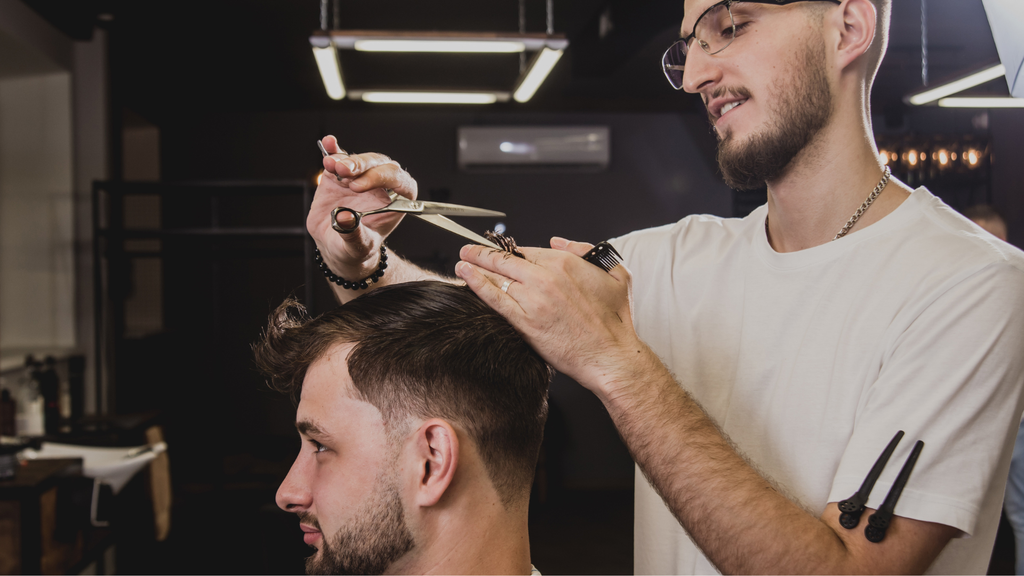
You settle into the leather chair. The cape snaps around your shoulders, the paper strip tightens at your neck, and somewhere behind you the clippers hum on their charging base. Then comes a small moment most men never think about: your barber either reaches for the spray bottle or doesn’t.
That little choice, wet or dry, shapes more of your cut than you might expect. It affects how the length is measured, how the lines are drawn, how the cut grows out and even how it looks the morning after your first shower at home.
I’ve been behind the chair for over twenty years. In that time, I’ve watched the spray bottle go from a given to a question. Perhaps you’ve noticed the shift too, and wondered whether it actually matters.
Why This Debate Keeps Coming Up
A client asked me once, half-curious and half-suspicious, “Why didn’t you wet my hair? The last guy always did.” Another, the following week, asked the opposite: “Why are you soaking it? I don’t wear it wet.”
Both were fair questions. I noticed that most men have a sense the choice matters but have never had anyone explain why. They just know one shop does it one way, another shop does it another, and the results feel different.
The honest answer is that neither method is always right. Each has moments where it shines and moments where it struggles. The interesting part is figuring out which moment you’re in.
What You’ll Find in the Pages Ahead
In the sections that follow, you’ll learn what wet and dry cutting actually are, what water does to a strand of hair and how both methods came to be. You’ll see how hair type, style and tools change the equation.
You’ll also find common mistakes, real stories from the chair, a look at costs, current trends, answers to the questions I hear most and a simple plan for your next visit. A few quick takeaways to carry with you:
- Straight hair and sharp geometric shapes often benefit from wet cutting
- Curly, coily and wavy hair often benefit from dry cutting
- Most great cuts use a bit of both
Take what fits your head. Leave what doesn’t.
Before weighing one method against the other, it helps to define them clearly.
What Wet and Dry Cutting Really Mean
Wet Cutting in Plain Terms
Wet cutting means the hair is damp or fully wet while it’s cut. That might come from a shampoo at the bowl or a few passes with a spray bottle in the chair.
Water makes hair heavier and smoother. It clumps together, lies flat against the comb and holds a clean section between your barber’s fingers. This makes it easier to measure length precisely and cut sharp, even lines.
It’s the method most of us grew up with. If you remember sitting on a booster seat while someone combed cold water through your hair, you’ve had a wet cut.
Dry Cutting in Plain Terms
Dry cutting means the hair is cut in its natural, dry state, usually clean and free of heavy product. Your barber sees the hair exactly as it falls, bends and springs on an ordinary day.
Instead of measuring a stretched, wet strand, the cutter shapes the hair the way you’ll actually wear it. Curls sit in their true pattern. Cowlicks show their real direction. Thick spots look thick and thin spots look thin.
It seems simple, but it asks a lot of the cutter. Dry hair doesn’t hold neat sections the way wet hair does, so the work relies more on eye, feel and experience.
The Hybrid Middle Ground
In practice, many skilled barbers use both. They might cut the bulk of the shape wet for structure, then dry the hair and refine it dry for texture and balance. Or they might clipper the sides dry and mist the top for a scissor-over-comb finish.
| Method | Hair State | Main Strength | Main Weakness | Common Uses |
| Wet cutting | Damp to soaked | Precise lines, clean sections | Hides true length and pattern | Classic scissor cuts, bobs, straight hair |
| Dry cutting | Clean and dry | Shows real shape and texture | Harder to section cleanly | Curly hair, texturizing, cowlicks |
| Hybrid | Wet first, then dry | Structure plus refinement | Takes more time | Most modern scissor cuts |
Think of it like a carpenter who measures twice and sands last. The structure gets built one way. The finish gets felt another way.
To understand why the two methods behave so differently, we need to look at what water actually does to hair.
What Water Does to a Strand of Hair
Swelling, Stretch and the Hydrogen Bond
Hair is made mostly of a protein called keratin. Two kinds of chemical bonds hold its shape. Disulfide bonds are strong and only change with chemical treatments like perms or relaxers. Hydrogen bonds are weaker and break every time hair gets wet.
According to Clarence Robbins’ widely used reference text, Chemical and Physical Behavior of Human Hair, a strand can absorb roughly 30 percent of its own weight in water. As it does, its diameter swells noticeably while its length changes only slightly. Wet hair also becomes more stretchy and more fragile than dry hair.
That stretchiness is the heart of the matter. When your barber combs wet hair and holds it taut between two fingers, the strand can be pulled longer than it sits naturally.
| Property | Wet Hair | Dry Hair |
| Hydrogen bonds | Broken, flexible | Re-formed, set |
| Stretch | Higher | Lower |
| Strength | Weaker, more prone to breakage | Stronger |
| Diameter | Swollen | Natural |
| Appearance of length | Looks longer | True length |
| Curl pattern | Loosened or hidden | Fully visible |
| Ease of sectioning | High | Lower |
Why Wet Hair Looks Longer Than It Is
Water weighs hair down. A curl relaxes, a wave flattens and a cowlick lies obediently against the scalp. All of it hangs longer than it would dry.
I’ve noticed that this is where many disappointments begin. A man asks for “just an inch off.” The cutter takes an inch off wet. Then the hair dries, bounces up and suddenly looks like two inches came off.
It’s a bit like buying jeans fresh off the hanger and then washing them in hot water. The tag said one thing. The dryer said another.
Shrinkage and the Spring-Back Surprise
Shrinkage is the difference between how long hair looks wet and stretched versus how long it looks dry and natural. On straight hair, shrinkage is minimal. On wavy hair, it’s noticeable. On curly and coily hair, it can be dramatic.
Many curl specialists estimate that tightly coiled hair can shrink to a fraction of its stretched length once dry, sometimes appearing well under half as long. That’s why a cutter who doesn’t account for spring-back can turn a planned shape into something much shorter than anyone intended.
Perhaps that’s the most useful thing to remember about water: it doesn’t lie, exactly, but it does hide things. The question is whether your style can afford for those things to stay hidden.
These physical facts have shaped how cutting evolved over the centuries.
A Short History of Wet and Dry Cutting
Barber-Surgeons and the Straight Razor

Barbering is an old trade. In 1540, England formally united barbers and surgeons into the Company of Barber-Surgeons, a partnership that lasted until 1745, when the surgeons broke away to form their own company. For centuries, the same hands that trimmed a beard might also pull a tooth or let blood.
Water and the straight razor went hand in hand from the start. Hot towels softened beards, lather lubricated skin and wet hair made razor work safer. I still think of the older barbers I trained under, folding steaming towels on a tray and talking about how their own mentors stropped razors on leather every morning.
That heritage still lives in the shop: the hot towel, the lather brush, the bright scent of witch hazel after a shave.
The Clipper Changes the Conversation
Clippers changed everything. Manual clippers spread in the late 1800s, and according to Wahl’s company history, Leo J. Wahl developed an electromagnetic hair clipper around 1919 that helped bring electric clippers into shops across America.
Clippers cut best on dry hair. Wet hair clumps, slows the blades and can leave uneven patches. As clipper work grew, especially in short back and sides, crew cuts and eventually fades, dry cutting quietly became the standard for a big portion of men’s grooming.
So in a sense, barbers were dry cutting long before anyone called it a technique. They just called it running the clippers.
Sassoon and the Geometric Revolution
In the 1960s, Vidal Sassoon reshaped hairdressing with precise geometric cuts. His bob in 1963 and his five-point cut in 1964 relied on exact lines and clean angles, which wet cutting made possible.
Sassoon’s methods spread through salons and schools worldwide. For decades, the spray bottle and the wide-tooth comb became symbols of serious technique. Wet hair meant control, and control meant precision.
Dry Cutting Finds Its Champions
By the 1980s and 1990s, some stylists began pushing back. New York stylist John Sahag became known for cutting hair dry so he could see its natural movement. Ouidad built a curl-focused approach in the 1980s, and Lorraine Massey co-founded the Devachan salon in 1994 and wrote Curly Girl: The Handbook in 2001, popularizing dry, curl-by-curl cutting.
| Era | Moment | What It Meant |
| 1540 to 1745 | Company of Barber-Surgeons in England | Water, razors and hot towels anchor the trade |
| Late 1800s | Manual clippers spread | Short dry cutting becomes practical |
| Around 1919 | Leo J. Wahl’s electric clipper | Dry clipper work speeds up |
| 1963 to 1964 | Sassoon’s bob and five-point cut | Wet precision becomes the gold standard |
| 1980s | John Sahag and Ouidad gain attention | Dry and curl-specific cutting rises |
| 1994 to 2001 | Devachan opens, Curly Girl published | Dry curl cutting reaches the mainstream |
| 2010s to today | Texture, fades and hybrid methods | Technique chosen by hair, not habit |
History, it seems, didn’t crown a winner. It simply handed us two tools and left the choosing to us.
With that background, let’s look at what wet cutting does best.
The Case for Wet Cutting
Precision Lines and Clean Sections
When hair is wet, it lies flat and holds together. Your barber can pull a clean vertical or horizontal section, check it against the guide from the last section and cut a crisp line.
That matters most for structured shapes: a classic taper with a defined scissor line, an even-length top or a sharp perimeter on longer hair. Wet hair lets the cutter check balance from one side to the other with real accuracy.
It’s a bit like painting trim with masking tape. The tape doesn’t make the painter better. It just keeps the edges clean.
Control on Straight, Slippery Hair
Fine, straight hair can be slippery when dry. It slides out from between fingers, flies around under the dryer and refuses to stay sectioned. Water tames it.
Since straight hair doesn’t shrink much, the length measured wet stays close to the length you’ll see dry. That makes wet cutting especially reliable for men with straight hair who want a neat, polished result.
I noticed that many men with very straight hair actually feel uneasy with a fully dry cut. The hair moves so much that the process looks less precise, even when it isn’t. A light mist gives both of you confidence.
Comfort and the Ritual of the Shampoo
There’s also something to be said for the experience. A shampoo at the bowl, warm water, the scalp massage, the smell of eucalyptus or tea tree, a towel wrapped around your head as you walk back to the chair. It slows the visit down.
A wet cut also clears away product, sweat and debris, which gives the cutter a clean, honest starting point. Clippers and shears glide better through clean hair, and clean hair tends to dull blades more slowly.
| Situation | Why Wet Cutting Helps |
| Straight, fine hair | Controls flyaways, minimal shrinkage |
| Geometric or structured shapes | Clean sections and accurate guides |
| Heavy product buildup | Shampoo resets the hair |
| Razor cutting | Water protects hair and reduces tugging |
| First visit with a new cutter | Clean slate to read the hair afterward |
Wet cutting brings order. But order isn’t always what the hair needs.
The Case for Dry Cutting
Seeing the Hair as You Wear It
The biggest strength of dry cutting is honesty. You don’t walk around with soaking wet hair, so why cut it that way? Dry, the hair shows its real length, real volume and real direction.
When a cutter works dry, he can see exactly where a shape looks heavy, where it collapses and where it already sits well. Small adjustments get made with the end result in plain view.
Think of a tailor fitting a suit. He doesn’t measure you lying on a table. He has you stand the way you stand every day, shoulders relaxed, and pins the jacket there.
Working With Growth Patterns
Cowlicks, whorls, double crowns and stubborn sections near the hairline hide when hair is wet. Water flattens them. Once the hair dries, they reappear, sometimes right where a cutter took too much.
Dry cutting reveals these patterns before any length comes off. The cutter can leave a little extra weight over a crown whorl or shape a fringe around a lift, rather than discovering the problem after the blow dryer clicks off.
| Factor | Wet Cutting | Dry Cutting |
| Seeing true length | Harder | Easy |
| Spotting cowlicks and whorls | Hidden | Visible |
| Clean sectioning | Easy | Harder |
| Curl and wave accuracy | Low | High |
| Precision geometric lines | High | Moderate |
| Clipper performance | Poor on soaked hair | Excellent |
| Time in the chair | Often longer with shampoo | Often shorter |
| Best for | Straight hair, structured cuts | Textured hair, growth patterns |
Texture, Weight and Movement
Dry cutting is also where texture comes alive. Techniques like point cutting, slide cutting and careful thinning work best when the cutter can see how each piece falls.
On thick hair, removing weight dry lets the cutter watch the shape relax in real time. On wavy hair, it shows where a wave forms and where it fades.
Perhaps the simplest way to put it: wet cutting builds the frame, dry cutting decorates the room. Some homes need more frame. Some need more decorating.
Which one your hair needs depends a great deal on the kind of hair you have.
Hair Type Decides More Than You Think
Straight Hair: Where Wet Cutting Shines
Straight hair is the most predictable under water. What you see wet is close to what you’ll get dry, so the precision of wet cutting carries through.
That said, straight hair shows every line and every mistake. A choppy section or uneven guide sits out in the open. A quick dry check at the end catches anything the water disguised, especially near cowlicks.
Wavy Hair: The Gray Zone
Wavy hair is the most interesting case. When wet, it looks almost straight. When dry, it might wave beautifully in one area and lie flat in another.
I noticed that wavy-haired men are often the most frustrated by past cuts. The shape looked great in the chair after a blow-dry, then went somewhere unexpected after air drying at home. A hybrid approach often helps: structure wet, then refine dry so the cutter can see where the waves want to go.
Curly and Coily Hair: Why Dry Often Wins
For curly and coily hair, technique matters perhaps more than anywhere else. Shrinkage can be dramatic, and each curl may spring back at a slightly different rate.
Cutting dry lets the cutter shape the curls in their natural form, often curl by curl, so the final shape is balanced. For very short tapers, fades and sponge or wave styles on coily hair, dry clipper work is the norm anyway. Many barbers who specialize in textured hair would hardly consider soaking it before the clippers.
| Hair Type | Shrinkage | Preferred Approach | Why |
| Straight | Minimal | Wet or hybrid | Precision carries through to dry |
| Wavy | Moderate | Hybrid | Structure wet, waves refined dry |
| Curly | High | Dry | Curls shaped in true form |
| Coily | Very high | Dry, especially with clippers | Avoids surprise shortness, clean clipper work |
| Fine | Varies | Wet for control, dry check | Flyaways tamed, true volume confirmed |
| Thick or coarse | Varies | Dry for weight removal | See bulk and balance in real time |
Fine Hair vs. Thick Hair
Strand thickness changes things as much as curl pattern does.
| Factor | Fine Hair | Thick Hair |
| Behavior when wet | Clings flat, looks very thin | Looks dense and heavy |
| Behavior when dry | Light, can look fuller | Bulky, may puff out |
| Main risk | Removing too much volume | Leaving too much bulk |
| Best technique emphasis | Wet for control, minimal thinning | Dry for weight removal and shaping |
| Ideal finish check | Dry, to confirm fullness | Dry, to confirm balance |
I once had two friends book back to back. One had fine, straight hair that floated in every breeze. The other had hair so thick it took two passes to comb through. Same style requested, two very different paths to get there.
Hair type sets the stage. The style you choose writes the script.
Style by Style: When Technique Matters Most
Fades and Clipper Work
Fades are almost always cut dry. Clippers need dry hair to glide evenly, and the blending of a fade depends on seeing how each length catches the light.
Wet hair clogs blades, hides the transition lines and makes it harder to spot uneven patches. If someone wets your sides before a skin fade, it’s worth a gentle question about why.
Scissor Cuts and Classic Shapes
Scissor cuts like a classic taper, an Ivy League or a longer side part often benefit from water for the main structure. The cutter can follow guides cleanly and keep both sides balanced.
Then a dry finish lets him soften lines, check how the part falls and adjust weight on top.
| Style | Primary Technique | Finish | Why |
| Skin or low fade | Dry | Dry | Clippers perform best dry |
| Buzz cut | Dry | Dry | Clippers only, no structure to measure |
| Classic taper | Wet or hybrid | Dry check | Scissor structure, natural finish |
| Side part or Ivy League | Wet | Dry | Clean guides, then part placement |
| Textured crop | Dry | Dry | Texture and movement shaped in true state |
| Curly top with taper | Dry | Dry | Curl shape and shrinkage |
| Longer flow (4+ inches) | Hybrid | Dry | Structure plus natural movement |
Longer Flow Styles
Longer styles, the kind that reach the collar or tuck behind the ears, live and die by how they move. A shape that looks perfect wet can turn bulky or stringy dry.
Most experienced cutters build the length wet, then dry it and refine. That way the perimeter is precise, and the inner layers move the way the hair naturally wants to move.
Beards and Facial Hair
Beards are usually shaped dry, with a few exceptions. Beard hair tends to be coarser and often curlier than scalp hair, so it can shrink noticeably once dry. Trimming a wet beard can leave it shorter and patchier than expected.
Straight razor lining is the exception. Hot towels and lather soften the skin and hair along the cheek and neck, protecting both during a shave. That warm, slightly menthol-scented towel isn’t just a luxury. It has a job.
The style decides the method, and the method decides the tool.
How Tools Behave Wet and Dry
Shears vs. Clippers
| Factor | Shears | Clippers |
| Works best on | Wet or dry | Dry |
| Precision on long lengths | High | Limited |
| Speed on short lengths | Slower | Fast |
| Texturizing ability | Excellent | Limited without attachments |
| Effect of wet hair | Glides cleanly | Clogs and drags |
| Best for | Tops, longer styles, refining | Fades, sides, buzz cuts |
Good steel shears cut cleanly wet or dry, though dry cutting demands sharper blades. Dull shears on dry hair tend to fold the strand rather than slice it, which can leave rough ends.
Clippers are the dry cutter’s best friend. That steady buzz has been the soundtrack of every shop I’ve worked in. But point them at soaked hair and they slow down, snag and leave you with patches.
Razors: The Tool That Asks for Water
Razor cutting creates soft, tapered ends and lots of movement. It almost always requires wet hair. Dragging a razor through dry hair can pull, fray the ends and feel uncomfortable on the scalp.
If your cutter reaches for a razor on dry hair, that’s not necessarily wrong, but it is unusual. A gentle “Should we wet that first?” is a fair question.
Point Cutting vs. Blunt Cutting
| Factor | Point Cutting | Blunt Cutting |
| How it’s done | Shears cut into the ends at an angle | Shears cut straight across |
| Result | Soft, textured, broken-up ends | Clean, solid line |
| Best hair state | Dry, or damp then checked dry | Wet |
| Best for | Textured crops, cowlicks, thick hair | Structured shapes, perimeters |
| Risk | Over-texturing fine hair | Harsh lines on curly hair |
Blunt cutting builds weight and structure. Point cutting breaks it up. Many great cuts use both: blunt for the shape, point for the finish.
Even with the right tools, a few common mistakes can undo good work.
Mistakes That Undo a Good Cut
Cutting Wet Curls Too Short
This is probably the most common heartbreak I’ve seen. A cutter wets a head of curls, cuts what looks like a modest trim and then watches in quiet horror as the hair dries and springs up two inches shorter.
The fix is simple, though it requires patience: check the curl pattern dry before cutting, and if cutting wet, leave generous length to account for shrinkage.
Over-Thinning Dry Hair
Thinning shears are useful, but they’re easy to overuse. On dry hair, a cutter can see the bulk disappear, and it’s tempting to keep going.
Too much thinning leaves short pieces that stick out, especially near the crown and on fine hair. The hair loses its structure and can look frizzy or stringy as it grows.
Skipping the Dry Check
Even a beautiful wet cut deserves a dry check. Blow-drying the hair and looking again catches uneven spots, hidden cowlicks and any bounce that changes the shape.
A cut that’s only ever been seen wet is a bit like a car that’s only been driven in the parking lot. It probably runs fine. You still want to take it on the highway before you buy it.
| Mistake | What Happens | Better Approach |
| Cutting wet curls to target length | Dries much shorter | Cut dry or leave extra length |
| Over-thinning dry hair | Frizz, stragglers, lost shape | Thin gradually and check often |
| No dry check after wet cut | Hidden unevenness | Dry and refine before finishing |
| Clippering soaked hair | Patchy, uneven blending | Dry the hair first |
| Razor on dry hair | Pulling, frayed ends | Wet before razor work |
| Trimming the beard wet | Shorter and patchier than planned | Shape dry |
Trimming at Home Under Bathroom Light
Home trims cause plenty of trouble. Bathroom lighting creates shadows, the mirror reverses everything and it’s nearly impossible to see the back.
Many men wet their hair at the sink, take a little off the front, then discover a gap once it dries. If you trim at home, try cutting dry, taking off less than you think and leaving the back and crown for a pro.
Avoiding mistakes is one thing. Seeing what good work looks like is another.
What Happens in a Skilled Barber’s Chair

The Consultation
A good cut starts with conversation. Before any tool comes out, a skilled pro should look at your hair dry, ask how you style it and find out what’s been bothering you.
I like to ask a few simple questions. How do you wear it on a normal Tuesday? Do you blow-dry or air-dry? What did you like about your last cut, and what didn’t you like? Then I run my fingers through the hair, feeling for density, cowlicks and texture. That’s when I decide: wet, dry or both.
A Wet Cut, Step by Step
- Assess dry. Note cowlicks, growth patterns and natural part.
- Shampoo or mist. Wet the hair evenly to the roots.
- Section. Divide the hair into clean, manageable parts.
- Set a guide. Cut the first section to the desired length.
- Follow the guide. Work section by section, checking balance.
- Blow-dry. Dry the hair the way you’ll wear it.
- Refine dry. Soften lines and adjust weight.
A Dry Cut, Step by Step
- Start with clean, product-free hair.
- Observe natural fall. Let the hair settle where it wants.
- Shape the outline. Establish the overall silhouette.
- Work section by section. Cut in the hair’s natural pattern.
- Texturize. Use point or slide cutting where needed.
- Step back often. Check from several angles and distances.
- Finish. Light product, final adjustments.
The Finish
Before you leave, the hand mirror should come out so you can see the back. A soft brush dusted with talc sweeps away loose hairs, and that faint powdery smell has signaled “done” for generations.
I also like to show a client how to style the cut himself. A cut you can’t recreate at home isn’t really finished, no matter how good it looked under the shop lights.
Steps and theory help. Real people in real chairs teach me even more.
Stories From the Chair
The Curly Teen and the Shrinking Fringe
Jordan was fifteen, with tight, springy curls and a fringe he wanted to keep long enough to fall near his eyebrows. His last cut had left the fringe sitting high on his forehead after it dried, and he’d spent two weeks wearing a beanie.
I asked him to come in with dry, clean hair, no product. We cut it dry, curl by curl, and I kept checking how each section sat. When we finished, his fringe sat exactly where he wanted. “So it was the water?” he asked. Perhaps not the water itself. More the fact that nobody had seen his curls the way he actually wore them.
The Lawyer Who Needed Sharp Lines
Daniel had fine, straight hair and a closet full of navy suits. He wanted a clean, classic side part with perfectly even sides, the kind that looked the same on Monday and Friday.
For him, wet cutting made sense. His hair barely shrank, and the water let me set clean guides and keep both sides balanced. After a blow-dry, I made a few small adjustments around the part. He came back every four weeks like clockwork, and the shape held every time.
The Grandfather With the Thinning Crown
Harold was in his seventies, with silver, thinning hair and a quiet sense of humor. “Don’t take too much,” he said. “There’s not much left to take.”
When I wet his hair, it clung to his scalp and looked thinner than it was. So I worked mostly dry, leaving a bit of weight at the crown and avoiding thinning shears entirely. He looked in the mirror and nodded. “That looks like more hair than I came in with.” I told him the hair was all his. We’d just stopped hiding it under water.
Many of my favorite moments involve families, so let’s talk about them.
Fathers, Sons and Gift-Buyers
Kids in the Chair: Wet or Dry?
Children often have fine, soft hair and very little patience. A quick dry clipper cut can be faster and less fussy for wriggly little ones. A light mist can calm flyaways for a scissor trim.
| Factor | Wet Cut for Kids | Dry Cut for Kids |
| Speed | Slower, especially with shampoo | Faster |
| Comfort | Some kids dislike cold water | No spray bottle surprise |
| Precision on fringes | High on straight hair | High on curly hair |
| Best for | Straight-haired kids, scissor trims | Curly kids, clipper cuts, nervous first-timers |
A boy’s first haircut is a big moment for many families. I’ve watched fathers hold their son’s hand through the whole thing, then tuck a lock of hair into an envelope to keep. For that first visit, comfort often matters more than technique. Short, gentle and done is a fine outcome.
Booking for Someone Else
If you’re booking for a son, a partner or a friend, a few details help the cutter prepare. Mention the hair type, how it’s usually styled and any spots that cause trouble.
You might also ask whether the shop prefers wet or dry for that hair type. A thoughtful answer usually signals a thoughtful cutter.
Gift Cards and Grooming Experiences
A cut paired with a hot towel shave, a scalp massage or a beard shaping makes a memorable gift. Many shops offer packages that include both wet and dry services: a shampoo and wet cut on top, dry clipper work on the sides, then a hot towel to finish.
It seems that what people remember most isn’t the technique itself. It’s the feeling of being looked after, the warm towel, the quiet hum of the clippers, the chance to sit still for half an hour.
Gifts lead naturally to a question many people wonder about: what does all this cost?
Cost, Time and Where the Value Lives
Does Technique Change the Price?
Usually, the method itself doesn’t change the price much. What changes the price is the time, skill and specialization involved.
According to IBISWorld, U.S. barbershops form a multibillion-dollar industry, and pricing varies widely by city and shop. The U.S. Bureau of Labor Statistics also projects employment for barbers, hairstylists and cosmetologists to grow faster than the average for all occupations over the coming decade, a sign that demand for skilled hands isn’t slowing.
| Service | Typical Price Range | Usual Technique |
| Basic clipper cut | $20 to $35 | Dry |
| Skin fade | $30 to $50 | Dry |
| Scissor cut with shampoo | $35 to $60 | Wet or hybrid |
| Curl-specific dry cut | $45 to $90 | Dry |
| Kids’ cut | $15 to $30 | Dry or light mist |
| Cut with hot towel and style | $45 to $80 | Hybrid |
| Beard shaping | $15 to $35 | Dry, wet for razor lining |
Treat these as rough guides. A downtown shop in a big city may charge more, a small-town spot may charge less.
Time in the Chair
A dry clipper cut might take 20 to 30 minutes. A wet scissor cut with shampoo and blow-dry often runs 40 to 50. A careful curl-by-curl dry cut can take an hour or more.
More time doesn’t always mean better results, but rushing a technique that needs patience rarely ends well.
DIY vs. Professional
| Factor | DIY | Professional |
| Upfront cost | $30 to $100 for clippers | $20 to $60 per visit |
| Technique choice | Usually guesswork | Matched to hair type |
| Seeing the back | Nearly impossible | Full view |
| Accounting for shrinkage | Rarely | Built into the plan |
| Best for | Buzz cuts, quick neckline cleanups | Anything with shape, texture or curl |
Professional haircuts earn their keep in the details you can’t see in a bathroom mirror: the balance between sides, the weight at the crown, the way a curl springs back. You’re not just paying for length removed. You’re paying for judgment.
That judgment keeps evolving, and the conversations among pros reflect it.
What Pros Are Talking About Now
The Rise of Texture
When I talk with other pros over coffee before the shop opens, texture keeps coming up. Choppy crops, messy fringes, natural curls and matte finishes have become everyday requests.
Texture tends to favor dry cutting and dry refining, since the cutter needs to see how each piece moves. It seems men are increasingly asking, “What will my hair actually do?” rather than “Can you make it look like this photo?”
Curl Specialists and Dry Cutting Training
Curl-specific training has grown a lot. Methods inspired by Devachan, Ouidad and other curl pioneers are now taught in workshops, and some shops advertise curl specialists by name.
According to Grand View Research, the global men’s grooming market has grown into a large and expanding category, and services tailored to specific hair types have become part of that growth.
| Trend | What It Looks Like | Technique Impact |
| Texture-first styles | Crops, messy fringes, curls | More dry refining |
| Curl specialization | Dedicated curl cutters | Dry, curl-by-curl methods |
| Detailed fades | Skin fades, designs, tapers | Dry clipper precision |
| Hybrid workflows | Wet structure, dry finish | Both methods in one visit |
| Consultation-heavy visits | Longer intake conversations | Technique chosen per client |
Hybrid Is Becoming the Default
Maybe the biggest shift is that the debate itself is softening. Fewer cutters call themselves strictly wet or strictly dry. More choose based on the head in front of them.
I find that a healthier way to work. It’s less about loyalty to a method and more about listening to the hair. What might change if more of us approached our own hair with that same curiosity?
Curiosity leads to questions, and I hear plenty of them.
Frequently Asked Questions
Is a dry cut better than a wet cut?
Neither is better across the board. Dry cutting tends to suit curly, coily, wavy and thick hair, along with clipper work and texture. Wet cutting tends to suit straight hair and structured shapes that need clean lines. Many of the best results come from a hybrid approach: structure wet, refine dry.
Should I wash my hair before a dry cut?
Yes, ideally. Come in with clean, dry hair and no heavy product. Product weighs hair down, changes how it falls and can gum up shears and clippers. If you style your hair a certain way daily, you might mention it, but let the cutter see it natural first.
Why does my hair look shorter after it dries?
Wet hair stretches and hangs heavier, so it looks longer than its true length. When it dries, it returns to its natural shape, and curls or waves spring back up. That difference, called shrinkage, can be dramatic on curly and coily hair. A cutter who checks dry, or cuts dry, can plan for it.
Can clippers be used on wet hair?
They can, but they usually don’t perform well. Wet hair clumps, slows the blades and leads to patchy blending. Most barbers dry the hair before clipper work, especially for fades.
Is wet cutting better for fine or thinning hair?
Wet cutting can help control fine, slippery hair, but it also makes fine hair look thinner than it is. Many cutters use water for structure and finish dry to check volume. With thinning hair, avoid heavy thinning shears and ask for a dry check.
How should beards be trimmed?
Beards are usually best trimmed dry. Beard hair is often coarse and curly, so it shrinks when it dries. The exception is razor lining along the cheeks and neck, where hot towels and lather protect the skin.
Do dry cuts cost more?
Not usually. A basic dry clipper cut is often one of the least expensive services. Specialized curl-by-curl dry cuts can cost more, since they take longer and require specific training.
What should I tell my cutter if I’m not sure which method I need?
Describe your hair type, how you style it, how it behaves after air drying and what bothered you about past cuts. Then ask, “Would you cut this wet, dry or both?” A good cutter will explain the reasoning, which tells you a lot about how carefully he’ll work.
Is it okay to ask for a specific method?
Absolutely. It’s your hair. If you’ve had better results with one method, say so. A good cutter will either agree or explain, respectfully, why something else might suit your hair better.
Questions help, but a plan helps more.
Your Action Plan and a Final Word
Questions to Ask Before the First Snip
Here are a few questions worth bringing to your next appointment:
- Do you plan to cut my hair wet, dry or both?
- How much will my hair shrink once it dries?
- Will you check the cut dry before I leave?
- Are there cowlicks or growth patterns I should know about?
- How should I style this at home?
If you’ve recently moved or haven’t found the right person yet, searching “haircut near me” is an easy start. Look at photos of work on hair similar to yours, read reviews that mention your hair type and notice whether the cutter asks questions before picking up the shears.
A Simple Decision Guide
| Your Situation | Likely Best Approach |
| Straight hair, classic side part | Wet structure, dry check |
| Wavy hair, medium length | Hybrid: wet shape, dry refinement |
| Curly or coily hair, defined shape | Dry, curl by curl |
| Skin fade or buzz cut | Dry clippers |
| Thick hair needing weight removal | Dry |
| Fine or thinning hair | Light mist for control, dry finish |
| Beard shaping | Dry, with hot towel for razor lines |
| Razor-textured style | Wet |
| Kids’ first visit | Whatever keeps it quick and calm |
Use this as a starting point, not a rulebook. Your hair might surprise you.
A Final Word From the Chair
I’ve cut hair for thousands of men over the years. Straight, wavy, curly, coily, silver, thick, thin and everything in between. And I’ve noticed something: the best results rarely come from loyalty to one method. They come from paying attention. Perhaps that’s the real answer to the wet versus dry question. Technique matters most when the hair is least predictable, when curls shrink, cowlicks hide or a sharp line has to hold. Water reveals some things and hides others. Dry hair tells the truth but asks for patience. So the next time you’re in the chair, with the clippers humming nearby and that faint smell of talc in the air, maybe you’ll watch for the spray bottle a little differently. Not as a habit, but as a choice. What might your hair be trying to tell you, if your cutter took a moment to see it as you wear it every day? If any of this rings true for you, take it with you. If it doesn’t quite fit, that’s fine too. Every head of hair tells its own story, and after all these years behind the chair, I’m still learning to listen.