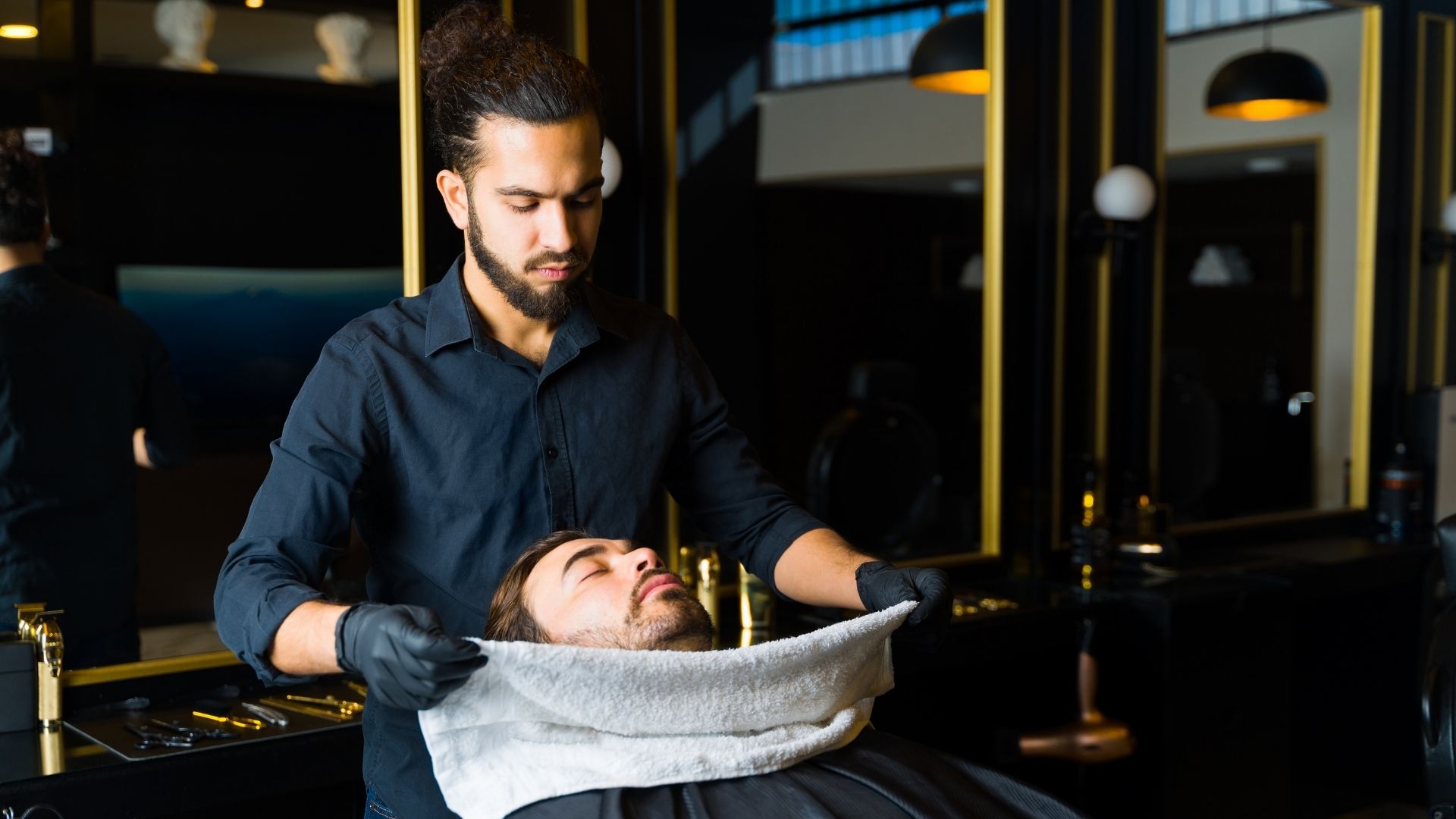
A hot towel isn’t a luxury add-on. It’s the single most important five minutes of any proper shave, and the science backs that up completely. When a barber lays a steaming towel across your face, heat softens the keratin in your facial hair, increases blood flow to the skin, and relaxes the muscles underneath. The result is a closer, more comfortable shave with less irritation and fewer nicks. This article breaks down exactly what happens at a cellular level when heat meets skin and hair, traces the ritual’s roots from ancient bathhouses to the modern barbershop, and gives you a step-by-step way to recreate the experience at home. By the end, you’ll understand why skipping the towel changes everything about the shave that follows.
Key Takeaways
- Heat physically softens the keratin protein in facial hair, making each strand easier to cut cleanly and reducing drag on the razor.
- Pores don’t literally open and close, but heat increases skin pliability, blood flow, and follicle lubrication, which produces similar practical benefits.
- The hot towel ritual has roots stretching back thousands of years, from Roman and Ottoman bathhouses to the barbershops of Victorian London and postwar America.
- Cold towels after a shave serve a different purpose entirely, closing pores’ surrounding tissue, calming inflammation, and sealing in post-shave products.
- Skin type changes how much heat you should use and for how long, with sensitive and dry skin requiring shorter, gentler applications than oily or thick skin.
The Hot Towel Experience — What It Is and Why It Feels So Good
Walk into any traditional barbershop and the ritual is nearly identical everywhere you go. You settle into the chair, lean back, and within a minute or two, a towel that’s been steeping in hot water arrives at your face. It’s not a gimmick. It’s the foundation of a proper wet shave.
What a hot towel treatment actually involves step by step
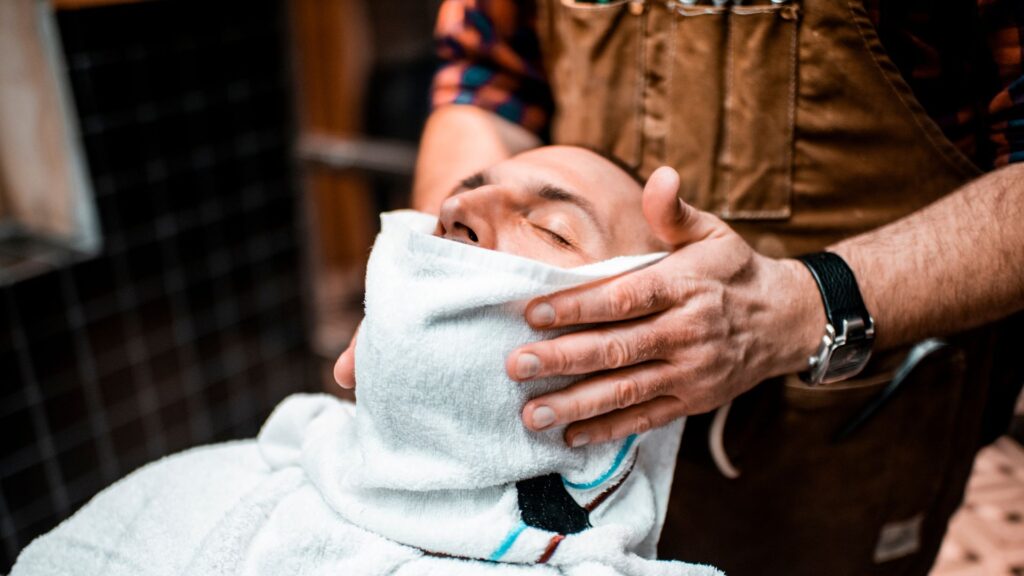
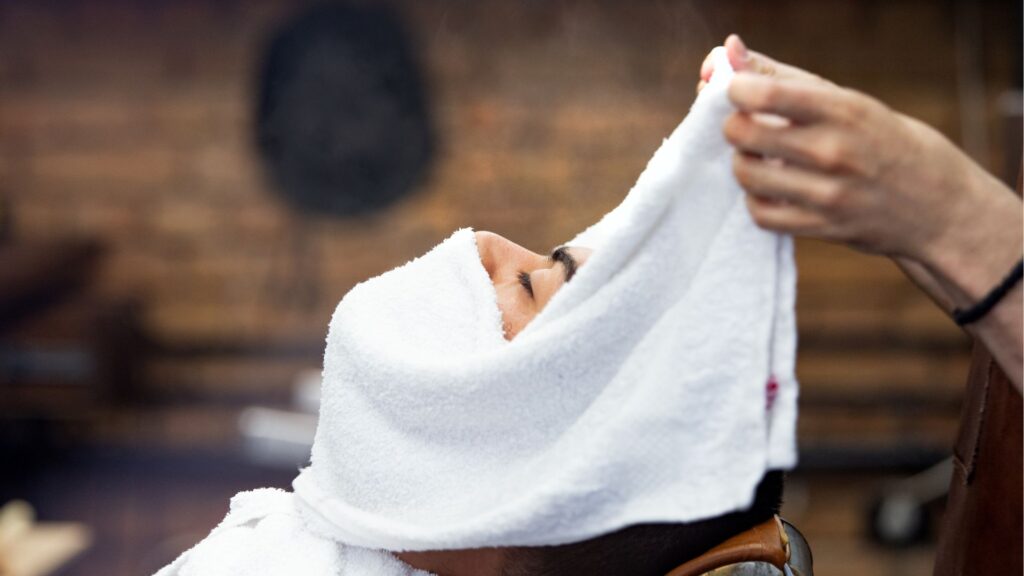
A barber typically soaks a cotton towel in water heated to roughly 130 to 150 degrees Fahrenheit, wrings out the excess, and folds it so the heat is evenly distributed. The towel is then draped over the lower half of your face, covering the cheeks, jaw, chin, and upper lip, while leaving the nose exposed so you can breathe comfortably. It stays in place for two to five minutes, sometimes reapplied a second time for particularly coarse or stubborn facial hair. Some shops finish the sequence with a light massage through the towel to work heat and moisture deeper into the skin.
The sensory experience and why it signals quality
There’s a reason people close their eyes the moment the towel lands. The warmth spreads instantly, the steam carries a faint scent of whatever’s been added to the water (often eucalyptus or menthol), and the weight of the damp fabric feels almost like a hand resting on your face. This sensory signature has become shorthand for quality in the grooming world. A shop that skips the hot towel is telling you something about how it treats the rest of the shave too. Clients notice, and barbers know it.
A brief history of hot towel shaving culture
Hot towel service became a defining feature of the American barbershop in the late 19th and early 20th centuries, when a fresh shave and a good haircut were considered essential weekly maintenance for working men. Barbershops competed on service quality, and the hot towel became a marker of craftsmanship that separated a proper shop from a quick trim stand. That reputation has stuck around for more than a century, and it’s part of why the ritual still feels special today even though the underlying mechanics are pure physics and biology.
The towel does more than feel good, though. It sets off a chain of physical changes in your skin and hair that make the rest of the shave possible. Let’s get into exactly what’s happening underneath that steam.
The Thermal Science Behind Hot Towels
Everything that makes a hot towel shave superior comes down to one simple fact: heat changes the physical properties of keratin, water, and skin tissue in predictable, measurable ways.
How heat affects the hair shaft and follicle
Facial hair is made almost entirely of keratin, a fibrous structural protein also found in fingernails and the outer layer of skin. Keratin is held together by hydrogen bonds and disulfide bonds that give hair its strength and rigidity. When you introduce heat and moisture, those hydrogen bonds temporarily weaken, and the hair shaft absorbs water and swells slightly. A swollen, softened hair shaft requires significantly less force to cut cleanly, which is exactly what you want when a blade is involved.
What happens to skin under sustained heat and moisture
Your skin’s outermost layer, the stratum corneum, is made of dead skin cells bound together by lipids. Heat and moisture soften this layer, making it more pliable and less likely to catch or tear during shaving. Sustained warmth also causes vasodilation, meaning the blood vessels near the surface of your skin widen and increase blood flow to the area. This brings more oxygen and nutrients to the skin and contributes to the flushed, relaxed feeling you get after a hot towel application.
The physics of thermal transfer through a wet towel
A damp towel transfers heat far more efficiently than a dry one because water conducts thermal energy roughly 25 times faster than air. This is why a wet hot towel feels immediately and intensely warm compared to, say, a heating pad. The water in the towel also delivers moisture directly to the skin and hair simultaneously with the heat, which is the exact combination keratin needs to soften.
Optimal temperature ranges and why they matter
| Temperature Range | Effect on Skin and Hair | Risk Level |
| Below 100°F (38°C) | Minimal softening effect, feels lukewarm | Very low risk, limited benefit |
| 110°F to 120°F (43°C to 49°C) | Noticeable softening begins, comfortable for most skin types | Low risk |
| 130°F to 150°F (54°C to 66°C) | Optimal range for keratin softening and vasodilation | Moderate, requires proper wringing and timing |
| Above 160°F (71°C) | Risk of burns, especially on sensitive or thin skin | High risk, not recommended |
Most professional barbers aim for the 130 to 150 degree range because it delivers the biological benefits without crossing into burn territory, particularly when the towel is applied for the standard two to five minute window.
Understanding the thermal mechanics is one thing, but the real payoff shows up the moment the razor touches your skin, which is where facial hair’s structure becomes the star of the show.
How Heat Softens Facial Hair and Why That Changes Everything
A razor doesn’t care how sharp it is if the hair it’s cutting is standing rigid and dry. Heat is what turns stubborn stubble into a cooperative surface for the blade.
The protein structure of facial hair and heat’s effect on it
Facial hair is thicker and coarser than scalp hair, often two to three times the diameter, which is part of why it resists cutting more than finer hairs. Heat and water penetrate the outer cuticle layer of the hair shaft and reach the cortex underneath, where the keratin bonds loosen. This process, sometimes called hydrothermal softening, can reduce the force needed to cut a single hair by a measurable margin, which translates directly into less tugging, less irritation, and a cleaner cut at the skin’s surface.
Comparing shaving with and without heat prep
| Factor | Shaving With Heat Prep | Shaving Without Heat Prep |
| Hair resistance to blade | Significantly reduced, hair cuts cleanly | High resistance, hair bends before cutting |
| Skin irritation risk | Lower, reduced friction and drag | Higher, increased risk of razor burn and ingrown hairs |
| Closeness of shave | Closer, blade glides smoothly | Less close, often requires multiple passes |
| Time to complete shave | Faster overall due to fewer repeat passes | Slower, more touch-ups needed |
| Post-shave comfort | Minimal redness or stinging | More likely to experience burning or tightness |
This comparison explains why experienced barbers never skip the warm-up step, even when a client is in a hurry. The few minutes saved by skipping the towel almost always get spent dealing with irritation afterward.
Why coarse and curly hair benefits most from hot towel prep
Men with thick, curly, or coily facial hair see the biggest improvement from heat prep because curved hair follicles are more prone to ingrown hairs and razor bumps. Softening the hair shaft before shaving reduces the sharp, slanted cut edge that curls back into the skin, which is one of the leading causes of pseudofolliculitis barbae, commonly known as razor bumps. For these hair types, the hot towel isn’t just a comfort measure, it’s a practical defense against a genuinely painful and persistent skin condition.
Softer hair is only half the story. The skin underneath is going through its own transformation, and that’s where a lot of grooming myths need sorting out.
Pore Opening — Fact, Fiction, and What Actually Happens to Skin
If you’ve ever heard a barber say heat “opens your pores,” you’ve heard one of the most repeated phrases in grooming history. It’s not entirely accurate, but the underlying effect it describes is very real.
What pores actually are and whether they open and close
Pores are simply openings of hair follicles and sweat glands. They don’t have muscles, so they can’t physically open or close the way a door does. What actually changes is the surrounding skin tissue. Heat causes the tissue around the pore to relax and swell slightly, which makes the opening appear larger and easier for oil, dirt, or in this case, shaving product, to pass through. Cold, by contrast, causes that tissue to tighten and constrict, making pores look smaller.
| Myth | Reality |
| “Heat opens pores like a valve.” | Pores have no muscles; heat relaxes surrounding tissue, making openings appear larger. |
| “Cold permanently closes pores.” | Cold temporarily constricts surrounding tissue; the effect is not permanent. |
| “Pore size can be changed long-term with temperature.” | Pore size is largely determined by genetics and sebum production, not temperature. |
| “Hot towels clean out pores completely.” | Hot towels soften debris and oil, making removal easier, but don’t deep clean by themselves. |
How heat increases skin pliability and blood flow
Even without a literal “opening” mechanism, heat genuinely improves how your skin behaves during a shave. Vasodilation increases circulation, bringing warmth and softness to the surface. This increased blood flow also delivers more nutrients to the area and can help minor nicks heal slightly faster. The skin becomes more elastic and forgiving under the blade, which reduces drag and the likelihood of cuts.
Dermatology research on heat and follicle lubrication
Dermatologists have long noted that heat application prior to hair removal procedures, including shaving and waxing, improves comfort and reduces trauma to the follicle. According to the American Academy of Dermatology, warming the skin before hair removal can help loosen debris within the follicle opening and make the surrounding skin more supple, both of which support a smoother glide for any blade or razor.
So heat gets the skin and hair ready, but what happens right after the razor finishes its work is just as important, and that’s where cold comes back into the picture.
Hot Towel vs. Cold Towel — When and Why Barbers Use Both
A great shave isn’t just about heat. It’s a full thermal cycle, and the cold towel at the end is doing a completely different job than the hot one at the start.
The role of the cold towel after shaving
Once the shave is complete, a barber typically applies a cold or cool towel to the freshly shaved skin. This step constricts blood vessels, reduces inflammation, and helps close the surrounding tissue around each follicle. It also soothes any minor irritation from the blade and preps the skin to properly absorb aftershave or balm without excessive stinging.
Direct comparison of thermal effects on pre-shave vs. post-shave skin
| Aspect | Hot Towel (Pre-Shave) | Cold Towel (Post-Shave) |
| Primary goal | Soften hair and skin, increase blood flow | Reduce inflammation, tighten tissue |
| Effect on blood vessels | Dilation (widening) | Constriction (narrowing) |
| Effect on hair shaft | Softens keratin for easier cutting | No significant effect, shave is complete |
| Ideal duration | 2 to 5 minutes | 30 seconds to 2 minutes |
| Skin sensation | Warm, relaxed, flushed | Cool, tightened, refreshed |
When cold is better than heat for specific skin types
Clients with rosacea, highly reactive skin, or a tendency toward broken capillaries often benefit from shorter hot towel applications and a more generous cold towel finish. For these skin types, prolonged heat can aggravate redness and flushing, so a skilled barber will dial back the heat exposure while still delivering a thorough cold-down to calm the skin afterward. This is a clear case of hot versus cold application being tailored to the individual rather than applied the same way for every client.
This back-and-forth between heat and cold isn’t a modern invention either. People have been using thermal therapy to prep skin for grooming for thousands of years, long before anyone understood the biology behind it.
The History of Hot Towel Shaving Across Cultures
The instinct to use warmth before a shave predates razors as we know them by millennia, and the ritual has traveled through nearly every major bathing culture on earth.
Ancient bathing rituals and early shaving heat prep
Ancient Egyptians are credited among the earliest civilizations to practice regular shaving, using copper razors as far back as 3000 BCE, and bathing rituals that included warm water preparation were common among the upper classes. The Romans took this further with their elaborate bathhouses, or thermae, which included a progression of rooms at different temperatures, the caldarium being the hottest, designed in part to prepare skin for grooming and scraping with a tool called a strigil.
The Ottoman hammam and its influence on grooming culture
The hammam, or Turkish bath, became central to grooming traditions across the Ottoman Empire starting in the medieval period. These bathhouses combined steam, heat, and ritualized washing with professional barbering, and the practice of wrapping warm, damp cloths around the face before a shave became a defining feature of hammam-style barbering that persists in Turkish and Middle Eastern barbershops today.
How European barbershops adopted and refined the hot towel ritual
As barbershops developed into formal businesses across Europe in the 17th through 19th centuries, many incorporated elements borrowed from bathhouse culture, including warm compresses before shaving. By the Victorian era in Britain, a proper shave at a barbershop was expected to include a hot towel as a baseline service, not an upgrade. This standard crossed the Atlantic with immigrant barbers and took hold firmly in American shops by the early 20th century.
Historical timeline of heat-based grooming from antiquity to today
| Era | Culture or Region | Heat-Based Grooming Practice |
| 3000 BCE | Ancient Egypt | Warm water bathing before shaving with copper razors |
| 1st century BCE to 5th century CE | Roman Empire | Thermae bathhouses with heated rooms before grooming |
| 8th to 19th century | Ottoman Empire | Hammam steam baths paired with professional barbering |
| 17th to 19th century | Europe (particularly Britain) | Hot compresses adopted as standard barbershop practice |
| Early 20th century | United States | Hot towel shaves become a defining feature of American barbershops |
| Present day | Global | Modern barbershops worldwide, blending tradition with steamers and towel warmers |
Thousands of years of trial and error all point to the same conclusion barbers rely on today, but the ritual doesn’t stop at the towel itself. What happens next, with oils and lather, matters just as much.
How Hot Towels Interact with Pre-Shave Oils and Shaving Lather
The hot towel is rarely the only product involved in a professional shave. It works in sequence with oils and lathers, and the order matters more than most people realize.
Why pre-shave oil is applied before the hot towel in some protocols
Some barbers apply a thin layer of pre-shave oil before the hot towel goes on, allowing the heat to help the oil penetrate the hair shaft and surrounding skin more deeply. The oil creates a protective, lubricating layer that reduces friction once the lather and razor are introduced, and the heat helps distribute it evenly across the skin’s surface.
How heat activates shaving cream and soap ingredients
Traditional shaving soaps and creams often contain ingredients like glycerin, stearic acid, and various oils that respond directly to temperature. Warm water and residual heat from the towel help these ingredients emulsify properly, creating a richer, more slippery lather. A cold lather applied to cold skin simply doesn’t perform the same way, which is part of why barbers often use warm water when building lather tableside rather than relying on pre-made foam from a can.
The layering sequence: oil, towel, lather, blade
| Step | Product or Action | Purpose |
| 1 | Pre-shave oil | Lubricates skin and begins softening hair |
| 2 | Hot towel application | Heats skin and hair, enhances oil absorption |
| 3 | Shaving lather or cream | Provides cushion and glide for the blade |
| 4 | Razor pass | Cuts softened hair cleanly with reduced friction |
| 5 | Cold towel | Closes out the thermal cycle and calms skin |
This layered approach is why a full-service barbershop shave feels so different from a quick swipe at the bathroom sink. Every step builds on the one before it. But not every face responds to this sequence the same way, and that’s where skin type becomes the deciding factor.
Skin Types and How They Respond Differently to Heat Prep
Heat is a tool, not a one-size-fits-all solution. A good barber reads your skin before deciding how hot and how long.
Sensitive skin and the risks of overheating
Sensitive skin, including skin prone to rosacea, eczema, or frequent redness, can react poorly to prolonged or excessive heat exposure. Overheating can trigger flare-ups, increase visible capillaries, and leave the skin blotchy for hours after the shave. For these clients, shorter towel applications in the 1 to 2 minute range at the lower end of the temperature spectrum tend to work better than the standard protocol.
Oily vs. dry skin responses to hot towel treatment
| Skin Type | Response to Hot Towel | Recommended Approach |
| Oily skin | Heat can increase sebum production temporarily; pores appear more open | Shorter exposure, follow with oil-balancing post-shave products |
| Dry skin | Heat can strip natural moisture if overdone | Pair with hydrating pre-shave oil, moderate towel temperature |
| Combination skin | Mixed response depending on area of the face | Targeted application, avoiding overexposure on oilier zones |
| Normal skin | Generally tolerates standard protocol well | Standard 2 to 5 minute application at 130 to 150°F |
Skin conditions that require modified heat protocols
Conditions like psoriasis, active acne, or recent sunburn require a barber to either reduce heat exposure significantly or skip the hot towel step entirely. A responsible barber will always ask about skin conditions or recent treatments before beginning a shave, since applying heat over compromised skin barriers can worsen inflammation rather than help it.
Getting the heat dosage right for someone’s skin is a technical skill, but it’s also tied to something less measurable: how heat makes people feel, which turns out to have real physiological roots too.
The Psychological and Physiological Relaxation Effect
The reason people describe hot towel shaves as “therapeutic” isn’t just marketing language. There’s a genuine nervous system response happening underneath that warm cloth.
How heat triggers the parasympathetic nervous system
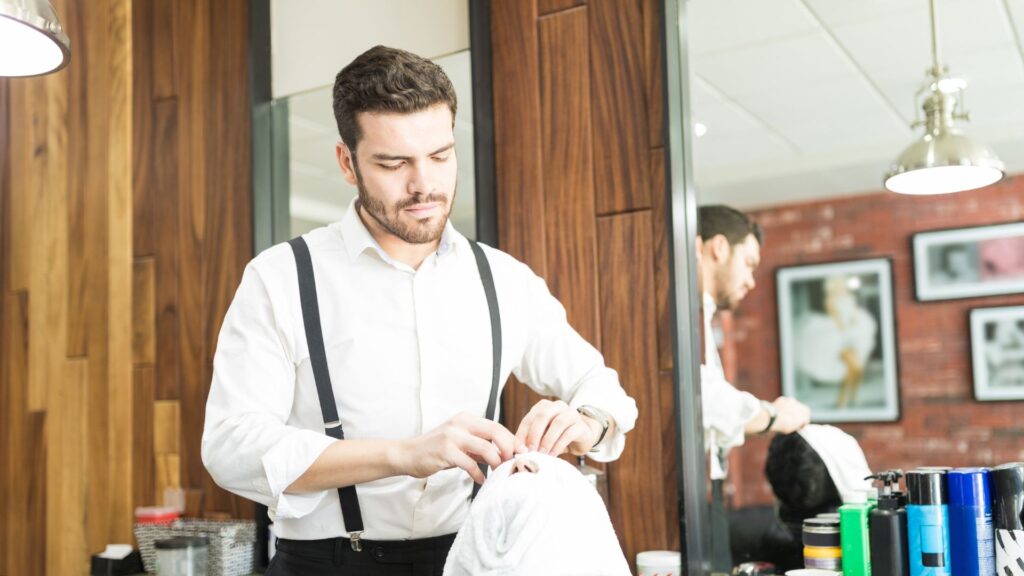
Applying warmth to the face and neck can activate the parasympathetic nervous system, the body’s “rest and digest” response, which lowers heart rate and reduces the production of stress hormones like cortisol. This is the same system responsible for the calm you feel after a warm bath or a sauna session. A hot towel essentially delivers a condensed version of that relaxation response directly to the face.
Why relaxed facial muscles produce a better shave
Tense facial muscles make for an uneven shaving surface, with tightness around the jaw and mouth that can cause the skin to pull unevenly under the razor. When the parasympathetic response kicks in and muscles relax, the skin lies flatter and more evenly, giving the barber a more predictable surface to work with and reducing the chance of nicks around difficult contours like the jawline and chin.
The stress-reduction research behind thermal therapy
Research into thermal therapy, including studies on warm compress application for muscle tension and stress reduction, has consistently found that localized heat exposure lowers perceived stress and physical tension in the treated area. While much of this research focuses on therapeutic contexts rather than grooming specifically, the underlying physiological mechanism, vasodilation paired with parasympathetic activation, applies directly to what happens during a hot towel shave.
All of this relaxation depends on getting the temperature and timing right, which means the tools a barber uses to deliver that heat matter more than most clients ever think about.
Tools of the Trade — Towel Types, Steamers, and Temperature Control
Not every hot towel is created equal. The method a barbershop uses to heat and deliver that towel affects consistency, safety, and the overall quality of the experience.
Traditional hand-wrung towels vs. commercial steamers
Old-school barbers heat towels in hot water and wring them out by hand, a method that requires skill and experience to gauge temperature accurately without a thermometer. Commercial towel steamers and warmers, now common in modern shops, heat towels to a consistent, programmable temperature and keep a supply ready throughout the day, reducing variability and the risk of applying a towel that’s too hot or too cool.
Towel material, thickness, and heat retention properties
Thicker cotton towels retain heat longer but can take more time to reach the desired temperature initially. Thinner towels heat and cool faster, which some barbers prefer for shorter, more controlled applications. Terrycloth remains the industry standard because its looped fibers hold more water and heat than flat weaves, delivering a more consistent thermal transfer throughout the service.
Temperature gauges, safety protocols, and burn prevention
Reputable shops use either calibrated towel steamers with digital temperature displays or train barbers to test towel heat against their own wrist or forearm before applying it to a client’s face. This simple step prevents burns and ensures the towel sits comfortably within the 130 to 150 degree range discussed earlier.
Comparison table of hot towel delivery methods
| Delivery Method | Temperature Consistency | Setup Cost | Best For |
| Hand-wrung towels | Variable, depends on barber’s experience | Very low | Traditional shops, old-school technique |
| Electric towel warmer | Consistent, holds set temperature | Moderate | Shops wanting reliability without steam equipment |
| Commercial towel steamer | Highly consistent, programmable | Higher | High-volume shops needing fast turnover |
| Microwave-heated towels (home use) | Variable, requires careful testing | Very low | At-home shaving routines |
Whichever method a shop chooses, the goal is the same: deliver consistent, safe heat every single time. And if a professional shop can do it this reliably, there’s no reason you can’t bring a version of this ritual into your own bathroom.
Hot Towel Shaving at Home — Replicating the Barbershop Experience
You don’t need a barbershop chair or a steamer to get most of the benefits of a hot towel shave. You just need a bit of patience and the right sequence.
Step-by-step home hot towel prep guide
| Step | Action | Notes |
| 1 | Wet a clean cotton or terrycloth towel with hot tap water | Water should feel very warm, not scalding |
| 2 | Wring out excess water thoroughly | Towel should be damp, not dripping |
| 3 | Test temperature on your inner wrist | Adjust if it feels uncomfortably hot |
| 4 | Apply towel to face for 2 to 3 minutes | Breathe through your nose, relax your jaw |
| 5 | Remove towel and apply pre-shave oil or lather immediately | Skin cools quickly, so don’t delay |
| 6 | Shave as usual, following grain first if unsure | Softened hair requires less pressure |
| 7 | Finish with a cold, damp towel for 30 seconds | Closes out the thermal cycle |
Tools and products needed for a quality home setup
A basic home setup only needs a couple of clean cotton towels, a sink or basin of hot water, and your preferred pre-shave oil, cream, or soap. For those who want to invest further, small electric towel warmers designed for home use are widely available and remove the guesswork of hand-wringing a towel to the right temperature.
Common home mistakes and how to avoid them
The most common mistake is rushing. Many men apply a towel for 20 or 30 seconds before giving up, which isn’t nearly enough time for the keratin-softening effect to kick in. Another frequent error is letting the towel cool too much before starting the shave, or waiting too long after removing it before applying lather, both of which waste the softening window heat provides.
Replicating this ritual at home is satisfying, but it’s worth remembering that the standard for what a “proper” shave experience looks like has been shaped, in part, by the people who can afford to demand the very best, and that influence runs deeper than you might expect.
The Celebrity Haircut Connection — How Grooming Rituals Influence Public Perception
Grooming trends don’t just trickle up from barbershops. They’re often pushed forward by high-profile clients whose standards set the bar for everyone else.
Why high-profile clients demand full hot towel service
Actors, musicians, and public figures who need to look camera-ready at a moment’s notice tend to request the full, unhurried version of a barbershop service, hot towel included, because the difference in finish quality is visible on screen and in photographs. A rushed shave shows up as razor burn or uneven texture under studio lighting, while a properly prepped shave looks smooth and even.
How Celebrity Haircut culture elevated barbershop ritual standards
The visibility of a polished Celebrity Haircut paired with a flawless shave has done more to popularize full-service grooming rituals than almost any marketing campaign could. When public figures are seen leaving high-end barbershops looking sharp, it reinforces the idea that the hot towel, the straight razor finish, and the full sequence of products are worth the time investment, not an unnecessary luxury.
The premium grooming market and heat-based services
This cultural influence has helped fuel growth in the premium barbershop and grooming market, where heat-based services, hot towel shaves, steam facials, and heated product applications, are positioned as signature offerings rather than add-ons. Shops that lean into this full ritual experience often command higher prices and build stronger client loyalty than quick-service alternatives.
The products involved in that ritual aren’t just marketing props either. There’s real chemistry happening in the oils, soaps, and balms that heat helps activate.
Product Science — What Goes Into Pre-Shave and Post-Shave Formulas
Every product in a barber’s shaving kit is formulated with heat in mind, whether it’s meant to be applied before, during, or after the towel does its job.
Ingredients in pre-shave oils and how heat activates them
Pre-shave oils typically contain a blend of carrier oils like jojoba, argan, or grapeseed, sometimes combined with essential oils for scent and mild antiseptic properties. Heat lowers the viscosity of these oils slightly, allowing them to spread more evenly and penetrate the hair shaft more thoroughly, which enhances the softening effect already underway from the towel itself.
Shaving soap and cream chemistry under heat
Traditional shaving soaps rely on a saponification process involving fats and alkalis, producing a product that needs warm water to properly activate and whip into a rich lather. Glycerin, a common ingredient in both soaps and creams, is hygroscopic, meaning it draws moisture into the skin, and this effect is enhanced when the skin is already warm and slightly damp from the towel.
| Product Category | Key Ingredients | Role of Heat |
| Pre-shave oil | Jojoba, argan, grapeseed oils | Lowers viscosity, improves penetration into hair shaft |
| Shaving soap | Tallow or vegetable fats, glycerin | Activates lather formation, improves slip |
| Shaving cream | Stearic acid, glycerin, water | Emulsifies more smoothly with warm water |
| Post-shave balm | Aloe vera, allantoin, menthol | Cooling agents work best on warm, freshly shaved skin |
Post-shave balm and cold towel synergy
Post-shave balms often contain cooling agents like menthol or aloe vera, which are most effective when applied to skin that’s already been brought down in temperature by a cold towel. The combination calms inflammation, reduces the stinging sensation from fresh nicks, and locks in moisture after the heat and moisture from the earlier steps have done their job softening everything up.
Even with all this science and product knowledge available, mistakes still happen constantly, both in professional shops and at home, and most of them are completely avoidable.
Common Mistakes Barbers and Clients Make With Hot Towel Prep
Understanding the science is only useful if it’s applied correctly. Here’s where things most often go wrong.
Towel too hot — the burn risk and how to prevent it
Applying a towel that exceeds safe temperature ranges, particularly anything above 160 degrees Fahrenheit, risks first-degree burns, especially on thin or sensitive skin like the neck and under the jaw. Barbers should always test towel temperature against their own skin before application, and anyone replicating this at home should do the same on their wrist before putting a towel anywhere near their face.
Not leaving the towel on long enough to work
As mentioned earlier, a towel applied for under a minute doesn’t give keratin enough time to soften meaningfully. The two to five minute window isn’t arbitrary. It reflects the actual time needed for heat and moisture to penetrate the hair shaft and surrounding skin tissue.
Skipping the cold towel finish and what that costs the skin
Ending a shave without a cold towel leaves blood vessels dilated and skin tissue in a relaxed, swollen state, which can prolong redness and increase the chance of post-shave irritation. This step takes less than a minute but makes a noticeable difference in how the skin looks and feels for hours afterward.
With the mistakes out of the way, let’s answer the specific questions people tend to ask once they understand the basics of this ritual.
Frequently Asked Questions About Hot Towel Shaving
How long should a hot towel stay on your face before shaving?
Two to five minutes is the standard range most barbers use, which gives heat and moisture enough time to soften the hair shaft and relax the surrounding skin without risking overexposure.
Is a hot towel shave bad for sensitive skin?
Not necessarily, but sensitive skin benefits from shorter exposure times and lower temperatures within the safe range, along with a more generous cold towel finish to calm the skin afterward.
Can you get the same results with a warm washcloth at home?
Yes, a clean, damp washcloth heated with hot tap water and properly wrung out can replicate most of the softening benefits of a professional hot towel, as long as it’s applied for a sufficient amount of time and at a safe temperature.
Do hot towels actually open your pores?
Not in a literal sense, since pores have no muscles to open or close. Heat relaxes the tissue surrounding each pore, making it appear larger and easier for debris and shaving product to pass through.
Why do barbers use a cold towel after shaving instead of just finishing with the hot one?
The cold towel constricts blood vessels, reduces inflammation, and helps calm skin that’s been through the heat and friction of shaving, which is a completely different physiological goal than the warming step that comes first.
Does hot towel treatment work the same way for all facial hair types?
Coarse, thick, or curly facial hair tends to see the biggest improvement, since softening reduces the chance of ingrown hairs and razor bumps that are more common with curved follicle growth patterns.
How often can you safely get a hot towel shave without irritating your skin?
Most men can tolerate a hot towel shave every few days to once a week without issue, though those with sensitive or reactive skin should space out treatments further and monitor how their skin responds over time.
Is it worth going to a barbershop just for the hot towel shave experience?
If you want the full combination of professional blade work, proper product layering, and consistent, safe temperature control, yes, a skilled barber delivers a more technically refined version of the experience than most home setups can match.
Your Pre-Shave Checklist — Getting the Most From Every Towel
Knowing the science is great, but turning it into a repeatable routine is what actually improves your shave week after week.
The pre-shave routine broken down step by step
| Step | Action | Why It Matters |
| 1 | Cleanse your face with warm water | Removes surface oil and debris before heat application |
| 2 | Apply pre-shave oil if using one | Begins softening hair and lubricating skin |
| 3 | Apply hot towel for 2 to 5 minutes | Softens keratin, increases blood flow and pliability |
| 4 | Apply lather or shaving cream immediately after removing towel | Captures residual warmth and moisture for best lather performance |
| 5 | Shave with the grain first, then against if needed | Reduces irritation while still achieving closeness |
| 6 | Finish with a cold towel | Closes out the thermal cycle, reduces inflammation |
| 7 | Apply post-shave balm or moisturizer | Locks in hydration and calms the skin |
How to brief your barber on your skin type and needs
Before your next shave, tell your barber directly about any sensitivity, recent breakouts, or reactions you’ve had to heat or specific products in the past. A good barber will adjust towel temperature, duration, and product choice based on that information rather than running the same protocol for every client in the chair.
Scheduling strategy for skin recovery between hot towel shaves
If you’re searching for a reliable haircut near me and planning to pair it with a shave, consider spacing out hot towel treatments if your skin tends to react strongly to heat, giving your skin a few days to recover fully between sessions rather than booking back-to-back appointments.
With a solid routine in place, it’s worth stepping back and looking at why this single step carries so much weight in the overall shaving experience.
The Towel Is the First Step, Not a Formality
Everything that happens during a shave traces back to those first few minutes under a warm towel, and understanding that changes how you think about the whole process.
Why skipping the hot towel changes the entire shave outcome
Without the heat, hair stays rigid, skin stays tight, and the razor has to work harder against resistance it shouldn’t have to fight. The result is more passes, more friction, and a higher chance of irritation, nicks, or ingrown hairs afterward. The hot towel isn’t decoration on top of the shave. It’s preparation that makes the rest of the process work the way it’s supposed to.
What the thermal ritual says about quality and care in a shop
A barbershop that takes the time to properly heat, wring, and apply a towel, then follows through with a cold towel at the end, is showing you how they approach every other part of the service too. Attention to a five-minute ritual tends to predict attention to the parts of the shave that actually touch a blade to your skin.
Final takeaways and how to use this knowledge at your next appointment
Next time you’re in the chair, pay attention to how long that towel stays on, how hot it feels, and whether a cold towel follows at the end. If you’re shaving at home, build the full sequence into your routine rather than skipping straight to lather and blade. The science is clear: heat softens hair, relaxes skin, and sets up every other step for success. Treat the towel as the real starting point of your shave, not a warm-up act, and you’ll notice the difference in both comfort and results.