
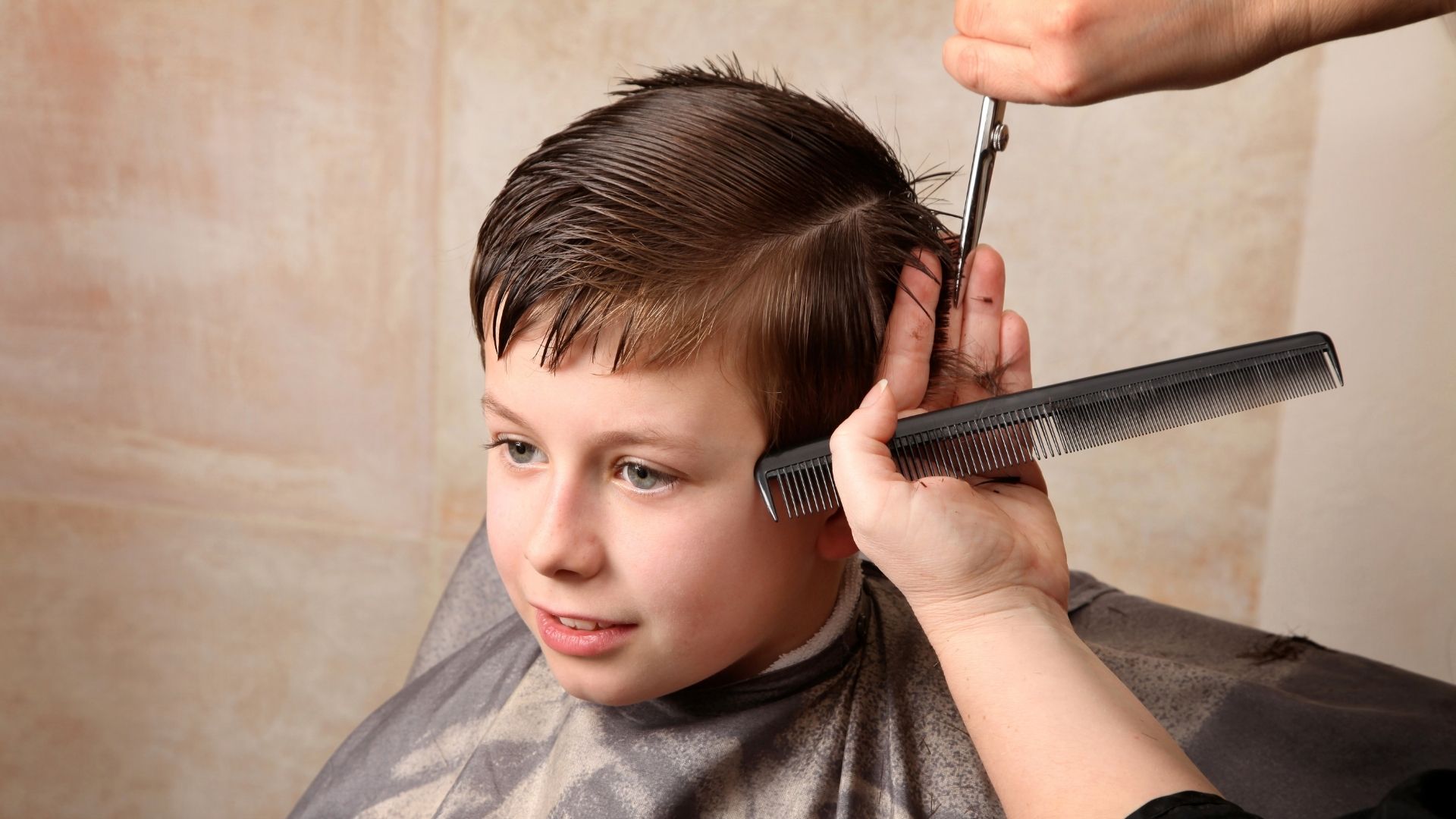
Kids’ haircuts grow out unevenly because children’s hair grows in multiple directions, cowlicks are more pronounced at a young age, and active lifestyles (sweating, helmets, rolling around on the floor) distort the shape faster than adult hair. Choosing a style that respects natural growth patterns, scheduling cuts around activity levels, and working with a barber who understands kids’ hair will keep the cut looking sharp for weeks longer.
Every parent has lived this moment. You pick your son up from the barbershop, the cut looks sharp, and you feel like you finally nailed it. Three weeks later, there’s a tuft sticking up at the crown, the sides look shaggy, and the whole thing looks nothing like it did on day one. You start wondering if the barber did something wrong, or if your son’s hair is just unusually difficult.
The truth is simpler and a little more reassuring. Kids’ hair behaves differently than adult hair, and active kids put that hair through more stress in a single afternoon than most adults do in a week. Understanding why a haircut grows out “weird” is the first step toward choosing a style, schedule, and barber relationship that actually holds up.
This guide walks through the biology behind kids’ hair growth, the technical side of how children’s cuts are actually performed, the most common mistakes parents and barbers make, and a full breakdown of the best haircut styles for boys who are constantly in motion. By the end, you’ll have a practical plan for keeping your son’s hair looking good between appointments, not just on the day he leaves the chair.
Why Kids’ Hair Grows Out the Way It Does (And Why It Surprises Every Parent)
The biology of children’s hair growth cycles
Hair grows in cycles made up of three phases: anagen (active growth), catagen (transition), and telogen (resting, before shedding). In young children, these cycles are shorter and less synchronized than they are in adults. That means different hairs on a child’s head are growing at different speeds and resting at different times, which creates subtle but visible unevenness as the cut grows out.
Children also tend to have a higher percentage of hair follicles in the active growth phase at any given time compared to adults, particularly in early childhood. This is partly why kids’ hair can seem to grow so fast that a fresh haircut looks “grown out” within weeks, even though the actual rate of growth (roughly half an inch per month, similar to adults) hasn’t changed dramatically.
Cowlicks, growth patterns, and why kids have more of them
A cowlick is simply a spot where hair grows in a spiral or a different direction than the surrounding hair, most commonly at the crown. Kids are often born with more pronounced cowlicks because the hair follicle pattern is still settling during the first several years of life. As a child’s head grows and the skull shape changes, these growth patterns can become more or less visible.
This matters enormously for haircuts. A barber who cuts against or ignores a cowlick will produce a style that looks perfect in the chair but flips the wrong way within a week, creating that “weird grow-out” look parents complain about.
How an active lifestyle accelerates visible grow-out
Active kids sweat more, rub their heads against furniture, wear helmets, and sleep in positions that press hair flat for hours. None of this changes the actual growth rate, but it does change how quickly a haircut’s shape degrades. A style that depends on precise lines or specific lengths to look good will show wear much faster on a kid who’s climbing, running, and swimming every day compared to a kid with a quieter routine.
What parents mistake for a bad haircut vs. natural grow-out
It’s worth separating two different problems. A bad haircut has uneven lengths, poor blending, or a shape that doesn’t suit the child’s hair type from the moment it’s finished. Natural grow-out is what happens to even a well-executed haircut over two to four weeks as hair lengthens and cowlicks reassert themselves. Many parents book a haircut appointment assuming something went wrong with the cut itself, when really the style simply wasn’t built to age gracefully on an active child.
The Anatomy of a Kids’ Haircut — What Actually Happens in the Chair
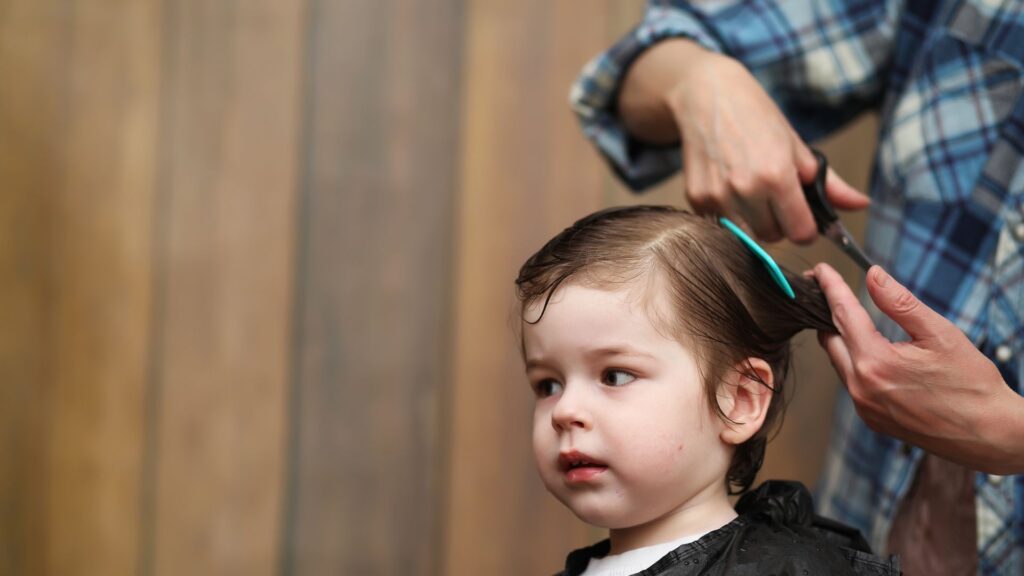
How a children’s haircut differs from an adult cut technically
Children’s heads are proportionally different than adult heads, with a larger cranium relative to facial features, especially before age ten. Barbers adjust their technique accordingly, often using shorter guard lengths on top and softer transitions on the sides to avoid emphasizing head shape irregularities that are more noticeable on a smaller frame.
Tools barbers use for cutting kids’ hair and why
Most barbers rely primarily on clippers with multiple guard sizes for children’s cuts because clippers are faster, safer around a moving target, and produce more consistent results than scissors alone. Scissors are still used for texturizing on top and for finishing details like the fringe, but the heavy lifting on sides and back is almost always clipper work with a child in the chair.
The role of movement and fidgeting in the final result
A five-year-old does not sit still the way an adult does. Barbers who specialize in kids’ cuts build in extra margin for movement, cutting in shorter passes and checking symmetry more frequently. This is one reason a kids’ haircut can take just as long, or longer, than an adult cut despite shorter hair overall.
Why soft blending matters more for kids than hard lines
Hard, sharp lines (like a crisp line-up or a severe fade transition) require regular maintenance to stay clean, sometimes as often as every one to two weeks. Soft blending, where lengths transition gradually rather than abruptly, hides grow-out far better because there’s no stark line to visibly separate as hair lengthens. For most active kids, soft blending is the more practical choice even if hard lines look slightly sharper on day one.
Why Kids’ Hair Grows Out Uneven — The Real Reasons
Gravity, sweat, and physical activity as grow-out drivers
Sweat weighs hair down and can cause styled sections to flatten or separate unpredictably. Combined with constant physical activity, a style that was symmetrical in the chair can start looking lopsided within days simply because one side gets pushed, pressed, or sweated on more than the other during play.
How sleep position affects hair shape over time
Kids who consistently sleep on one side can develop a flattened section on that side of the head, which becomes more visible as hair grows past the point where it can hold its original shape. Over weeks, this creates an asymmetry that has nothing to do with the original haircut and everything to do with nightly habits.
Sports helmets, hats, and the compression effect
Helmets used for football, hockey, biking, and other sports compress hair in the same spot every time they’re worn. For kids playing a sport several times a week, this compression effect can create a visible dent or flattened ring that becomes more pronounced as hair grows longer around it.
Hair texture changes during childhood and how they affect style longevity
Many children experience a shift in hair texture somewhere between toddlerhood and the early teenage years, often moving from a finer, straighter baby texture toward a texture closer to what they’ll have as adults. A style chosen based on a child’s hair texture at age four may not behave the same way at age eight if the texture has shifted toward more wave or curl.
The Most Common Haircut Mistakes Made on Active Kids
Cutting too short to compensate for activity
A common instinct is to cut hair very short so it “lasts longer” before needing another trim. While shorter hair does grow out more slowly in visible terms, cutting too short can expose scalp irregularities, make cowlicks more obvious rather than less, and leave a child with a style that looks severe rather than simply low-maintenance. This is one of the more avoidable Haircut Mistakes parents make when trying to stretch time between appointments.
Ignoring natural growth direction and cowlick patterns
A barber who cuts strictly by a reference photo without checking the child’s actual growth pattern is setting the style up to fail. The best cuts work with the grain of a child’s natural hair direction rather than fighting it, which is why a consultation before the first snip matters even for a simple kids’ cut.
Using adult-style precision cuts that don’t hold up to movement
Precision fades and razor-sharp parts are built for adults who style their hair daily with product and generally lead a less physically chaotic routine. Applied directly to an active seven-year-old with no styling routine, these cuts tend to look messy within a week rather than intentionally textured.
Over-layering or under-layering for the child’s texture
Too many layers on fine, straight hair can leave it looking thin and wispy as it grows. Too few layers on thick or curly hair can create a heavy, boxy shape that doesn’t move naturally. Matching the layering approach to the child’s actual texture, not just the requested style, is essential for a cut that grows out gracefully.
Hair Texture in Children — Why It Changes and What to Do About It
Straight, wavy, curly, and coily — how kids’ textures evolve
Hair texture exists on a spectrum, and children’s texture can shift as hormone levels and follicle shape change during growth. A toddler with loose, wavy hair may develop tighter curls by age six, or a child with coily hair may see the curl pattern loosen slightly over the years. Because of this, a cut that worked beautifully last year might need adjustment this year, not because the barber did anything wrong the first time, but because the hair itself has changed.
The transition from baby hair to permanent texture
Baby hair is typically finer and sometimes a different texture entirely than the hair that eventually replaces it, often somewhere between ages two and four, though this varies widely. Parents sometimes panic when a toddler’s soft curls seem to “disappear,” when in reality the permanent hair texture underneath is simply asserting itself.
How to cut for each texture to maximize grow-out shape
Straight hair tends to grow out cleanly but shows unevenness quickly since there’s no curl to disguise length discrepancies, so precision at the time of cutting matters most. Wavy hair benefits from moderate layering that lets the wave do some of the styling work. Curly and coily hair generally holds shape longest when cut slightly longer than requested, since curl shrinkage can make hair look shorter than its actual length, and cutting a dry curl pattern to the exact desired length when wet or stretched can result in an unexpectedly short result once it dries and curls back up.
Product basics for active kids’ hair (what’s safe, what works)
For most kids, a lightweight, tear-free styling cream or a small amount of water-based pomade is sufficient. Heavy waxes and alcohol-based gels can dry out a child’s scalp and are generally unnecessary for the simple, low-maintenance styles recommended for active kids. A barber can usually recommend an age-appropriate product if styling help is needed for school pictures or special occasions.
The Best Haircuts for Active Boys — Styles Built to Last

The crew cut — the gold standard for active kids
The crew cut remains one of the most reliable choices for active boys because it’s short enough to resist sweat and helmet compression, requires essentially no daily styling, and grows out into a slightly longer version of itself rather than an unrecognizable mess. It works across nearly every hair texture and face shape, which is part of why it has remained a staple haircut for generations of boys.
The taper — a step up with minimal maintenance
A taper keeps length on top while gradually shortening hair down the sides and back, without the stark contrast of a full fade. Because the transition is gradual, a taper grows out more forgivingly than a fade, making it a strong option for parents who want a style with a bit more personality but still want to stretch time between haircut appointments.
The textured crop for wavy and curly-haired boys
The textured crop uses shorter sides with slightly longer, textured hair on top that can be left loose or lightly styled. This cut works especially well for boys with wavy or curly textures since the natural movement of the hair adds to the style rather than fighting against a rigid shape, and it tends to grow out into a slightly shaggier but still intentional look rather than an obviously overdue cut.
Fade options for older boys and why timing matters
Fades can absolutely work for active kids, particularly older boys around nine or ten and up who have more input into their own style preferences. The tradeoff is maintenance. A fade needs refreshing every two to three weeks to maintain its sharp line, which means parents choosing this style should be prepared for a tighter haircut schedule.
Styles to avoid for highly active kids
Styles that rely on one specific length relationship to look intentional, like a very short buzz paired with one long section on top designed to flop a particular way, tend to look the most obviously “grown out” once that balance shifts. Similarly, any style requiring daily product application is a tough fit for a child who showers after practice and doesn’t restyle hair independently.
Matching the Haircut to the Sport and Activity Level
Football, wrestling, and helmet sports — what cut works best
For contact sports involving helmets, shorter overall length tends to hold up best since there’s less hair to compress and distort. A crew cut or tight taper minimizes the visible dent that helmets can create and reduces the amount of sweat trapped against the scalp during practice and games.
Swimming and water sports — keeping hair manageable and chlorine-resistant
Chlorine can be particularly harsh on hair, drying it out and sometimes affecting color over a season of regular swimming. Shorter styles reduce the surface area exposed to pool chemicals, and parents of competitive swimmers often find that rinsing hair with clean water immediately after swimming helps reduce chlorine buildup regardless of style length.
Year-round athletes vs. seasonal players — scheduling your cuts accordingly
A child playing one sport for a three-month season has different needs than a child who moves from soccer to basketball to baseball across the full year. Year-round athletes generally benefit from settling into one low-maintenance style and sticking with a consistent haircut schedule, while seasonal players have more flexibility to experiment with styles during off-months.
Outdoor vs. indoor activity and how environment affects hair
Outdoor activity exposes hair to sun, wind, and sweat in combination, which can accelerate both grow-out appearance and, over a long summer, some sun-related lightening or dryness. Indoor sports reduce sun exposure but still involve plenty of sweat, so the activity level matters more than the specific environment when deciding how short to go.
Face Shape and Head Shape Considerations for Kids
How kids’ face shapes differ from adults and change with age
Children’s faces are rounder and proportionally different than adult faces, with features that continue to shift through puberty. A face shape assessment done at age six may not hold true by age twelve, which is one reason barbers who work regularly with kids tend to favor adaptable styles over rigid, face-shape-specific recommendations.
Matching cut style to face shape for young boys
As a general guide, rounder faces often benefit from added height on top to create the visual impression of length, while longer or narrower faces can carry more width on the sides without looking unbalanced. These are helpful starting points rather than strict rules, and a skilled barber will adjust based on what they see in the chair rather than following a formula blindly.
Head shape concerns (flat spots, uneven skulls) and how to cut around them
Many infants develop mild flat spots from time spent on their backs, and some children have naturally asymmetrical skull shapes that are completely normal. A good barber can use strategic length and texture to soften the visual impact of these variations, which is another reason a proper consultation matters more than simply requesting a specific haircut by name.
Age-appropriate style vs. style the child actually wants
Somewhere around age seven or eight, many boys start expressing strong opinions about their hair, often influenced by friends, older siblings, or social media. Balancing a child’s preferences with what will actually look good and hold up well is an ongoing conversation, not a one-time decision, and involving the child appropriately tends to lead to better long-term satisfaction with the haircut.
First Haircuts and How to Set Up Good Habits Early
When to schedule the first real haircut (and what to expect)
Most babies have their first real haircut somewhere between twelve and eighteen months, though this varies enormously depending on how much hair a child has and how fast it grows. The first cut is usually simple, focused more on neatening up length and shape than on any particular style, and many barbershops that specialize in kids keep this first appointment deliberately low-key to build positive associations.
How to make the barbershop a positive experience for nervous kids
Bringing a comfort item, scheduling the appointment when the child isn’t tired or hungry, and choosing a kid-friendly barbershop with distractions like tablets or themed chairs can make a significant difference in how a nervous child responds to their first few haircuts. A positive early experience tends to pay off for years in terms of how cooperative a child is during future appointments.
Starting with the right style so grow-out is manageable from day one
For a first haircut, simpler is almost always better. A basic trim or light crew cut gives a child’s hair time to be assessed over a few appointments before committing to a more specific style, and it avoids the grow-out frustration that can come from attempting a more complex cut on hair whose final texture hasn’t fully revealed itself yet.
Building a relationship with a barber who understands kids
Returning to the same barber for early haircuts allows that barber to track how a child’s hair texture and growth pattern are developing over time, which leads to better style recommendations down the line. This relationship becomes especially valuable once a child starts playing organized sports and the haircut near me schedule needs to adapt to a more active routine.
How Often Should Active Kids Get a Haircut?
Growth rate benchmarks by age group
Hair generally grows about half an inch per month regardless of age, though younger children’s cycles can appear slightly faster due to the higher percentage of actively growing follicles mentioned earlier. In practical terms, most parents notice visible grow-out starting around three to four weeks after a cut.
Style-specific maintenance schedules for active boys
A crew cut or buzz cut can often stretch to four or even six weeks before looking noticeably overdue. A taper with more length on top typically needs attention every three to four weeks. A fade, as mentioned earlier, needs the tightest schedule at every two to three weeks to maintain its defining sharp line.
Signs it’s time to book before the scheduled appointment
Hair starting to cover the ears, a cowlick becoming visibly disruptive at the crown, or hair getting long enough to irritate a child’s eyes during sports are all signs that a haircut appointment should be moved up rather than waiting for the “usual” timeframe. Active kids in particular may need a slightly tighter schedule during peak sports season compared to the off-season.
Frequency comparison across different haircut types
| Haircut Style | Typical Time Between Cuts |
| Crew cut / buzz cut | 4–6 weeks |
| Taper | 3–4 weeks |
| Textured crop | 3–5 weeks |
| Fade | 2–3 weeks |
At-Home Maintenance Between Visits — What Parents Can Realistically Do
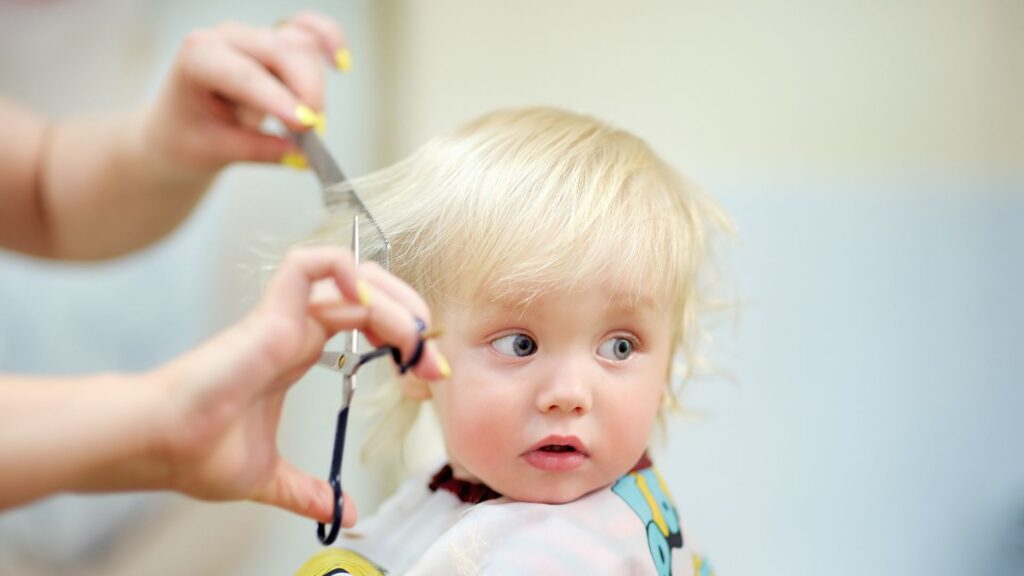
Basic tools every parent should have
A good pair of grooming scissors, a fine-tooth comb, and a basic trimmer with an adjustable guard cover the vast majority of at-home touch-up needs. These tools are worth the investment even for parents who don’t plan to cut hair at home regularly, since they’re useful for quick emergency trims between appointments.
Safe neckline and fringe trimming between appointments
Lightly trimming the neckline with a trimmercan keep a haircut looking tidy for an extra week or two. For fringe maintenance, work on dry hair, take very small sections, and cut less than you think you need; you can always remove more, but an uneven fringe is harder to disguise.Use a comb as a guide rather than placing scissors directly against the skin, especially around the ears and neckline. Keep children still with a book, video, or calm conversation, and stop if they become restless or upset.
Use high-quality tools for the best results—a sharp pair of haircutting scissors and a decent trimmer can make all the difference. Avoid using household scissors, as they tend to tug on hair and result in a choppy finish. If layers are part of the cut, focus on maintaining the overall shape rather than trying to recreate salon-level texturing; less is often more when working at home.
For finer details, consider sectioning the hair with clips to maintain precision and work slowly through each layer. When cutting longer hair, use point-cutting techniques to avoid harsh lines. Always step back and assess the haircut as you go, ensuring balance and symmetry, especially around the face and sides. Remember, a little patience and caution go a long way in preserving a professional, polished appearance until your next salon visit.
Frequently Asked Questions About Kids’ Haircuts
How often should kids get haircuts?
Most kids benefit from a haircut every 6-8 weeks to keep their hair healthy and maintain a manageable style. However, this can vary depending on hair type and personal preference.
What is the best way to cut a toddler’s hair at home?
Make sure your child is comfortably seated and distracted, perhaps with a favorite video or toy. Use safety scissors designed for hair, section the hair, and work slowly. For younger children, focus on basic trims rather than complex styles.
How do I handle a child who’s scared of haircuts?
Patience and reassurance are key. Explain each step of the process in simple terms and allow them to hold tools like a comb to reduce fear. Rewarding them with a small treat or praise afterward can also create a positive experience.
Can I use adult tools for kids’ hair?
It’s best to use tools designed specifically for kids. Smaller scissors or clippers with guards provide better control and reduce the risk of accidents.
What hairstyles are easiest for kids to maintain?
Low-maintenance cuts like bobs, pixies, or short layered styles tend to work well for children. These styles require minimal daily upkeep and hold up to active routines.
Conclusion
Whether you’re tackling adult trims, managing your own at-home styling, or navigating kids’ haircuts, the common thread is preparation and care. With a steady hand, the right tools, and a little patience, achieving a polished haircut at home is entirely within reach. Remember, the goal isn’t perfection but maintaining healthy hair and a fresh look until your next salon visit.