The Ten Seconds That Decide Your Haircut
“Just a Little Off the Sides”
The bell over the door jingles. You hang your jacket on the hook, take in the smell of talc and bay rum, and settle into the leather chair. The cape swings around your shoulders and snaps shut at the neck. Then I lean in and ask the question that decides everything: “What are we doing today?”
Most men answer the same way. “Just a little off the sides. Keep it kind of short. You know, clean.”
I’ve heard that sentence maybe twenty thousand times. And here’s the honest truth after two decades behind the chair: it can mean at least six different haircuts. “A little” might be a quarter inch or two inches. “The sides” might stop at your temple or run all the way up to your crown. “Short” to a college kid means a skin fade. “Short” to a retired banker means his ears are showing.
Those first ten seconds shape the next thirty minutes. Get them right, and you walk out feeling like a million bucks. Get them wrong, and you spend two weeks wearing a hat.
Why Words Matter More Than You Think
A haircut is one of the few services where you can’t take the result back. A mechanic can swap a part. A tailor can let out a seam. Once the clippers take hair off, the only fix is time.
That’s why words matter so much. Your barber can’t read your mind, and you can’t see the back of your own head while the cut happens. The language you use is the only bridge between the picture in your head and the picture in the mirror.
Think of it like ordering a steak. Say “cook it however” and you’ll get something edible. Say “medium rare, salt and pepper only” and you get your steak. Neither one is wrong. One just leaves a lot more to chance.
The good news? You don’t need to sound like a barber. You need maybe fifteen terms and a simple way to put them together.
What This Guide Will Give You
By the end of this guide, you’ll know:
- The core vocabulary of guards, tapers, fades, necklines and top-of-head techniques
- How to book the right service online or over the phone, so the right amount of time is set aside
- A step-by-step way to describe your cut from sides to top to edges
- The phrases that cause trouble and what to say instead
This guide is written for men of every hair type, for fathers booking a son’s first real cut, and for anyone buying a haircut as a gift. No jargon for its own sake. Just the words that actually change your results.
Before we build your vocabulary, it helps to understand why barber talk works like its own language.
Barber Talk Is Its Own Language
Same Words, Different Meanings
Ask five men what a “trim” means and you’ll get five answers. Ask five barbers, and they’ll agree more often than you’d think. That gap is where most bad haircuts are born.
| What You Say | What You Might Mean | What a Barber Might Hear |
| “Just a trim” | Barely touch it | Same shape, about a half inch off |
| “Short on the sides” | A #3 guard | A #1, or a fade |
| “Clean it up” | Neckline only | Full cut at the same length |
| “Thin it out” | Less bulk | Thinning shears all over |
| “Take it down” | Shorter overall | Fade it higher |
| “Keep the length” | Don’t touch the top | Trim the top a little to keep its shape |
| “Fade it” | Gradual shortening | Down to bare skin |
None of these misunderstandings come from carelessness. They come from two people using the same words with different dictionaries. Your job isn’t to memorize mine. It’s to add a few specifics so we land on the same page.
How Barbers Learn the Vocabulary
Barbers don’t pick up these terms casually. State licensing boards across the country require formal training before anyone can cut hair for pay, often somewhere between several hundred and 1,500 hours depending on the state. A good chunk of that time goes into learning the names of techniques, tools and shapes.
Then comes the real school: the shop floor. When I started, I swept hair for months and listened. An older barber would call out, “Give him a number two, block the back, square the sideburns,” and I’d watch exactly what that looked like. Words turned into pictures. Pictures turned into muscle memory.
So when you use a barber term correctly, you’re tapping into thousands of hours of shared training. It’s like calling a play in football. Say “slant route,” and every receiver on the field knows exactly where to run.
Why “Short” Is the Riskiest Word in the Shop
If I could ban one word from the chair, it would be “short.” Not because it’s wrong, but because it means nothing without a number attached.
Here’s what I mean. A man who has worn three inches on top for years asks for “short.” To him, an inch and a half is short. A man who usually wears a skin fade asks for “short.” To him, a #1 on top is short. Same word. Opposite haircuts.
The fix is easy. Pair every length word with something measurable: a guard number, a number of inches, or a finger width. “Short on the sides, like a number two” leaves almost no room for error. “Short” by itself leaves the door wide open.
To understand why this language looks the way it does, it helps to take a quick trip back in time.
Where the Words Came From
Barber-Surgeons and the Striped Pole
Long before anyone asked for a fade, barbers did a lot more than cut hair. In medieval Europe, they pulled teeth, set bones and performed bloodletting. In 1540, England formally joined barbers and surgeons into a single guild, the Company of Barber-Surgeons. The two trades didn’t officially split until 1745.
That history lives on in the red and white pole spinning outside the shop. The red stood for blood, the white for bandages. Some American poles added blue, likely as a nod to the flag.
Even back then, clear communication mattered. A barber-surgeon needed to know whether you wanted a shave or a tooth pulled. I’m glad our misunderstandings today are a little less painful.
Military Cuts and the Numbers Game
Much of today’s clipper language comes from the military. When electric clippers arrived in the early twentieth century, with Leo Wahl developing his electromagnetic clipper around 1919, barbers suddenly had a fast, repeatable way to cut short hair.
During World War II, millions of recruits needed identical cuts in minutes. Names like crew cut, burr, butch and high and tight became standard. Guard numbers later turned length into simple math, so any barber on any base could repeat the same cut.
| Era | Milestone | Terms It Gave Us |
| 1540 to 1745 | Barbers and surgeons share a guild | “Barber,” the striped pole |
| 1850s | Manual clippers spread | Even short cuts |
| Around 1919 | Wahl’s electric clipper | Fast clipper cuts |
| 1940s | WWII induction haircuts | Crew cut, burr, high and tight |
| 1950s | Flattops and pompadours | Flattop, pomp, ducktail |
| 1980s to 1990s | Black shops elevate the fade | Fade, high-top, line-up, temp fade |
| 2010s | Social media haircut culture | Skin fade, drop fade, textured crop |
| 2020s | Online booking and phone photos | Service menus with precise names |
Neighborhood Shops and Street Names
Some of the richest haircut words never came from a textbook. They came from the corner shop. In the 1980s and 1990s, Black barbers in cities like New York, Philadelphia and Atlanta turned the fade into an art form, and the language grew with it: temp fade, Caesar, high-top, line-up, edge-up.
Every neighborhood has its own spin. Back in my apprentice days, I worked one summer in a shop across town. On my first day, a kid asked for “a Brooklyn” and I just stood there with the clippers humming. The old barber next to me laughed and said, “Temp fade, line him up.” I never forgot it.
That’s the beauty of the barber’s vocabulary. It’s part history, part slang, and part family recipe. It also means the safest words are the ones that describe what you want, not just what your block calls it.
Now let’s get into the most precise words you can use in the chair: numbers.
The Numbers Behind the Clippers
Guard Numbers Decoded
Clipper guards are the plastic combs that snap onto the blade. Each number leaves a set length, and on most clippers, every step adds about an eighth of an inch.
| Guard Number | Approximate Length | What It Looks Like |
| #0 (no guard) | 1/32 to 1/16 inch | Scalp clearly visible |
| #0.5 | 1/16 inch | Light shadow |
| #1 | 1/8 inch | Very short, scalp shows |
| #1.5 | 3/16 inch | Short, a little coverage |
| #2 | 1/4 inch | Short, solid coverage |
| #3 | 3/8 inch | Classic short sides |
| #4 | 1/2 inch | Fuller, softer |
| #6 | 3/4 inch | Longer sides, almost a crop |
| #8 | 1 inch | Longest standard guard |
Knowing your number is the single most useful thing you can bring to the chair. If you’ve liked a past cut, ask your barber what guard they used and save it in your phone. It takes five seconds and saves you from guessing next time.
The Lever Nobody Mentions
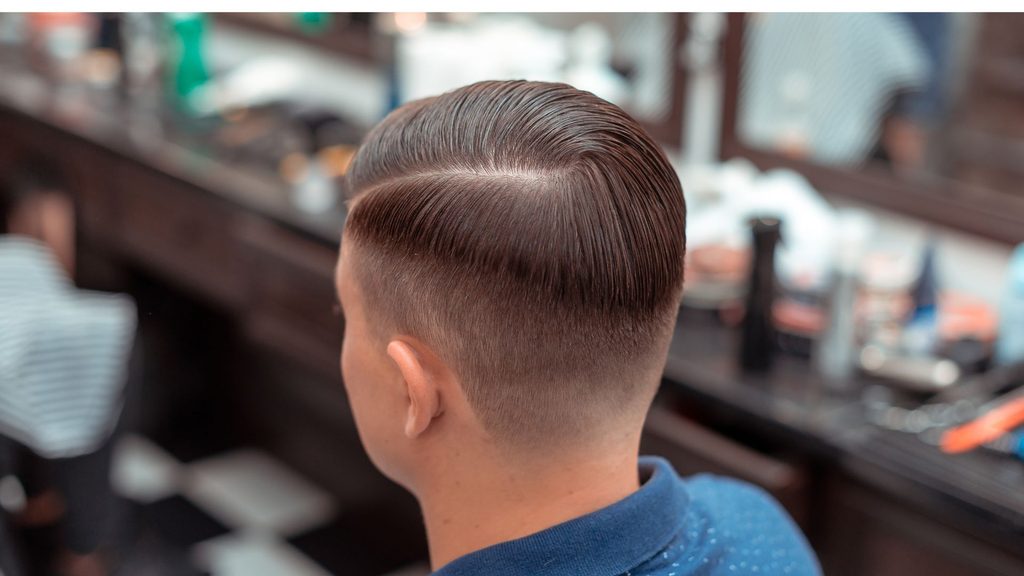
On the side of most clippers sits a small lever. Flip it open, and the blade cuts slightly longer. Close it, and it cuts shorter. The difference is tiny, often less than a millimeter, but on short hair it shows.
Barbers use the lever to create in-between lengths. That’s how a fade goes from dark to light without visible lines. So if you hear your barber say, “number one, lever open,” that’s a real length, somewhere between a #0.5 and a #1.
You don’t need to request lever positions. But if your last cut was a “#1 lever closed” and you loved it, tell your next barber exactly that. It’s the haircut version of knowing your coffee order down to the shot of espresso.
Inches vs. Guard Numbers
| Factor | Talking in Inches | Talking in Guard Numbers |
| Best for | The top, scissor work | The sides and back |
| Precision | Good, but people guess | Very high on clipper areas |
| Common mistake | Overestimating length | Mixing up brands |
| Example request | “Leave about two inches on top” | “Number two on the sides” |
| Works across shops? | Yes | Mostly, brands vary slightly |
My advice is to use both. Guard numbers for the sides, inches or finger widths for the top. Most men badly guess inches, by the way. A man once told me he had “about six inches” on top. It was closer to three. We both had a good laugh. Hold a ruler up once in the bathroom mirror and you’ll never guess wrong again.
Numbers give you precision. Next, let’s tackle the two words men mix up more than any others.
Taper, Fade and Everything in Between
Taper vs. Fade
This is the comparison that causes the most confusion in the chair. Both cuts get shorter as they move down the head. The difference is how far down they go.
| Feature | Taper | Fade |
| Shortest length | Visible hair, often #1 or #2 | Down to skin or near skin |
| Where it shortens | Mostly at the sideburns and neckline | Can run up the whole side |
| Contrast | Soft, natural | Sharp, dramatic |
| Grow-out | Gentle | Shows within a week |
| Typical visit rhythm | Every 3 to 5 weeks | Every 2 to 3 weeks |
| Overall feel | Classic, professional | Modern, bold |
Ask for a “fade” when you meant a “taper,” and you might see far more scalp than you expected. Ask for a “taper” when you wanted a “fade,” and you might feel your cut looks unfinished. One word swap, two very different mornings.
Low, Mid, High, Skin and Shadow
Once you know you want a fade, the next question is where it starts and how short it goes.
- A low fade starts just above the ears and neckline.
- A mid fade starts around the temple.
- A high fade climbs near the top of the head.
- A skin fade (also called a bald fade) goes down to bare skin.
- A shadow fade stops just short of skin, leaving a faint haze.
Skin fade vs. shadow fade matters more than most men realize. A skin fade shows every bump, scar and freckle on your scalp. A shadow fade is more forgiving and grows out more evenly. If you’re unsure, the shadow fade is the safer first date.
There are also newer names like the drop fade, which dips lower behind the ear, and the burst fade, which curves around the ear and leaves length at the neckline. If you hear a term on social media, describe it too. Names travel faster than definitions.
What “Blend” Really Means
You’ll hear barbers say they want a “clean blend.” A blend is the smooth transition between two lengths, with no visible line. In a fade, good blending is what makes the hair look like it’s melting from dark to light.
When you ask for something to be “blended,” you’re asking for no visible step. When you ask for a disconnect or disconnected undercut, you’re asking for the opposite: a sharp, intentional line between short sides and a long top.
Blended vs. disconnected is a real choice, not a quality question. One looks soft and classic. The other looks bold and fashion-forward. Say which one you want, and your barber won’t have to guess.
The sides are only half the story. The top of your head has a vocabulary all its own.
The Top of Your Head Has Its Own Vocabulary
Scissor Over Comb vs. Clipper Over Comb
When your barber works on the top or the upper sides, they’ll often lift the hair with a comb and cut above it. With scissors, it’s scissor over comb. With clippers, it’s clipper over comb.
| Factor | Scissor Over Comb | Clipper Over Comb |
| Finish | Softer, more natural | Crisper, more uniform |
| Speed | Slower | Faster |
| Best for | Longer, classic cuts | Short tops and blending |
| Grow-out | Smooth | Can show lines sooner |
| Price impact | Often adds time | Usually standard |
If you like a soft, gentlemanly look, ask for “scissors on top.” If you want a tight, sharp short cut, clippers do the job well. There’s that steel-on-steel snip of scissors and the low hum of clippers, and each one leaves its own signature.
Texturizing vs. Thinning
These two get confused all the time, and the result can be a top that looks either choppy or flat.
| Factor | Texturizing | Thinning |
| Goal | Add movement and separation | Remove bulk |
| Tools | Point cutting, slide cutting, razor | Thinning shears |
| Result | Piecey, lived-in look | Lighter, flatter hair |
| Best for | Crops, messy styles | Very thick, heavy hair |
| Risk if overdone | Choppy ends | Frizz, puffiness, weak shape |
Point cutting means snipping into the ends with the tips of the scissors. Slide cutting means gliding open scissors along the hair. A razor cut uses a straight razor to soften ends. All of these add texture. Thinning shears, with their notched blade, simply remove weight.
If your hair puffs out by week three, you might need thinning. If it lies flat and boring, texture is likely the better word.
Crops, Quiffs, Pomps and Slick Backs
Style names give your barber a quick picture of the finished shape.
- A crop is short on top, often pushed forward with a fringe.
- A quiff is swept up and back at the front, with volume.
- A pompadour (or pomp) is a bigger, rounder version of the quiff, swept back.
- A slick back combs everything straight back, often with shine.
- A side part splits the hair to one side, sometimes with a shaved hard part line.
- An Ivy League is a longer crew cut you can part.
Naming the style is useful, but it’s only half the message. Pair it with length. “A textured crop with about an inch and a half on top” is a clear order. “A crop” alone could mean a dozen things.
Talking Length in Fingers and Inches
On top, barbers often measure in fingers. We lift the hair between our fingers and cut what sticks above. Roughly, one finger width is about three quarters of an inch.
So if you say, “Take about a finger off the top,” your barber knows what that looks like. If you say, “Leave about two fingers,” that’s close to an inch and a half.
It’s a bit old-school, like measuring a horse in hands, but it works. And it beats guessing in inches when you’ve never held up a ruler.
Once the top is set, it’s time to talk about the edges, which is where a cut either looks finished or doesn’t.
The Edges: Necklines, Line-Ups and Sideburns
Blocked vs. Tapered Neckline
The neckline is the shape of hair at the back of your neck. It’s small, but it changes how your whole cut grows out.
| Feature | Blocked (Squared) | Tapered | Rounded |
| Shape | Straight horizontal line | Fades into the skin | Soft curved corners |
| Look | Sharp, bold | Natural, clean | Classic, softer |
| Grow-out | Shows fuzz quickly | Grows out gently | In between |
| Best for | Thick necklines, frequent visits | Most men, longer gaps | Classic cuts |
| Neck appearance | Can widen the neck | Can lengthen the neck | Balanced |
Blocked vs. tapered is one of the most overlooked choices in a haircut. A blocked neckline looks crisp for a week, then starts sprouting stubble below the line. A tapered neckline grows out so gently you might not notice for weeks. If you can’t get in often, a taper at the neck is your best friend.
Line-Up, Edge-Up, Shape-Up
These three terms mostly mean the same thing: using a trimmer to create sharp, clean lines along the hairline, temples, sideburns and neckline. Some shops say line-up, others edge-up, others shape-up.
A line-up looks fantastic on day one. That sharp border along the forehead seems carved by hand, because it was. But there’s a catch. Push the hairline back too far, and it won’t grow back to where it started. Some men wind up with a hairline creeping back over months, simply from aggressive line-ups.
So when you ask for one, consider saying, “Line me up, but keep my natural hairline.” That one sentence protects your forehead for years.
Sideburns and the Space Around the Ears
Sideburns get their own vocabulary too. You might ask for them squared, tapered, angled or faded into the beard. Length matters as well: mid-ear, top of the ear, or the bottom of the earlobe.
Then there’s the hair around your ears. Lined around the ears means a clean, defined arc. Tapered over the ears means softer, with a little hair falling naturally. Ears out means fully clear.
I once had a client who wanted “regular sideburns.” His regular turned out to be the bottom of his earlobe. Mine was mid-ear. We fixed it next time, but now I always ask, “Where do you like them to stop?” A simple point of reference, like “middle of my ear,” removes the guesswork.
Edges and lengths aren’t the whole picture, though. Your hair type changes which words matter most.
Hair Type Changes the Conversation
Straight and Fine
For straight, fine hair, the most important words are about coverage and texture. Fine hair shows scalp easily, so a #1 on the sides can look almost bald. A #2 or #3 often looks fuller.
On top, fine hair benefits from texturizing and usually suffers from thinning shears. Words like “piecey,” “matte” and “movement” help your barber understand that you want body, not less hair.
Thick and Wavy
Thick, wavy hair grows out as much as it grows down. The key terms here are debulking, weight removal and thinning. You might also mention whether you want the waves to show or stay tight.
A useful phrase: “My hair puffs out on the sides by week three. Can we take some weight out?” That one sentence tells your barber what problem to solve, not just what length to cut.
Curly and Coily
Curly and coily hair has a vocabulary all its own: sponge, twists, waves, 360 waves, temp fade, Caesar, high-top. Shrinkage matters a great deal, since curly hair can look half its true length once it dries.
Close cuts also bring a real skin concern. The American Osteopathic College of Dermatology notes that pseudofolliculitis barbae, the condition behind razor bumps, affects an estimated 45 to 83 percent of Black men who shave regularly, and very close clipper work along the hairline and nape can trigger similar irritation. That’s why phrases like “keep a guard on the edges” or “don’t go to skin on my neck” are worth saying out loud.
Thinning and Receding
According to the American Hair Loss Association, about two-thirds of American men experience some noticeable hair loss by age 35. So if your hairline is climbing, you’re in good company.
| Hair Type | Key Terms to Use | Phrases That Help |
| Straight and fine | Texturize, matte, coverage | “Don’t go so short I see scalp” |
| Thick and wavy | Debulk, weight removal | “It puffs out by week three” |
| Curly | Shrinkage, define, sponge | “Cut it dry so we see the curl” |
| Coily | Temp fade, waves, line-up | “Guard on the neckline, please” |
| Thinning crown | Shorter top, texture | “Help it look fuller” |
| Receding hairline | Crop, short sides, no hard line-up | “Keep my natural hairline” |
For thinning hair, the honest conversation matters most. Saying, “I’m thinning at the crown, what would you suggest?” invites expertise. Barbers see the back of your head more clearly than anyone, and many of us have helped hundreds of men find a cut that works with their hair, not against it.
So why does all this vocabulary make such a difference? Let’s look at the reasoning.
Why Clear Words Lead to Better Cuts
The Picture in Your Head vs. the Picture in Mine
When you sit down, you have a picture in your head. I have a picture in mine. A haircut is basically two people trying to line those pictures up.
Psychologist Allan Paivio’s research on dual coding in the 1970s suggested that people remember and process information better when words and images work together. That’s exactly what happens in the chair. A photo gives me the shape. Your words give me the details the photo can’t show, like how short you’re willing to go and what bugged you about your last cut.
Words alone leave gaps. Photos alone leave gaps. Use both, and the two pictures start to match.
Half an Inch a Month: Why Mistakes Linger
According to the American Academy of Dermatology, scalp hair grows about half an inch per month. That sounds reasonable until you realize what it means for a mistake.
If a barber takes an inch too much off the top, you’re living with it for about two months. If the sides go from a #3 to a #1 by accident, it’ll take roughly two weeks just to get back to where you started.
There’s an old saying in the trade, and you may have heard it: the Two-Week Rule Of Haircut. The difference between a good haircut and a bad one is about two weeks. It’s half joke, half truth. Hair grows back, but those two weeks can feel long when you have a job interview, a wedding, or school photos on the calendar. Clear words up front shorten the odds that you’ll ever need the rule.
Trust and the Repeatable Cut
The best haircut isn’t the one you get once. It’s the one you can get again and again.
| Factor | Vague Request | Specific Request |
| First result | Hit or miss | Close to what you pictured |
| Repeatability | Hard to recreate | Easy to repeat |
| Switching barbers | Start from scratch | Same cut, new chair |
| Time in the chair | More back-and-forth | Faster, smoother |
| Trust built | Slowly | Quickly |
Once you have the right words, your cut becomes portable. Move to a new city, travel for work, or see a different barber when yours is on vacation, and you can still walk out looking like yourself. It’s like having your grandmother’s recipe written down instead of stored in her memory.
All of this starts before you even sit in the chair. It starts when you book.
Booking the Right Service
Reading a Service Menu
Most shops list services with specific names, and each one comes with a set amount of time. That time matters. Book a quick cut when you need a full fade with a beard sculpt, and your barber has to rush or run late.
| Service Name | What It Usually Includes | Typical Time |
| Classic haircut | Scissor or clipper cut, basic neckline | 30 minutes |
| Fade or skin fade | Detailed blending, line-up | 40 to 50 minutes |
| Buzz cut | One guard all over, edges | 15 to 20 minutes |
| Line-up or edge-up | Hairline and edges only | 10 to 15 minutes |
| Beard trim | Shape and length on beard | 15 to 20 minutes |
| Haircut and beard | Full cut plus beard work | 45 to 60 minutes |
| Kids’ cut | Simpler cut for children | 20 to 30 minutes |
| Hot towel shave | Straight razor shave with towels | 30 to 45 minutes |
If you’re unsure, pick the longer service. It’s better for your barber to finish early than to cut corners on your blend.
“Haircut” vs. “Skin Fade” When You Book Online
Here’s a real example from my own book. A young man booked a “classic haircut,” a thirty-minute slot. He sat down and asked for a high skin fade with a hard part and beard line-up. That’s closer to an hour of work.
| Factor | Booking “Haircut” | Booking “Skin Fade” |
| Time reserved | Often 30 minutes | Often 45 minutes or more |
| Price shown | Base price | Fade price |
| Barber’s prep | Standard cut | Expects detailed blending |
| Risk if wrong | Rushed blend or surprise charge | Little to none |
We made it work, but I had to rush the blend more than I liked, and the next client waited. When the booking matches the cut, everyone wins. You get full attention, the barber stays on schedule, and nobody’s sweating the clock.
Notes, Photos and Phone Calls
Many online booking systems include a notes field. Use it. A single line like “Mid skin fade, #2 on top, keep natural hairline” lets your barber plan before you walk in.
Some systems let you attach a photo. If yours doesn’t, keep one ready on your phone. And if you’re making a big change, say from long hair to a short fade, a quick phone call can help. Ask, “How much time should I book for this?” Most barbers would much rather answer a question than untangle a scheduling mess.
Now that the appointment is set, let’s walk through exactly how to describe your cut once you’re in the chair.
How to Describe the Cut You Want, Step by Step
Start With the Sides
Work from the bottom up, just like most barbers do. The sides and back set the frame for everything else.
- Pick the style: taper, fade, or same length all the way down
- Pick the shortest length: skin, #0.5, #1, #2
- Pick the height: low, mid or high
- Pick the blend: blended or disconnected
A complete sentence might sound like: “Low taper fade, starting at a #1, blended into the top.” That’s a clear set of instructions in about ten words.
Move to the Top
Next, tell your barber how much to leave and how you style it.
- Length: inches or fingers, or “same shape, take off a half inch”
- Tool preference: scissors or clippers
- Texture: texturized, thinned or left natural
- How you wear it: forward, back, to the side, or messy
The last one matters more than you’d think. A top cut to be pushed back looks different from one meant to sit forward. Tell your barber how you style it on a normal Tuesday, not how it looks in a magazine.
Finish With the Edges and Styling
The last details make the cut look finished.
- Neckline: blocked, tapered or rounded
- Sideburns: where they stop and how they’re shaped
- Ears: lined, tapered over or fully clear
- Hairline: natural or lined up
- Product: whether you want styling at the end, and what you use at home
| Step | Question to Answer | Example Answer |
| 1. Sides | Taper or fade? How short? | “Low fade, start at a #0.5” |
| 2. Top | How long? Scissors or clippers? | “Two fingers, scissors, textured” |
| 3. Style | How do you wear it? | “Pushed to the side” |
| 4. Neckline | Blocked or tapered? | “Tapered” |
| 5. Edges | Line-up? Sideburns? | “Light line-up, natural hairline” |
| 6. Finish | Product? | “Matte clay, please” |
That’s a full haircut order. You can say all of it in under thirty seconds, and you’ll be amazed how much smoother the next thirty minutes feel.
Bring the Right Photo
Photos help, but only the right ones. A good reference photo has:
- Clear lighting, ideally natural
- More than one angle, especially side and back
- Similar hair type to yours
- A recent date, not ten years old
| Factor | Bringing a Photo | Using Only Words |
| Shape accuracy | High | Medium |
| Length accuracy | Low, photos hide length | High with numbers |
| Hair type match | Depends on the photo | Depends on your terms |
| Best for | New styles | Repeat cuts |
| Weak spot | Filters, lighting, different hair | Vague words like “short” |
The strongest move is combining both. Show the photo, then add the numbers. “I like this shape, but I want a #2 on the sides, not skin.”
Even with the right steps, a few phrases keep causing trouble. Let’s clear them up.
Words That Cause Trouble
“Just Clean It Up”
This might be the most confusing request in men’s grooming. To some, it means the neckline and edges only. To others, it means a full haircut at the same length. To a few, it means “make it look nice, whatever that takes.”
If you mean edges only, say, “Just the neckline and around the ears, don’t touch the length.” If you mean a full cut, say, “Same style, about a half inch shorter all over.” Clear beats polite every time.
“Thin It Out”
Thick-haired men say this often, and the results can be rough. Ask for thinning without guidance, and you might end up with frizz, puffiness, or a top that won’t hold shape.
| Request | What It Often Gets You | Better Phrase |
| “Thin it out” | Thinning shears everywhere | “Take some weight out of the sides” |
| “Clean it up” | A full cut or just edges | “Neckline and ears only” |
| “Make it short” | Anything from #0 to #4 | “#2 on the sides, inch on top” |
| “Do whatever” | The barber’s favorite style | “Something low maintenance for work” |
| “Like last time” | A guess, if records are missing | “Mid fade, #1, scissors on top” |
| “Fade it” | Possibly a skin fade | “Shadow fade, don’t go to skin” |
The pattern is clear. Every risky phrase gets safer when you add a number, a location, or a reason.
Celebrity Names and Old Photos
“Give me what that actor had in his last movie.” I hear some version of this every week. Celebrity references can help, but they come with traps.
First, celebrities often have different hair types, hairlines and head shapes. Second, their cuts change from film to film. Third, many of those photos involve stylists, lighting and editing. A haircut that looks perfect on a red carpet might need forty minutes of styling each morning.
If you love a celebrity cut, bring the photo and ask an honest question: “Will this work with my hair?” A good barber will tell you the truth, even if it’s, “We can get close, but here’s what will be different.”
Real stories show these lessons better than any list. Here are a few from my chair.
Stories From the Chair

The Groom Who Asked for a Number One
A groom came in four days before his wedding, nervous and in a hurry. “Number one on the sides,” he said. I asked if he usually wore it that short. He said yes.
As the clippers buzzed up the first side, I watched his face in the mirror. Something flickered. I stopped. “You okay?” He admitted his usual barber always did “a one,” but he’d never seen the guard. I checked his old photos together with him. His “one” was clearly a #3.
We left the other side at a #3 and blended the first side as gently as possible. By the wedding day, four days of growth helped. He looked sharp. But I still think about how close that came. Knowing your real number isn’t trivia. It’s insurance.
The Dad Booking for His Son
A father booked his twelve-year-old for a “kids’ cut.” When they arrived, the boy pulled up a photo of a high skin fade with a design shaved into the side. The dad raised his eyebrows. The son grinned.
We had a quick, friendly three-way conversation. The dad wanted something school-appropriate. The son wanted something cool. We settled on a mid fade with a clean part line, which fit in the time slot and passed the school dress code.
The lesson for parents? Before you book, ask your son what he wants and look at the photo together. It saves negotiations in the chair, and it gives him a little practice speaking up for himself, which is a skill worth having long before his first job interview.
The New Guy in Town
A man walked in who had just moved here for work. He’d seen the same barber back home for eleven years and had never once described his own haircut. “He just knew,” he said.
So we built his cut together, from scratch. He showed me a few photos on his phone. I asked about his mornings, his job and what he liked about his old barber’s work. Then I wrote his “order” on the back of a business card: mid taper, #2 to #1, scissors on top, two fingers, tapered neckline.
He came back a month later holding that same card. “I’m never losing this,” he said. Moving is hard enough. Your haircut shouldn’t have to start over too.
These stories all point to something practical: getting the words wrong costs you, in more ways than one.
What Miscommunication Really Costs
The Price of a Do-Over
A bad haircut doesn’t just cost the price of the visit. It can cost a second visit, a hat, a little confidence and sometimes a missed opportunity.
| Cost | When It Shows Up | How Much It Can Add |
| Corrective cut | Right away or a few days later | A second service fee |
| Extra visit sooner | Cut grew out wrong | One more visit per cycle |
| Products to hide it | Styling around a mistake | $15 to $30 |
| Time lost | Extra trips, extra mornings | An hour or more |
| Confidence | Interviews, dates, photos | Hard to measure |
Many shops will fix a genuine mistake for free, and they should. But when the issue came from a miscommunication, both sides end up a little frustrated. It’s far easier to spend two extra minutes describing your cut than two weeks waiting it out.
How Booking Right Saves Money
Booking the right service can save money too. If you book a full fade when you only need a line-up, you’ll pay more than you need. If you book a basic cut when you need a fade, you may face a surprise upcharge at the register.
| Scenario | Wrong Booking | Right Booking |
| Only edges needed | Full haircut, $35 | Line-up, $15 |
| Fade needed | Classic cut plus upcharge | Fade service, set price |
| Cut and beard | Two separate appointments | Combo service, often discounted |
| Teen’s first fade | Kids’ cut, time runs short | Fade service, proper time |
When you’re searching for a barbershop near me, it helps to read the service menu before you book, not after. A shop with clear service names and honest descriptions usually reflects barbers who care about clear communication in the chair too.
Gift Cards and Booking for Someone Else
Buying a haircut as a gift is thoughtful, but the vocabulary still matters. A gift card for a “haircut” might not cover a skin fade with a beard sculpt.
A few tips for gift-givers:
- Buy a dollar amount instead of a specific service, so the person can choose
- Include a little extra for a tip
- Pick a shop that offers the style the person usually wears
- For sons heading off to college or a new job, consider a prepaid set of visits
One wife I remember bought her husband a “full grooming” package for his fortieth birthday: haircut, beard trim and hot towel shave. She called ahead and told us he wore a “mid taper, #2 on the sides, scissors on top.” He walked in amazed that we already knew his cut. That’s the kind of gift that feels personal.
Costs and booking habits are changing as the industry evolves. Here’s what I’m seeing from behind the chair.
Trends and Insights From Behind the Chair
Phones in the Chair
Phones have changed the haircut conversation more than any tool since electric clippers. According to the Pew Research Center, roughly 90 percent of American adults now own a smartphone. That means almost every man walking through the door has a camera and a photo library in his pocket.
That’s mostly good. A photo shows shape in a way words can’t. But I’ve also noticed men relying on photos instead of words. A photo with a filter, a different hair type or perfect studio light can set expectations we can’t meet. The best clients use their phones the way a coach uses game film: as a starting point for conversation, not a replacement for it.
Online Booking Is Shaping the Words
Online booking has made service names more specific. Fifteen years ago, most menus said “haircut,” “kids’ cut” and “shave.” Today, you’ll often see “skin fade,” “taper,” “line-up,” “beard sculpt” and “enhancements.”
That shift is quietly teaching men the vocabulary. When you choose between “taper” and “fade” on a booking screen, you’re learning the difference. Meanwhile, the U.S. Bureau of Labor Statistics projects employment of barbers, hairstylists and cosmetologists to grow faster than the average for all occupations over the coming decade, so there are more chairs, more menus and more choices than ever. Knowing the language helps you choose well.
New Names for Old Cuts
Plenty of “new” cuts are old ones with fresh names. The textured crop echoes the Caesar. The modern mullet borrows from the 1980s. The burst fade is a creative cousin of older tapers. The French crop has been around for generations.
| New Name | Older Cousin | What’s Actually Different |
| Textured crop | Caesar cut | More texture, often a fade |
| Modern mullet | 1980s mullet | Softer, blended sides |
| Burst fade | Taper around the ear | Rounded shape around the ear |
| Drop fade | Low fade | Dips lower behind the ear |
| Buzz with taper | Military buzz | Shorter sides, cleaner neckline |
When a new name shows up, ask your barber about it. Chances are they’ve cut it under an older name for years. That’s one of my favorite parts of the job: hearing an old cut come back around wearing a new jacket.
With all of that in mind, here are the questions I hear most often.
Frequently Asked Questions
Do I need to know barber terms to get a good haircut?
Not all of them. A few key terms, like your guard number, taper or fade, and neckline shape, cover most of what matters. A good barber will ask follow-up questions. But knowing even a handful of terms helps you get a closer result on the first try and makes your cut easy to repeat anywhere.
What’s the difference between a taper and a fade?
A taper gradually shortens the hair near the sideburns and neckline, usually leaving visible hair at the bottom. A fade usually runs higher and often goes down to skin or near skin. Tapers look softer and grow out gently. Fades look sharper but need more frequent visits.
What guard number should I ask for if I’m unsure?
A #3 is a safe starting point for the sides. It’s short and clean without showing much scalp. If you like it, go a number shorter next time. Starting too short is the mistake that takes the longest to fix.
Is it rude to bring a photo to my barber?
Not at all. Most barbers welcome photos. Just bring clear, well-lit shots from more than one angle, ideally of someone with similar hair. Pair the photo with words like your preferred guard number, and you’ll get the best result.
How do I describe my haircut if I’ve always just said “the usual”?
Ask your current barber to tell you exactly what they do. Write down the guard numbers, the top length, the neckline style and any line-up details. Save it in your phone. That note becomes your haircut recipe for any shop.
What should I put in the notes when I book online?
Keep it short and specific. Include the style, the shortest length on the sides, the length on top and anything you want avoided. For example: “Low taper, #1 to #2, scissors on top, keep natural hairline.”
How do I book a haircut for my son?
Talk with him first and look at photos together. Then book the service that matches the style, not just his age. A fade often needs more time than a basic kids’ cut. In the notes, mention anything important, like school dress codes or sensitive skin.
What if I don’t like my haircut after I leave?
Give it a few days, since fresh cuts often settle as hair grows. If something still feels off, call the shop politely and describe the issue using specific terms. Most barbers are happy to make adjustments, especially when you can explain what you’d like changed.
With your questions answered, let’s turn everything into a plan you can use on your very next booking.
Your Booking Checklist and a Final Word
The Pre-Booking Checklist
Before you book, run through these questions:
- Do I know my guard number for the sides?
- Do I want a taper or a fade? Low, mid or high?
- How much do I want on top, in inches or fingers?
- Blocked or tapered neckline?
- Line-up? If so, natural hairline or sharp edges?
- Do I need beard work too?
- Have I picked the right service and time slot?
- Do I have a clear photo ready?
You don’t need every answer. Even three or four of them will make your next visit smoother.
Your Personal Cut Card
Here’s a simple template to fill in once and keep on your phone.
| Detail | Your Answer |
| Style on sides | Taper / fade / same length |
| Fade height | Low / mid / high |
| Shortest length | Skin / #0.5 / #1 / #2 / #3 |
| Blend | Blended / disconnected |
| Top length | ___ inches or ___ fingers |
| Top tool | Scissors / clippers |
| Texture | Texturized / thinned / natural |
| How you style it | Forward / back / side / messy |
| Neckline | Blocked / tapered / rounded |
| Edges | Natural hairline / line-up |
| Sideburns | Mid-ear / top of ear / faded into beard |
| Product | Clay / pomade / cream / none |
Fill it in after a cut you love. That card is your cut, written down, ready to travel with you anywhere.
A Final Word From the Chair
At the end of a good cut, I brush the last bits of hair from your collar, dust a little talc on your neck, unsnap the cape and turn the chair toward the mirror. That moment is where words finally meet results.
So, why does haircut terminology matter when booking a barber? Because a haircut is a conversation before it’s a cut. The right words help you book the right time, describe the right shape and get a result you can repeat for years. They protect your hairline, your schedule, your wallet and, on the big days, your peace of mind.
You don’t need to talk like a barber. You just need to talk like a man who knows what he wants. Learn your guard number. Know taper from fade. Pick your neckline. Bring a good photo. Then sit back, listen to the hum of the clippers, and let your barber do what they do best.
And if the words still come out a little rough? That’s fine. Ask questions. Point at the photo. Say what bugged you about your last cut. The chair has always been a place for conversation, and it’ll be right here, leather warm and clippers ready, whenever you are.