
Walk into any barbershop on a Saturday morning and you’ll see it. The same guy, the same chair, the same order he’s given for a decade: “Number two on the sides, scissor on top, clean up the neckline.” He doesn’t think twice. He doesn’t bring a photo. He just sits down and trusts the process. This article digs into why so many men lock into one style for years (sometimes decades) and never look back, what’s actually happening in the brain and the barber chair when that happens, and the honest signs that tell you it might be time to switch it up. You’ll get the psychology, a little grooming history, practical comparisons between hair types and face shapes, and a step-by-step plan for making a change without regret. Think of this as the conversation your barber would have with you if the clippers were off and the shop was empty.
Key Takeaways
- Sticking with one look for years is driven by habit, identity, and genuine trust in a barber relationship, not laziness.
- Hair type, face shape, and scalp health all influence which cuts actually work for you and which ones only look good on other men.
- Aging, weight changes, and shifting hairlines can quietly make a once-great cut look dated, even if you can’t see it in the mirror.
- Certain classic styles age well because they’re built on proportion, not trend, while others need updating every few years.
- A good self-audit, a 30-day trial, and the right conversation with your barber are all it takes to change your style with confidence.
The Barbershop Truth Nobody Says Out Loud
The same order, every single time
Most men who have found a style that works will repeat it, word for word, visit after visit. It’s not a lack of imagination. It’s efficiency. A clear, repeatable request means fewer surprises, less time in the chair, and a result they already know they’ll like. Over time, that order becomes shorthand between a client and his barber, almost like a password that guarantees satisfaction.
Why barbers notice what you don’t
Barbers see hundreds of heads a month, and they notice drift that clients miss entirely. A hairline that’s receded an inch. A crown that’s thinning. A jaw that’s softened with age. Because they see you only every few weeks, barbers often spot incremental changes faster than you do, since you look in the mirror every single day and your brain smooths over the slow transformation.
The psychology of a man and his haircut
For many men, a haircut isn’t just grooming. It’s a small, controllable piece of identity in a life full of variables they can’t control. Career stress, family responsibilities, and financial pressure all shift constantly, but the cut stays the same. That consistency offers a quiet sense of stability, which is part of why so many men resist changing it even when a new style would genuinely suit them better.
The Science Behind Why Men Resist Change
Habit loops and the brain’s comfort zone
Behavioral psychologists describe habits as loops: a cue, a routine, and a reward. The cue might be an overgrown neckline, the routine is the trip to the barbershop, and the reward is walking out feeling sharp. Once that loop runs smoothly, the brain has little incentive to disrupt it. Breaking the loop to try something new requires a deliberate decision, and most people default to the path with the least friction.
Identity, self-image, and hair
Hair is one of the few physical features people can control completely. For a lot of men, a specific style becomes tied to how they see themselves: disciplined, rugged, sharp, approachable. Change that style, and it can briefly feel like changing who you are in other people’s eyes, even though the change is purely cosmetic.
Risk aversion and the fear of looking wrong
Nobody wants to leave the barbershop looking worse than when they walked in. That fear of a bad outcome, even a temporary one, often outweighs the appeal of trying something fresh. It’s the same instinct that keeps people in jobs they’ve outgrown or cars they should have replaced years ago: known mediocrity feels safer than unknown improvement.
A Brief History of Men Sticking to What Works
Classic male grooming through the decades
Men’s grooming has always moved in slow cycles rather than fast trends. The clean, structured cuts of the mid-20th century gave way to longer, looser styles in the 1970s, then snapped back to tighter, sharper shapes in the decades that followed. Through all of it, a handful of core silhouettes, short sides with length on top, close crops, and side parts, kept reappearing because they flatter a wide range of face shapes and hair types.
Cultural icons and their signature cuts
Certain public figures become so associated with one style that the cut itself takes on their name in barbershop conversation. Think of the clean-cut military look tied to soldiers and athletes, or the slicked side part associated with old-school businessmen. When a style becomes a signature, men who admire that figure often adopt it and keep it for life, treating the cut as a personal brand rather than a passing choice.
How military and workforce traditions locked in styles
Decades of military grooming standards and corporate dress codes trained generations of men to see short, low-maintenance cuts as the professional default. Even after leaving the service or loosening workplace rules, many men keep the same tight, practical style simply because it was ingrained early and never gave them a reason to change.
The Hair Types That Make Change Harder (or Easier)
Straight, wavy, curly, and coily hair behavior
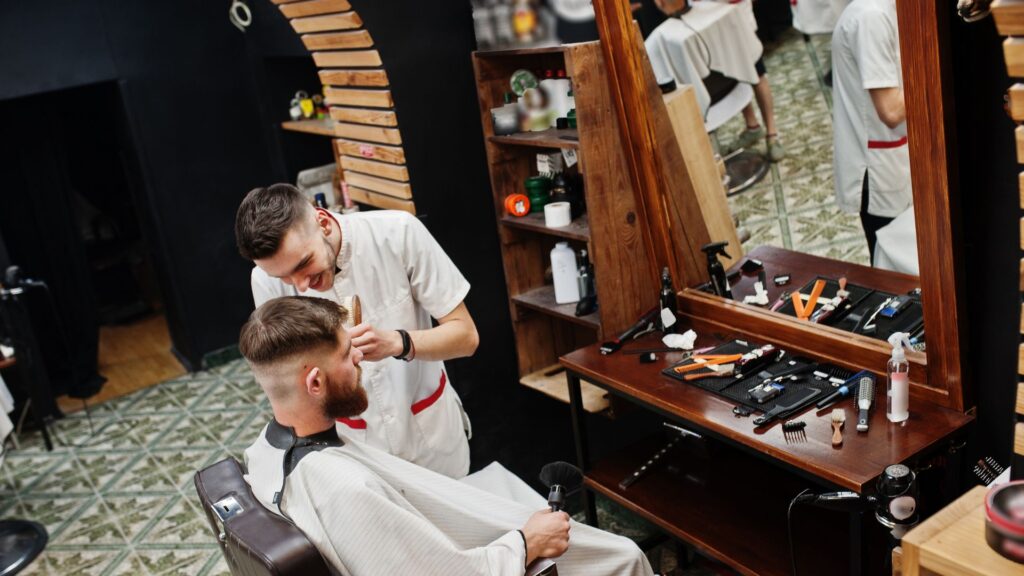
Hair type determines how forgiving or demanding a style will be.
- Straight hair holds sharp lines well and suits structured cuts, but it shows grease and flatness quickly.
- Wavy hair adds natural texture and works well with tousled, medium-length looks, though it can look undefined if cut too short.
- Curly hair shrinks significantly when dry, so cuts need to account for that bounce back, and the wrong length can leave a style looking shapeless.
- Coily hair requires precise cutting and consistent moisture care, and it holds strong shape in close crops and defined fades.
Density, thickness, and why they matter
Thick hair can handle more volume and longer styles without looking stringy, while fine hair often looks better shorter, since length on thin strands tends to lie flat and lifeless. Density also affects how often a style needs maintenance, since thicker hair grows out more visibly than finer hair.
How scalp health affects your style options
A healthy scalp supports stronger, more manageable hair, while dryness, excess oil, or dandruff can limit which styles actually look good day to day. Men dealing with scalp issues often find that shorter, lower-maintenance cuts hide these concerns better than longer styles that require daily styling to look intentional.
Hair type vs. face shape compatibility table
| Hair Type | Best Paired Face Shapes | Styles That Work Well | Styles to Approach Carefully |
| Straight | Oval, Square | Crew cut, textured crop, side part | Long, loose layers (can look flat) |
| Wavy | Round, Oval, Heart | Medium-length quiff, messy fringe | Very short buzz (loses texture) |
| Curly | Square, Diamond | Curly crop, afro fade, loose curls on top | Slicked-back styles (hard to control) |
| Coily | Oval, Round, Square | High-top fade, twist-out, shape-up | Long, unstructured lengths |
What Your Face Shape Is Actually Telling You
The six face shapes and what they mean for your cut
Most men’s faces fall into one of six broad categories: oval, round, square, heart, diamond, and oblong. Each shape has a different ratio of width to length and different proportions at the forehead, cheekbones, and jaw, which is exactly why the same haircut can look sharp on one man and flat on another.
How to measure your face shape at home
Stand in front of a mirror with your hair pulled back and use a soft measuring tape or string to note four measurements: forehead width, cheekbone width, jawline width, and face length from hairline to chin. Compare the numbers: if they’re all close, you likely have an oval or round shape; if the jaw is notably wider or narrower than the forehead, you’re probably working with a square, heart, or diamond shape.
When your face shape changes with age and weight
Faces are not static. Weight gain often softens a jawline and fills out cheeks, pushing a square face closer to round. Weight loss can do the opposite, sharpening angles that were once hidden. Aging also changes facial fat distribution and skin elasticity, which is why a style that suited you at 25 may not suit the same bone structure at 45.
The Comfort Factor: Why Familiarity Feels Like Loyalty
The barber-client relationship as a trust bond
A long-term barber relationship functions like any other trusted professional bond. Clients return because the barber understands their hair, their preferences, and their face, without needing a lengthy explanation each visit. That trust reduces decision fatigue and makes the appointment feel more like catching up with a friend than a transaction.
Routine as a form of self-care for men
For many men, a regular barbershop visit is one of the few structured self-care habits they maintain. It offers a brief, guilt-free pause in a busy schedule, a chance to sit still, disconnect, and be looked after. Keeping the same style removes one more variable from an already packed week.
When comfort becomes a style crutch
Comfort turns into a crutch when the reason for keeping a cut shifts from “this looks great on me” to “this is just what I’ve always done.” That shift is subtle, but it’s the difference between a style that’s genuinely working and one that’s coasting on inertia alone.
Signs Your Haircut Has Quietly Aged You
The decade-drift: how styles date without you noticing
Styles shift gradually enough that nobody notices in real time, the way a decade-old suit cut suddenly looks dated even though no single year felt like a turning point. A cut that felt fresh ten years ago can accumulate small, dated details (an overgrown taper, an outdated part, excess length on top) without ever feeling like a dramatic change.
Physical changes that make old cuts look off
Hairlines recede, crowns thin, and gray comes in unevenly. A style built around a full head of hair at 28 may unintentionally highlight thinning patches at 45. The same length and shape that once looked deliberate can start to look like an attempt to hide something, even if that was never the intention.
What other people see that you don’t
Friends, partners, and coworkers often notice an outdated or ill-fitting style long before the man wearing it does, simply because they see him from angles and distances he rarely considers. Most people won’t say anything unprompted, which means the feedback loop many men rely on for other wardrobe choices rarely exists for hair.
The mirror vs. the camera problem
Mirrors show a flattering, familiar, mirror-reversed version of your face, often under forgiving bathroom lighting. Photos and video calls show the asymmetries, the actual proportions, and the honest lighting that a mirror never will. Many men are genuinely startled by how different their style looks in a photo compared to how they picture it in their head.
Classic Cuts That Actually Stand the Test of Time
Why some styles never go out of fashion
The styles that last decades share one trait: they’re built on proportion and structure rather than a passing trend. A clean crew cut, a well-executed side part, or a tapered fade all rely on classic ratios between length on top and length on the sides, which is why they photograph well across generations rather than looking locked to a specific era.
The cuts worth keeping vs. the ones worth retiring
| Style | Still Works Today | Needs an Update |
| Classic crew cut | Yes, timeless and low maintenance | N/A |
| Tight taper fade | Yes, adapts well to most face shapes | N/A |
| Heavily gelled spikes (early 2000s) | No | Soften with a textured crop |
| Long, feathered layers | No | Modernize with a tapered medium length |
| Slicked side part | Yes, with a modern fade underneath | N/A |
| Bowl cut | No | Replace with a textured fringe |
Modern updates to timeless styles
Many timeless cuts have been quietly refreshed over time without losing their core identity. Classic Cuts tend to age best when the sides are tightened into a modern fade, the top is given subtle texture instead of being combed flat, and the overall shape is kept slightly shorter than past decades favored. These small adjustments keep a traditional style looking current without forcing a dramatic overhaul.
When Life Events Should Trigger a Change
Career shifts, promotions, and professional image
A new role, a promotion into client-facing work, or a career pivot into a more formal industry often calls for a sharper, more polished style. The cut that worked in a casual workplace may read as careless in a boardroom, and a small grooming upgrade can reinforce the professional image a new position demands.
Relationships, dating, and the social signal of hair
Hair sends a signal before a single word is spoken. Men entering the dating scene after years out of it often find that a style refresh, paired with updated facial hair grooming, makes a noticeable difference in first impressions, simply because it shows attention to detail and self-respect.
Fatherhood, aging, and redefining your look
Becoming a father often shifts priorities toward low-maintenance practicality, while aging naturally changes hair density, color, and hairline position. Both are legitimate, healthy reasons to revisit a style that was built for a different life stage entirely.
How to Talk to Your Barber About Changing Your Cut

The words that actually work in the barber’s chair
Specific, measurable language gets better results than vague requests. Instead of “shorter on the sides,” try “take the sides down to a number two and keep two inches on top.” Numbers, clipper guard sizes, and clear length descriptions give a barber something concrete to execute rather than guesswork to interpret.
Bringing reference photos, the right way
A reference photo works best when the man in it has a similar hair type, hairline, and face shape to yours. Bringing a photo of a celebrity with completely different hair texture often leads to disappointment, since the same cut can look entirely different depending on the canvas it’s applied to.
What a good barber will tell you that a bad one won’t
A skilled barber will tell you honestly if a requested style won’t suit your hair type, face shape, or current hairline, and will suggest an alternative that achieves a similar feel. A less experienced barber may simply attempt the exact request regardless of fit, which is one of the clearest signs of the difference in expertise.
The Practical Guide to Transitioning Your Haircut
Going shorter: the step-down method
Dropping several inches at once can feel jarring and look uneven on hair that’s been one length for years. A step-down approach, reducing length gradually over two or three visits, allows the cut to settle naturally and gives you time to adjust before committing fully to the shortest version.
Growing it out without looking like a mess
Growing out a short style requires patience and strategic trims that remove bulk without sacrificing overall length, rather than skipping the barbershop entirely. Regular shape-up visits during the growing phase prevent the awkward, shaggy stage from dragging on longer than necessary.
Managing the awkward in-between phase
Every transition has a rough patch where the old style has grown out but the new one hasn’t fully formed. Hats, light styling products, and a slightly tighter neckline trim can all make this phase far more manageable while the overall cut catches up.
Products that help during a style transition
| Product Type | Best Use During Transition |
| Matte clay | Controls flyaways on medium-length tops |
| Light sea salt spray | Adds texture to growing curls or waves |
| Pomade | Keeps longer sides disciplined while growing out |
| Beard balm | Coordinates facial hair with a changing cut |
The Cost of Staying vs. The Cost of Changing
Maintenance costs of your current cut over 10 years
A cut requiring visits every three to four weeks adds up significantly over a decade when you include the base price of the service, tipping, and any added treatments like beard trims or hot towel shaves. Men rarely calculate this total, but it often rivals the cost of several major purchases over the same period.
Investment in a new style: what to expect
Switching styles sometimes means a slightly longer or more detailed initial appointment, since reshaping a cut takes more work than simply maintaining one. After that first visit, most new styles settle into a maintenance rhythm similar to the previous one.
Value of a great haircut vs. an average one
| Factor | Average Haircut | Great Haircut |
| Fit to face shape | Generic approach | Tailored to your proportions |
| Styling effort needed daily | High (fighting the cut) | Low (cut works with your hair) |
| Longevity between visits | Looks rough after 2 weeks | Still sharp after 3 to 4 weeks |
| Confidence impact | Neutral | Noticeably boosts first impressions |
What the Barbershop Data Says About Men’s Grooming Habits
Industry statistics on male grooming frequency
Specific national grooming frequency data varies by region and source, and reliable figures should always be confirmed with the original research rather than assumed. What barbershops consistently observe, regardless of exact statistics, is a steady rhythm of visits roughly every three to five weeks among regular clients, which lines up with the natural growth cycle of most men’s hair.
Trends in men’s haircut requests by age group
| Age Group | Common Requests | Typical Priority |
| 18 to 25 | Fades, textured crops, trend-driven styles | Appearance, social image |
| 26 to 40 | Low-maintenance fades, classic crops | Professional image, efficiency |
| 41 to 55 | Classic cuts, gray blending, thinning solutions | Age-appropriate polish |
| 56 and up | Simple, clean, easy-care styles | Comfort and simplicity |
How the modern barbershop has evolved to meet men where they are
Today’s barbershops increasingly combine traditional service with modern touches: online booking, beard sculpting, scalp treatments, and consultations that go beyond a quick clipper run. This shift reflects a broader change in how men approach grooming, treating it as part of overall self-care rather than a purely functional errand.
Searching for a Haircut Near Me: What to Look For
How to find a barber who gets your hair type
When searching for a haircut near me, look past star ratings alone and check whether a shop’s portfolio includes work on hair similar to yours in texture and density. A barbershop that primarily showcases straight-hair fades may not be the strongest choice for a man with tight curls, and vice versa.
Red flags and green flags in a barbershop
| Green Flags | Red Flags |
| Barber asks about your hair history and goals | Barber starts cutting without any consultation |
| Clean, organized station and tools | Visible neglect of tools or workspace |
| Willingness to explain their approach | Dismissive of questions or preferences |
| Consistent results across multiple visits | Noticeably different outcome every visit |
Building a long-term relationship with the right barber
Consistency with one skilled barber, rather than hopping between shops, allows them to track your hair’s changes over time and adjust your style proactively rather than reactively. That long-term relationship is often what separates men who age gracefully into new looks from those who get caught off guard by a style that’s quietly stopped working.
The Action Plan: How to Decide if It’s Time to Change
The self-audit checklist
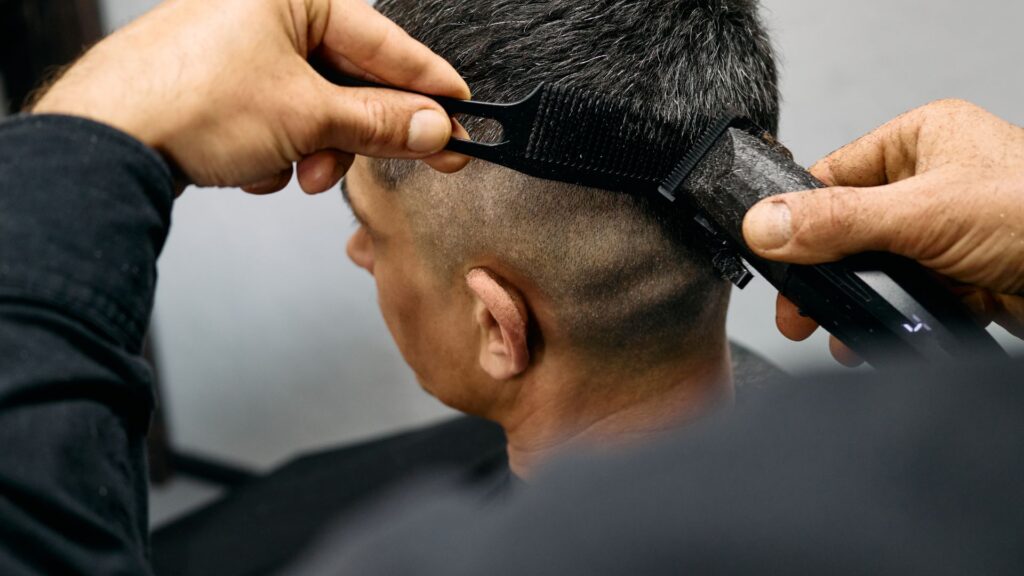
- Take a current, well-lit photo and compare it honestly to one from five years ago.
- Ask a trusted friend or partner for unfiltered feedback.
- Note how much daily effort your current style requires to look intentional.
- Check whether your hairline, density, or face shape has shifted since you last chose this style.
- Consider whether your current cut matches your current life stage and career.
The 30-day hair experiment
Commit to one modest change, such as adjusting the length on top or trying a new part, for a full 30 days before judging the result. This window allows the style to grow past its awkward first week and gives you a fair sense of how it actually settles and performs.
How to commit to a new look without regret
Start with a change that’s reversible, like adjusting length or texture, before committing to something more permanent like a dramatically shorter cut. A staged approach lowers the stakes and builds confidence before any bigger decision.
FAQs: Everything You’ve Been Afraid to Ask Your Barber
How often should I actually get a trim to maintain my style?
Most structured styles need attention every three to four weeks, while longer, low-maintenance looks can often stretch to five or six weeks before losing their shape.
Is it true that cutting hair short makes it grow back thicker?
No. Cutting hair does not change its thickness, density, or growth rate at the follicle level. Shorter hair can simply appear thicker because the ends haven’t thinned out from styling and daily wear.
What’s the biggest mistake men make when trying to change their style?
Changing everything at once, cut, part, and length, without giving the barber a clear direction. A single, well-communicated adjustment almost always produces a better result than an unclear total overhaul.
Can a bad haircut really affect how people perceive me professionally?
Appearance does influence first impressions in professional settings, and a well-maintained, appropriate style supports a polished image, though it’s one factor among many including communication and competence.
How do I know if my hairline has actually receded or if I’m overthinking it?
Compare current photos taken in consistent lighting to ones from two or three years earlier. A gradual, measurable shift in the hairline position over that time is a clearer signal than a single day’s observation in the mirror.
Should I change my style if I’m starting to go gray?
Not necessarily. Many styles accommodate gray hair well, and a skilled barber can suggest cuts or light grooming adjustments that work with gray rather than against it, rather than requiring an entirely new approach.
Is it worth paying more for a barber who specializes in my hair type?
If your current barber consistently struggles with your texture or density, a specialist is usually worth the investment, since the result and the time saved on daily styling often outweigh the price difference.
What should I do if I hate a new style right after getting it?
Give it at least a week before deciding, since hair settles and falls differently once it’s been washed and styled a few times outside the shop. If you still dislike it after that, return to your barber with specific feedback for an adjustment.
How do I find a reliable haircut near me if I’ve just moved to a new area?
Look for shops with consistent reviews mentioning your specific hair type, check their portfolio for similar textures, and consider booking a smaller trim first before committing to a full style change with an unfamiliar barber.
The Chair Is Waiting: Your Hair, Your Rules, Your Time
The closing argument for change (or staying put)
Nothing about a classic style is wrong, and nothing about trying something new is reckless. What matters is honesty: is your current look a deliberate choice that still fits who you are, or is it simply the path of least resistance? Both staying and changing can be the right call, but only one of them is usually the honest one.
What a fresh cut does for a man’s confidence
A well-executed new style has a way of resetting how a man carries himself, straightening his posture a little and sharpening his attention to the rest of his appearance. That confidence boost is real, even if it’s hard to measure, and most men who make a thoughtful change report feeling more put-together almost immediately.
The barbershop as a place of honest reflection
The barber chair is one of the few places where a man sits still, faces a mirror directly, and has an honest professional looking at him with fresh eyes every few weeks. Use that moment. Ask the question you’ve been avoiding. Whether the answer is “keep doing exactly what you’re doing” or “let’s try something new,” the chair is ready whenever you are.