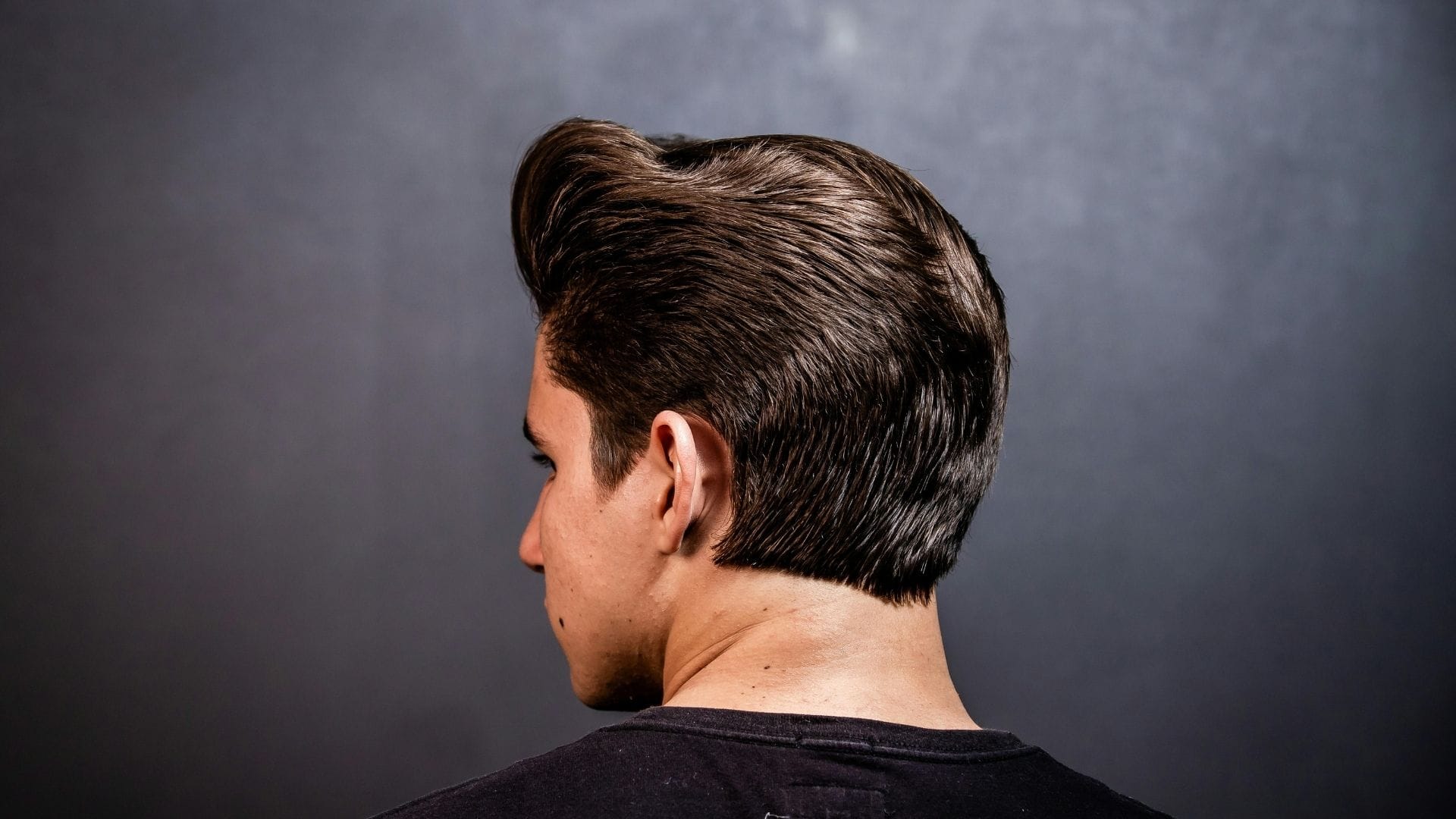
A haircut is the structural work: the cutting, shaping, and technical foundation applied to your hair with clippers, scissors, and a razor. A hairstyle is what happens after that foundation is styled, textured, and maintained day-to-day with product and effort. Every great hairstyle starts with a solid haircut, but not every haircut is meant to become an elaborate hairstyle. Understanding which one you’re asking for, and which one you actually need, changes how you talk to the person behind the chair, how much time you spend in the mirror each morning, and how much money you spend keeping your look sharp. This guide breaks down both terms in plain language, walks through the science of hair type and face shape, decodes a typical service menu, and gives you a real decision framework so you never leave the chair confused again.
Key Takeaways
- A haircut refers to the structural cut itself; a hairstyle is the styled, finished result achieved with product and daily effort.
- Your hair type, texture, density, and face shape all determine which cuts and styles are realistic for you, not just what looks good in a photo.
- The Line Up Haircut is a precision edging service, not a full haircut, and it works best as an add-on for men who already have their length and shape dialed in.
- Low-maintenance haircuts and high-maintenance hairstyles come with very different daily time and product commitments, so be honest about your lifestyle before you commit to a look.
- Clear communication with the person cutting your hair, including reference photos and honest answers about your styling habits, is the single biggest factor in getting a result you’ll actually be happy with.
The Question Every Man Has Asked at Least Once
Every man has sat in the chair, looked in the mirror, and asked some version of the same question: “Can you just clean it up?” It sounds simple. It rarely is. That question could mean a trim, a total shape change, or an entirely new look. The confusion between haircut and hairstyle causes more bad haircuts than bad technique ever will.
Why most men use haircut and hairstyle interchangeably (and why that causes problems)
Most guys use “haircut” and “hairstyle” as if they’re the same word, and honestly, it’s understandable. Both involve scissors, both involve your head, and both end with you looking in a mirror hoping for the best. But a haircut is the technical process: the cutting, thinning, and shaping of your hair into a base structure. A hairstyle is the finished, styled look built on top of that structure, often with product, heat, or specific parting and combing techniques.
Here’s where it gets messy. A client says “give me a fade” and pictures a specific textured, styled look from a barbershop’s Instagram page. The person cutting hears “fade” and delivers a technically correct fade, the structural cut, without the styling that made the photo look the way it did. Nobody did anything wrong technically, but the client leaves disappointed because he wanted the hairstyle, not just the haircut.
This mismatch shows up constantly:
| What the client says | What the client actually wants | What often gets delivered |
| “Just a fade” | A styled, textured fade like a reference photo | A clean, unstyled fade haircut |
| “Something like this celebrity” | The full styled look, including product | The underlying cut only |
| “Low maintenance” | A cut that looks good with zero effort | A cut that still needs daily styling |
| “Clean and professional” | A specific length and finish | Ambiguous, over to the barber’s interpretation |
What a great consultation actually looks like
A real consultation is a two-way conversation, not a five-second nod before the clippers turn on. A good barber asks about your hair type, your daily routine, how much time you spend styling, and what you actually do for work or life that affects upkeep. They’ll ask if you use product now, and if not, whether you’re willing to start.
Then comes the honest part: matching your expectations to your hair’s actual behavior. If you bring in a photo of thick, wavy hair styled into a textured quiff and you have fine, straight hair, a good consultation catches that gap before the cutting starts, not after.
A proper consultation covers:
- Reference photos, ideally two or three angles
- Current hair type, density, and growth pattern
- Face shape and how the client feels about it
- Styling habits: product use, blow-drying, heat tools
- Maintenance schedule: how often the client actually gets back in the chair
- Lifestyle factors: work dress code, gym routine, humidity, hats
How clarity before the chair leads to better results
Clarity before the first snip changes everything downstream. When you and the person cutting your hair agree on the same target result, the technical decisions, from where the guard changes to how much weight comes off the top, all serve that shared goal. Miscommunication, on the other hand, compounds. A slightly wrong assumption about density leads to a slightly wrong choice of guard length, which leads to a style that just won’t sit the way you pictured it.
The fix is almost embarrassingly simple: bring photos, describe your daily routine honestly, and ask questions before the cutting starts, not after. That five extra minutes of conversation saves you from six weeks of growing out a cut you didn’t actually want. With that foundation set, it’s worth slowing down and defining these two terms properly, starting with the one that comes first in every great look: the haircut itself.
Defining the Terms — What a Haircut Actually Is
A haircut is the physical, structural act of cutting hair to a specific length and shape using tools like clippers, shears, and razors. It’s the foundation everything else is built on, and it exists independently of any styling product or technique applied afterward.
The technical definition of a haircut
In professional terms, a haircut refers to the cutting and shaping of hair to create a defined structure, length, and silhouette. It’s a physical, mechanical process. Think of it as architecture: the haircut is the frame of the house before anyone paints the walls or picks out furniture.
A haircut typically includes:
- Determining the guard lengths or scissor-over-comb measurements for different zones of the head
- Creating a fade, taper, or blunt line depending on the desired transition
- Shaping the perimeter around the ears, neckline, and hairline
- Removing bulk or weight through thinning shears if needed
- Establishing the parting or natural fall pattern of the hair
None of that requires a single drop of product. That’s the key distinction. A haircut can be evaluated the moment you step out of the chair with damp or freshly cut hair, before any styling has been applied.
The tools and techniques that make a haircut a haircut
The tools tell the story. Clippers with interchangeable guards create the graduated lengths behind a fade or taper. Shears handle precision length work and texturizing on top. A straight razor cleans up hairlines and necklines with a sharpness clippers can’t match. Thinning shears remove bulk without shortening length, which matters a lot for guys with thick or dense hair who feel weighed down.
Technique matters as much as tools. Scissor-over-comb work creates soft, natural blending on top, while clipper-over-comb achieves a similar effect with more speed and control for shorter styles. Freehand clipper work, done without a comb, is common in fades where the barber blends multiple guard lengths directly into the skin.
| Tool | Primary use | Result |
| Clippers with guards | Bulk removal, fades, tapers | Graduated length, blended zones |
| Shears | Precision cutting, texturizing | Controlled length, natural movement |
| Straight razor | Hairline and neckline finishing | Sharp, clean edges |
| Thinning shears | Bulk reduction | Lighter feel without losing length |
When a haircut is all you actually need
Plenty of men genuinely just need a haircut, full stop. If your daily routine involves a towel dry and walking out the door, you’re a haircut-only guy, and there’s nothing wrong with that. A well-executed haircut, especially a classic taper or crew cut, holds its shape and looks intentional with zero styling effort.
Signs you fall into this category: you don’t own any styling product, you’ve never used a blow dryer on your hair on purpose, and your idea of hair maintenance is remembering to book the next appointment. If that’s you, tell whoever is cutting your hair exactly that. It changes how they shape the cut, favoring structure that looks good as it grows out and doesn’t rely on a specific styling technique to look finished. Once the structural cut is sorted, the next layer of the conversation is what happens on top of that structure, which brings us to the hairstyle itself.
Defining the Terms — What a Hairstyle Actually Is
A hairstyle is the styled, finished appearance of hair after grooming techniques, products, and tools have been applied to a haircut. It’s the difference between the raw cut and the polished, presented result you see in the mirror each morning.
The difference between shape and style
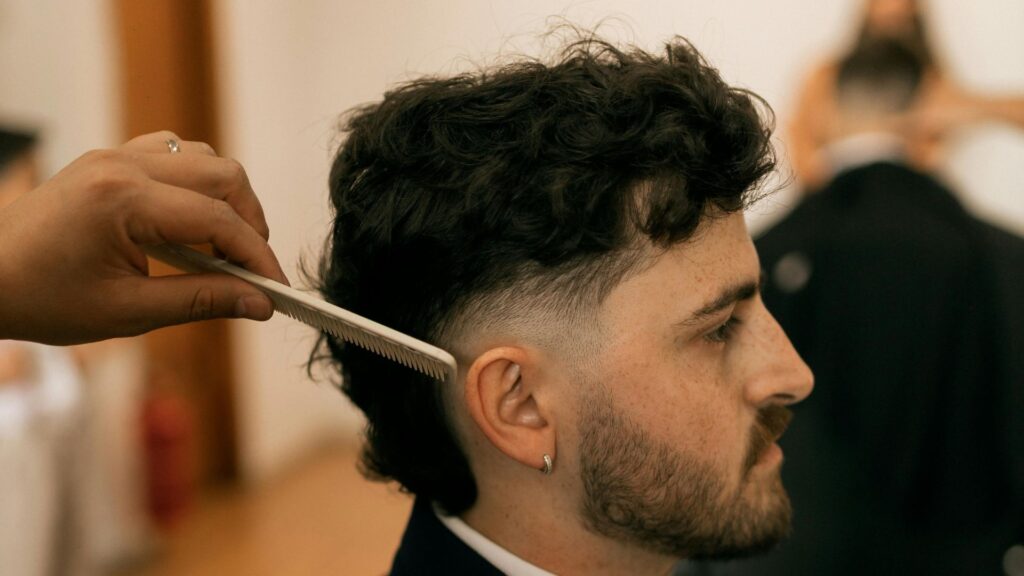
Shape is what the scissors and clippers create. Style is what you do with that shape afterward. A textured crop, for example, has a shape defined by shorter sides and longer, textured length on top. The style comes from how that top section is dried, product is applied, and the hair is pushed, pulled, or combed into its final form.
Two men can walk out of the same barbershop with the identical haircut and look completely different a day later based purely on styling choices. One slicks it back with a strong-hold pomade for a sleek, polished look. The other uses a matte clay and tousles it with his fingers for a relaxed, textured finish. Same haircut, two different hairstyles.
How products, texture, and daily effort factor into a hairstyle
A hairstyle lives and dies by three things: the product used, the natural texture of the hair, and the time invested each day. Product provides hold, texture, and finish. Natural hair texture determines how that product behaves, since a pomade sits differently on straight hair than on curly hair. Daily effort is the honest variable most men underestimate when they pick a style from a photo.
Common style-building steps include:
- Towel-drying to about 80 percent, since fully wet or fully dry hair takes product differently
- Applying a small amount of product, working it through evenly with fingers
- Using a blow dryer with a round brush or fingers to build volume or direction where needed
- Combing or finger-styling into the final shape
- A light hold spray or finishing product to lock it in through the day
Hairstyle as identity and self-expression
A hairstyle says something about you before you speak a word. It’s one of the few pieces of personal expression that’s visible in every interaction, from a job interview to a first date. That’s why men get attached to a specific style, sometimes long after their hair type or lifestyle has changed enough that the style no longer suits them.
There’s real psychology here. Studies on grooming and self-perception consistently find that people report higher confidence and more positive self-assessment after a grooming change they feel good about, which is a big part of why a good hairstyle feels like more than just hair. It’s a small, daily act of self-respect. With the technical distinction between cut and style clear, it helps to understand where these ideas came from, because men’s grooming has a much longer and stranger history than most people realize.
A Brief History of Men’s Hair — From Ancient Cuts to Modern Styles
Men’s hair has always been a signal, of status, rebellion, discipline, or belonging, long before Instagram made every fade searchable. Understanding that history explains why certain cuts carry cultural weight today and why barbershops became more than just a place to get a trim.
How men’s grooming evolved through the centuries
Ancient Egyptians shaved their heads for hygiene in the heat and wore wigs for formal occasions, a very early example of separating the practical cut from the styled presentation. Roman soldiers kept hair short for battlefield practicality, while Roman citizens experimented with curled, oiled styles as a display of wealth and leisure.
Medieval Europe swung between extremes: monks shaved specific patterns for religious reasons, while nobility grew hair long as a marker of status since peasants needed short, practical cuts for labor. The 18th century brought powdered wigs into fashion for upper-class men, an entire industry built around styled hairpieces rather than natural hair at all.
| Era | Dominant style | Cultural driver |
| Ancient Egypt | Shaved heads, formal wigs | Hygiene, status |
| Roman Empire | Short military cuts, curled leisure styles | Practicality, class |
| Medieval Europe | Long hair for nobility, short for laborers | Class and religion |
| 18th century | Powdered wigs | Aristocratic fashion |
| Early 20th century | Slicked side parts | Formality, uniformity |
| 1950s | Pompadours, crew cuts | Youth rebellion vs. military discipline |
| 1960s-70s | Long hair, natural texture | Counterculture movements |
| 1990s-2000s | Buzz cuts, frosted tips | Athletic influence, pop culture |
| 2010s-present | Fades, textured crops, beards | Barbershop revival, social media |
The cultural moments that redefined men’s hair
The 1950s pompadour, popularized by Elvis Presley, turned a hairstyle into a statement of youth and rebellion against the clean-cut conformity of the previous decade. The 1960s and 70s counterculture movement flipped that again, with long, natural hair symbolizing anti-establishment values. The 1990s brought a completely different energy, with buzz cuts and athletic influence dominating, largely thanks to sports culture and hip hop.
Each shift wasn’t really about hair length or shape in isolation. It was about what that choice communicated. That’s the throughline connecting ancient Rome to a modern barbershop: hair has never just been hair.
How barbershops became the keepers of both cut and style
The modern barbershop, as a dedicated space for men’s grooming, really took shape in the 19th century, evolving from a mix of surgery, dentistry, and shaving services into a specialized grooming trade. By the 20th century, the barber shop had become a community fixture, part grooming appointment, part social hub, and it’s stayed that way through every style trend since.
What makes a good barbershop valuable today isn’t just technical skill with clippers. It’s the accumulated knowledge of what’s worked across thousands of heads of hair, which is exactly the expertise that helps translate a request into both the right haircut and the right hairstyle. That history sets the stage for something more personal: your specific hair, because no amount of trend knowledge matters if the cut doesn’t work with what’s actually growing out of your scalp.
Your Hair Type Changes Everything
Your hair’s texture, density, and porosity determine which cuts and styles will actually work for you, regardless of what looks good in a photo or on someone else’s head. Ignoring hair type is the single most common reason a requested style fails to translate in real life.
The science of hair texture, density, and porosity
Hair texture refers to the shape of the strand itself: straight, wavy, curly, or coily, determined by the shape of the hair follicle. Density is how many strands you have per square inch of scalp, independent of how thick each individual strand is. Porosity describes how well your hair absorbs and retains moisture and product, which affects how styling products behave once applied.
| Hair type | Follicle shape | Common behavior |
| Straight | Round | Reflects light, can appear flat, holds less volume |
| Wavy | Oval | Natural movement, moderate product absorption |
| Curly | Elliptical, curved | High volume, prone to frizz, needs moisture |
| Coily | Flat, tightly curved | Maximum shrinkage, needs intensive moisture and gentle handling |
How hair type determines which styles are realistic
Straight, fine hair struggles to hold volume-heavy styles like a tall pompadour without strong product and blow-drying technique. Curly hair, on the other hand, naturally provides volume and texture that suits cropped, textured styles beautifully but fights against sleek, slicked-back looks unless heavily treated or product-laden.
Density matters just as much. High-density hair can carry longer, heavier styles without looking thin, while low-density hair often looks better shorter, since length exaggerates any sparseness. This is precisely why a photo of a favorite celebrity’s hairstyle isn’t a reliable starting point on its own. It has to be filtered through your actual hair’s texture and density first.
Matching the right haircut to your hair’s natural behavior
The smartest approach works with your hair’s natural tendency rather than against it every single day. If you have wavy hair that naturally falls into a side part, a cut that respects that natural fall will look great with minimal effort. Fighting your hair’s natural direction daily, forcing straight hair into curls or curly hair into a sleek finish, means more time, more product, and more frustration.
A knowledgeable person cutting your hair will ask about your natural part, cowlicks, and growth pattern before finalizing a shape, because these details determine where a fade should blend, how the crown is textured, and whether a particular style is realistic without daily heat styling. Hair type is only half the equation, though. The other half sits right there in the mirror: the shape of your face.
Face Shape and How It Guides Both Cut and Style Decisions
Face shape influences which haircuts create balance and which hairstyles flatter your specific bone structure, working alongside hair type rather than replacing it as a factor in the final decision.
The major face shapes and what they mean for hair choices
There are generally six recognized face shapes: oval, round, square, rectangular, heart, and diamond. Oval faces are considered the most balanced and versatile, generally suiting the widest range of cuts. Round faces benefit from added height and angles to create the illusion of length. Square faces, with strong jawlines, often look best with softer cuts on top to balance the angularity, or can lean into the strong jaw with a sharp fade.
| Face shape | Key characteristic | General goal |
| Oval | Balanced proportions | Most styles work; maintain balance |
| Round | Soft curves, similar width and length | Add height, create angles |
| Square | Strong jaw, broad forehead | Soften with texture, or embrace with sharp lines |
| Rectangular | Longer face, narrow width | Add width, avoid excessive height |
| Heart | Wider forehead, narrower chin | Balance with volume at jaw level |
| Diamond | Narrow forehead and chin, wide cheekbones | Soften cheekbone width with textured sides |
Haircuts that work with your face shape
For round faces, a textured crop or a fade with added height on top creates visual length. For square faces, a crew cut or textured fringe softens strong angles, while a slick fade can accentuate the jaw for those who want that effect intentionally. Rectangular faces do well with cuts that add width, like a fuller fringe or side-swept style, avoiding overly tall builds that stretch the face further.
Hairstyles that flatter or balance specific facial structures
Beyond the structural cut, styling choices reinforce these goals. A round face benefits from styling hair up and off the forehead rather than flat across it, while a heart-shaped face looks balanced when styled with a bit of width at the sides rather than swept tightly back. This is the point where haircut and hairstyle work in true partnership: the cut sets the potential, and the styling choice decides whether that potential gets used well or fought against. Speaking of specific techniques used to sharpen these results, there’s one service worth its own dedicated conversation: the Line Up Haircut.
The Line Up Haircut — Precision, Purpose, and When to Ask for One
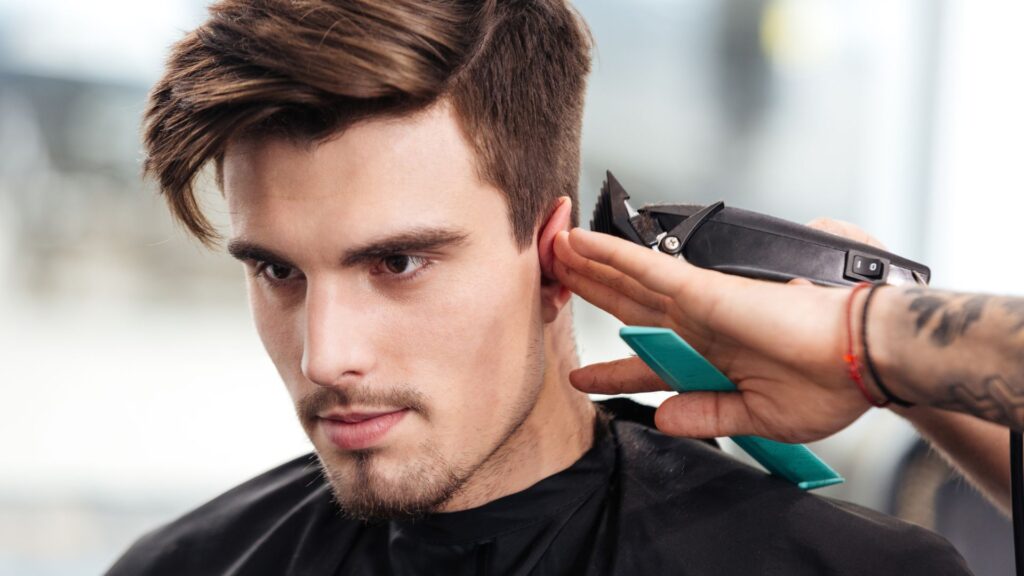
The Line Up Haircut is a precision edging service that sharpens the hairline, temples, and beard borders using a straight razor or trimmer, typically performed as a finishing touch rather than a standalone full haircut.
What a Line Up Haircut is and what it does
This service focuses entirely on definition. Rather than cutting length or shaping volume, it’s about creating crisp, clean borders where hair meets skin, most commonly along the forehead hairline, around the ears, and along the neckline. Done well, it makes an existing cut look sharper and more intentional without changing the overall length or shape at all.
Who benefits most from a Line Up
Men with naturally curly or coily hair often see the biggest transformation, since tight curl patterns can blur the edge of a hairline over time. It’s also a favorite among guys who keep a consistent short style and want to maintain crisp definition between full haircuts, since edges tend to grow out and soften faster than the rest of the cut.
How this service differs from other edge and shape services
A standard haircut includes some hairline cleanup as part of the overall service, but it’s typically less precise and less razor-focused than a dedicated edging appointment. A beard line-up is a related but separate service, focusing on the beard’s border rather than the hairline. Knowing the difference helps you ask for exactly what you want the next time you’re booked in, especially since not every shop lists these as separate line items. That brings us naturally to a much bigger challenge: actually reading a barbershop’s service menu.
The Barbershop Service Menu Decoded
A typical service menu separates structural haircut services from styling and finishing add-ons, but the naming conventions vary widely between shops, which is exactly why so many men end up confused before they even sit down.
Common service names and what they actually mean
“Skin fade,” “taper,” “crew cut,” “buzz cut,” and “scissor cut” all describe structural haircut variations. “Blowout,” “style,” and “finish” typically refer to the styling step layered on top. Some shops bundle everything into one flat rate, while others itemize every step.
| Menu term | What it typically includes |
| Skin fade | Clipper work fading to bare skin at the sides/back |
| Taper | Gradual length reduction without going to skin |
| Crew cut | Short, uniform length on top with tapered sides |
| Scissor cut | Length work done primarily with shears |
| Edge up / line up | Precision hairline and border cleanup |
| Style / finish | Blow-dry and product application after cutting |
Haircut services vs. styling services on the menu
The clearest way to tell the two apart on a menu is to ask what’s included in the price. A basic haircut service usually covers cutting and shaping only, sometimes with a quick towel dry. A full style or finish service adds blow-drying, product, and a polished final look, and it’s often priced as a separate line item or an upgrade.
Add-ons, upgrades, and how they affect the final result
Common add-ons include hot towel treatments, beard trims, scalp massages, and hair treatments like deep conditioning. Each one changes the final result in a specific way: a hot towel softens facial hair for a cleaner razor finish, while a scalp treatment can improve how product sits on the hair afterward. None of these are required, but understanding what they do lets you choose upgrades that actually matter to you rather than paying for something you don’t need. Once you understand the menu, the next practical step is figuring out which category of appointment you actually need to book.
When You Need a Haircut vs. When You Need a Hairstyle Consultation
A routine haircut appointment works when you’re maintaining an existing look, while a full hairstyle consultation is warranted when you’re changing direction entirely or trying to solve a problem your current cut isn’t fixing.
Signs your hair just needs a cut
If you’re happy with your current shape and just need the length managed, a standard haircut appointment is all you need. You already know how to style it, you’re not chasing a new look, and you just want the growth cleaned up on a regular schedule.
Signs you need a full style consultation and redesign
Booking a consultation makes sense when you’re bored with your current look, transitioning between major life events like a new job, or your hair has changed due to age, thinning, or texture shifts. It’s also worth booking one if you’ve been unhappy with your last few haircuts without knowing exactly why.
| Situation | Book a routine haircut | Book a full consultation |
| Maintaining current look | Yes | No |
| Bored with current style | No | Yes |
| Major life change (new job, event) | No | Yes |
| Hair texture or density has changed | No | Yes |
| Consistently unhappy with results | No | Yes |
How to tell your barber which one you’re after
Say it directly: “I just want this maintained the same way” versus “I want to talk through some new options.” That single sentence at the start of the appointment changes how much time and conversation happens before the clippers come out, and it sets accurate expectations on both sides. Once you know which type of appointment to book, it’s worth being honest with yourself about the upkeep that follows, because that’s where a lot of style decisions quietly fall apart.
Lifestyle, Maintenance, and the Reality of Upkeep
Low-maintenance haircuts require minimal daily styling and less frequent trims, while high-maintenance hairstyles demand daily product application, styling time, and more frequent appointments to keep their shape intact.
Low-maintenance haircuts vs. high-maintenance hairstyles
A buzz cut or classic crew cut needs almost no daily attention: towel dry and go. A textured quiff or a slicked pompadour, by contrast, needs daily product, often a blow dryer, and careful styling to look intentional rather than messy.
| Factor | Low-maintenance cut | High-maintenance style |
| Daily styling time | 0-2 minutes | 10-20 minutes |
| Product needed | Optional | Usually required |
| Trim frequency | Every 4-6 weeks | Every 2-4 weeks |
| Tools required | None | Blow dryer, brush, comb |
Daily styling time and product commitment
Be realistic about your mornings. A style that looks incredible on the barbershop’s Instagram page might have taken fifteen minutes and three products to achieve. If your actual morning routine allows for two minutes in front of a mirror, choose a cut that looks good with that level of effort, not one that only looks good with far more.
Scheduling frequency for cuts vs. style refreshes
Shorter, more structured cuts like fades need more frequent trims, often every two to three weeks, to keep the blend crisp. Longer, looser styles can stretch to five or six weeks between visits since the growth is less noticeable. Knowing this before you commit to a look helps you budget both time and money accurately. Maintenance naturally leads to the next essential topic, since so much of a hairstyle’s daily upkeep comes down to product.
Products — The Bridge Between a Cut and a Style
The right product transforms a structural haircut into a finished hairstyle by adding hold, texture, and shine, while the wrong product can make even a great haircut look flat or overdone.
Why the right product turns a good haircut into a great hairstyle
Product does three jobs: it adds hold so the style stays put, it adds texture or shine to change the visual finish, and it protects hair from environmental factors like humidity. Skipping product entirely on a style designed around movement and texture, like a textured crop, often leaves it looking unfinished.
Product types broken down by hold, finish, and hair type
| Product type | Hold level | Finish | Best for |
| Pomade (oil-based) | Medium-high | High shine | Slick, classic styles |
| Pomade (water-based) | Medium-high | Low to medium shine | Versatile, restyleable looks |
| Clay | Medium | Matte | Textured, natural-looking styles |
| Wax | Medium-high | Matte to natural | Defined texture, shorter styles |
| Fiber | High | Matte | Thick, spiky texture |
| Gel | High | Wet or glossy | Sleek, controlled styles |
How to apply products correctly for lasting results
Start small, about a dime-sized amount for short to medium hair, and warm it between your palms before applying. Work it through damp or dry hair depending on the product, starting at the roots for volume or through the mid-lengths for texture. Adding too much at once is a common mistake, since it’s much easier to add more than to remove excess once it’s in your hair. Understanding products well also helps you avoid a handful of very common mistakes men make when choosing their next look.
Common Mistakes Men Make When Choosing a Cut or Style
The most frequent mistakes involve copying a reference photo without accounting for hair type, skipping the consultation conversation entirely, and neglecting the maintenance a chosen style actually requires.
Picking styles based on celebrity photos without considering hair type
A photo is a great starting point, but it’s not a guarantee. Bring the photo, but also be open to hearing how it might need to adapt to your specific texture, density, and face shape. A good professional will tell you honestly what will and won’t translate.
Skipping the consultation and assuming your stylist knows
Even a regular client’s needs change over time, whether from a new job, hair thinning, or simply wanting a change. Assuming no conversation is needed leads to autopilot cuts that stop evolving with you.
Neglecting maintenance and letting style degrade
A style that looked sharp in week one but hasn’t been touched up in week six isn’t really that style anymore. Skipping scheduled trims or ignoring the need for a hairline touch-up slowly erodes the intended shape until it barely resembles what was originally cut.
| Mistake | Consequence | Fix |
| Copying a photo blindly | Style doesn’t translate to your hair | Discuss adaptation with your stylist |
| Skipping consultation | Cut doesn’t match current goals | Speak up about changes in lifestyle or preference |
| Ignoring maintenance schedule | Style degrades and looks unkempt | Stick to the recommended trim frequency |
Avoiding these mistakes costs nothing but a bit of honesty and communication, which brings up a fair question: how much should all of this actually cost you?
Pricing — What You’re Paying For and Why It Varies
Haircut pricing reflects time, skill level, and service complexity, while hairstyle consultations and redesigns typically cost more due to the added time for discussion, planning, and often more advanced technique.
How haircut pricing works
Standard haircuts are usually priced based on the shop’s location, the barber’s experience level, and the complexity of the service, such as a skin fade requiring more precision than a basic trim. Master barbers or senior stylists typically charge more than junior staff, reflecting years of additional training and repeat-client demand.
Why hairstyle consultations and redesigns cost more
A consultation service takes longer, sometimes double the time of a routine visit, because it includes discussion, sometimes photos or mock styling, and more careful attention to detail throughout the cut itself. That added time is the primary driver of the higher price point, not an arbitrary upcharge.
| Service type | Relative price level | Typical time |
| Routine maintenance haircut | $ | 20-30 minutes |
| Skin fade or detailed cut | $$ | 30-45 minutes |
| Full style consultation and redesign | $$$ | 45-75 minutes |
| Line Up or edge-only service | $ | 10-15 minutes |
When to invest more and when routine maintenance is enough
Invest in the higher-priced consultation when you’re making a real change or haven’t found the right look yet. Once you’ve landed on a style you love, routine maintenance appointments are usually all you need going forward, since the hard decision-making work has already been done. Pricing decisions get more layered around specific life moments, which is exactly where we’re headed next.
Special Scenarios — First Visits, Big Events, and Kids in the Chair
First-time visits, major life events, and children’s haircuts each call for a slightly different approach to booking, communication, and service selection than a routine adult maintenance appointment.
First-time visits and setting expectations
Walking into a new shop for the first time, bring reference photos, be upfront that it’s your first visit, and don’t be afraid to ask questions about the shop’s specialties. A good first visit often includes a brief consultation even for what seems like a routine cut, simply because there’s no history to work from yet.
Grooming before weddings, interviews, and important events
For big events, book your appointment several days ahead rather than the day before, giving any slight unevenness or a too-short feeling time to settle. It’s also smart to do a trial run for anything unfamiliar, like a new style for a wedding, well before the actual event date.
Introducing kids to the chair and what service to book
Kids’ haircuts are almost always structural, simple, low-maintenance cuts that hold up to active play with zero styling required. Look for a shop or stylist experienced with children specifically, since patience and speed matter more here than intricate technique.
| Scenario | Key priority | Timing recommendation |
| First-time visit | Clear communication, bring references | Anytime |
| Wedding or interview | Polished, reliable result | 3-5 days before the event |
| Kids’ first haircuts | Patience, simplicity | Whenever needed, shorter appointments |
Trends in Men’s Grooming That Are Reshaping Both Cut and Style
Classic, structured cuts are making a strong comeback, while social media continues to accelerate how quickly new styling techniques spread and evolve within the industry.
The return of classic cuts
Timeless cuts like the crew cut and side part have seen renewed popularity, partly as a reaction against overly trend-driven styles that age quickly in photos. Classic cuts age well precisely because they’re not tied to a specific cultural moment.
Modern styling culture and social media influence
Social media has turned styling technique into content, with detailed tutorials on product application and blow-drying methods reaching far more people than a barbershop conversation ever could. This has raised the average client’s styling knowledge significantly, though it’s also increased the gap between photo and reality that a stylist has to manage in consultations.
Where professional barbering and personal style are heading
The industry is trending toward more personalized, consultation-heavy service models rather than walk-in, one-size-fits-all approaches. Clients increasingly expect their stylist to understand their specific hair type and lifestyle rather than simply executing a requested cut. With trends covered, it’s time to bring everything together into something practical you can actually use the next time you sit in the chair.
Your Personal Hair Decision Checklist and Final Word from the Chair
The right decision between a cut, a style, or both comes down to being honest about your hair type, your face shape, your daily routine, and what you’re actually trying to communicate with your appearance.
The decision framework — cut, style, or both
Ask yourself three questions before your next appointment: Am I happy with my current shape, or do I want something new? How much daily time am I realistically willing to spend styling? Does my current look still match my lifestyle and hair’s natural behavior? Your answers point you toward a routine haircut, a full consultation, or a combination of both.
| Question | If yes | If no |
| Happy with current shape? | Book routine haircut | Consider a consultation |
| Willing to style daily? | Higher-maintenance styles open up | Stick to low-maintenance cuts |
| Lifestyle changed recently? | Book a consultation to reassess | Routine maintenance is fine |
How to communicate your goal every single visit
Say the goal out loud at the start of every appointment, not just the first one. “Same as last time” is a perfectly valid instruction. So is “I want to talk about something different.” Both are more useful than silence and hoping for the best.
Frequently Asked Questions About Haircuts and Hairstyles
What’s the simplest way to explain the difference between a haircut and a hairstyle?
A haircut is the structural cutting of hair into a shape and length. A hairstyle is what that shape looks like once it’s been styled with product, drying technique, or combing.
Can one haircut support multiple different hairstyles?
Yes. A single haircut, especially a versatile one like a textured crop, can be styled slicked back one day and tousled and messy the next, simply by changing the product and technique used.
How do I know if my hair type will support a style I saw online?
Compare the texture and density shown in the photo to your own hair. If they’re significantly different, ask your stylist how the style would need to adapt to work with what you actually have.
Is a Line Up Haircut the same as a full haircut?
No. It’s a precision edging service focused on the hairline, temple, and border areas, typically used as a finishing touch alongside or between full haircuts rather than replacing one.
How often should I get a haircut if I want to maintain a sharp fade?
Every two to three weeks is typical for a sharp fade, since the blended zones grow out and lose definition faster than longer, looser styles.
Why do some haircuts cost more than others at the same shop?
Price differences usually reflect time and complexity. A detailed skin fade or a full consultation takes longer and requires more precision than a basic trim, which is reflected in the price.
What should I bring to a consultation appointment?
Bring two or three reference photos from different angles, be honest about your current styling habits and time commitment, and be ready to discuss your lifestyle, including work environment and activity level.
Do I need product for every hairstyle?
Not every style requires product, but most styles built around specific texture, volume, or hold do need it to hold their intended shape throughout the day.
How do I find a good barbershop near me if I’m new to an area?
Look at recent client photos on their social pages, read reviews mentioning consultation quality, and consider booking a simple maintenance cut first before committing to a big style change with someone new. A quick search for “barber near me” is a fine starting point, but treat the first visit as a trial rather than a lifetime commitment.
Conclusion
A great haircut is patient work, and a great hairstyle is a daily habit built on top of it. Neither one is better than the other. They just serve different needs at different points in your life. Know which one you’re asking for, be honest about your hair and your routine, and you’ll leave every appointment looking like the best version of yourself, not someone else’s photo.