
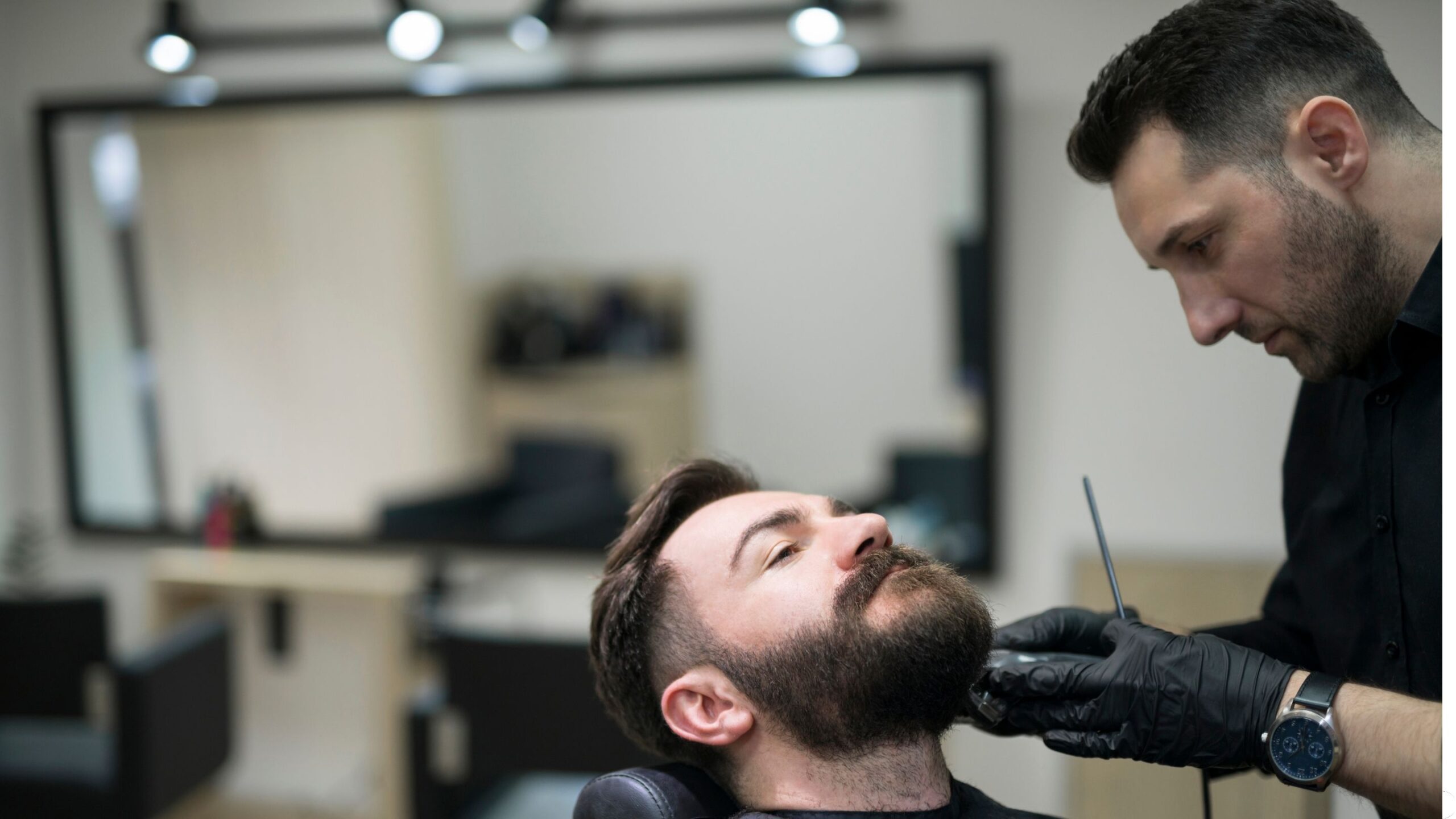
Two Cheeks, Two Different Stories
The Question I Hear Almost Every Week
It usually happens right after the hot towel comes off.
A client leans forward in the leather chair, rubs his jaw, and looks at me in the mirror. Then he asks some version of the same question. “Why is my left side so much thicker than my right?”
I’ve heard it from college kids growing their first real beard. I’ve heard it from firefighters, accountants, pastors and truck drivers. Once I heard it from a seventy-year-old grandfather who’d worn the same beard since the Carter administration and had only just noticed.
So if you’ve been staring at your reflection wondering why your beard grows unevenly on both cheeks, you’re in good company. Perhaps more company than you’d expect.
I noticed long ago that the question rarely comes from vanity alone. Underneath it, there’s usually a quieter worry. Is something wrong with me? Most of the time, the honest answer is no. There’s simply a lot going on beneath the skin that nobody ever explained.
Why Nobody Has a Perfectly Matched Beard
Here’s something that might ease your mind. After more than twenty years of trimming beards, I can count on one hand the faces I’ve seen with truly matching cheeks.
Your two cheeks are a bit like two brothers raised in the same house. Same parents, same rules, same dinner table. Yet one turns out to be a linebacker and the other a chess player. They share a source, but they don’t share every detail.
Each side of your face has its own follicles, its own blood supply, its own skin texture and even its own habits, since you probably sleep, lean and scratch on one side more than the other. Small differences add up over months.
It seems the real question isn’t whether your cheeks are uneven. It’s how uneven they are, and whether that difference is natural, temporary, habit-driven or worth a closer look.
What This Guide Will Help You See
In the sections ahead, you’ll find the biology behind beard growth, the role of genetics and age, the habits that quietly shape each side, and the skin conditions that sometimes play a part.
You’ll also learn how to tell natural unevenness from a bad trim, what a skilled barber does to balance a lopsided beard, which products and styles help, and what all of this tends to cost.
Think of this as a long conversation in the chair. Take what’s useful. Leave what isn’t. Every face is different, and yours might write its own rules.
Before we get into causes, it helps to agree on a few words.
Getting the Language Right Before We Go Further
The Five Zones of a Beard
Barbers rarely think of a beard as one thing. We see it in zones, the way a groundskeeper sees a ballfield as infield, outfield, foul territory and warning track.
| Zone | Where It Sits | What Typically Happens |
| Cheek line | Top edge of the beard on each cheek | Often the most uneven area |
| Cheeks | The flat area below the cheekbones | Slowest to fill in for many men |
| Jawline | Along the bone from ear to chin | Usually fuller and more even |
| Chin and mustache | Center of the face | Often the first area to grow in |
| Neckline | Under the jaw and down the throat | Grows fast, sometimes too fast |
When you say your beard grows unevenly, it’s worth asking which zone you mean. In my experience, most men are talking about the cheek line and upper cheeks, the part of the face where density tends to be lowest and where even small gaps stand out.
Patchy vs. Uneven: Two Different Problems
These two words get swapped all the time, but they describe different things.
| Factor | Patchy Beard | Uneven Beard |
| What you see | Bare spots or gaps within the beard | One side fuller, longer or higher than the other |
| Where it shows | Usually cheeks and under the lip | Comparing left side to right side |
| Common causes | Genetics, age, density, alopecia | Growth direction, habits, trimming, asymmetry |
| Usually improves with | Time, length, styling | Better trimming, balanced lines, time |
| Barber’s main tool | Length and blending | Line placement and shaping |
A beard can be both patchy and uneven, of course. But it helps to know which one is bothering you most, because the fixes are different.
Density, Length and Direction
Three simple terms will come up again and again.
Density is how many hairs grow in a given area. A cheek with lower density looks thinner even if every hair is the same length.
Length is how far each whisker extends. One side can look shorter simply because it grows a little slower or gets rubbed down by habits.
Direction, or grain, is the angle each hair grows out of the skin. Hair growing flat against the face looks thinner than hair standing out at an angle, even when density is identical.
I like to think of these three like the ingredients in a recipe. Change any one of them on a single cheek, and the whole dish tastes a little different.
With the language in place, let’s look at what’s happening underneath.
The Biology Behind the Mismatch
Testosterone, DHT and Receptor Sensitivity
Beard growth runs on androgens, the family of hormones that includes testosterone. An enzyme called 5-alpha reductase converts some testosterone into dihydrotestosterone, or DHT, a stronger form that pushes facial follicles to produce thick, dark terminal hairs.
But here’s the part that surprises most men. The level of these hormones in your blood is only half the story. The other half is how sensitive your follicles are to them.
| Term | Plain-English Meaning | Why It Matters for Your Cheeks |
| Testosterone | The main male hormone | Supplies the raw signal |
| DHT | A more potent version of testosterone | Drives thick beard growth |
| 5-alpha reductase | Enzyme that makes DHT | Activity can vary by area |
| Androgen receptors | “Docking stations” on follicles | More sensitive follicles grow more |
| Terminal hair | Thick, pigmented hair | What makes a beard look full |
| Vellus hair | Fine, light “peach fuzz” | What fills in thin areas early on |
Researchers, including dermatologist Valerie Randall, whose work on androgen action in hair follicles is widely cited, have shown that the same hormone can trigger strong growth in one area and weak growth in another. It all depends on the receptors in each follicle.
So it’s quite possible that the follicles on your left cheek simply listen to the hormone signal more closely than the ones on your right. Same radio station, different volume knobs.
Every Follicle Keeps Its Own Calendar
Beard hairs cycle through phases of growth, transition and rest, just like scalp hair. The difference is that beard hairs usually have a shorter growth phase, which is part of why a beard reaches a natural maximum length.
Dermatology texts generally put beard growth at roughly 0.3 to 0.4 millimeters per day. That works out to about half an inch per month, give or take.
But that’s an average across thousands of follicles. At any moment, some hairs on your right cheek may be in a growth sprint while their neighbors are resting. Over a few weeks, these tiny timing differences can make one side look a step behind.
It reminds me of a high school relay team. Same uniform, same coach, same track. But one runner always hands off the baton a half-second late.
Your Face Isn’t Symmetrical Either
Long before your beard showed up, your face was already a little uneven.
Researchers in facial anatomy have long noted that almost no human face is perfectly symmetrical. One cheekbone may sit slightly higher. One side of the jaw may be a bit wider. One ear might sit lower. Dentists and plastic surgeons work with these differences every day.
A beard sits on top of all that. If your right cheekbone is higher, your natural cheek line may sit higher too. If your jaw is wider on one side, the beard may look thicker there simply because it’s covering more surface.
I once had a client who swore his beard was thinner on the right. When we looked closely, his density was nearly identical. His right cheek was just a little flatter, so the light hit it differently and showed more skin. Perhaps the beard wasn’t uneven at all. Perhaps the canvas was.
Biology sets the stage, but family history decides much of the script.
Genetics, Heritage and the Age Clock

What Your Father and Grandfather Can Tell You
If you want to know how your beard might fill in, one of the best predictors is sitting at the head of your family table.
Look at photos of your father, your grandfathers and your uncles on both sides. Where did their beards grow thick? Where did they stay thin? Did anyone have a lighter patch on one cheek?
I’ve seen this play out so many times. A young man comes in frustrated about a sparse right cheek. A few months later, his dad sits down in the next chair, and there it is: the same thin spot in the same place, quietly hidden under thirty years of grooming habits.
There’s something tender about that discovery. Your beard isn’t just yours. In a way, it’s a family heirloom, handed down without anyone meaning to.
What Researchers Have Found About Beard Genes
Science is still learning about facial hair genetics, but some interesting work has emerged.
A 2016 study led by researchers at University College London and published in Nature Communications examined more than 6,000 people across Latin America and identified genetic variants associated with traits like beard thickness, eyebrow thickness and hair curliness. One gene, EDAR, showed links to beard thickness.
Other research has suggested broad differences between populations. Men of East Asian heritage, for example, often have lower facial hair density on the cheeks, while men of Mediterranean and Middle Eastern heritage often grow denser cheek coverage.
| Heritage (General Tendency) | Common Beard Pattern | Typical Cheek Coverage |
| East Asian | Strong mustache and chin, lighter cheeks | Often sparse |
| Mediterranean and Middle Eastern | Dense overall | Often full, high cheek line |
| Northern European | Moderate to full, varied color | Moderate |
| African and Caribbean | Coarse, curly, can be dense | Varies widely, prone to ingrowns |
| South Asian | Often dense and dark | Often full |
| Latin American | Wide range | Varies widely |
These are broad tendencies, not rules. I’ve had Korean clients with thick, even beards and Greek clients who could barely manage a mustache. Your own family tree matters far more than any chart.
The Age Clock: Why Your Twenties Are a Waiting Room
Beards are slow to finish. Many men assume their beard is “done” at nineteen. It seems far more likely that it’s still unfolding.
| Age Range | What Often Happens | What It Means for Unevenness |
| 15 to 18 | Mustache and chin appear first | Cheeks often bare or fuzzy |
| 18 to 22 | Jawline fills in, cheeks lag | One cheek may lead the other |
| 22 to 27 | Cheeks continue thickening | Gaps often start to close |
| 27 to 35 | Many men reach peak density | Unevenness often settles |
| 35 and up | Gray hairs appear, sometimes unevenly | Color differences can mimic thinness |
Vellus hairs on the cheeks can gradually turn into terminal hairs well into your twenties, which is why the beard you have at twenty-one may look quite different by twenty-eight.
Gray adds a twist later in life. Gray and white hairs reflect more light and can make one side look thinner, even when density hasn’t changed. More than one gentleman in his fifties has asked me why his left cheek “went bald,” only to discover it simply went silver first.
Genes and age set the foundation. Now let’s look closer at the hair itself.
The Grain, the Swirl and the Whisker
Reading the Grain of Your Beard
Every beard has a grain, like a piece of oak. Run your fingers up your cheek and you’ll feel it: hair that lies smooth one way and resists the other.
On most men, cheek hair grows downward and slightly back toward the ears. On the neck, it might grow sideways or even upward. But I’ve noticed that the grain on the left cheek rarely matches the grain on the right exactly.
When hair on one cheek grows flatter against the skin, it covers less visual space. The opposite cheek, where hair stands out at a sharper angle, looks fuller from the front. Same number of hairs. Different shadow.
This is one reason a fresh trim can look perfect in the chair and slightly off a week later. The grain pulls each side in its own direction as the hair grows.
Swirls That Make One Cheek Look Thinner
Just like the crown of your head, your beard can have whorls, small spots where hair grows in a circular pattern. They’re especially common along the jaw, under the cheekbones and near the corners of the mouth.
A whorl on one cheek can make that area look patchy because the hairs fan out instead of stacking together. Picture a crowd at a ballgame. When everyone faces the field, the stands look full. When they all turn in different directions, you suddenly notice the empty seats.
Whorls often become more obvious at medium length, roughly a quarter inch to an inch. At stubble length, they barely show. At longer lengths, the weight of the hair helps pull them flat.
If you’ve ever felt one cheek “goes weird” at about three weeks of growth, a swirl might be the reason.
Coarse Whiskers vs. Fine Whiskers
Texture isn’t always the same on both sides. Many men have slightly coarser hair on one cheek and finer hair on the other.
| Factor | Coarse Whiskers | Fine Whiskers |
| Feel | Wiry, stiff, scratchy | Soft, silky |
| Visual density | Looks fuller | Looks thinner |
| Grow-out behavior | Stands away from skin | Lies flat |
| Common problems | Ingrown hairs, frizz | Shows skin, looks sparse |
| What helps | Softening oils, regular conditioning | Brushing for lift, balm for body |
When one cheek has coarse hair and the other fine hair, the coarse side will almost always look bigger and fuller. The difference may not be growth at all. It may simply be texture.
Hair has its own personality, but you shape it more than you might realize through daily habits.
Everyday Habits That Tip the Scale
The Side You Sleep On
Most men sleep mostly on one side, night after night, year after year. That’s thousands of hours of cheek pressed into a pillowcase.
Over time, friction can flatten hair, break fragile whiskers and push growth in a direction that makes that side look thinner. Cotton pillowcases add a little drag. Rough, worn ones add more.
I had a client, a retired Navy man, who couldn’t figure out why his right cheek always looked thinner. I asked which side he slept on. He laughed and said, “Right side, since boot camp.” Forty years of pillow pressure had quietly shaped his beard.
It’s not a dramatic effect, but it’s a steady one. If one side always seems thinner and flatter, perhaps your pillow has been weighing in.
Phones, Hands and Chin Rests
Think about how often you touch your face without noticing. You rest your chin on your hand during meetings. You hold the phone against the same cheek for calls. You rub your jaw when you’re thinking.
| Habit | Which Side It Affects | Possible Effect |
| Sleeping on one side | Pillow side | Flattened, thinner-looking hair |
| Resting chin on hand | Dominant hand side | Friction, breakage |
| Phone held to one ear | Phone side | Rubbing, oil buildup |
| Scratching or tugging | Dominant hand side | Breakage, irritation |
| Seatbelt or shoulder strap | Strap side | Rubbing along the jaw |
| Driving window sun | Window side | Drier, lighter hair over time |
That last one is easy to miss. In the U.S., the driver’s side faces the window, so the left cheek often gets more sun on long commutes. Sun can dry and lighten hair over time, which can make that side look thinner.
None of these habits alone will ruin a beard. But together, they can tilt the balance.
Trimming From Your Dominant Side
This might be the biggest habit of all.
When you trim at home, you probably hold the trimmer in your dominant hand. If you’re right-handed, the right cheek is easy. You can see it, angle the trimmer properly and work with control. The left cheek is harder. You reach across your face, work at an awkward angle and often take a little more than you meant to.
Haircut habits work the same way. Men who trim their own necklines often push one side higher than the other for exactly this reason. With beards, the result is a cheek line that creeps lower on one side and a jaw that looks lighter on the side you can’t reach well.
I see it every week. A man sits down and says his left side won’t grow. I look closer and the hair is there. It’s just been trimmed shorter for months.
Habits explain a lot, but sometimes the skin itself is telling a story.
Skin and Medical Causes Worth Knowing
Ingrown Hairs and Razor Bumps
Pseudofolliculitis barbae, often called razor bumps, happens when shaved hairs curl back into the skin. It’s especially common in men with curly or coily beard hair.
Reviews published in the Journal of the American Academy of Dermatology have estimated that razor bumps affect somewhere between 45 and 83 percent of Black men who shave regularly. That’s not a small issue. It’s an everyday reality for millions of men.
When bumps cluster on one cheek, often the side shaved more aggressively or at a worse angle, the hair there may grow in irregularly or not break the skin at all. Over time, repeated irritation can even lead to scarring and dark spots that make that side look sparser.
If one cheek has more bumps than the other, the unevenness you see may be inflammation, not genetics.
Alopecia Barbae and Sudden Bald Spots
Sometimes a round, smooth bald patch appears in the beard almost overnight. This is often alopecia barbae, a form of alopecia areata that affects the beard.
According to the National Alopecia Areata Foundation, alopecia areata affects about 6.8 million people in the United States, with a lifetime risk of roughly 2 percent. It’s an autoimmune condition, meaning the body’s immune system mistakenly targets hair follicles.
| Condition | What It Looks Like | Typical Cause | Next Step |
| Razor bumps | Red bumps, ingrown hairs | Curly hair curling back into skin | Change shaving method, see a dermatologist if severe |
| Alopecia barbae | Smooth, round bald patches | Autoimmune response | See a dermatologist |
| Folliculitis | Pimple-like bumps around hairs | Bacterial or fungal infection | See a doctor |
| Tinea barbae | Red, scaly patches with hair loss | Fungal infection | Antifungal treatment |
| Scarring | Smooth patches with no hair | Injury, acne, surgery | Styling, possible medical options |
The key difference is speed. Natural unevenness has been there all along. Alopecia barbae tends to appear suddenly, sometimes in a perfect circle. If you notice a new smooth patch, it’s worth getting checked.
Scars, Acne and Old Injuries
A scar can stop hair growth completely in a small area. Follicles damaged by deep cuts, burns or severe acne often don’t recover.
Think back. Did you take a hockey stick to the jaw in high school? Fall off a bike at ten? Have bad cystic acne in your teens? Sometimes the reason one cheek is thinner traces back to something you forgot about long ago.
I once trimmed a man who had a clean line running through his right cheek. He’d never noticed it before his beard grew out. When I pointed it out, he paused, then smiled. “My brother threw a rock at me when I was eight,” he said. “Guess he got the last word.”
When to See a Dermatologist
Most uneven beards don’t need a doctor. But a few signs suggest it’s worth a visit:
- A smooth, round bald patch appearing suddenly
- Redness, itching, scaling or pus in one area
- Painful bumps that keep coming back
- Hair loss spreading over weeks
- Unevenness alongside other changes, like eyebrow or scalp hair loss
A good barber can spot many of these, but we’re not doctors. If something looks off, I’ll always suggest a dermatologist before trying to style around it.
Of course, not every worry needs a medical answer. Some come from myths we’ve all heard.
Myths and Mistakes That Make It Look Worse
The Shaving Myth vs. the Truth
You’ve probably heard it: shave your cheeks clean and the hair will grow back thicker.
It’s one of the most stubborn myths in grooming, and it simply isn’t true. Back in 1928, researcher Mildred Trotter published work in the American Journal of Physical Anthropology showing that shaving didn’t change hair’s thickness, color or growth rate. The Mayo Clinic says the same today.
| Myth | What People Believe | What’s Actually True |
| Shaving thickens hair | Regrowth comes back denser | Shaving doesn’t change follicles |
| Blunt regrowth means more hair | Stubble feels coarse, so it must be thicker | A cut hair has a blunt tip, so it feels rougher |
| Shaving the weak side helps it catch up | Clean slate restarts growth | Both sides keep their own pace |
Why does the myth stick? Because a shaved hair grows back with a blunt tip instead of the natural tapered one. It feels coarser and looks darker against the skin. But nothing beneath the surface has changed.
More Testosterone Doesn’t Mean More Beard
Many men assume that a sparse beard means low testosterone. It’s an understandable worry, but it’s rarely that simple.
As we covered earlier, follicle sensitivity matters at least as much as hormone levels. A man with average testosterone and sensitive follicles may grow a thick beard. A man with high testosterone and less sensitive follicles may struggle.
I’ve trimmed powerlifters with thin beards and gentle, soft-spoken librarians with beards like a mountain man. Perhaps a beard tells you more about your family than your hormones.
If you have other symptoms, like low energy or changes in mood, that’s worth discussing with a doctor. But an uneven cheek on its own isn’t usually a sign of low testosterone.
Chasing Symmetry With the Trimmer
This is the mistake I see most often, and it’s completely understandable.
You notice one side is fuller. So you trim it down to match the thinner side. Then the thinner side looks a little off, so you trim it too. Then the first side looks uneven again. Twenty minutes later, you’ve got a beard far shorter than you wanted and somehow still lopsided.
It’s like adjusting a picture frame on the wall. Nudge it left, nudge it right, nudge it left again. Eventually you’ve knocked a hole in the drywall.
The better approach is to stop, step back and look at the whole face in good light. Or let someone with a fresh eye take over.
Quitting at Week Four
Somewhere around the third or fourth week of growing a beard, many men give up. The beard is long enough to show gaps but too short to cover them. It itches. It looks scruffy. Your partner starts making comments.
| Week | What You’ll Likely See | Common Feeling |
| 1 | Even stubble | “This looks great” |
| 2 | Heavy stubble, first gaps | “Hmm” |
| 3 | Gaps more obvious, itching | “Maybe this isn’t for me” |
| 4 | Awkward length, uneven cheeks | “I’m shaving tonight” |
| 6 to 8 | Hair lengthens, covers gaps | “Okay, this is working” |
| 10 to 12 | Fuller look, shape possible | “Glad I waited” |
Week four is a bit like mile twenty of a marathon. It’s the moment most people quit, and it’s also the moment just before things start to turn. Longer hair often lies over thin spots and fills them in visually.
Now let’s figure out whether your unevenness is natural or self-inflicted.
How to Tell Natural Unevenness From a Bad Trim
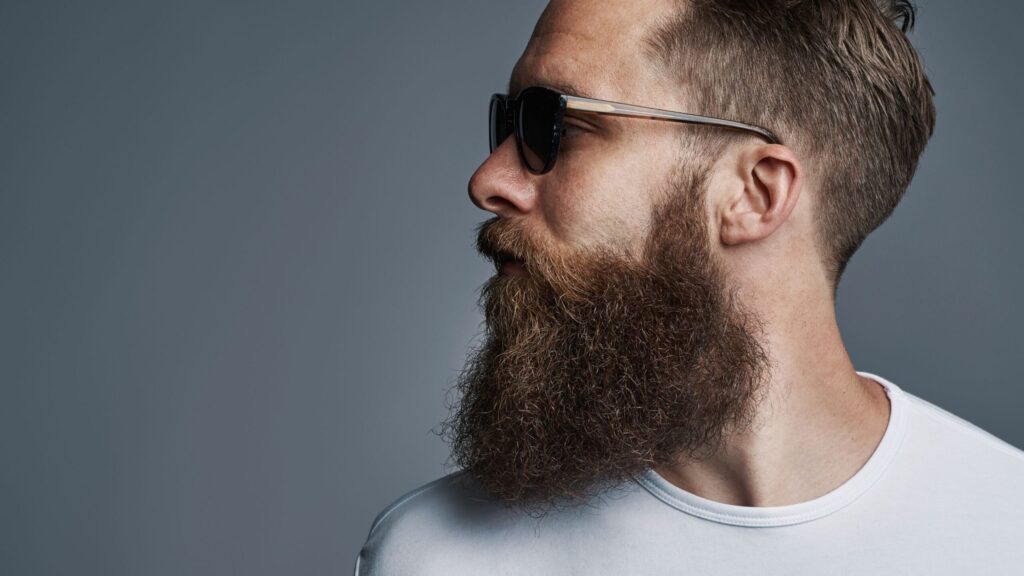
The Daylight and Two-Mirror Test
Bathroom light lies. A single overhead bulb casts shadows that can make one cheek look thinner than it is.
Try this:
- Stand near a window in natural daylight
- Face the light straight on
- Use a handheld mirror to check each side at the same angle
- Turn slowly left, then right, watching where the light reveals skin
- Take a photo of each side from the same distance
Many men discover their “thin” cheek is simply the side that faces away from their bathroom light. Others confirm a real difference. Either way, you’ll know more than you did.
The Six-Week Grow-Out Experiment
If you’re unsure whether trimming is causing the unevenness, the most honest test is to stop trimming entirely.
Let your beard grow for six weeks without touching the cheeks. Clean up your neck if you need to for work, but leave the cheek line alone. Take photos every week in the same light.
At six weeks, you’ll see your natural growth pattern without any trimming influence. If both sides look reasonably balanced, the unevenness probably came from your trimmer. If one side still lags clearly, it’s likely biology.
It takes patience. But it’s like a mechanic letting an engine idle to hear what it sounds like before making any repairs.
Measuring Both Sides
Sometimes it helps to put numbers to what you’re seeing. A small ruler or the guard markings on a trimmer work well.
| What to Measure | How to Measure | What a Notable Difference Looks Like |
| Cheek line height | Distance from bottom of eye to top of beard | More than about a quarter inch |
| Hair length on cheek | Gently straighten a few hairs and measure | More than about an eighth inch |
| Sideburn bottom | Distance from earlobe to sideburn end | Visibly different heights |
| Jawline coverage | Note any visible skin along the jaw | Gaps on one side only |
| Density check | Count hairs in a small patch in a photo | Clearly fewer on one side |
You don’t need to be precise to the millimeter. You’re simply looking for patterns.
Reading What You Find
Once you’ve done your checks, the results usually point in one of a few directions.
| Clue | Natural Unevenness | Trimmer-Caused Unevenness |
| Hair density | Truly fewer hairs on one side | Similar hair count on both sides |
| Cheek line | Follows natural growth | Sits lower on one side than natural growth |
| After six weeks untouched | Difference remains | Difference shrinks or disappears |
| Pattern in family | Often shows up in relatives | No family pattern |
| Shape of difference | Gradual fading | Sharp, straight edges |
If the evidence points to trimming, the fix is simple and hopeful. If it points to biology, the fix is about working with what you have, and that’s where a good barber earns his keep.
How a Good Barber Evens Things Out
Setting the Cheek Line to the Weaker Side
When I balance an uneven beard, I almost always start with the cheek line, and I usually set it based on the weaker side.
Here’s why. If your right cheek line naturally sits lower because hair doesn’t grow as high, I can’t add hair there. But I can lower the left cheek line to match, so both sides look intentional.
It’s a bit like a tailor hemming a pair of pants when one leg is slightly shorter. You don’t stretch the short leg. You adjust the long one so they look even when you walk.
I usually mark the line with clippers turned upside down, then refine it with a straight razor. Throughout, I step back, check both sides in the mirror and compare from the front. Your eyes see your face straight on, so that’s how it needs to look balanced.
Blending, Fading and Using Length as Camouflage
Sometimes a sharp cheek line isn’t the answer. For thinner cheeks, a soft blend or faded cheek can work wonders.
| Technique | What the Barber Does | Best For |
| Natural cheek line | Cleans only stray hairs above natural growth | Mild unevenness, fuller beards |
| Lowered cheek line | Sets both lines to the weaker side’s height | Clear height differences |
| Faded cheeks | Graduates length from short at top to longer below | Patchy upper cheeks |
| Weight on the jaw | Leaves more length along the jawline | Thin cheeks, strong jaw growth |
| Length management | Keeps fuller side slightly shorter | Density differences |
Length as camouflage is one of the most useful tricks I know. Longer hair on the fuller side can lie over thinner areas nearby. Shorter, tighter trimming on the fuller side can bring it closer in appearance to the thinner side. It’s a bit of visual sleight of hand, like a good catcher framing a pitch.
Hot Towel, Straight Razor and the Final Check
A hot towel isn’t just a luxury. It softens the beard and opens up the skin, which helps the trimmer cut cleanly and the razor glide without tugging.
There’s a calming ritual to it. The steam rising off the towel, the faint smell of eucalyptus, the warmth settling into your jaw. It slows everything down, and slowing down matters when you’re shaping lines a sixteenth of an inch at a time.
After the razor work, I do a final check from at least three angles: straight on, from each side, and from above while the client looks down. I’ll often ask him to smile and to talk, since cheeks move and a line that looks even when still might shift when he laughs.
I noticed long ago that the best beard trims aren’t the ones with the sharpest lines. They’re the ones that still look natural when the man is living his life.
Between visits, what you do at home matters just as much.
Home Care That Actually Helps
Beard Oil vs. Beard Balm
These are the two most common beard products, and they serve slightly different purposes.
| Factor | Beard Oil | Beard Balm |
| Texture | Liquid | Semi-solid, waxy |
| Main purpose | Moisturize skin and hair | Moisturize plus light hold |
| Common ingredients | Jojoba, argan, sweet almond oil | Shea butter, beeswax, oils |
| Best for | Short beards, dry skin, itch | Medium to long beards, shaping |
| Helps uneven cheeks by | Softening coarse side, reducing breakage | Pushing hair to cover thin spots |
| Feel | Light, absorbs fast | Heavier, stays put |
Neither product will grow new hair. But both can reduce breakage and make hair lie better, which can soften the look of unevenness. Jojoba oil is a common favorite because it closely resembles the skin’s natural oils.
If one cheek is coarser and the other finer, try using a little extra oil on the coarse side to tame it and a touch of balm on the fine side to give it body.
Boar Bristle Brush vs. Wide-Tooth Comb
How you groom your beard matters as much as what you put on it.
| Factor | Boar Bristle Brush | Wide-Tooth Comb |
| Best beard length | Short to medium | Medium to long |
| Main benefit | Spreads oils, trains direction | Detangles, shapes |
| Effect on thin areas | Lifts and directs hair over gaps | Separates hair, can expose gaps |
| Effect on skin | Gentle exfoliation | Minimal |
| Daily use | Yes, morning and evening | Yes, gently |
A good brush is one of the most underrated tools for uneven cheeks. Brushing hair from the fuller areas toward the thinner ones, day after day, can train growth direction over time. It’s like teaching a puppy to sit. Repetition does the work.
Washing, Exfoliating and Moisturizing
Beard skin needs care too. Dry, flaky skin can irritate follicles and make hair grow in weaker.
A simple routine might look like this:
- Wash your beard two to four times a week with a gentle beard wash, not harsh body soap
- Condition after washing, especially if your hair is coarse or curly
- Exfoliate once or twice a week with a soft brush or gentle scrub to clear dead skin
- Moisturize daily with beard oil, working it down to the skin
- Dry gently, patting rather than rubbing
I’ve seen beards transform over a few months just by changing the routine. Not because the hair grew differently, but because healthier skin let it grow its best.
Growth Treatments: What the Research Says
Some men explore treatments to boost growth on a thin cheek. It’s worth knowing what the research does and doesn’t show.
Minoxidil is the most studied. A small 16-week randomized trial published in the Journal of Dermatology in 2016 found that 3 percent minoxidil lotion produced a modest increase in beard hair count compared with a placebo. Results were noticeable but not dramatic, and the study was small.
Microneedling has shown promise for scalp hair in some studies, but evidence for beards specifically is still limited.
Supplements like biotin are often marketed for beard growth. Unless you have an actual deficiency, which is uncommon, there’s little evidence they’ll make a difference.
| Treatment | Evidence Level | What It May Do | Things to Consider |
| Minoxidil | Some clinical evidence | Modest increase in hair count | Daily use, possible irritation, talk to a doctor |
| Microneedling | Limited for beards | May support growth | Risk of irritation or infection if done poorly |
| Biotin supplements | Weak unless deficient | Little effect for most men | Can interfere with some lab tests |
| Beard oils | Cosmetic | Healthier hair, less breakage | Doesn’t grow new hair |
If you’re considering any treatment, it’s wise to talk with a dermatologist first. They can look at your skin and help you decide whether it’s worth trying.
Products help, but sometimes the smartest move is picking a style that works with your beard rather than against it.
Beard Styles That Work With Uneven Cheeks
Heavy Stubble vs. Full Beard
| Factor | Heavy Stubble | Full Beard |
| Length | About 3 to 5 millimeters | 1 inch or more |
| Shows unevenness? | Moderately, mostly in density | Less, since length covers gaps |
| Maintenance | Trim every few days | Shape every 2 to 4 weeks |
| Best for | Mild differences, professional settings | Patchy cheeks, strong jaw growth |
| Watch out for | Visible cheek line differences | The awkward weeks during growth |
Heavy stubble is honest. At that length, you’ll see density differences, but a well-placed cheek line can still make it look clean and deliberate.
A full beard is more forgiving. Once hair reaches an inch or more, it tends to lie over thin areas. Many men who think they can’t grow a beard simply haven’t let it get long enough.
Boxed Beard vs. Rounded Short Beard
| Factor | Boxed Beard | Rounded Short Beard |
| Shape | Squared at the jaw and chin | Follows the natural curve of the face |
| Cheek line | Sharp and defined | Soft or natural |
| Hides uneven cheeks? | Sometimes, if lines are set low | Often, since edges are soft |
| Best for | Fuller beards, strong jaws | Mild patchiness, rounder faces |
| Upkeep | Frequent line work | Moderate |
A boxed beard relies on crisp lines, which means the barber has a lot of control over balance. A rounded short beard has softer edges, so small differences tend to fade into the overall shape.
Goatees, Van Dykes and Other Clever Options
If your cheeks are truly sparse or uneven, sometimes the best move is to stop fighting them and focus where your beard grows best.
- Goatee: chin and mustache only, cheeks shaved clean
- Van Dyke: pointed chin beard with a separate mustache
- Extended goatee: goatee that stretches partway along the jaw
- Chin strap with mustache: a thin line along the jaw paired with the mustache
- Short beard with faded cheeks: full on the jaw and chin, fading toward bare cheeks
These styles turn a weak area into a non-issue. You’re simply choosing where the beard lives. Perhaps it’s a bit like a ballplayer who can’t hit for power learning to bunt and steal bases. Different game, still a winning one.
Styles come and go, and beards have their own long history.
Beards Through History and What Barbers See Now
From Beard Taxes to Safety Razors
Beards have been loved, feared, taxed and banned through the centuries.
| Era | Beard Moment | What It Meant |
| Around 330 BC | Alexander the Great reportedly encourages his soldiers to shave | Fewer handholds for enemies in battle |
| 1698 | Peter the Great introduces a beard tax in Russia | A push toward Western European fashion |
| 1860 | Eleven-year-old Grace Bedell writes to Abraham Lincoln suggesting he grow whiskers | Lincoln becomes the first president with a full beard |
| Mid to late 1800s | Full beards become a mark of Victorian manhood | Peak beard era of that century |
| Early 1900s | Gillette’s disposable-blade safety razor spreads | Shaving at home becomes easier |
| 1914 to 1918 | Soldiers shave for gas mask seals | Clean-shaven look takes hold |
| 1960s to 1970s | Counterculture brings beards back | Beards signal freedom and protest |
| 2003 | Movember begins in Australia | The mustache becomes a cause |
| 2010s | The modern beard boom | Beards return to the mainstream |
Through most of the 20th century, the neighborhood barbershop was where men went for a hot lather shave as often as a haircut. I still remember the old-timers talking about weekly shaves, the smell of bay rum and the slap of the razor on the leather strop. Back then, uneven cheeks didn’t matter much. Everyone shaved them off.
The Beard Boom and “Peak Beard”
In the early 2010s, beards came roaring back. Suddenly, everybody from tech workers to country singers was growing one.
In 2014, researchers at the University of New South Wales, led by Robert Brooks, published a study in Biology Letters suggesting that beard preferences follow a kind of novelty effect. When beards are rare, they seem more attractive. When they become common, clean-shaven faces gain appeal. The media nicknamed it “peak beard.”
Yet beards haven’t faded the way the theory might suggest. Market researchers have tracked steady growth in beard care products over the past decade, and the oils, balms and brushes that were once niche are now on grocery store shelves.
With more men growing beards, more men started noticing their uneven cheeks. A generation of shaving had hidden the issue. A generation of beards revealed it.
What Barbers Are Noticing Today
When I talk with other barbers at trade shows or over coffee before the shop opens, a few themes come up.
First, men are more open about their beard insecurities. A decade ago, nobody would admit they worried about patchy cheeks. Now they ask outright.
Second, men are more interested in beard design than just trimming. They want lines placed thoughtfully, fades blended into the beard and shapes that suit their face.
Third, men are more willing to work with their natural growth. Instead of forcing a full beard, they’re asking what will look best on them. It seems like a healthy shift, really. Less about chasing an ideal and more about understanding what’s there.
Speaking of real men, let me tell you about a few of them.
Stories From the Chair
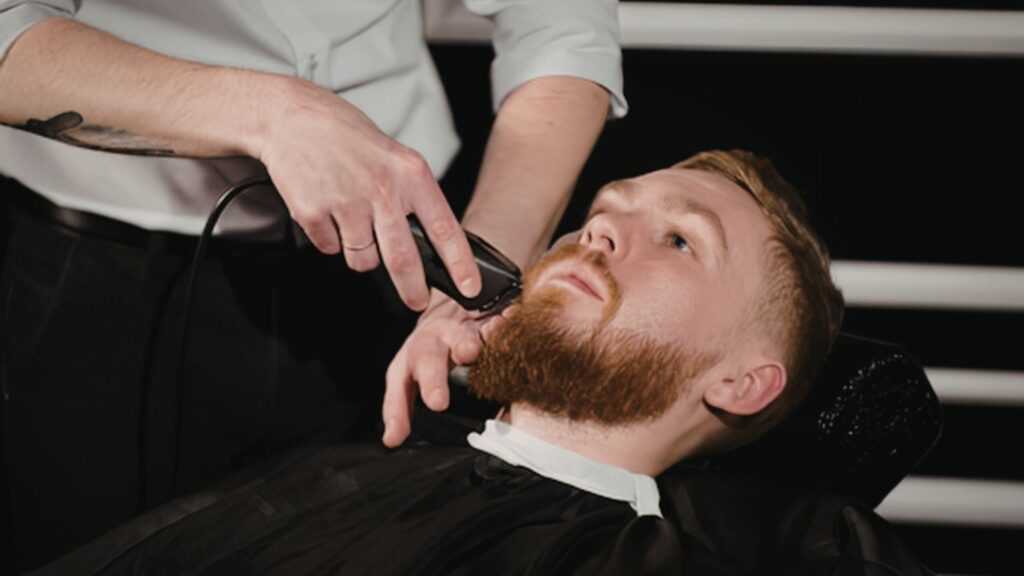
The College Kid Who Almost Gave Up
Devon was twenty when he first sat in my chair. He’d been trying to grow a beard for three months and was close to giving up. His left cheek had decent coverage. His right cheek had what he called “a few lonely hairs.”
He showed me pictures of beards he wanted. All of them full, thick, lumberjack style.
I asked him to try something different. We set both cheek lines low, matching his right side. We kept his jaw and chin a little fuller. And I asked him to come back in two months without shaving the cheeks.
When he came back, the right side had filled in more than either of us expected. Not perfectly, but enough. With the lowered lines, his beard looked balanced for the first time.
“I thought my face was broken,” he said. I told him it wasn’t broken. It was just still writing its first draft.
The Father Who Brought His Son In
A father brought his sixteen-year-old son in for his first real beard shaping. The boy had a thin mustache, some fuzz on his chin and almost nothing on his cheeks. His right side was a little thicker than his left.
The father leaned against the counter while I worked. After a while, he said quietly, “My right side always came in first, too.”
The boy looked up at him in the mirror. You could see something settle in his face. It wasn’t about the beard anymore. It was about knowing that his dad had been in that same awkward spot once and turned out fine.
We kept the trim light and simple. I cleaned up the edges, softened the mustache and left the cheeks alone. Sometimes the most important part of a first beard trim isn’t the trimming. It’s the conversation that happens around it.
The Gift Set That Changed a Routine
A woman came in one December looking for a gift for her husband. She told me his beard was uneven, he refused to see anyone about it, and he trimmed it himself in the garage with a clipper he’d bought in 2009.
We put together a simple kit: a boar bristle brush, a bottle of jojoba-based beard oil and a gift card for a beard shaping.
He came in a few weeks later, a bit grudging. His left cheek was clearly shorter than his right. When I asked how he trimmed, he admitted he did it right-handed, reaching across his face.
After the shaping, he looked in the mirror for a long moment. “Huh,” he said. “It was the clippers the whole time.”
He comes in every month now. His wife tells me he brushes his beard every morning, and she’s stopped hearing about it.
Stories like these often raise a practical question: what does all this cost?
What Beard Care Costs and Where the Value Lives
Professional Beard Services and Prices
IBISWorld tracks the U.S. barber shop industry as a multibillion-dollar market, and beard services have become a meaningful part of that business. Prices vary widely depending on your city, the shop and the barber’s experience.
| Service | Typical Price Range | Time | What’s Included |
| Beard line-up | $10 to $20 | 10 to 15 minutes | Cheek line, neckline cleanup |
| Beard trim | $15 to $35 | 15 to 30 minutes | Length trim and shaping |
| Beard sculpting | $30 to $50 | 30 to 45 minutes | Full design, lines, blending |
| Hot towel shave | $30 to $60 | 30 to 45 minutes | Hot towel, lather, straight razor |
| Haircut and beard combo | $45 to $90 | 45 to 75 minutes | Full haircut plus beard work |
Treat these as rough guides. A downtown shop in a major city may charge more, while a small-town spot may charge less.
DIY Trimming vs. Professional Shaping
| Factor | DIY Trimming | Professional Shaping |
| Upfront cost | $30 to $100 for a trimmer | $15 to $50 per visit |
| Ongoing cost | Blades and oil occasionally | Every 2 to 4 weeks |
| Precision | Limited by angle and skill | High, with an outside view |
| Risk of uneven cheeks | High, especially on the weaker hand side | Low |
| Best for | Maintenance between visits | Setting lines and shape |
Many men find a balance works best. Visit a barber every few weeks to set the shape and lines, then maintain at home by trimming only stray hairs and keeping the neckline tidy.
It’s a bit like having a coach set up your training plan and then doing the workouts yourself. You get expert structure without paying for every single session.
Budget Products vs. Premium Products
| Factor | Budget Products | Premium Products |
| Typical price for beard oil | $8 to $15 | $25 to $45 |
| Ingredients | Often a few basic oils | Often blends of higher-grade oils |
| Fragrance | Often synthetic | Often essential oils or natural scents |
| Results | Can work very well | Often similar, sometimes nicer feel |
| Best choice for | Testing what works for you | Once you know your preferences |
Perhaps the most honest advice I can give is this: expensive doesn’t always mean better. A simple jojoba or argan oil can do as much for your beard as a fancy bottle with a leather label. Start simple, see how your beard responds and upgrade only if you find a reason to.
Let’s turn to the questions I hear most.
Frequently Asked Questions
Is it normal for one side of my beard to grow faster than the other?
Yes, it’s very common. Each cheek has its own follicles, its own growth cycle and its own sensitivity to hormones. Many men also have small differences in facial structure and daily habits that affect each side. A mild difference is completely normal. A sudden or dramatic change, like a new bald patch, is worth checking with a dermatologist.
Will my uneven beard even out as I get older?
Often, it improves. Many men see their cheeks fill in gradually through their twenties and into their early thirties as fine vellus hairs turn into thicker terminal hairs. That said, some degree of unevenness tends to stay, since genetics and facial structure don’t change. Patience and good styling usually make a big difference while you wait.
Can I make the thinner side grow faster?
There’s no reliable way to make one side catch up quickly. Some men try minoxidil, which has shown modest results in a small clinical trial, but it’s worth discussing with a dermatologist first. In the meantime, letting your beard grow longer, brushing hair toward thin areas and having your barber balance the lines can make a noticeable difference.
Does sleeping on one side really affect my beard?
It can, though the effect is gentle. Years of friction against a pillow may flatten hair, break fragile whiskers and push growth in certain directions. A smoother pillowcase, like satin or silk, may help reduce friction. It’s not a cure, but it’s an easy change worth trying.
Should I shave the fuller side to match the thinner side?
Usually not. Trimming the fuller side shorter can help balance appearance, but shaving it completely tends to make things look more uneven. A better approach is to have your barber set your cheek lines to match the weaker side and keep the fuller side slightly shorter in length.
What’s the best beard style for uneven cheeks?
It depends on your face and how uneven your beard is. A full beard often covers gaps best, since length lies over thin areas. A rounded short beard with soft edges also works well. If your cheeks are very sparse, a goatee, Van Dyke or extended goatee might suit you better, since they focus on areas where your beard grows strongest.
How often should I get my beard trimmed if it’s uneven?
Every two to four weeks is a good rhythm for most men. That’s often enough to keep lines balanced before uneven growth becomes noticeable. Between visits, avoid trimming the cheek lines yourself. Just tidy the neckline and any stray hairs, and let your barber handle the shaping.
My son’s beard is coming in unevenly. Should I worry?
Almost certainly not. Teenage beards nearly always come in unevenly, with the mustache and chin first and the cheeks much later. Encourage patience, keep trims light and let his barber clean up edges without reshaping too much. Most young men see big changes between ages eighteen and twenty-five.
Questions help, but a plan helps more.
Your Even-Beard Action Plan and a Final Word
Your Thirty-Day Checklist
Here’s a simple plan to start understanding and balancing your beard:
- Take daylight photos of both cheeks from the same angle and distance
- Note which side you sleep on and which hand you trim with
- Stop trimming your cheek lines at home for the full thirty days
- Start a simple routine: wash, condition, oil and brush
- Brush hair from fuller areas toward thinner ones every morning
- Check for bumps, redness or smooth patches that might need a doctor
- Look at family photos to spot any inherited patterns
- Book a beard shaping with an experienced barber at the end of the month
If you’ve just moved to a new area, it seems like half the battle is simply finding the right person. Searching “barbershop near me” will give you a list. Reading reviews, looking at photos of beard work and asking around will help you find someone who understands faces, not just clippers.
Your Beard Balance Scorecard
After thirty days, score each area from 1 to 3.
| Area | 1 = Needs Work | 2 = Acceptable | 3 = Balanced |
| Cheek line height | Clearly different | Slightly different | Matches |
| Cheek density | One side much thinner | Small difference | Similar |
| Jawline coverage | Gaps on one side | Minor gaps | Even |
| Sideburn length | Clearly mismatched | Slight difference | Matches |
| Hair texture | Very different feel | Somewhat different | Similar |
| Skin health | Bumps or irritation | Occasional issues | Healthy |
Scoring guide:
- 16 to 18 points: Your beard is well balanced. Keep doing what you’re doing.
- 12 to 15 points: Mostly balanced. A barber can likely fix remaining differences with line work.
- 6 to 11 points: Worth a closer look. Talk with your barber, and consider a dermatologist if skin issues are involved.
This isn’t a grade. It’s a way of noticing.
Conclusion
I’ve trimmed thousands of beards over the years. Thick ones, thin ones, red, black, silver and every shade in between. I can’t think of a single one that matched perfectly from cheek to cheek. Perhaps that’s the point. Your beard isn’t meant to be a mirror image. It carries your family history, your daily habits, the shape of your bones and maybe a scar from a long-ago summer. In its own quiet way, it tells your story. The next time you’re in the chair, with the hot towel warming your jaw and the clippers humming near your ear, maybe you’ll look at your two cheeks a little differently. Not as a problem to solve, but as two sides of the same face, each doing its best. What might change if you stopped asking “What’s wrong with my beard?” and started asking “What is my beard trying to show me?” If any of this rings true for you, take it with you. If it doesn’t quite fit, that’s fine too. Every beard grows in its own way, and after all these years behind the chair, I’m still learning to read