

A $3 haircut often costs more than a $45 cut once you factor in frequency, upkeep, product dependency, and the damage control needed to fix a rushed job. Applying a cost-per-wear framework, borrowed from fashion economics, to grooming reveals that quality cuts last longer, require fewer touch-ups, and deliver better long-term value per dollar spent.
I’ve been standing behind a chair for over twenty years now. Steel scissors, straight razors, the hum of clippers, the smell of talc and bay rum. I’ve cut hair for construction workers, CEOs, nervous grooms, and toddlers who scream like I’m trying to take their arm off. And in two decades, I’ve heard every version of the same sentence: “I just want something cheap and fast.”
I get it. Money’s tight, time’s tighter. But here’s the thing nobody tells you when you’re sitting in that $15 chair getting rushed through in eight minutes flat: cheap isn’t the same as affordable. Those are two different words, and confusing them is costing you more than you think.
This piece walks through something I call cost-per-wear for hair. It’s a concept lifted straight from the fashion world, where smart shoppers calculate the real value of a garment by dividing its price by how many times they’ll actually wear it. I’m going to show you how that same math applies to your head, your wallet, and your reflection in the mirror every single morning.
By the end of this, you’ll know exactly how to calculate what a haircut is really costing you, how to spot a skilled professional from a rushed one, and how to build grooming habits that stretch every dollar further. No fluff, no sales pitch. Just what I’ve learned from two decades of cutting hair for a living.
The $3 Haircut Illusion — What Cheap Really Costs
A three-dollar haircut sounds like a steal until you sit down in the chair and realize what you’re actually buying. Spoiler: it’s not a haircut tailored to you. It’s a template applied to your head as fast as humanly possible.
What you actually pay for at a budget shop
At a budget chain, you’re paying for speed, not skill. The clippers run on one or two guard sizes, the scissor work is minimal, and the whole appointment is built around volume. More chairs filled, more heads cut, more revenue per hour. That model works fine for some guys who just want a basic buzz. But if you’ve got cowlicks, thick or curly hair, a receding hairline you’re trying to work around, or a style with any real shape to it, a rushed ten-minute cut usually can’t deliver it. You’re not paying for craftsmanship. You’re paying for throughput.
The psychology of price anchoring in grooming
Here’s something most guys never think about: price anchoring messes with how we judge quality everywhere, including the chair. When you see a three-dollar sign out front, your brain automatically lowers its expectations before you even sit down. You walk in ready to accept “good enough.” That mental discount follows you out the door too. Guys who pay rock-bottom prices tend to tolerate rock-bottom results, even when the cut looks uneven in natural light later that day. Paying more doesn’t just buy better technique, it resets your own standard for what you’re willing to accept.
How cheap cuts affect first impressions
People form judgments about you within seconds, and your hair is one of the first things they notice, right alongside your posture and your handshake. A cut that’s uneven, poorly blended, or already growing out awkwardly sends a signal before you say a word. It’s not vanity, it’s basic human perception. A sharp, well-executed cut reads as put-together. A rushed one reads as an afterthought. If you’re walking into interviews, client meetings, or first dates with a cut that looks like it was done in a hurry, you’re negotiating from behind before the conversation even starts.
Defining Cost-Per-Wear — A Framework Built for Clothes, Perfect for Hair
Cost-per-wear isn’t a new idea. It’s just new applied to your head.
Where cost-per-wear comes from (fashion industry origins)
The concept started in the fashion world as a way to justify spending more on quality pieces. The math is simple: take the price of an item, divide it by the number of times you’ll actually wear it, and you get the true cost per use. A $200 jacket worn 100 times costs two dollars a wear. A $20 jacket that falls apart after five wears costs four dollars a wear. Suddenly the “expensive” option is the cheaper one. Sustainable fashion advocates have used this framework for years to push back against disposable, fast-fashion thinking, and it holds up just as well outside the closet.
Adapting the formula to haircuts
For hair, the formula shifts slightly. Instead of counting wears, you count days the cut actually looks good. A $15 cut that starts looking shaggy and shapeless after ten days gives you roughly $1.50 per good-looking day. A $45 cut from a skilled professional that holds its shape and grows out cleanly for 30 days gives you $1.50 per day too, except now you’re also getting better technique, cleaner lines, and a style that actually suits your face shape. Run the math on your own grooming routine and you might be surprised which option actually wins.
Why frequency of cuts matters in the equation
Frequency is the hidden variable most guys ignore. If a bad cut forces you back into the chair every two weeks just to clean up the mess, you’re not saving money, you’re paying twice for half a result. A quality cut, properly executed with the grain of your hair and the shape of your head, naturally grows out in a way that still looks intentional. That extends the usable life of every single appointment, which is the entire point of the cost-per-wear framework in the first place.
The Real Price Tag — Breaking Down What Goes Into a Quality Haircut
When you understand what’s actually involved in a professional cut, the price tag starts making a lot more sense.
Tools, training, and time — what skilled barbers invest
A good tradesman invests in his tools, and cutting hair is no different. Quality shears alone can run several hundred dollars, and a serious professional owns multiple pairs for different textures and techniques. Add in clipper sets, guards, straight razors, and the ongoing cost of keeping every blade properly honed, and the equipment investment adds up fast before a single client sits down. Then there’s the training. Learning to read hair growth patterns, cowlicks, and face shapes takes years of apprenticeship, not a weekend course. That education shows up in every line and fade you see in the mirror.
Product quality and sanitation standards
What touches your scalp matters. A well-run shop uses proper sanitation protocols between every single client, from sterilized blades to clean capes and sanitized stations. That’s not optional overhead, it’s a health and safety requirement, and it costs money to maintain correctly. On top of that, the pomades, clays, and finishing products used on your hair during the service are a real line-item expense, not an afterthought thrown in for free.
The overhead behind a professional shop
Rent, insurance, licensing, continuing education, utilities. The overhead behind a professional barbershop is substantial, and every dollar of it factors into what you pay in the chair. A shop that invests in a comfortable leather chair, proper lighting, hot towel service, and a clean, well-maintained space isn’t padding the bill for fun. That environment is part of what you’re paying for, because it reflects the same attention to detail you’ll find in the actual cut.
Hair Type, Cut Complexity, and Why One Price Doesn’t Fit All
No two heads are the same, and pricing should reflect that reality.
Different hair types and their unique demands
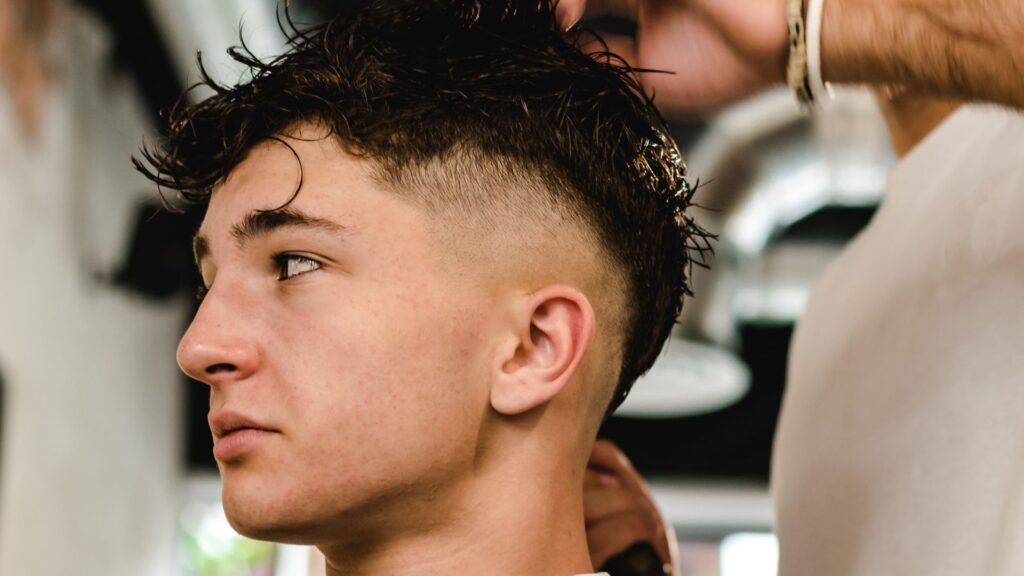
Fine, straight hair behaves predictably and can often handle a quicker service. Thick, curly, or coily hair requires more time, more technique, and often more product knowledge to cut correctly without leaving it bulky or uneven. Hair that’s thinning or receding needs a barber who understands how to work with what’s there rather than fighting it. Treating every head the same, the way a flat-rate budget shop often does, ignores these real differences entirely.
Technical cuts vs. basic trims — what the difference looks like
A basic trim is maintenance. A technical cut, think skin fades, precise tapers, scissor-over-comb work, or textured crops, is closer to sculpture. It requires steady hands, a trained eye, and the patience to blend transitions so they look seamless rather than stepped. You can usually tell the difference in under five seconds just by looking at someone’s hairline.
Table: Hair type vs. recommended cut frequency and cost range
| Hair Type | Recommended Frequency | Typical Cost Range |
| Fine, straight | Every 5-6 weeks | 20-40 |
| Thick, straight | Every 4-5 weeks | 25-45 |
| Curly or coily | Every 6-8 weeks | 35-60 |
| Fading or short styles | Every 2-3 weeks | 25-50 |
| Thinning or receding | Every 3-4 weeks | 25-45 |
The Hidden Costs of a Bad Haircut
The price on the sign is never the whole story.
Damage control — what fixing a bad cut actually costs
When a cut goes wrong, you’ve got two options: live with it or pay someone else to fix it. Fixing usually means another appointment, often at a higher price point because you’re now asking a skilled professional to correct uneven lines or salvage a botched fade. That second visit erases any savings from the first one, and then some.
The confidence tax — how a poor cut affects your daily life
I’ve watched guys avoid photos, skip social plans, and show up to important meetings wearing a hat because they didn’t like what they saw in the mirror that morning. That’s a real cost, even if it never shows up on a receipt. Confidence affects how you carry yourself in every room you walk into, and a cut you’re self-conscious about chips away at that quietly all week long.
Time lost trying to fix or grow out a bad cut
Growing out a bad cut isn’t quick. Depending on how aggressive the mistake was, you could be looking at weeks of awkward transitional stages before it’s fully corrected. That’s weeks of bad hair days, weeks of avoiding the mirror, weeks you don’t get back.
Haircut Frequency — The Schedule That Makes or Breaks Your Look
Consistency is where real value gets built or lost.
How often should you actually be getting a haircut?
Most men do best getting a cut every three to five weeks, though it varies by hair type and style, as shown in the table above. Going too long between cuts lets the shape grow out of proportion. Going too often can actually work against certain styles that need a little length to hold their shape properly.
How Haircut habits affect the cost-per-cut calculation
Your Haircut habits, how consistently you book appointments and how well you maintain the style between visits, directly shape your cost-per-wear number. A guy who shows up reliably every four weeks and takes care of his hair at home stretches every cut’s value further than someone who waits until it’s a mess and then rushes in for an emergency fix.
The compounding effect of consistent upkeep
Consistent upkeep compounds over time, much like consistent investing. Each well-timed cut builds on the last, keeping the shape sharp instead of letting it unravel and require a bigger correction later. Over a year, that discipline adds up to noticeably better results for roughly the same total spend.
Barbershop vs. Budget Chain vs. DIY — A Direct Cost Breakdown
Let’s put all three options side by side and see how they actually stack up.
What you get at each price point
A quality grooming shop gets you a trained professional, a consultation, proper tools, and a finished look built around your face and hair type. A budget chain gets you speed and a flat template applied to most heads the same way. DIY gets you zero labor cost and a steep learning curve that often shows up in the mirror before it shows up in your skill.
Table: Full comparison across service tiers
| Option | Average Cost | Time Per Visit | Skill Level | Result Consistency |
| Quality shop | 35-75 | 30-45 min | High | High |
| Budget chain | 12-20 | 8-15 min | Variable | Low to moderate |
| DIY at home | 0-5 per cut (after clipper purchase) | 15-30 min | Beginner to intermediate | Low |
The DIY trap — clippers at home and what they really cost
Home clippers look like free money until you factor in the learning curve, the uneven lines, and the eventual trip to a professional to fix the damage. A decent clipper set runs $40 to $100 upfront, and that’s before you account for the time spent watching tutorials and the frustration of a mirror image you didn’t expect.
The Grooming Products Factor — What You Buy After Matters
What happens after the cut can cost just as much as the cut itself.
How a quality cut reduces product dependency
A well-shaped cut holds its form with minimal styling. A poor cut often needs extra product just to look presentable, pomade to control a bad part, clay to hide uneven length, spray to fake volume where it’s missing. The better the base cut, the less you need to fight it every morning.
Breakdown of common styling products and their costs
Pomades, clays, and waxes typically run $10 to $25 per tub. Texturizing sprays land in a similar range. Guys relying heavily on product to compensate for a weak cut can easily spend $20 to $40 a month just on styling aids.
Table: Product cost comparison by cut quality tier
| Cut Quality | Monthly Product Spend | Styling Time Daily |
| High-quality, well-shaped cut | 5-15 | 2-5 minutes |
| Average cut | 15-25 | 5-10 minutes |
| Poorly executed cut | 25-40 | 10-15 minutes |
The Career and Social ROI of a Great Haircut
Appearance shapes perception, whether we like it or not.
What studies say about appearance and professional success
Research in workplace psychology has long shown that grooming and presentation influence first impressions in professional settings, often before a word is spoken. A clean, sharp cut signals attention to detail, something hiring managers and clients both notice, even subconsciously.
First impressions in job interviews, dates, and business meetings
In any high-stakes first meeting, you’re being read in seconds. A cut that’s clean, intentional, and suited to your face shape reads as confidence and preparation. A cut that’s grown out or uneven reads as an afterthought, regardless of how good the rest of your outfit looks.
The barbershop as community — more than just a cut
Beyond the technical side, a good shop builds relationships. Clients come back for the same chair year after year, not just for the cut, but for the conversation, the familiarity, the twenty minutes of actually being listened to. That sense of community is part of the value too, even if it never shows up in a cost-per-wear spreadsheet.
Historical Context — How Haircut Pricing Has Evolved
Understanding where pricing came from helps explain where it’s headed.
A timeline of barbershop pricing in America
Haircut prices have climbed steadily over the decades, tracking closely with inflation, rising rent, and the increasing cost of training and licensing. What cost a couple dollars in the mid-20th century reflects a very different economic landscape than today’s market.
Why prices rose and what drove the shift
Licensing requirements, rising commercial rent, higher product costs, and growing demand for specialized techniques like fades and modern tapers have all pushed prices upward. Skilled labor costs more, and grooming has shifted from a basic necessity to a genuine craft in many markets.
Table: Decade-by-decade average haircut price vs. inflation
| Decade | Approx. Average Cut Price | General Trend |
| 1970s | 2-4 | Basic service model |
| 1980s | 6-10 | Rising commercial rents |
| 1990s | 10-15 | Growth of styling specialization |
| 2000s | 15-25 | Expansion of premium shops |
| 2010s | 20-35 | Rise of craft and fade culture |
| 2020s | 25-60+ | Premium positioning, higher overhead |
Reading the Barber — Signs of a Skilled Professional vs. a Rushed One
You can usually tell within the first few minutes who’s good at this.
What to look for when you sit down in the chair
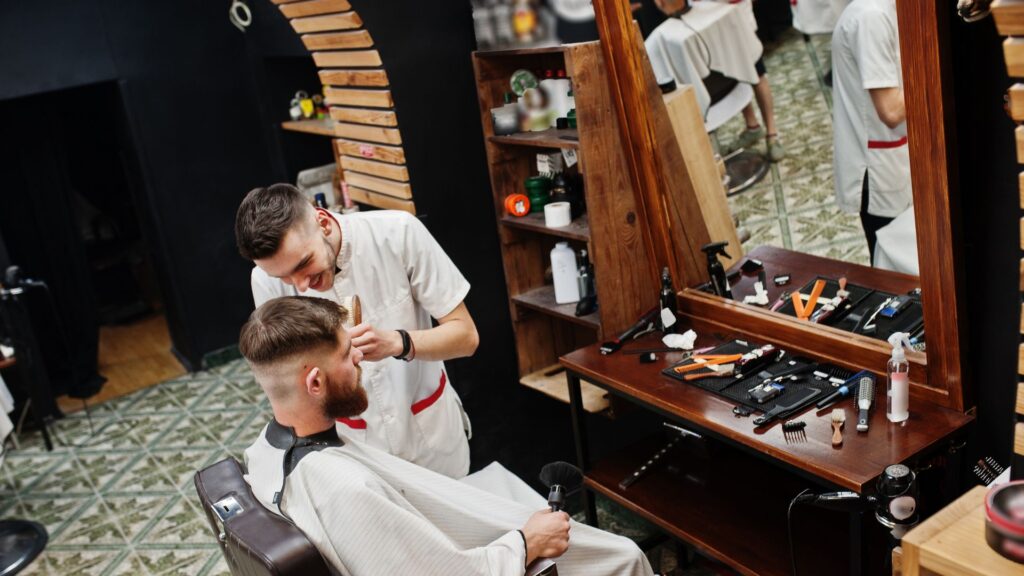
A skilled professional asks questions before picking up a single tool. How do you part your hair? What do you do for work? Any cowlicks or stubborn spots I should know about? That consultation, short as it is, is the difference between a cut built for you and a cut applied to you.
Red flags that tell you to walk out
Rushing straight into the cut without asking a single question, using one guard size on everyone regardless of hair type, dull or visibly dirty tools, or a station that looks like it hasn’t been wiped down all day. Any of these should have you reconsidering before you sit all the way down.
How to communicate your style to any barber
Bring a reference photo if you have one, describe the length you want left on top versus the sides, and be specific about maintenance, how often you’re realistically willing to come back in. Clear communication upfront prevents most bad outcomes before they happen.
The Budget Man’s Guide to Getting the Most Value at Any Price Point
Not everyone can spend top dollar every visit, and that’s fine. Here’s how to get the most out of whatever you’ve got.
How to maximize the life of any haircut
Keep the style simple enough to grow out gracefully, invest in a small amount of quality product rather than a cabinet full of cheap stuff, and learn basic at-home maintenance for the areas that grow fastest, like the neckline and sideburns.
When it makes sense to spend more vs. stay budget
If your look is simple, low-maintenance, and forgiving as it grows out, a budget option might genuinely work fine. If you’ve got complex hair, a precise style, or you’re in a role where appearance carries real professional weight, spending more upfront almost always pays off in fewer corrective visits.
Smart grooming habits that stretch your dollar
Book your next appointment before you leave the current one, stay consistent rather than reactive, and build a simple two-product routine instead of chasing every new release on the shelf. Small habits like these do more for your cost-per-wear number than any single splurge.
Kids’ Haircuts — Why the Cost-Per-Wear Argument Doubles for Fathers
If you think cost-per-wear matters for you, it matters twice as much for your kids.
The unique challenges of cutting children’s hair
Kids move, they get anxious, and their hair is often thinner and more delicate than an adult’s. Cutting it well requires patience most budget shops simply don’t have time to offer in a rushed ten-minute slot.
What a bad kids’ cut actually costs (confidence, school, photos)
A bad cut on a kid shows up in school photo day, in how confident they feel walking into class, and in how often they get teased by classmates who notice more than adults give them credit for. That’s a real cost, even if it’s not financial.
Table: Kids’ haircut tiers and outcomes
| Tier | Typical Cost | Experience | Common Outcome |
| Budget chain | 10-18 | Rushed, minimal patience | Inconsistent, prone to redo |
| Dedicated kids’ shop | 20-35 | Patient, kid-focused environment | Clean, even results |
| Family shop with skilled barber | 25-40 | Personalized, relationship-based | High consistency over time |
Gifting a Haircut — The Underrated Present That Delivers Real Value
Sometimes the best gift isn’t a gadget, it’s an upgrade to how someone sees themselves.
Why grooming gifts outperform gadgets in lasting impact
A gadget sits in a drawer within a year. A great haircut changes how someone feels walking into a room that same week. The emotional return on a grooming gift is immediate and visible in a way most physical gifts can’t match.
How to gift a barbershop experience the right way
Book the appointment in advance, choose a shop known for quality consultations, and consider pairing it with a small grooming kit so the results last beyond that single visit.
Table: Gift value comparison — haircut vs. common gift alternatives
| Gift Option | Average Cost | Lasting Impact | Repeat Value |
| Quality haircut experience | 40-75 | Immediate, visible | High if repeated |
| Tech gadget | 50-150 | Short-term novelty | Low over time |
| Clothing item | 30-100 | Moderate | Depends on fit and style |
| Grooming kit | 25-60 | Moderate, supportive | High when paired with cuts |
Your 30-Day Grooming Reset — An Action Plan
Here’s a simple plan to put everything in this piece into practice.

Week 1 — Assess your current haircut situation
Take an honest look in the mirror. How long has it been since your last cut? Does your current style actually suit your face shape and lifestyle, or are you just used to it? Write down what’s working and what isn’t.
Week 2 — Find the right barber and book your cut
Ask for recommendations, read reviews, and book a consultation before committing to a full service if you’re trying someone new. Pay attention to how many questions they ask before they pick up a tool.
Week 3-4 — Build the habits that maintain your investment
Book your next appointment before you leave the chair, establish a simple two-product home routine, and pay attention to how your hair grows out so you know exactly when it’s time to come back in.
Table: 30-day reset checklist
| Week | Focus | Action Item |
| Week 1 | Assessment | Evaluate current style and growth pattern |
| Week 2 | Research | Find and book with a qualified professional |
| Week 3 | Habit building | Establish home maintenance routine |
| Week 4 | Consistency | Schedule next appointment before leaving |
FAQs — Everything You Were Afraid to Ask Your Barber
How do I know if my barber is actually skilled?
Look for a thorough consultation before the cut begins, clean and well-maintained tools, and a willingness to explain their approach. A skilled professional asks about your hair type, your lifestyle, and your maintenance habits before touching a single strand.
Is a $50 haircut really worth it over a $15 one?
It depends on your hair type and style complexity. For simple, low-maintenance cuts, a budget option can work fine. For technical styles, thick or curly hair, or professional settings where appearance matters, the higher price typically pays for itself through fewer touch-ups and longer-lasting results.
How often should I get a haircut to maximize value?
Most men see the best cost-per-wear results with a cut every three to five weeks, depending on hair type and style, as outlined in the frequency table above.
What is cost-per-wear when applied to haircuts?
Cost-per-wear for hair means dividing the price of your cut by the number of days it continues to look good. A cheaper cut that grows out quickly can end up costing more per day than a pricier cut that holds its shape longer.
Can a bad haircut actually damage my hair?
Yes. Dull blades can cause split ends, uneven cutting can weaken the hair shaft over time, and incorrect technique on certain textures can lead to breakage that takes months to fully grow out.
What should I tell my barber for the best results?
Be specific about length, mention any cowlicks or problem areas, bring a reference photo if possible, and let them know how often you’re realistically able to come back for maintenance.
How do I find a good barber when I move to a new city?
Start by checking reviews and asking locals for recommendations rather than just searching “barbershop near me” and picking the closest result. Book a simple trial service first, like a basic trim, before committing to anything more technical so you can judge their skill with lower stakes.
Conclusion
Run the math honestly and the cheap option rarely wins. A rushed cut that needs correcting, extra product to compensate, and more frequent visits to maintain any shape at all usually costs more over a year than a quality cut done right the first time. Think of your haircut the way you’d think of a good pair of boots or a well-fitted jacket. The upfront price tag only tells part of the story. What matters is how long it holds up and how it makes you carry yourself in the meantime. Nobody’s asking you to overspend. The point is to spend smart, with your actual hair type, lifestyle, and standards in mind, rather than chasing the lowest number on a sign out front. Your hair is on display every single day. Treat it like the investment it actually is, not a corner to cut.